Hispanopedia Wiki
The accessible surface area (ASA) or solvent-accessible surface area (SASA) is the surface area of a biomolecule that is accessible to a solvent. Measurement of ASA is usually described in units of square angstroms (a standard unit of measurement in molecular biology). ASA was first described by Lee & Richards in 1971 and is sometimes called the Lee-Richards molecular surface.[1] ASA is typically calculated using the 'rolling ball' algorithm developed by Shrake & Rupley in 1973.[2] This algorithm uses a sphere (of solvent) of a particular radius to 'probe' the surface of the molecule.
Methods of calculating ASA
Shrake–Rupley algorithm
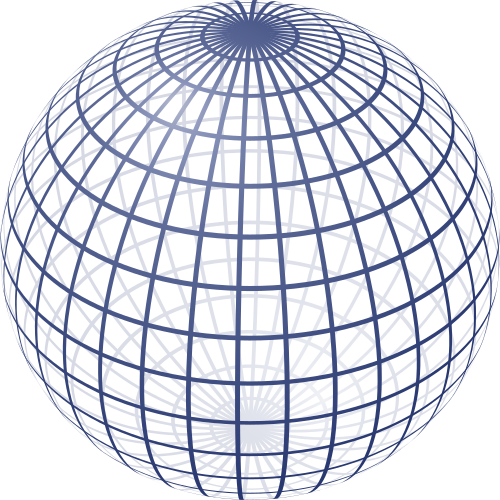
The Shrake–Rupley algorithm is a numerical method that draws a mesh of points equidistant from each atom of the molecule and uses the number of these points that are solvent accessible to determine the surface area.[2] The points are drawn at a water molecule's estimated radius beyond the van der Waals radius, which is effectively similar to ‘rolling a ball’ along the surface. All points are checked against the surface of neighboring atoms to determine whether they are buried or accessible. The number of points accessible is multiplied by the portion of surface area each point represents to calculate the ASA. The choice of the 'probe radius' does have an effect on the observed surface area, as using a smaller probe radius detects more surface details and therefore reports a larger surface. A typical value is 1.4Å, which approximates the radius of a water molecule. Another factor that affects the results is the definition of the VDW radii of the atoms in the molecule under study. For example, the molecule may often lack hydrogen atoms, which are implicit in the structure. The hydrogen atoms may be implicitly included in the atomic radii of the 'heavy' atoms, with a measure called the 'group radii'. In addition, the number of points created on the van der Waals surface of each atom determines another aspect of discretization, where more points provide an increased level of detail.
método LCPO
El método LCPO utiliza una aproximación lineal del problema de dos cuerpos para un cálculo analítico más rápido del ASA. [ 3 ] Las aproximaciones utilizadas en LCPO dan como resultado un error en el rango de 1-3 Ų.
Método del diagrama de potencia
En 2011, se presentó un método que calcula el ASA de forma rápida y analítica utilizando un diagrama de potencia . [ 4 ]
Aplicaciones
El área superficial accesible se utiliza a menudo para calcular la energía libre de transferencia necesaria para mover una biomolécula de un disolvente acuoso a un disolvente no polar, como un entorno lipídico. El método LCPO también se utiliza para calcular los efectos implícitos del disolvente en el paquete de software de dinámica molecular AMBER .
Recientemente se ha sugerido que el área de superficie accesible (predicha) puede utilizarse para mejorar la predicción de la estructura secundaria de las proteínas . [ 5 ] [ 6 ]
Relación con la superficie excluida por disolvente
El ASA está estrechamente relacionado con el concepto de superficie excluida por el disolvente (también conocida como área superficial molecular de Connolly o simplemente superficie de Connolly), que se imagina como una cavidad en el disolvente a granel. También se calcula en la práctica mediante un algoritmo de bola rodante desarrollado por Frederic Richards [ 7 ] e implementado tridimensionalmente por Michael Connolly en 1983 [ 8 ] y Tim Richmond en 1984. [ 9 ] Connolly dedicó varios años más a perfeccionar el método. [ 10 ]
Véase también
- solvatación implícita
- Superficie de Van der Waals
- VADAR es una herramienta para analizar estructuras de péptidos y proteínas.
- Superficie accesible relativa
Notas
- ↑ Lee, B; Richards, FM. (1971). "La interpretación de las estructuras proteicas: estimación de la accesibilidad estática". J Mol Biol . 55 (3): 379– 400. doi : 10.1016/0022-2836(71)90324-X . PMID 5551392 .
- 1 2 Shrake, A; Rupley, JA. (1973). "Entorno y exposición al solvente de átomos de proteínas. Lisozima e insulina". J Mol Biol . 79 (2): 351– 71. doi : 10.1016/0022-2836(73)90011-9 . PMID 4760134 .
- ↑ Weiser J, Shenkin PS, Still WC (1999). "Superficies atómicas aproximadas a partir de combinaciones lineales de solapamientos por pares (LCPO)". Journal of Computational Chemistry . 20 (2): 217– 230. doi : 10.1002/(SICI)1096-987X(19990130)20:2 < 217::AID-JCC4 > 3.0.CO ; 2-A .
- ↑ Klenin K, Tristram F, Strunk T, Wenzel W (2011). "Derivadas del área superficial y el volumen molecular: fórmulas analíticas simples y exactas" . Journal of Computational Chemistry . 32 (12): 2647– 2653. doi : 10.1002/jcc.21844 . PMID 21656788. S2CID 27143042 .
- ↑ Momen-Roknabadi, A; Sadeghi, M; Pezeshk, H; Marashi, SA (2008). "Impacto del área de superficie accesible de los residuos en la predicción de estructuras secundarias de proteínas" . BMC Bioinformatics . 9 : 357. doi : 10.1186/1471-2105-9-357 . PMC 2553345. PMID 18759992 .
- ↑ Adamczak, R; Porollo, A; Meller, J. (2005). "Combinación de la predicción de la estructura secundaria y la accesibilidad al disolvente en proteínas". Proteins . 59 (3): 467– 75. doi : 10.1002/prot.20441 . PMID 15768403 . S2CID 13267624 .
- ↑ Richards, FM. (1977). "Áreas, volúmenes, empaquetamiento y estructura de proteínas". Annu Rev Biophys Bioeng . 6 : 151–176 . doi : 10.1146/annurev.bb.06.060177.001055 . PMID 326146 .
- ↑ Connolly, ML (1983). "Cálculo analítico de la superficie molecular". J Appl Crystallogr . 16 (5): 548– 558. Bibcode : 1983JApCr..16..548C . doi : 10.1107/S0021889883010985 .
- ↑ Richmond, TJ (1984). "Área de superficie accesible al disolvente y volumen excluido en proteínas. Ecuaciones analíticas para esferas superpuestas e implicaciones para el efecto hidrofóbico". J Mol Biol . 178 (1): 63–89 . doi : 10.1016/0022-2836(84)90231-6 . PMID 6548264 .
- ↑ Connolly, ML (1993). "El paquete de superficie molecular". J Mol Graphics . 11 (2): 139– 141. doi : 10.1016/0263-7855(93)87010-3 . PMID 8347567 .
Referencias
- Connolly, ML (1983). "Superficies accesibles al disolvente de proteínas y ácidos nucleicos". Science . 221 (4612): 709– 713. Bibcode : 1983Sci...221..709C . doi : 10.1126/science.6879170 . PMID 6879170 .
- Richmond, Timothy J. (1984). "Área de superficie accesible al disolvente y volumen excluido en proteínas". J. Mol. Biol . 178 (1): 63– 89. doi : 10.1016/0022-2836(84)90231-6 . PMID 6548264 .
- Connolly, Michael L. (1985). "Cálculo del volumen molecular". J. Am. Chem. Soc . 107 (5): 118– 1124. doi : 10.1021/ja00291a006 .
- Connolly, ML (1991). "Esqueleto intersticial molecular" . Computers and Chemistry . 15 (1): 37– 45. doi : 10.1016/0097-8485(91)80022-E .
- Sanner, MF (1992). Modelado y aplicaciones de superficies moleculares (tesis doctoral).
- Connolly, ML (1992). "Distribuciones de forma de la topografía de proteínas". Biopolymers . 32 ( 9): 1215– 1236. doi : 10.1002/bip.360320911 . PMID 1420989. S2CID 23512517 .
- Blaney, JM (1994). "Geometría de distancias en el modelado molecular". Reviews in Computational Chemistry . Rev. Comput. Chem. Vol. 5. pp. 299–335 . doi : 10.1002/9780470125823.ch6 . ISBN 9780470125823.
- Grant, JA; Pickup, BT (1995). "Una descripción gaussiana de la forma molecular". J. Phys. Chem . 99 (11): 3503– 3510. doi : 10.1021/j100011a016 .
- Boissonnat, Jean-Daniel; Devillers, Olivier; Duquesne, Jacqueline; Yvinec, Mariette (1994). "Cálculo de superficies de Connolly". Journal of Molecular Graphics . 12 (1): 61– 62. doi : 10.1016/0263-7855(94)80033-2 . ISSN 1093-3263 .
- Petitjean, M (1994). "Sobre el cálculo analítico de superficies y volúmenes de van der Waals: algunos aspectos numéricos". J. Comput. Chem . 15 (5): 507– 523. doi : 10.1002/jcc.540150504 . S2CID 24101766 .
- Connolly, ML (1996). "Superficies moleculares: una revisión" . Network Science . Archivado del original el 15 de marzo de 2013.
- Lin, SL (1994). "Representaciones de superficies moleculares mediante puntos críticos dispersos" . Proteins . 18 (1): 94– 101. doi : 10.1002/prot.340180111 . PMID 8146125. S2CID 38132786 .
- Gerstein, M; Richards, FS (2001). "Geometría de proteínas: volúmenes, áreas y distancias". CiteSeerX 10.1.1.134.2539 .
- Voss, NR (2006). "La geometría del túnel de salida del polipéptido ribosomal". J. Mol. Biol . 360 (4): 893– 906. CiteSeerX 10.1.1.144.6548 . doi : 10.1016/j.jmb.2006.05.023 . PMID 16784753 .
- Leach, A. (2001). Modelado molecular: principios y aplicaciones (2.ª ed.). Prentice Hall. pág . 7. ISBN 9780582382107.
- Busa, Jan; Dzurina, Jozef; Hayryan, Edik (2005). "ARVO: Un paquete de Fortran para calcular el área de superficie accesible al disolvente y el volumen excluido de esferas superpuestas mediante ecuaciones analíticas". Comput. Phys. Commun . 165 (1): 59– 96. Bibcode : 2005CoPhC.165...59B . doi : 10.1016/j.cpc.2004.08.002 .
Enlaces externos
- Ciencia de redes, parte 5: Superficies accesibles al disolvente
- AREAIMOL es una herramienta de línea de comandos del paquete de programas CCP4 para calcular el ASA.
- Cálculos del área accesible al solvente de NACCESS .
- FreeSASA es una herramienta de línea de comandos de código abierto, una biblioteca C y un módulo Python para calcular ASA.
- Surface Racer, programa de Oleg Tsodikov. Cálculo de la superficie molecular y accesible al disolvente, así como de la curvatura media. Gratuito para uso académico.
- ASA.py : una implementación del algoritmo Shrake-Rupley basada en Python .
- Superficie molecular de Michel Sanner : el programa más rápido para calcular la superficie excluida.
- pov4grasp renderiza superficies moleculares.
- Paquete de superficie molecular : programa de Michael Connolly.
- Volume Voxelator : una herramienta web para generar superficies excluidas.
- ASV (software gratuito) Cálculo analítico del volumen y la superficie de la unión de n esferas (también se incluye el cálculo de Monte Carlo).
- Cálculo de vorlume : Área superficial y volumen de una familia de esferas 3D.
- GetArea Calcula en línea la superficie accesible al solvente de las proteínas.
- ProMS - Calculadora de superficie molecular de proteínas
- Modelado molecular
- Química computacional
- Dinámica molecular
- Estructura de las proteínas