 Hispanopedia Wiki

In chemistry, a radical, also known as a free radical, is an atom, molecule, or ion that has at least one unpaired valence electron.[1][2] With some exceptions, these unpaired electrons make radicals highly chemically reactive. Radicals consisting of main group elements are often very reactive and undergo uncontrollable reactions, notably dimerization and polymerization. Most organic radicals have short lifetimes.
A notable example of a radical is the hydroxyl radical (HO·), a molecule that has one unpaired electron on the oxygen atom. Two other examples are triplet oxygen and triplet carbene (꞉CH2) which have two unpaired electrons.
Radicals may be generated in a number of ways, but typical methods including redox reactions, ionizing radiation, heat, electrical discharges, and electrolysis are known to produce radicals. Radicals are intermediates in many chemical reactions, more so than is apparent from the balanced equations.
Radicals are important in combustion, atmospheric chemistry, polymerization, plasma chemistry, biochemistry, and many other chemical processes. A majority of natural products are generated by radical-generating enzymes. In living organisms, the radicals superoxide and nitric oxide and their reaction products regulate many processes, such as control of vascular tone and thus blood pressure. They also play a key role in the intermediary metabolism of various biological compounds. Such radicals are also messengers in a process dubbed redox signaling. A radical may be trapped within a solvent cage or be otherwise bound.
Formation
Radicals are either (1) formed from spin-paired molecules or (2) from other radicals. Radicals are formed from spin-paired molecules through homolysis of weak bonds or electron transfer, also known as reduction. Radicals are formed from other radicals through substitution, addition, and elimination reactions.
Formación de radicales a partir de moléculas con espines apareados
Homólisis

La homólisis crea dos nuevos radicales a partir de una molécula con espines apareados al romper un enlace covalente, dejando cada uno de los fragmentos con uno de los electrones del enlace. [ 3 ] Las energías de disociación homolítica del enlace , generalmente abreviadas como "Δ H °", son una medida de la fuerza del enlace. La escisión de H 2 en 2 H • , por ejemplo, requiere un Δ H ° de +435 kJ/mol , mientras que la escisión de Cl 2 en dos Cl • requiere un Δ H ° de +243 kJ/mol. Para enlaces débiles, la homólisis puede inducirse térmicamente. Los enlaces fuertes requieren fotones de alta energía o incluso llamas para inducir la homólisis.
Algunas reacciones de homólisis son particularmente importantes porque actúan como iniciadores de otras reacciones radicalarias. Un ejemplo de ello es la homólisis de halógenos, que ocurre bajo la luz y sirve como fuerza impulsora de las reacciones de halogenación radicalaria. Otra reacción notable es la homólisis del peróxido de dibenzoílo, que da lugar a la formación de dos radicales benzoiloxi y actúa como iniciador de numerosas reacciones radicalarias. [ 4 ]

Reducción

Clásicamente, los radicales se forman mediante reducciones de un electrón . Por lo general, los compuestos orgánicos reducidos con un electrón son inestables. La estabilidad se confiere al anión radical cuando la carga puede deslocalizarse . Algunos ejemplos son los nafténidos , antracenuros y cetilos de metales alcalinos .
Formación de radicales a partir de otros radicales
Abstracción

La abstracción de hidrógeno genera radicales. Para que se produzca esta reacción, el enlace C-H del átomo donador de hidrógeno debe ser débil, lo cual rara vez ocurre en los compuestos orgánicos. Los enlaces C-H alílicos , y especialmente los doblemente alílicos, son propensos a la abstracción por O₂ . Esta reacción es la base de los aceites secantes , como los derivados del ácido linoleico .
Suma

En las adiciones de radicales libres , un radical se adiciona a un sustrato con espines apareados. Cuando se aplica a compuestos orgánicos, la reacción generalmente implica la adición a un alqueno. Esta adición genera un nuevo radical, que puede adicionarse a otro alqueno, y así sucesivamente. Este comportamiento es la base de la polimerización por radicales libres , tecnología que produce muchos plásticos . [ 5 ] [ 6 ]
Eliminación
La eliminación de radicales puede considerarse como el proceso inverso de la adición de radicales. En la eliminación de radicales, un compuesto radical inestable se descompone en una molécula con espines apareados y un nuevo compuesto radical. A continuación se muestra un ejemplo de una reacción de eliminación de radicales, donde un radical benzoiloxi se descompone en un radical fenilo y una molécula de dióxido de carbono. [ 7 ]

Estabilidad
Una gran variedad de radicales inorgánicos, así como un número menor de radicales orgánicos, son estables y, de hecho, aislables. El óxido nítrico (NO) es un ejemplo bien conocido de un radical inorgánico aislable, y la sal de Fremy (nitrosodisulfonato de potasio, (KSO₃ ) ₂NO ) es un ejemplo relacionado. Se conocen muchos radicales tiazilo , a pesar de la limitada estabilización por resonancia π (véase más adelante). [ 8 ] [ 9 ]
El término "radical estable" conlleva una ambigüedad perniciosa. El comportamiento de los radicales varía con distintas estabilidades termodinámicas y cinéticas, y no existe una regla general que las conecte. Por ejemplo, la deslocalización por resonancia estabiliza termodinámicamente los radicales bencílicos , pero estos radicales experimentan una dimerización rápida y limitada por difusión . En condiciones normales, su vida media cinética se mide en nanosegundos . [ 10 ] Por el contrario, el H • es altamente reactivo (termodinámicamente inestable), pero también el compuesto químico más abundante del universo (cinéticamente estable) porque existe principalmente en entornos de baja densidad.
Siguiendo la influyente revisión de Griller e Ingold de 1976, [ 10 ] los químicos modernos llaman estabilizado a un radical centrado en carbono R • si el enlace R–H correspondiente es más débil que en un alcano ; el radical es persistente si su vida media dura más que el límite de encuentro. [ 11 ] La persistencia es casi exclusivamente un efecto estérico. [ 10 ] Sin embargo, los orbitales de alto momento angular ( d o f ), la deslocalización y el efecto α pueden hacer que los radicales orgánicos sean estabilizados.

El radical comercial 2,2,6,6-tetrametilpiperidiniloxilo (TEMPO) ilustra estos fenómenos: los sustituyentes metilo protegen el núcleo radical N -hidroxipiperidinilo para su persistencia; y los pares de electrones no enlazantes del nitrógeno y el oxígeno vecinales debilitan cualquier enlace que pudiera formarse con el oxígeno, manteniendo el radical estabilizado. En consecuencia, el TEMPO se comporta, aparte de su paramagnetismo , como un compuesto orgánico normal. [ 3 ]
Orbitales moleculares con un solo electrón


En la teoría de orbitales moleculares , una estructura electrónica radical se caracteriza por un orbital molecular lleno de energía más alta que contiene solo un electrón desapareado. Ese orbital se llama "orbital molecular de ocupación simple" o SOMO, y tradicionalmente se llena con espín hacia arriba sin pérdida de generalidad . [ 3 ] : 977 Los compuestos radicales son termodinámicamente inestables porque las posiciones nucleares fijas no pueden minimizar simultáneamente las energías de los orbitales llenos de espín hacia arriba (que incluyen el SOMO) y las energías de los orbitales llenos de espín hacia abajo (que no lo hacen). Por lo tanto, un SOMO cuya energía depende poco de la posición nuclear puede producir un radical relativamente estabilizado. Dos tipos comunes de tales SOMO son un orbital d , [ 12 ] que requiere solo distorsión de Jahn-Teller ; y un SOMO deslocalizado sobre una gran porción de la molécula o cristal, [ 13 ] : 649–650 que requiere poco movimiento en cada núcleo.
En principio, los SOMO pueden ser de cualquier tipo, pero entre los átomos del grupo principal , casi todos los radicales estables conocidos tienen un SOMO de tipo π . [ 11 ] En consecuencia, los SOMO se deslocalizan como otros enlaces π: a pares solitarios cercanos en grupos hidroxilo (−OH), éteres (−OR) o aminas (−NH₂ o −NR); a enlaces π conjugados en alquenos , carbonilos o nitrilos ; o en hiperconjugación a fragmentos cercanos ricos en hidrógeno o flúor . [ 14 ]

Muchos de los grupos funcionales mencionados anteriormente son dadores de electrones , pero la donación de electrones no es necesaria para lograr la deslocalización de SOMO, y la extracción de electrones funciona igual de bien. [ 3 ] : 978 De hecho, los radicales son particularmente estables si pueden deslocalizarse tanto en un grupo atractor de electrones como en un grupo donador de electrones, el " efecto capto-dativo ". [ 15 ]
En el caso de donación de electrones, el SOMO interactúa con el par solitario de menor energía para formar un nuevo orbital de enlace deslocalizado, lleno y de menor energía, y un nuevo SOMO antienlazante de mayor energía (en conjunto, un enlace de tres electrones ). Debido a que el nuevo orbital de enlace contiene más electrones que el SOMO, el estado electrónico resultante reduce la energía molecular. [ 3 ] : 979
En el caso de atracción de electrones, el SOMO interactúa con un orbital antienlazante σ* o π* vacío. Ese orbital antienlazante tiene menos energía que el SOMO aislado, al igual que el orbital híbrido resultante . [ 3 ] : 978
equilibrios comunes

La estabilidad de muchos (o la mayoría) de los radicales orgánicos no se indica por su capacidad de aislamiento, sino que se manifiesta en su capacidad para funcionar como donantes de H • . Esta propiedad refleja un enlace debilitado con el hidrógeno, generalmente O−H, pero a veces N−H o C−H. Este comportamiento es importante porque estos donantes de H • actúan como antioxidantes en biología y en la industria. Un ejemplo ilustrativo es el α-tocoferol ( vitamina E ). El radical tocoferol en sí mismo no es suficientemente estable para aislarse, pero la molécula original es un donante de átomos de hidrógeno altamente eficaz. El enlace C−H se debilita en los derivados de trifenilmetilo (tritilo).
Most main-group radicals are in notional equilibrium with closed-shell dimers. For example, nitrogen dioxide equilibrates with dinitrogen tetroxide, and tributyltin radicals equilibrate with hexabutyldistannane. Consequently, radicals may be stabilized when the dimeric bond is weak. For example, compounds with a radical localized to atoms with adjacent lone pairs experience a powerful α effect when dimerized, such that the dimer may practically never form.[16] Likewise, the quinonic loss of aromaticity in Gomberg's dimer predisposes the compound towards homolysis.
In other cases, radical dimers may form a "π dimer", analogous to a donor-acceptor complex but without charge transfer.[17]
Diradicals
Diradicals are molecules containing two radical centers. Dioxygen (O2) is an important example of a stable diradical. Singlet oxygen, the lowest-energy non-radical state of dioxygen, is less stable than the diradical due to Hund's rule of maximum multiplicity. The relative stability of the oxygen diradical is primarily due to the spin-forbidden nature of the triplet-singlet transition required for it to grab electrons, i.e., "oxidize". The diradical state of oxygen also results in its paramagnetic character, which is demonstrated by its attraction to an external magnet.[18] Diradicals can also occur in metal-oxo complexes, lending themselves for studies of spin forbidden reactions in transition metal chemistry.[19]Carbenes in their triplet state can be viewed as diradicals centred on the same atom, while these are usually highly reactive persistent carbenes are known, with N-heterocyclic carbenes being the most common example.
Triplet carbenes and nitrenes are diradicals. Their chemical properties are distinct from the properties of their singlet analogues.
Occurrence of radicals
Combustion

A familiar radical reaction is combustion. The oxygen molecule is a stable diradical, best represented by •O–O•. Because spins of the electrons are parallel, this molecule is stable. While the ground state of oxygen is this unreactive spin-unpaired (triplet) diradical, an extremely reactive spin-paired (singlet) state is available. For combustion to occur, the energy barrier between these must be overcome. This barrier can be overcome by heat, requiring high temperatures. The triplet-singlet transition is also "forbidden". This presents an additional barrier to the reaction. It also means molecular oxygen is relatively unreactive at room temperature except in the presence of a catalytic heavy atom such as iron or copper.
Combustion consists of various radical chain reactions that the singlet radical can initiate. The flammability of a given material strongly depends on the concentration of radicals that must exist, or be obtained - as in laboratory conditions, before initiation and propagation reactions dominate leading to combustion of the material. Once the combustible material has been consumed, termination reactions again dominate and the flame dies out. As indicated, promotion of propagation or termination reactions alters flammability. For example, because lead itself deactivates radicals in the gasoline-air mixture, tetraethyl lead was once commonly added to gasoline. This prevents the combustion from initiating in an uncontrolled manner or in unburnt residues (engine knocking) or premature ignition (preignition).
When a hydrocarbon is burned, a large number of different oxygen radicals are involved. Initially, hydroperoxyl radical (HOO•) are formed. These then react further to give organic hydroperoxides that break up into hydroxyl radicals (HO•).
Polymerization
Many polymerization reactions are initiated by radicals. Polymerization involves an initial radical adding to non-radical (usually an alkene) to give new radicals. This process is the basis of the radical chain reaction. The art of polymerization entails the method by which the initiating radical is introduced. For example, methyl methacrylate (MMA) can be polymerized to produce Poly(methyl methacrylate) (PMMA – Plexiglas or Perspex) via a repeating series of radical addition steps:

Newer radical polymerization methods are known as living radical polymerization. Variants include reversible addition-fragmentation chain transfer (RAFT) and atom transfer radical polymerization (ATRP).
Being a prevalent radical, O2 reacts with many organic compounds to generate radicals together with the hydroperoxide radical. Drying oils and alkyd paints harden due to radical crosslinking initiated by oxygen from the atmosphere.
Atmospheric radicals
The most common radical in the lower atmosphere is molecular dioxygen. Photodissociation of source molecules produces other radicals. In the lower atmosphere, important radical are produced by the photodissociation of nitrogen dioxide to an oxygen atom and nitric oxide (see eq. 1.1 below), which plays a key role in smog formation—and the photodissociation of ozone to give the excited oxygen atom O(1D) (see eq. 1.2 below). The net and return reactions are also shown (eq. 1.3 and eq. 1.4, respectively).
In the upper atmosphere, the photodissociation of normally unreactive chlorofluorocarbons (CFCs) by solar ultraviolet radiation is an important source of radicals (see eq. 1 below). These reactions give the chlorine radical, Cl•, which catalyzes the conversion of ozone to O2, thus facilitating ozone depletion (eq. 2.2–eq. 2.4 below).
Such reactions cause the depletion of the ozone layer, especially since the chlorine radical is free to engage in another reaction chain; consequently, the use of chlorofluorocarbons as refrigerants has been restricted.
In biology


Radicals play important roles in biology. Many of these are necessary for life, such as the intracellular killing of bacteria by phagocytic cells such as granulocytes and macrophages. Radicals are involved in cell signalling processes,[21] known as redox signaling. For example, radical attack of linoleic acid produces a series of 13-hydroxyoctadecadienoic acids and 9-hydroxyoctadecadienoic acids, which may act to regulate localized tissue inflammatory and/or healing responses, pain perception, and the proliferation of malignant cells. Radical attacks on arachidonic acid and docosahexaenoic acid produce a similar but broader array of signaling products.[22]
Radicals may also be involved in Parkinson's disease, senile and drug-induced deafness, schizophrenia, and Alzheimer's.[23] The classic free-radical syndrome, the iron-storage disease hemochromatosis, is typically associated with a constellation of free-radical-related symptoms including movement disorder, psychosis, skin pigmentary melanin abnormalities, deafness, arthritis, and diabetes mellitus. The free-radical theory of aging proposes that radicals underlie the aging process itself. Similarly, the process of mitohormesis suggests that repeated exposure to radicals may extend life span.
Because radicals are necessary for life, the body has a number of mechanisms to minimize radical-induced damage and to repair damage that occurs, such as the enzymessuperoxide dismutase, catalase, glutathione peroxidase and glutathione reductase. In addition, antioxidants play a key role in these defense mechanisms. These are often the three vitamins, vitamin A, vitamin C and vitamin E and polyphenol antioxidants. Furthermore, there is good evidence indicating that bilirubin and uric acid can act as antioxidants to help neutralize certain radicals. Bilirubin comes from the breakdown of red blood cells' contents, while uric acid is a breakdown product of purines. Too much bilirubin, though, can lead to jaundice, which could eventually damage the central nervous system, while too much uric acid causes gout.[24]
Reactive oxygen species
Reactive oxygen species or ROS are species such as superoxide, hydrogen peroxide, and hydroxyl radical, commonly associated with cell damage. ROS form as a natural by-product of the normal metabolism of oxygen and have important roles in cell signaling. Two important oxygen-centered radicals are superoxide and hydroxyl radical. They derive from molecular oxygen under reducing conditions. However, because of their reactivity, these same radicals can participate in unwanted side reactions resulting in cell damage. Excessive amounts of these radicals can lead to cell injury and death, which may contribute to many diseases such as cancer, stroke, myocardial infarction, diabetes and major disorders.[25] Many forms of cancer are thought to be the result of reactions between radicals and DNA, potentially resulting in mutations that can adversely affect the cell cycle and potentially lead to malignancy.[26] Some of the symptoms of aging such as atherosclerosis are also attributed to radical induced oxidation of cholesterol to 7-ketocholesterol.[27] In addition, radicals contribute to alcohol-induced liver damage.[28] Radicals produced by cigarettesmoke are implicated in inactivation of alpha 1-antitrypsin in the lung. This process promotes the development of emphysema.
Oxybenzone has been found to form radicals in sunlight, and therefore may be associated with cell damage as well. This only occurred when it was combined with other ingredients commonly found in sunscreens, like titanium oxide and octyl methoxycinnamate.[29]
ROS attack the polyunsaturated fatty acid, linoleic acid, to form a series of 13-hydroxyoctadecadienoic acid and 9-hydroxyoctadecadienoic acid products that serve as signaling molecules that may trigger responses that counter the tissue injury which caused their formation. ROS attacks other polyunsaturated fatty acids, e.g. arachidonic acid and docosahexaenoic acid, to produce a similar series of signaling products.[30]
Reactive oxygen species are also used in controlled reactions involving singlet dioxygen known as type II photooxygenation reactions after Dexter energy transfer (triplet-triplet annihilation) from natural triplet dioxygen and triplet excited state of a photosensitizer. Typical chemical transformations with this singlet dioxygen species involve, among others, conversion of cellulosic biowaste into new poylmethine dyes.[31]


Depiction in chemical reactions
In chemical equations, radicals are frequently denoted by a dot placed immediately to the right of the atomic symbol or molecular formula as follows:
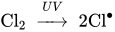
Radical reaction mechanisms use single-headed arrows to depict the movement of single electrons:

The homolytic cleavage of the breaking bond is drawn with a "fish-hook" arrow to distinguish from the usual movement of two electrons depicted by a standard curly arrow. The second electron of the breaking bond also moves to pair up with the attacking radical electron.
Radicals also take part in radical addition and radical substitution as reactive intermediates. Chain reactions involving radicals can usually be divided into three distinct processes. These are initiation, propagation, and termination.
- Initiation reactions are those that result in a net increase in the number of radicals. They may involve the formation of radicals from stable species as in Reaction 1 above or they may involve reactions of radicals with stable species to form more radicals.
- Propagation reactions are those reactions involving radicals in which the total number of radicals remains the same.
- Termination reactions are those reactions resulting in a net decrease in the number of radicals. Typically two radicals combine to form a more stable species, for example:
- 2 Cl• → Cl2
History and nomenclature

Until late in the 20th century the word "radical" was used in chemistry to indicate any connected group of atoms, such as a methyl group or a carboxyl, whether it was part of a larger molecule or a molecule on its own. A radical is often known as an R group. The qualifier "free" was then needed to specify the unbound case. Following recent nomenclature revisions, a part of a larger molecule is now called a functional group or substituent, and "radical" now implies "free". However, the old nomenclature may still appear in some books.
The term radical was already in use when the now obsolete radical theory was developed. Louis-Bernard Guyton de Morveau introduced the phrase "radical" in 1785 and the phrase was employed by Antoine Lavoisier in 1789 in his Traité Élémentaire de Chimie. A radical was then identified as the root base of certain acids (the Latin word "radix" meaning "root"). Historically, the term radical in radical theory was also used for bound parts of the molecule, especially when they remain unchanged in reactions. These are now called functional groups. For example, methyl alcohol was described as consisting of a methyl "radical" and a hydroxyl "radical". Neither are radicals in the modern chemical sense, as they are permanently bound to each other, and have no unpaired, reactive electrons; however, they can be observed as radicals in mass spectrometry when broken apart by irradiation with energetic electrons.
In a modern context the first organic (carbon–containing) radical identified was the triphenylmethyl radical, (C6H5)3C•. This species was discovered by Moses Gomberg in 1900. In 1933 Morris S. Kharasch and Frank Mayo proposed that free radicals were responsible for anti-Markovnikov addition of hydrogen bromide to allyl bromide.[32][33]
In most fields of chemistry, the historical definition of radicals contends that the molecules have nonzero electron spin. However, in fields including spectroscopy and astrochemistry, the definition is slightly different. Gerhard Herzberg, who won the Nobel prize for his research into the electron structure and geometry of radicals, suggested a looser definition of free radicals: "any transient (chemically unstable) species (atom, molecule, or ion)".[34] The main point of his suggestion is that there are many chemically unstable molecules that have zero spin, such as C2, C3, CH2 and so on. This definition is more convenient for discussions of transient chemical processes and astrochemistry; therefore researchers in these fields prefer to use this loose definition.[35]
See also
- Electron pair
- Globally Harmonized System of Classification and Labelling of Chemicals
- Hofmann–Löffler reaction
- Free radical research
References
- ↑IUPAC Gold Book radical (free radical)PDFArchived 2017-03-02 at the Wayback Machine
- ↑Hayyan, M.; Hashim, M.A.; Anjkut, I.M. (2016). "Superoxide Ion: Generation and Chemical Implications". Chem. Rev. 116 (5): 3029–85. doi:10.1021/acs.chemrev.5b00407. PMID 26875845.
- 123456Clayden, Jonathan; Greeves, Nick; Warren, Stuart G. (2012). Organic chemistry (2nd ed.). Oxford: Oxford University Press. ISBN 978-0-19-927029-3. OCLC 761379371.
- ↑"Diacyl Peroxides". polymerdatabase.com. Retrieved 2020-12-08.
- ↑Gridnev, Alexei A.; Ittel, Steven D. (2001). "Catalytic Chain Transfer in Free-Radical Polymerizations". Chemical Reviews. 101 (12): 3611–3660. doi:10.1021/cr9901236. PMID 11740917.
- ↑Monroe, Bruce M.; Weed, Gregory C. (1993). "Photoinitiators for free-radical-initiated photoimaging systems". Chemical Reviews. 93: 435–448. doi:10.1021/cr00017a019.
- ↑Su, Wei-Fang (2013), Su, Wei-Fang (ed.), "Radical Chain Polymerization", Principles of Polymer Design and Synthesis, Lecture Notes in Chemistry, vol. 82, Berlin, Heidelberg: Springer, pp. 137–183, doi:10.1007/978-3-642-38730-2_7, ISBN 978-3-642-38730-2
{{citation}}: CS1 maint: work parameter with ISBN (link) - ↑Oakley, Richard T. (1988). "Cyclic and Heterocyclic Thiazenes"(PDF). Progress in Inorganic Chemistry. Cyclic and Heterocyclic Thiazenes (section). Vol. 36. pp. 299–391. doi:10.1002/9780470166376.ch4. ISBN 978-0-470-16637-6. Archived from the original(PDF) on 2015-09-23. Retrieved 2011-03-31.
- ↑Rawson, J; Banister, A; Lavender, I (1995). The Chemistry of Dithiadiazolylium and Dithiadiazolyl Rings**Dedicated to Dr. Z. V. Hauptman, in appreciation of his important contribution to sulfur-nitrogen and carbon-sulfur-nitrogen chemistry. Advances in Heterocyclic Chemistry. Vol. 62. pp. 137–247. doi:10.1016/S0065-2725(08)60422-5. ISBN 978-0-12-020762-6.
- 123Griller, David; Ingold, Keith U. (1976). "Persistent carbon-centered radicals". Accounts of Chemical Research. 9: 13–19. doi:10.1021/ar50097a003.
- 12Hicks 2010, p. 231.
- ↑Power, Philip P. (2003) [19 July 2002]. "Persistent and stable radicals of the heavier main group elements and related species". Chemical Reviews. 103 (3). American Chemical Society: 789–810. doi:10.1021/cr020406p. PMID 12630853.
- ↑Carey, Francis A.; Sundberg, Richard J. (1984). Advanced Organic Chemistry. Vol. A: Structures and Mechanisms (2 ed.). New York: Plenum. ISBN 0-306-41087-7. LCCN 84-8229.
- ↑Carey & Sundberg 1984, pp. 649–650. As Smith (2023), March's Organic Chemistry (8th ed.) pp. 254, 256 notes, a contrary view is suggested in
- Gronert, S. (2006) in J. Org. Chem., vol. 71, pp. 7045–;
- ——— (2007) in Org. Lett., vol. 9, pp. 2211–; and
- Galli, C.; Guarnieri, A.; Koch, H.; Mencarelli, P.; and Rappoport, Z. (1997) J. Org. Chem., vol. 62, pp. 4072–.
- ↑Carey & Sundberg 1984, p. 651. Smith 2023, p. 256 writes: "There is some evidence in favor of the captodative effect, some of it from ESR studies. However, there is also experimental and theoretical evidence against it," with extensive citations on both sides.
- ↑Hicks, Robin G., ed. (2010). Stable Radicals. Wiley. pp. 317–318. ISBN 978-0-470-77083-2.
- ↑Hicks, Robin G. (30 Mar 2007) [23 Nov 2006]. "What's new in stable radical chemistry?". Organic & Biomolecular Chemistry. 5 (9). The Royal Society of Chemistry: 1324–1328, 1331–1335. doi:10.1039/b617142g. PMID 17464399.
- ↑However, paramagnetism does not necessarily imply radical character.
- ↑Linde, C.; Åkermark, B.; Norrby, P.-O.; Svensson, M. (1999). "Timing is Critical: Effect of Spin Changes on the Diastereoselectivity in Mn(Salen)-Catalyzed Epoxidation". Journal of the American Chemical Society. 121 (21): 5083–84. Bibcode:1999JAChS.121.5083L. doi:10.1021/ja9809915.
- ↑Broderick, J.B.; Duffus, B.R.; Duschene, K.S.; Shepard, E.M. (2014). "Radical S-Adenosylmethionine Enzymes". Chemical Reviews. 114 (8): 4229–317. doi:10.1021/cr4004709. PMC 4002137. PMID 24476342.
- ↑Pacher P, Beckman JS, Liaudet L (2007). "Nitric oxide and peroxynitrite in health and disease". Physiol. Rev. 87 (1): 315–424. doi:10.1152/physrev.00029.2006. PMC 2248324. PMID 17237348.
- ↑Njie-Mbye, Ya Fatou; Kulkarni-Chitnis, Madhura; Opere, Catherine A.; Barrett, Aaron; Ohia, Sunny E. (2013). "Lipid peroxidation: pathophysiological and pharmacological implications in the eye". Frontiers in Physiology. 4: 366. doi:10.3389/fphys.2013.00366. PMC 3863722. PMID 24379787.
- ↑Floyd, R.A. (1999). "Neuroinflammatory processes are important in neurodegenerative diseases: An hypothesis to explain the increased formation of reactive oxygen and nitrogen species as major factors involved in neurodegenerative disease development". Free Radical Biology and Medicine. 26 (9–10): 1346–55. doi:10.1016/s0891-5849(98)00293-7. PMID 10381209.
- ↑An overview of the role of radicals in biology and of the use of electron spin resonance in their detection may be found in Rhodes C.J. (2000). Toxicology of the Human Environment – the critical role of free radicals. London: Taylor and Francis. ISBN 978-0-7484-0916-7.
- ↑Rajamani Karthikeyan; Manivasagam T; Anantharaman P; Balasubramanian T; Somasundaram ST (2011). "Chemopreventive effect of Padina boergesenii extracts on ferric nitrilotriacetate (Fe-NTA)-induced oxidative damage in Wistar rats". J. Appl. Phycol. 23 (2): 257–63. Bibcode:2011JAPco..23..257K. doi:10.1007/s10811-010-9564-0. S2CID 27537163.
- ↑Mukherjee, P.K.; Marcheselli, V.L.; Serhan, C.N.; Bazan, N.G. (2004). "Neuroprotecin D1: A docosahexanoic acid-derived docosatriene protects human retinal pigment epithelial cells from oxidative stress". Proceedings of the National Academy of Sciences of the USA. 101 (22): 8491–96. Bibcode:2004PNAS..101.8491M. doi:10.1073/pnas.0402531101. PMC 420421. PMID 15152078.
- ↑Lyons, MA; Brown, AJ (1999). "7-Ketocholesterol". Int. J. Biochem. Cell Biol. 31 (3–4): 369–75. doi:10.1016/s1357-2725(98)00123-x. PMID 10224662.
- ↑Wu, Defeng; Cederbaum, Arthur I. (2003). "Alcohol, Oxidative Stress, and Free Radical Damage". Alcohol Research & Health: the Journal of the National Institute on Alcohol Abuse and Alcoholism. 27 (4): 277–84. PMID 15540798.
- ↑Serpone, N; Salinaro, A; Emeline, AV; Horikoshi, S; Hidaka, H; Zhao, JC (2002). "An in vitro systematic spectroscopic examination of the photostabilities of a random set of commercial sunscreen lotions and their chemical UVB/UVA active agents". Photochemical & Photobiological Sciences. 1 (12): 970–81. Bibcode:2002PhPhS...1..970S. doi:10.1039/b206338g. PMID 12661594. S2CID 27248506.
- ↑Njie-Mbye, Ya Fatou; Kulkarni-Chitnis, Madhura; Opere, Catherine A.; Barrett, Aaron; Ohia, Sunny E. (2013). "Lipid peroxidation: pathophysiological and pharmacological implications in the eye". Frontiers in Physiology. 4: 366. doi:10.3389/fphys.2013.00366. PMC 3863722. PMID 24379787.
- ↑Desvals, Arthur; Fortino, Mariagrazia; Lefebvre, Corentin; Rogier, Johann; Michelin, Clément; Alioui, Samy; Rousset, Elodie; Pedone, Alfonso; Lemercier, Gilles; Hoffmann, Norbert (2022-05-16). "Synthesis and characterization of polymethine dyes carrying thiobarbituric and carboxylic acid moieties"(PDF). New Journal of Chemistry. 46 (19): 8971–8980. doi:10.1039/D2NJ00684G. ISSN 1369-9261. S2CID 248165785.
- ↑Kharasch, M. S. (1933). "The Peroxide Effect in the Addition of Reagents to Unsaturated Compounds. I. The Addition of Hydrogen Bromide to Allyl Bromide". Journal of the American Chemical Society. 55 (6): 2468–2496. Bibcode:1933JAChS..55.2468K. doi:10.1021/ja01333a041.
- ↑Yan, M; Lo, JC; Edwards, JT; Baran, PS (2016). "Radicals: Reactive Intermediates with Translational Potential". J Am Chem Soc. 138 (39): 12692–12714. Bibcode:2016JAChS.13812692Y. doi:10.1021/jacs.6b08856. PMC 5054485. PMID 27631602.
- ↑G. Herzberg (1971), "The spectra and structures of simple free radicals", ISBN 0-486-65821-X.
- ↑28th International Symposium on Free RadicalsArchived 2007-07-16 at the Wayback Machine.
- Free radicals
- Biological processes
- Biomolecules
- Chemical bonding
- Environmental chemistry
- Senescence