 Hispanopedia Wiki
La economía de la República Popular China es una economía de mercado socialista mixta en desarrollo , que incorpora políticas industriales y planes estratégicos quinquenales . [27] China es la segunda economía más grande del mundo por PIB nominal , detrás de Estados Unidos, y desde 2017 ha sido la economía más grande del mundo cuando se mide por paridad de poder adquisitivo (PPA). [28] [nota 2] China representó el 19% de la economía mundial en 2022 en términos de PPA, [29] y alrededor del 18% en términos nominales en 2022. [29] [30] La economía se compone de empresas estatales (SOE) y empresas de propiedad mixta, así como un gran sector privado nacional que aporta aproximadamente el 60% del PIB, el 80% del empleo urbano y el 90% de los nuevos puestos de trabajo, el sistema también consta de un alto grado de apertura a las empresas extranjeras. Según los datos anuales de los principales indicadores económicos publicados por la Oficina Nacional de Estadísticas desde 1952, el PIB de China creció un promedio del 6,17% anual en los 26 años transcurridos entre 1953 y 1978. China implementó la reforma económica en 1978, y de 1979 a 2023, la tasa de crecimiento del PIB del país creció un promedio del 8,93% anual en los 45 años transcurridos desde su implementación de la reforma económica. Según los datos preliminares publicados por las autoridades, el PIB de China en 2023 fue de 126,06 billones de yenes chinos (17,89 billones de dólares estadounidenses [31] ), con un aumento real del 5,2% con respecto al año anterior. [32] [33]
China es la mayor economía manufacturera y exportadora de bienes del mundo . [34] Sin embargo, las exportaciones como porcentaje del PIB han caído constantemente a solo alrededor del 20%, lo que refleja su importancia decreciente para la economía china. No obstante, sigue siendo la nación comercial más grande del mundo y desempeña un papel destacado en el comercio internacional . [35] [36] La manufactura ha estado haciendo una transición hacia industrias de alta tecnología como vehículos eléctricos , energía renovable , telecomunicaciones y equipos de TI , y los servicios también han crecido como porcentaje del PIB. También es el mercado de consumo de más rápido crecimiento del mundo y el segundo mayor importador de bienes . [37] China también es el mayor consumidor mundial de numerosos productos básicos y representa aproximadamente la mitad del consumo mundial de metales. [38] China es un importador neto de productos de servicios. [39] China fue el mayor receptor de inversión extranjera directa (IED) en el mundo en 2020, recibiendo entradas de $ 163 mil millones. [40] pero más recientemente, la IED entrante ha caído drásticamente a niveles negativos. [41] [42] Tiene la segunda IED saliente más grande , con US$136,91 mil millones en 2019. [43]
China tiene las mayores reservas de divisas del mundo , por un valor de 3,1 billones de dólares, [44] pero si se incluyen los activos extranjeros de los bancos comerciales estatales de China, el valor de las reservas de China aumenta a casi 4 billones de dólares. [45] China enfrentó una leve desaceleración económica durante la crisis financiera de 2007-2008 e inició un paquete de estímulo masivo , que ayudó a recuperar su crecimiento económico. Más recientemente, la imposición de las "3 líneas rojas" a los préstamos de los desarrolladores ha provocado una crisis inmobiliaria y ha planteado dudas sobre la exactitud de las afirmaciones de China sobre la gravedad de esta crisis. [46] [47] [48] El crecimiento económico de China se está desacelerando en la década de 2020, ya que enfrenta una serie de desafíos que van desde una población que envejece rápidamente , un mayor desempleo y una crisis inmobiliaria . [49] China tiene la sexta reserva de oro más grande del mundo , con más de 2000 toneladas de oro. [50] Gasta alrededor del 2,43% del PIB en investigación y desarrollo avanzados en varios sectores de la economía. [51] [52]
Con 791 millones de trabajadores, la fuerza laboral china fue la más grande del mundo en 2021, según The World Factbook . En 2022, China ocupó el puesto 11 como el país más innovador del mundo, el tercero en la región de Asia y Oceanía y el segundo entre los países con una población de más de 100 millones. Es la única economía de ingresos medios y la única economía recientemente industrializada entre las 30 principales. [53] [54] También lidera en varias medidas de solicitudes de patentes globales , [55] [56] así como en investigación y producción científica. [57] También es el mayor exportador de alta tecnología del mundo. [58] China tiene los segundos activos financieros más grandes del mundo , valorados en 17,9 billones de dólares en 2021. [59] En 2022 [update], China ocupaba el segundo lugar en el mundo en número total de multimillonarios . [60] y el segundo en millonarios con 6,2 millones. China tiene la clase media más grande del mundo, con más de 500 millones de personas que ganan más de 120.000 RMB al año. [61]
China tiene acuerdos bilaterales de libre comercio con muchas naciones y es miembro de la Asociación Económica Integral Regional (RCEP). [62] China es ampliamente considerada como la "potencia de la fabricación" o "la fábrica del mundo". [63] De las 500 empresas más grandes del mundo , 142 tienen su sede en China. [64] Tiene cuatro de los diez centros financieros más competitivos del mundo [65] y tres de las diez bolsas de valores más grandes del mundo (tanto por capitalización de mercado como por volumen comercial ). [66] El gasto social público en China fue de alrededor del 10% del PIB. [67] Además, el gasto en pensiones públicas en China representó el 5,2% del PIB. [68]
Historia

Históricamente, China fue una de las principales potencias económicas del mundo durante la mayor parte de los dos milenios que van desde el siglo I hasta el siglo XIX . [69] [70] [71] [72] [73] China representó alrededor de un cuarto a un tercio del PIB mundial hasta mediados del siglo XIX. La participación de China en el PIB mundial era de un tercio en 1820, cuando la Revolución Industrial estaba comenzando en Gran Bretaña. [74] [75] [76] [77] El PIB de China en 1820 era seis veces mayor que el de Gran Bretaña, la economía más grande de Europa, y casi veinte veces el PIB de los nacientes Estados Unidos. [78]
Al final de la Guerra Civil China , la economía quedó devastada. [79] Cuando los nacionalistas derrotados huyeron a Taiwán, despojaron a China de activos líquidos, incluidos oro, plata y las reservas de dólares del país . [79] Cuando el KMT fue derrotado, el comercio había sido destruido, la moneda nacional perdió valor y la economía se basó en el trueque. [79]
El desarrollo de la República Popular China desde uno de los países más pobres a una de las economías más grandes fue el más rápido de cualquier país. [80] : 11 Desde 1949 hasta la reforma económica china en 1978, la economía fue dirigida por el Estado y la actividad del mercado permaneció clandestina. [81] Las reformas económicas comenzaron bajo Deng Xiaoping . [81] Posteriormente, China se convirtió en la economía principal de más rápido crecimiento del mundo , con tasas de crecimiento promedio del 10% durante 30 años. [82] [83] Muchos académicos consideran el modelo económico chino como un ejemplo de capitalismo autoritario , [84] [85] capitalismo de estado [86] o capitalismo de partido-estado . [87] [88]
China sacó a más personas de la pobreza extrema que cualquier otro país en la historia [89] [90] —entre 1978 y 2018, China redujo la pobreza extrema en 800 millones. [91] Entre 1981 y 2019, el porcentaje de la población que vive en la pobreza extrema disminuyó del 88,1% al 0,2%. [92] Su superávit en cuenta corriente se multiplicó por 53 entre 1982 y 2021, de 5.670 millones de dólares a 317.000 millones de dólares . [93] Durante este tiempo, China también se convirtió en una potencia industrial, pasando de los éxitos iniciales en sectores de bajos salarios como la ropa y el calzado a la producción cada vez más sofisticada de computadoras , productos farmacéuticos y automóviles . Las fábricas de China generaron 3,7 billones de dólares de valor agregado manufacturero real, más que Estados Unidos, Corea del Sur, Alemania y el Reino Unido juntos. El sector manufacturero de China se beneficia de uno de los mercados internos más grandes del mundo, una inmensa escala de fabricación y cadenas de suministro manufactureras altamente desarrolladas. [94] También tiene dos ( Shenzhen-Hong Kong-Guangzhou y Beijing en el segundo y tercer lugar respectivamente) de los cinco principales clústeres de ciencia y tecnología del mundo, lo que es más que cualquier otro país. [53] [95]
China ha mantenido un crecimiento sostenido gracias a sus relaciones exportadoras, su sector manufacturero y sus trabajadores con salarios bajos. [96] China fue la única economía importante del mundo que experimentó un crecimiento del PIB en 2020, cuando su PIB aumentó un 2,3%. [97] Sin embargo, en 2022 registró uno de sus peores resultados económicos en décadas debido al COVID-19. [98] En 2023, el FMI predijo que China seguiría siendo una de las principales economías de más rápido crecimiento. [99] La economía de China contribuye al aumento de las emisiones mundiales de gases de efecto invernadero (GEI) que provocan el cambio climático y se ve gravemente afectada por sus efectos adversos , aunque sus emisiones per cápita siguen siendo mucho menores que las de las economías desarrolladas como Estados Unidos. [100]
Economías regionales

El desigual sistema de transporte de China , combinado con importantes diferencias en la disponibilidad de recursos naturales y humanos y en la infraestructura industrial , ha producido variaciones significativas en las economías regionales de China. [101] El desarrollo económico de Shenzhen ha hecho que se haga referencia a la ciudad como el próximo Silicon Valley del mundo . [102] [103]
El desarrollo económico ha sido generalmente más rápido en las provincias costeras que en el interior y existen grandes disparidades en el ingreso per cápita entre las regiones. Las tres regiones más ricas son el delta del Yangtze en el este de China; el delta del río de la Perla en el sur de China; y la región de Jing-Jin-Ji en el norte de China. Es el rápido desarrollo de estas áreas lo que se espera que tenga el efecto más significativo en la economía regional asiática en su conjunto y la política del gobierno chino está diseñada para eliminar los obstáculos al crecimiento acelerado en estas regiones más ricas. Para 2035, se proyecta que las cuatro ciudades de China ( Shanghai , Beijing, Guangzhou y Shenzhen) estarán entre las diez ciudades más grandes del mundo por PIB nominal según un informe de Oxford Economics. [104]
PIB por división administrativa
Hong Kong y Macao
De acuerdo con la política de un país, dos sistemas , las economías de la ex colonia británica de Hong Kong y la colonia portuguesa de Macao preservan formalmente un sistema capitalista separado de China continental. [105] [106]
Desarrollo regional
Estas estrategias están dirigidas a las regiones relativamente más pobres de China en un intento de evitar el aumento de las desigualdades:
- Desarrollo Occidental de China , diseñado para aumentar la situación económica de las provincias occidentales a través de la inversión y el desarrollo de los recursos naturales.
- Revitalizar el noreste de China , para rejuvenecer las bases industriales en el noreste de China . Abarca las tres provincias de Heilongjiang , Jilin y Liaoning , así como las cinco prefecturas orientales de Mongolia Interior .
- Plan de ascenso de China central , cuyo objetivo es acelerar el desarrollo de sus regiones centrales. Abarca seis provincias: Shanxi , Henan , Anhui , Hubei , Hunan y Jiangxi .
- Tercer Frente , centrado en las provincias del suroeste
Gobierno

El Partido Comunista Chino (PCCh) se refiere oficialmente al sistema económico de China como la economía de mercado socialista . Para guiar el desarrollo económico, el gobierno central chino adopta planes quinquenales que detallan sus prioridades económicas y políticas esenciales. El decimocuarto plan quinquenal (2021-2025) se está implementando actualmente, haciendo hincapié en el crecimiento impulsado por el consumo y la autosuficiencia tecnológica mientras China pasa de ser una economía de ingresos medios altos a una economía de ingresos altos. [108]
El sector público desempeña un papel central en la economía de China. [109] Este desarrollo también está en línea con los objetivos de planificación del gobierno central chino para lograr los Dos Centenarios , a saber, el objetivo material de que China se convierta en una sociedad moderadamente próspera en todos los aspectos para 2021 y el objetivo de modernización de que China se convierta en un "país socialista fuerte, democrático, civilizado, armonioso y moderno" para 2049, el centenario de la fundación de la República Popular. [110] China conserva el control estatal sobre las alturas de mando de la economía en industrias clave como la infraestructura, las telecomunicaciones y las finanzas a pesar de la significativa mercantilización de la economía desde la reforma y la apertura . [111] : 20 Los mecanismos específicos que implementan el control gubernamental de las alturas de mando de la economía incluyen los derechos de propiedad pública, la participación administrativa generalizada y la supervisión del PCCh de los altos directivos. [111] : 20
Es más probable que el Estado intervenga en áreas donde los precios de los bienes y servicios son social y políticamente sensibles. [112] : 105 Por ejemplo, el gobierno de China interviene más activamente en el sector bancario comercial que en el de capital privado, donde participan significativamente menos hogares. [112] : 100 La participación del Estado en la asignación de finanzas, contratos y recursos facilita los esfuerzos del gobierno chino por minimizar los efectos de la volatilidad del mercado. [113] : 3
,_2018.jpg/1280px-Worlds_regions_by_total_wealth(in_trillions_USD),_2018.jpg)

Empresas estatales
Las empresas estatales chinas desempeñan importantes funciones que benefician al Estado. [114] La académica Wendy Leutert escribe: "Contribuyen a los ingresos de los gobiernos central y local a través de dividendos e impuestos, apoyan el empleo urbano, mantienen bajos los precios de los insumos clave, canalizan el capital hacia industrias y tecnologías específicas, apoyan la redistribución subnacional hacia las provincias más pobres del interior y del oeste, y ayudan a la respuesta del Estado a los desastres naturales, las crisis financieras y la inestabilidad social". [114]
Casi 867.000 empresas en China tienen algún grado de propiedad estatal, según Franklin Allen del Imperial College de Londres . [115] A partir de 2017, China tiene más empresas estatales que cualquier otro país, y la mayor cantidad de empresas estatales entre las grandes empresas nacionales. [114] Las empresas estatales representaron más del 60% de la capitalización de mercado de China en 2019 [116] y generaron el 40% del PIB de China de US$15,98 billones de dólares (101,36 billones de yuanes) en 2020, y las empresas privadas nacionales y extranjeras y la inversión representaron el 60% restante. [117] [118] A finales de 2019, los activos totales de todas las empresas estatales de China, incluidas las que operan en el sector financiero, alcanzaron los US$58,97 billones en 2015. [119] Noventa y una (91) de estas empresas estatales pertenecen a las empresas Fortune Global 500 de 2020. [120] A partir de 2023 [update], las empresas privadas solo representan el 37% de las 100 principales empresas que cotizan en bolsa del país, según el Instituto Peterson de Economía Internacional . [115]
Disputas sobre datos económicos
Existen disputas sobre la fiabilidad de los datos económicos oficiales. Fuentes extranjeras y algunas chinas han afirmado que las estadísticas oficiales del gobierno chino exageran el crecimiento económico de China. [121] Sin embargo, varios académicos e instituciones occidentales han afirmado que el crecimiento económico de China es mayor que el indicado por las cifras oficiales. [122] Otros, como la Economist Intelligence Unit , afirman que si bien hay evidencia de que los datos del PIB de China están "suavizados", creen que los datos del PIB nominal y real de China son ampliamente precisos. [123] Otros, afirman que el crecimiento del PIB informado es irreconciliable con los datos que salen de China. [124] En 2024, el Departamento de Agricultura de los Estados Unidos dejó de confiar en los datos oficiales del gobierno chino por preocupaciones de confiabilidad. [125] Según documentos de 2007 obtenidos por WikiLeaks, el secretario del Partido de Liaoning y futuro primer ministro, Li Keqiang, dijo que no tiene mucha confianza en las estimaciones del PIB del país, calificándolas de "artificiales" y poco fiables, y que los datos publicados, especialmente las cifras del PIB, deberían utilizarse "sólo como referencia". [126] En su lugar, desarrolló el índice Li Keqiang , una medida alternativa del desempeño económico chino que utiliza tres variables que él prefería. [127]
Desde hace mucho tiempo se ha sospechado que las provincias y ciudades chinas falsean sus cifras, especialmente los funcionarios de los gobiernos locales, cuyo desempeño suele evaluarse en función del desempeño de sus respectivas economías. [128] Los gobiernos locales han sido objeto de un mayor escrutinio en los últimos años debido a los datos económicos, y el secretario general del PCCh, Xi Jinping, afirmó que la falsificación de datos económicos "no solo perjudica nuestro juicio sobre la situación económica, sino que también socava gravemente las ideas del Partido Comunista y su estilo de búsqueda de la verdad". [121] [129]
Según un artículo de investigación de 2019 publicado por la Brookings Institution que ajusta la serie temporal histórica del PIB utilizando datos del impuesto al valor agregado , que según los autores son "altamente resistentes al fraude y la manipulación", [130] [131] el crecimiento económico de China puede haber sido exagerado en un 1,7 por ciento cada año entre 2008 y 2016, lo que significa que el gobierno puede haber estado exagerando el tamaño de la economía china en un 12-16 por ciento en 2016. [131] [132]
Varios académicos e instituciones occidentales han apoyado la afirmación de que es probable que la economía de China esté subestimada. [133] [134] [135] [122] [136] [137] [138] Un artículo de la Oficina Nacional de Investigación Económica con sede en EE. UU . afirmó que el crecimiento económico de China puede ser mayor que lo que informan las estadísticas oficiales. [139] Un artículo de Hunter Clarka, Maxim Pinkovskiya y Xavier Sala-i-Martin publicado por Elsevier Science Direct en 2018 emplea un método innovador de luces nocturnas grabadas por satélite, que los autores afirman que es el mejor predictor imparcial del crecimiento económico en las ciudades chinas. Los resultados sugieren que la tasa de crecimiento económico china es más alta que los datos oficiales informados. [133]
Algunos analistas utilizan mediciones satelitales de contaminación lumínica para modelar el crecimiento económico chino y sugieren que las cifras de la tasa de crecimiento en los datos oficiales chinos son más confiables, aunque es probable que estén suavizadas. [140] Según un artículo del Banco de la Reserva Federal de St. Louis , las estadísticas oficiales de China son de alta calidad en comparación con otros países en desarrollo, de ingresos medios y bajos. En 2016, China estaba en el percentil 83 de los países de ingresos medios y bajos, frente al percentil 38 en 2004. [141] Un estudio del Banco de la Reserva Federal de San Francisco encontró que las estadísticas oficiales del PIB de China están "significativamente y positivamente correlacionadas" con medidas verificables externamente de la actividad económica, como los datos de importación y exportación de los socios comerciales de China, lo que sugiere que el crecimiento económico de China no fue más lento de lo que indicaban las cifras oficiales. [122]
El estudio de Daniel H. Rosen y Beibei Bao, publicado por el Centro de Estudios Estratégicos e Internacionales en 2015, mostró que el PIB en 2008 fue en realidad entre un 13 y un 16 por ciento mayor que los datos oficiales, mientras que el PIB de 2013 fue exactamente de 10,5 billones de dólares en lugar de la cifra oficial de 9,5 billones de dólares. [136] Según una investigación realizada por Arvind Subramanian , ex economista del Fondo Monetario Internacional (FMI) y miembro senior del Instituto Peterson de Economía Internacional , el tamaño de la economía china por paridad de poder adquisitivo en 2010 fue de aproximadamente 14,8 billones de dólares en lugar de una estimación oficial de 10,1 billones de dólares del FMI, lo que significa que el PIB de China fue subestimado en un 47 por ciento. [135]
Deuda nacional
En 2022, la deuda gubernamental total de China se situó en aproximadamente CN¥ 94 billones ( US$ 14 billones), equivalente a alrededor del 77,1% del PIB . [142] En 2014, muchos analistas expresaron su preocupación por el tamaño general de la deuda gubernamental de China. [143] [144] [145] [146] A fines de 2014, el Fondo Monetario Internacional informó que la relación deuda pública bruta/PIB de China era del 41,44 por ciento. [147] [148] En 2015, un informe del Fondo Monetario Internacional concluyó que la deuda pública de China es relativamente baja "y está en una trayectoria estable en todas las pruebas de estrés estándar excepto en el escenario con shocks de pasivos contingentes", como "una recapitalización bancaria a gran escala o un rescate del sistema financiero para hacer frente, por ejemplo, a un posible aumento de los NPL debido al desapalancamiento". [149]
Las autoridades chinas han desestimado las preocupaciones de los analistas, insistiendo en que "el país aún tiene margen para aumentar la deuda gubernamental". [150] El ex presidente de la Reserva Federal , Ben Bernanke , a principios de 2016, comentó que "la ... pila de deuda que enfrenta China [es] un problema 'interno', dado que la mayoría de los préstamos se emitieron en moneda local. [151] Una encuesta de 2019 de la OCDE encontró que la deuda corporativa de China es más alta que la de otros países importantes. [152]
En China ha aumentado la " banca en la sombra ", lo que plantea riesgos para el sistema financiero. [153] [154] La deuda no registrada es una zona gris, pero se estima que la suma solo para los gobiernos locales asciende a 9 billones de dólares [155] o 63 billones de yuanes, frente a las estimaciones de alrededor de 30 billones de yuanes en 2020. [156]
Entorno regulatorio e ingresos gubernamentales
Aunque la economía china se ha expandido rápidamente, su marco regulatorio no ha seguido el mismo ritmo. Desde las reformas de libre mercado de Deng Xiaoping, el crecimiento de nuevas empresas ha superado la capacidad del gobierno para regularlas. Esto ha creado una situación en la que las empresas, ante la creciente competencia y la escasa supervisión, toman medidas drásticas para aumentar los márgenes de ganancia , a menudo a expensas de la seguridad del consumidor . Esta cuestión se volvió más evidente en 2007, cuando Estados Unidos impuso una serie de restricciones a las exportaciones chinas problemáticas. [157]
Derecho antimonopolio y de la competencia
El sector tecnológico chino se ha caracterizado por estar dominado por unas pocas entidades más grandes, entre ellas Ant Group y Tencent. [158] La administración de Xi Jinping ha intentado hacer cumplir las normas de competencia económica , y los reguladores económicos chinos han iniciado investigaciones sobre Alibaba y Tencent. [159]
La ofensiva contra los gigantes tecnológicos y las empresas de Internet durante la ola de reformas de la administración de Xi Jinping de 2020-2021 fue seguida por llamados del Politburó contra las prácticas monopolísticas de gigantes comerciales minoristas como Alibaba . [160]
En marzo de 2021, Xi declaró que China fortalecería su aplicación de las leyes antimonopolio en un esfuerzo por promover lo que describió como el desarrollo saludable y sostenible de la economía de plataformas. [161] : 100 Se produjeron dos cambios institucionales importantes. [161] : 100 En noviembre de 2021, China actualizó el estatus burocrático de la oficina antimonopolio de la Administración Estatal de Regulación del Mercado . [161] : 100–101 En junio de 2022, realizó importantes modificaciones a la Ley Antimonopolio , incluido un lenguaje explícito centrado en la regulación de la economía de plataformas. [161] : 101
Datos
En el siguiente cuadro se muestran los principales indicadores económicos en el período 1980-2022 (con estimaciones del personal técnico del FMI para 2023-2028). La inflación por debajo del 5% se muestra en verde. [142]
Inflación

La carne de cerdo es una parte importante de la economía china, con un consumo per cápita de 90 gramos por día. El aumento mundial del precio de los alimentos para animales asociado con el aumento de la producción de etanol a partir del maíz resultó en fuertes aumentos de los precios de la carne de cerdo en China en 2007. El aumento del costo de producción interactuó negativamente con el aumento de la demanda resultante del rápido aumento de los salarios. El estado respondió subvencionando los precios de la carne de cerdo para los estudiantes y los pobres urbanos y pidió un aumento de la producción. Se consideró la liberación de carne de cerdo de la reserva estratégica de carne de cerdo del país. [162]
Ciclos de inversión
.jpg/1280px-Beijing_Financial_Street_(overlook).jpg)
La inversión china siempre ha sido muy cíclica. [163]
En China, la mayor parte de las inversiones las realizan entidades que son al menos parcialmente propiedad del Estado y la mayoría de ellas están bajo el control de los gobiernos locales. Por lo tanto, los auges son principalmente el resultado de incentivos perversos a nivel de los gobiernos locales. [164] A diferencia de los empresarios en una economía de libre empresa, los funcionarios locales chinos están motivados principalmente por consideraciones políticas. Como sus evaluaciones de desempeño se basan, en gran medida, en el crecimiento del PIB dentro de sus jurisdicciones, tienen un fuerte incentivo para promover proyectos de inversión a gran escala. [165] [166]
Un ciclo típico comienza con una relajación de la política crediticia e industrial del gobierno central, lo que permite a los gobiernos locales impulsar agresivamente la inversión, tanto a través de entidades del sector estatal que controlan directamente como ofreciendo incentivos de promoción de la inversión a inversores privados y empresas fuera de sus jurisdicciones. [167] El auge resultante ejerce una presión al alza sobre los precios y también puede dar lugar a una escasez de insumos clave como el carbón y la electricidad (como ocurrió en 2003). [168] Una vez que la inflación ha aumentado a un nivel en el que comienza a amenazar la estabilidad social, el gobierno central intervendrá reforzando la aplicación de la política industrial y crediticia. Los proyectos que se llevaron a cabo sin las aprobaciones requeridas se detendrán. Los préstamos bancarios a determinados tipos de inversores se restringirán. El crédito se vuelve entonces restrictivo y el crecimiento de la inversión comienza a disminuir. [169]
Sistema financiero y bancario

China tiene los activos bancarios totales más grandes del mundo, de alrededor de $ 45,838 billones (309,41 billones de CNY) con $ 42,063 billones en depósitos totales y otros pasivos. [170] La mayoría de las instituciones financieras de China son de propiedad estatal y están gobernadas por el estado. [171] Los principales instrumentos de control financiero y fiscal son el Banco Popular de China (PBC) y el Ministerio de Finanzas , ambos bajo la autoridad del Consejo de Estado . El Banco Popular de China reemplazó al Banco Central de China en 1950 y gradualmente se hizo cargo de los bancos privados . Cumple muchas de las funciones de otros bancos centrales y comerciales . Emite la moneda, controla la circulación y juega un papel importante en el desembolso de los gastos presupuestarios. Además, administra las cuentas, los pagos y los recibos de las organizaciones gubernamentales y otros organismos, lo que le permite ejercer una supervisión exhaustiva sobre sus resultados financieros y generales en consideración de los planes económicos del gobierno. El PBC también es responsable del comercio internacional y otras transacciones en el extranjero . Las remesas de los chinos en el extranjero son administradas por el Banco de China (BOC), que tiene varias sucursales en varios países. [ cita requerida ]
Otras instituciones financieras cruciales incluyen el Banco de Desarrollo de China (CDB), que financia el desarrollo económico y dirige la inversión extranjera ; el Banco Agrícola de China (ABC), que provee para el sector agrícola; el Banco de Construcción de China (CCB), que es responsable de capitalizar una parte de la inversión general y de proporcionar fondos de capital para ciertas empresas industriales y de construcción; y el Banco Industrial y Comercial de China (ICBC), que realiza transacciones comerciales ordinarias y actúa como un banco de ahorros para el público. [ cita requerida ] China inició la fundación del Banco Asiático de Inversión en Infraestructura en 2015 y el Fondo de la Ruta de la Seda en 2014, un fondo de inversión del gobierno chino para fomentar una mayor inversión y brindar apoyo financiero en los países a lo largo de la Franja y la Ruta . [ 172 ]

Las reformas económicas de China aumentaron enormemente el papel económico del sistema bancario . En teoría, cualquier empresa o individuo puede acudir a los bancos para obtener préstamos fuera del plan estatal, en la práctica, el 75% de los préstamos bancarios estatales van a las Empresas de Propiedad Estatal (SOE). [173] Aunque casi todo el capital de inversión se proporcionaba anteriormente en forma de subvención de acuerdo con el plan estatal, desde el comienzo de la reforma la política ha cambiado a una base de préstamo a través de las diversas instituciones financieras dirigidas por el estado. Se estima que, a partir de 2011, 14 billones de yuanes en préstamos estaban pendientes a los gobiernos locales. Los observadores externos creen que gran parte de ese total es moroso. [174] Cada vez se ponen a disposición cantidades cada vez mayores de fondos a través de los bancos para fines económicos y comerciales. Las fuentes extranjeras de capital también han aumentado. China ha recibido préstamos del Banco Mundial y varios programas de las Naciones Unidas , así como de países (particularmente Japón ) y, en menor medida, bancos comerciales. Hong Kong ha sido un importante conducto de esta inversión, así como una fuente en sí mismo. El 23 de febrero de 2012, el PBC mostró su inclinación a liberalizar sus mercados de capital al hacer circular un revelador calendario de diez años. [175] Siguiendo los pasos de este desarrollo, los bancos de Shenzhen pudieron lanzar remesas transfronterizas en yuanes para individuos, un cambio significativo en las restricciones de control de capital del PBC ya que anteriormente se había prohibido a los ciudadanos chinos transferir sus yuanes a cuentas en el extranjero. [176]
China tiene cuatro de los diez centros financieros más competitivos del mundo ( Shanghái , Hong Kong , Pekín y Shenzhen ), más que cualquier otro país. [65] China tiene tres de las diez bolsas de valores más grandes del mundo ( Shanghái , Hong Kong y Shenzhen ), tanto por capitalización de mercado como por volumen comercial . [66] [177] Al 12 de octubre de 2020, la capitalización de mercado total de los mercados de valores de China continental, que consisten en la Bolsa de Valores de Shanghái y la Bolsa de Valores de Shenzhen, superó los 10 billones de dólares estadounidenses, excluida la Bolsa de Valores de Hong Kong, con aproximadamente 5,9 billones de dólares estadounidenses. [178]
A finales de junio de 2020, los inversores extranjeros habían comprado un total de 440.000 millones de dólares en acciones chinas, lo que representa alrededor del 2,9% del valor total, e indica que los inversores extranjeros adquirieron un total de 156.600 millones de dólares en acciones solo en la primera mitad de 2020. [179] El valor total del mercado de bonos de China superó los 15,4 billones de dólares , por encima del de Japón y el Reino Unido, y solo superado por el de Estados Unidos con 40 billones de dólares , a principios de septiembre de 2020. [180] A finales de septiembre de 2020, las tenencias extranjeras de bonos chinos alcanzaron los 388.000 millones de dólares , o el 2,5%, del valor total, a pesar de un aumento del 44,66% interanual. [181]
Mercados de valores

Al menos a partir de 2024, China tendrá el segundo mercado de acciones y mercados de futuros más grande del mundo, así como el tercer mercado de bonos más grande. [182] : 153
Las bolsas de valores de China incluyen la Bolsa de Valores de Pekín , la Bolsa de Valores de Shanghái (incluido el Mercado STAR ), la Bolsa de Valores de Shenzhen y la Bolsa de Valores de Hong Kong. El mercado de valores de China está relativamente subdesarrollado en comparación con otros aspectos de su economía. [183] : 148–150
Para cotizar en la Bolsa de Valores de China, las empresas deben demostrar una buena situación financiera (incluida una rentabilidad sostenida), una gobernanza corporativa sólida (por ejemplo, con un directorio de directores independientes, un consejo de supervisión, auditoría y ningún historial de información errónea o fraude) y tener una capitalización de mercado equivalente a al menos US$4 millones. [97] : 271–272
El gobierno regula las ofertas públicas iniciales , alentándolas cuando el mercado está alto en un esfuerzo por enfriar los precios y prohibiéndolas cuando el mercado está bajo. [112] : 109
Cuando los mercados de valores reabrieron en el período de la República Popular China en 1990, la mayoría de las empresas que cotizaban en bolsa eran empresas estatales; esto era parte de un experimento para someter a las empresas estatales a la disciplina del mercado. [183] : 152–153 Las bolsas de valores de Shanghai y Shenzhen estaban bajo control municipal y se denominaban "puntos experimentales" hasta 1997. [111] : 102–103 En 1997, el gobierno central puso las bolsas bajo el control del gobierno central y afirmó que las bolsas tenían un papel legítimo en la economía de mercado socialista. [111] : 102
En 2015, una caída del mercado bursátil en China eliminó 2 billones de dólares del valor del mercado bursátil mundial. [183] : 147
Sistema monetario

El renminbi ("moneda del pueblo") es la moneda de China, denominada yuan , subdividida en 10 jiao o 100 fen . El renminbi es emitido por el Banco Popular de China, la autoridad monetaria de China. La abreviatura ISO 4217 es CNY, aunque también se abrevia comúnmente como "RMB". A partir de 2005, los observadores externos generalmente consideraban que el yuan estaba infravalorado en aproximadamente un 30-40%. [184] [185] Sin embargo, en 2017, el FMI declaró que el yuan estaba correctamente valuado. [186]
El renminbi se mantiene en un sistema de tipo de cambio flotante administrado principalmente frente al dólar estadounidense . El 21 de julio de 2005, China revaluó su moneda en un 2,1% frente al dólar estadounidense y, desde entonces, ha adoptado un sistema de tipo de cambio que hace referencia a una canasta de monedas y ha permitido que el renminbi fluctúe a una tasa diaria de hasta medio punto porcentual. [ cita requerida ]
Existe una relación compleja entre la balanza comercial de China , la inflación, medida por el índice de precios al consumidor , y el valor de su moneda. A pesar de permitir que el valor del yuan "flote", el banco central de China tiene una capacidad decisiva para controlar su valor en relación con otras monedas. La inflación en 2007, que refleja el marcado aumento de los precios de la carne y el combustible, probablemente esté relacionada con el aumento mundial de los productos básicos utilizados como alimento para animales o como combustible. Por lo tanto, los rápidos aumentos en el valor del yuan permitidos en diciembre de 2007 posiblemente estén relacionados con los esfuerzos por mitigar la inflación permitiendo que el renminbi valga más. [187] Un artículo publicado en International Review of Economics & Finance en 2010 por Mete Feridun (University of Greenwich Business School) y sus colegas proporciona evidencia empírica de que el desarrollo financiero fomenta el crecimiento económico en China. [188]
Durante la semana del 10 de agosto de 2015, en el contexto de una desaceleración de la economía china y la apreciación del dólar estadounidense, el Banco Popular de China devaluó el renminbi en aproximadamente un 5%. [189] La devaluación se logró vinculando el tipo de cambio oficial a los tipos de cierre del mercado. Un tipo de cambio "representativo" basado en el mercado frente al dólar estadounidense es uno de los requisitos para la designación de una moneda como una con Derechos Especiales de Giro (DEG) por parte del Fondo Monetario Internacional (FMI), uno de los objetivos de China. [190] Desde finales de la década de 2000, China ha buscado internacionalizar el renminbi . [191] A partir de 2013, el RMB es la octava moneda más comercializada en el mundo. [192] En noviembre de 2015, antes de las reuniones del G-20 y el FMI, la directora del FMI, Christine Lagarde, anunció su apoyo a la adición del yuan a la canasta de monedas de los DEG. El anuncio dio "luz verde" a la aprobación oficial en la reunión del FMI del 30 de noviembre. [193] La internacionalización de la economía china sigue afectando al pronóstico económico estandarizado lanzado oficialmente en China por el Índice de Gerentes de Compras en 2005.
Sectores
Según Fortune Global , de las 500 empresas más grandes del mundo , 135 tienen su sede en China. [194] En 2023, China continental y Hong Kong albergaban a las 324 empresas cotizadas más grandes medidas por ingresos en Fortune Global 2000 , ocupando el segundo lugar a nivel mundial. [195] China también alberga más de doscientas nuevas empresas tecnológicas privadas (unicornios tecnológicos), cada una con una valoración de más de mil millones de dólares , la cifra más alta del mundo. [196]
Agricultura

China es el mayor productor y consumidor de productos agrícolas del mundo, y unos 300 millones de trabajadores agrícolas chinos trabajan en el sector, en su mayoría en parcelas de tierra del tamaño de las granjas estadounidenses. Prácticamente toda la tierra cultivable se utiliza para cultivos alimentarios . China es el mayor productor mundial de arroz y se encuentra entre las principales fuentes de trigo , maíz , tabaco , soja , patatas , sorgo , cacahuetes , té , mijo , cebada , semillas oleaginosas , carne de cerdo y pescado . Los principales cultivos no alimentarios, incluidos el algodón, otras fibras y las semillas oleaginosas , proporcionan a China una pequeña proporción de sus ingresos de comercio exterior. Las exportaciones agrícolas, como verduras y frutas, pescado y mariscos, cereales y productos cárnicos, se exportan a Hong Kong. Los rendimientos son altos debido al cultivo intensivo ; por ejemplo, la superficie cultivable de China es solo el 75% del total de Estados Unidos, pero China todavía produce alrededor de un 30% más de cultivos y ganado que Estados Unidos. China espera aumentar aún más la producción agrícola mediante mejores reservas de plantas, fertilizantes y tecnología.
Según las estadísticas gubernamentales publicadas en 2005, [197] después de una caída en el rendimiento de los cultivos agrícolas en 2000, la producción ha ido aumentando anualmente.

Según el Programa Mundial de Alimentos de las Naciones Unidas , en 2022 China alimentó al dieciocho por ciento de la población mundial con solo el siete por ciento de la tierra cultivable del mundo . [198]
La ganadería constituye el segundo componente más importante de la producción agrícola. China es el principal productor mundial de cerdos, pollos y huevos, y también tiene rebaños considerables de ovejas y ganado vacuno. Desde mediados de los años 1970, se ha puesto mayor énfasis en aumentar la producción ganadera . China tiene una larga tradición de pesca oceánica y de agua dulce y de acuicultura . La cría en estanques siempre ha sido importante y se ha enfatizado cada vez más para complementar la pesca costera y continental amenazada por la sobrepesca y para proporcionar productos de exportación tan valiosos como los camarones . China también es incomparable en el tamaño y el alcance de su armada pesquera, con entre 200.000 y 800.000 barcos, algunos de ellos tan lejanos como Argentina. Impulsado principalmente por subsidios gubernamentales, su crecimiento y sus actividades han pasado en gran medida sin control. [199]

Los problemas ambientales, como las inundaciones, la sequía y la erosión, plantean graves amenazas a la agricultura en muchas partes del país. La destrucción generalizada de los bosques dio paso a un enérgico programa de reforestación que resultó inadecuado, y los recursos forestales siguen siendo bastante escasos. [200] Los principales bosques se encuentran en las montañas Qin y las montañas centrales y en la meseta de Yunnan-Guizhou . Debido a que son inaccesibles, los bosques de Qinling no se explotan extensivamente, y gran parte de la madera del país proviene de Heilongjiang , Jilin , Sichuan y Yunnan .
El oeste de China , que comprende el Tíbet , Xinjiang y Qinghai , tiene poca importancia agrícola, salvo en las zonas de floricultura y cría de ganado . El arroz, el cultivo más importante de China, predomina en las provincias del sur y muchas de las granjas de la zona producen dos cosechas al año. En el norte, el trigo es de máxima importancia, mientras que en el centro de China el trigo y el arroz compiten entre sí por el primer puesto. El mijo y el kaoliang (una variedad de sorgo de grano) se cultivan principalmente en el noreste y algunas provincias centrales, que, junto con algunas zonas del norte, también proporcionan cantidades considerables de cebada . La mayor parte de la cosecha de soja procede del norte y el noreste; el maíz se cultiva en el centro y el norte, mientras que el té procede principalmente de las zonas montañosas cálidas y húmedas del sur. El algodón se cultiva ampliamente en las provincias centrales, pero también se encuentra en menor medida en el sureste y el norte. El tabaco procede del centro y partes del sur. Otros cultivos importantes son las patatas, la remolacha azucarera y las semillas oleaginosas.

En la última década, el gobierno ha estado fomentando la mecanización agrícola y la consolidación de tierras para aumentar los rendimientos y compensar la pérdida de trabajadores rurales que han migrado a las ciudades. [201] Según las estadísticas de la Organización de las Naciones Unidas para la Alimentación y la Agricultura, la tasa de crecimiento anual de la mecanización agrícola en China es del 6,4%. Para 2014, la tasa de mecanización integrada había aumentado a casi el 60%, con la tasa para el trigo superando el 90% y la del maíz acercándose al 80%. [202] Además de equipos agrícolas estándar como tractores, las cooperativas agrícolas de China han comenzado a utilizar equipos de alta tecnología, incluidos vehículos aéreos no tripulados, que se utilizan para rociar los cultivos con pesticidas. [203] Se han logrado buenos avances en el aumento de la conservación del agua , y aproximadamente la mitad de la tierra cultivada está bajo riego.
A fines de los años 1970 y principios de los años 1980 se introdujeron reformas económicas, que comenzaron con la transición del trabajo agrícola a un sistema de responsabilidad familiar y la eliminación gradual de la agricultura colectivizada . Más tarde, esto se amplió para incluir una liberalización gradual de los controles de precios, la descentralización fiscal , la privatización masiva de las empresas estatales, lo que permitió una amplia variedad de empresas privadas en los servicios y la industria ligera , la fundación de un sistema bancario diversificado (pero con grandes dosis de control estatal), el desarrollo de un mercado de valores y la apertura de la economía a un mayor comercio exterior y a la inversión extranjera .
Vivienda y construcción
En 2010, China se convirtió en el mayor mercado mundial para la construcción. [182] : 112 Ha seguido siendo el mayor del mundo al menos hasta 2024. [182] : 112
El sector inmobiliario representa alrededor del 20% de la economía china. [204] A partir de 2023, los bienes inmuebles representan el 60% de los activos de los hogares chinos. [183] : 161 Además, a partir de 2023, China tiene la tasa más alta de propiedad de vivienda en el mundo. [183] : 170 El 90% de los hogares urbanos son propietarios de su vivienda. [183] : 170
En comparación con otras naciones, invertir en los mercados de valores y otros activos es más difícil debido a los controles cambiarios dentro del país. Como resultado, muchos ciudadanos chinos poseen múltiples propiedades, ya que son una de las pocas formas en las que es comparativamente fácil hacer crecer y preservar la riqueza. Debido a esto, muchos economistas han especulado sobre una burbuja inmobiliaria dentro de la economía china [205]. El 16 de julio de 2020, el Wall Street Journal informó que el mercado inmobiliario dentro de la economía china había crecido a US$52 billones, eclipsando el mercado inmobiliario estadounidense de 2008 antes de la crisis financiera . [206]
A pesar de la posibilidad de una burbuja inmobiliaria, muchas personas siguen optando por invertir sus activos en el mercado inmobiliario. El 19 de diciembre de 2021, según un informe del McKinsey Global Institute, el patrimonio neto de China alcanzó los 120 billones de dólares en 2020, superando los 89 billones de dólares de Estados Unidos, ya que el mercado inmobiliario en auge hizo subir el valor de las propiedades. [207]
Recursos energéticos y minerales

- Producción: 6,5 billones de kWh (2017) [208]
- Consumo: 7,7620 billones de kWh (2020) [5]
- Exportaciones: 21.800 millones de kwh (2020) [5]
- Importaciones: 6,2 mil millones de kwh (2015) [5]
Electricidad – producción por fuente (2023): [209]
- Carbón: 60,5%
- Hidroeléctrica: 13,2%
- Viento: 9,4%
- Solar: 6,2%
- Nuclear: 4,6%
- Gas natural: 3,3%
- Bioenergía: 2,2%
Aceite:
- Producción: 3.527.000 bbl/d (560.700 m 3 /d) (2022)
- Consumo: 6.534.000 bbl/d (1.038.800 m 3 /d) (2005) y se espera que sea de 9.300.000 bbl/d (1.480.000 m 3 /d) en 2030
- Exportaciones: 443.300 bbl/d (70.480 m 3 /d) (2005)
- Importaciones: 10.170.000 bbl/d (1.617.000 m 3 /d) (2022) [210]
- Importaciones netas: 2.740.000 barriles diarios (436.000 m3 / d) (2005)
- Reservas probadas: 16,3 Gbbl (2,59 × 10 9 m 3 ) (1 de enero de 2006)
^
Gas natural:
- Producción: 47,88 km 3 (2005 est.)
- Consumo: 44,93 km 3 (2005 est.)
- Exportaciones: 2.944 km3 ( 2005)
- Importaciones: 0 m3 ( 2005)
- Reservas probadas: 1.448 km3 ( estimación del 1 de enero de 2006)
China tiene recursos naturales con un valor estimado de 23 billones de dólares, el 90% de los cuales son carbón y tierras raras . [211] A lo largo de los años, se incorporaron grandes subsidios a la estructura de precios de ciertos productos básicos y estos subsidios crecieron sustancialmente a fines de la década de 1970 y en la de 1980. [212] Desde 1980, la producción energética de China ha crecido drásticamente, al igual que la proporción asignada al consumo interno. Alrededor del 80 por ciento de toda la energía se genera a partir de combustibles fósiles en plantas térmicas , con aproximadamente el 17 por ciento en instalaciones hidroeléctricas ; solo alrededor del dos por ciento proviene de energía nuclear , principalmente de plantas ubicadas en Guangdong y Zhejiang . [213] Aunque China tiene un rico potencial energético general, la mayoría aún no se ha desarrollado. Además, la distribución geográfica de la energía coloca la mayoría de estos recursos relativamente lejos de sus principales usuarios industriales. El noreste es rico en carbón y petróleo , la parte central del norte de China tiene abundante carbón y el suroeste tiene un inmenso potencial hidroeléctrico . Pero las regiones industrializadas alrededor de Guangzhou y la región del Bajo Yangtze alrededor de Shanghai tienen muy poca energía, mientras que hay relativamente poca industria pesada ubicada cerca de las principales áreas de recursos energéticos, salvo en la parte sur del noreste.
Debido en gran parte a las preocupaciones ambientales, China ha querido cambiar su actual combinación energética de una fuerte dependencia del carbón, que representa el 70-75% de la energía del país, hacia una mayor dependencia del petróleo, el gas natural , la energía renovable y la energía nuclear . China ha cerrado miles de minas de carbón en los últimos cinco a diez años para reducir la sobreproducción . Según las estadísticas chinas, esto ha reducido la producción de carbón en más del 25%. Al menos a partir de 2023, la energía solar se ha vuelto más barata que la energía a carbón en China. [112] : 167
Desde 1993, China ha sido un importador neto de petróleo, una gran parte del cual proviene de Oriente Medio. El petróleo importado representa el 20% del crudo procesado en China. [ cita requerida ] Se espera que las importaciones netas aumenten a 3,5 millones de barriles (560.000 m 3 ) por día para 2010. [ cita requerida ] China está interesada en diversificar las fuentes de sus importaciones de petróleo y ha invertido en campos petrolíferos en todo el mundo. China está desarrollando importaciones de petróleo de Asia Central y ha invertido en campos petrolíferos de Kazajstán . [ 214 ] Beijing también planea aumentar la producción de gas natural de China, que actualmente representa sólo el 3% del consumo total de energía de China e incorporó una estrategia de gas natural en su Décimo Plan Quinquenal (2001-2005), con el objetivo de expandir el uso de gas de una participación del 2% de la producción total de energía al 4% para 2005 (el gas representa el 25% de la producción energética de EE. UU.). [ cita requerida ]
Desde principios de la década de 2000, el sector de energía limpia de China se ha desarrollado rápidamente. [215] : 23 Este crecimiento ha permitido que la energía renovable tenga un papel importante en la cooperación internacional de China, incluida la cooperación Sur-Sur en la que China es una fuente importante de transferencia de tecnología de energía limpia a otros países en desarrollo. [215] : 4, 23 Al menos a partir de 2023, China es el principal productor mundial de paneles solares y turbinas eólicas. [112] : 167
El 11.º Programa Quinquenal (2006-2010), anunciado en 2005 y aprobado por el Congreso Nacional Popular en marzo de 2006, exigía mayores medidas de conservación de la energía, incluido el desarrollo de fuentes de energía renovables y una mayor atención a la protección del medio ambiente. Las directrices exigían una reducción del 20% en el consumo de energía por unidad de PIB para 2010. El abandono del carbón en favor de fuentes de energía más limpias, como el petróleo, el gas natural, la energía renovable y la energía nuclear, es un componente importante del programa de desarrollo de China. Pekín también pretende seguir mejorando la eficiencia energética y promover el uso de tecnología de carbón limpio . China tiene abundantes recursos hidroeléctricos; la presa de las Tres Gargantas, por ejemplo, tendrá una capacidad total de 18 gigavatios cuando esté en pleno funcionamiento (se prevé que lo esté en 2009). Además, se proyecta que la proporción de electricidad generada por energía nuclear aumentará del 1% en 2000 al 5% en 2030. La ley de energía renovable de China, que entró en vigor en 2006, exige que el 10% de su energía provenga de fuentes de energía renovables para 2020. [ cita requerida ]
En 2010, el rápido aumento de los salarios y un incremento general del nivel de vida habían puesto el mayor uso de energía en una trayectoria de colisión con la necesidad de reducir las emisiones de carbono para controlar el calentamiento global . [100] Se hicieron esfuerzos diligentes para aumentar la eficiencia energética y aumentar el uso de fuentes renovables ; se habían cerrado más de 1.000 plantas de energía ineficientes, pero las proyecciones seguían mostrando un aumento dramático en las emisiones de carbono provenientes de la quema de combustibles fósiles . [216]

While not the largest source of historical cumulative emissions, today China accounts for one quarter of global greenhouse gas emissions.[217] On a per capita basis, China's emissions in 2019 (9 tonnes CO2-equivalent [tCO2e] per year) surpass those of the European Union (7.6 tCO2e) but remain slightly below the Organisation for Economic Co-operation and Development (OECD) average (10.7 tCO2e) and well below the United States average (17.6 tCO2e). However, the carbon intensity of China's GDP—the amount of carbon used to generate a unit of output—remains relatively high.[100] To avoid the long-term socioeconomic cost[218] of environmental pollution in China,[219][220] it has been suggested by Nicholas Stern and Fergus Green of the Grantham Research Institute on Climate Change and the Environment that the economy of China be shifted to more advanced industrial development with low carbon dioxide emissions and better allocation of national resources to innovation and R&D for sustainable economic growth in order to reduce the impact of China's heavy industry. This is in accord with the planning goals of the central government.[221] Contrary to the publicized goals, China is building a large number of coal fired power plants and it carbon emissions could further increase.[222][223]
Mining
China's mineral resources are diverse and rich. As of at least 2022, more than 200 types of minerals are actively explored or mined in China. These resources are widely but not evenly distributed throughout the country. Taken as a whole, China's economy and exports do not rely on the mining industry, but the industry is critical to various subnational Chinese governments.
Mining is extensively regulated in China and involves numerous regulatory bodies. The Chinese state owns all mineral rights, regardless of the ownership of the land on which the minerals are located. Mining rights can be obtained upon government approval, and payment of mining and prospecting fees.
During the Mao Zedong era, mineral exploration and mining was limited to state-owned enterprises and collectively-owned enterprises and private exploration of mineral resources was largely prohibited. The industry was opened to private enterprises during the Chinese economic reform in the 1980s and became increasingly marketized in the 1990s. In the mid-2000s, the Chinese government sought to consolidate the industry due to concerns about underutilization of resources, workplace safety, and environmental harm. During that period, state-owned enterprises purchased smaller privately-owned mines. China's mining industry grew substantially and the period from the early 2000s to 2012 is often referred to as a "golden decade" in the mining industry.Hydroelectric resources

China has an abundant potential for hydroelectric power production due to its considerable river network and mountainous terrain. Most of the total hydroelectric capacity is situated in the southwest of the country, where coal supplies are poor but demand for energy is rising swiftly. The potential in the northeast is fairly small, but it was there that the first hydroelectric stations were built – by the Japanese during its occupation of Manchuria.[224]
Thirteen years in construction at a cost of $24 billion, the immense Three Gorges Dam across the Yangtze River was essentially completed in 2006 and produced more than 100TWh of energy in 2018.
Coal
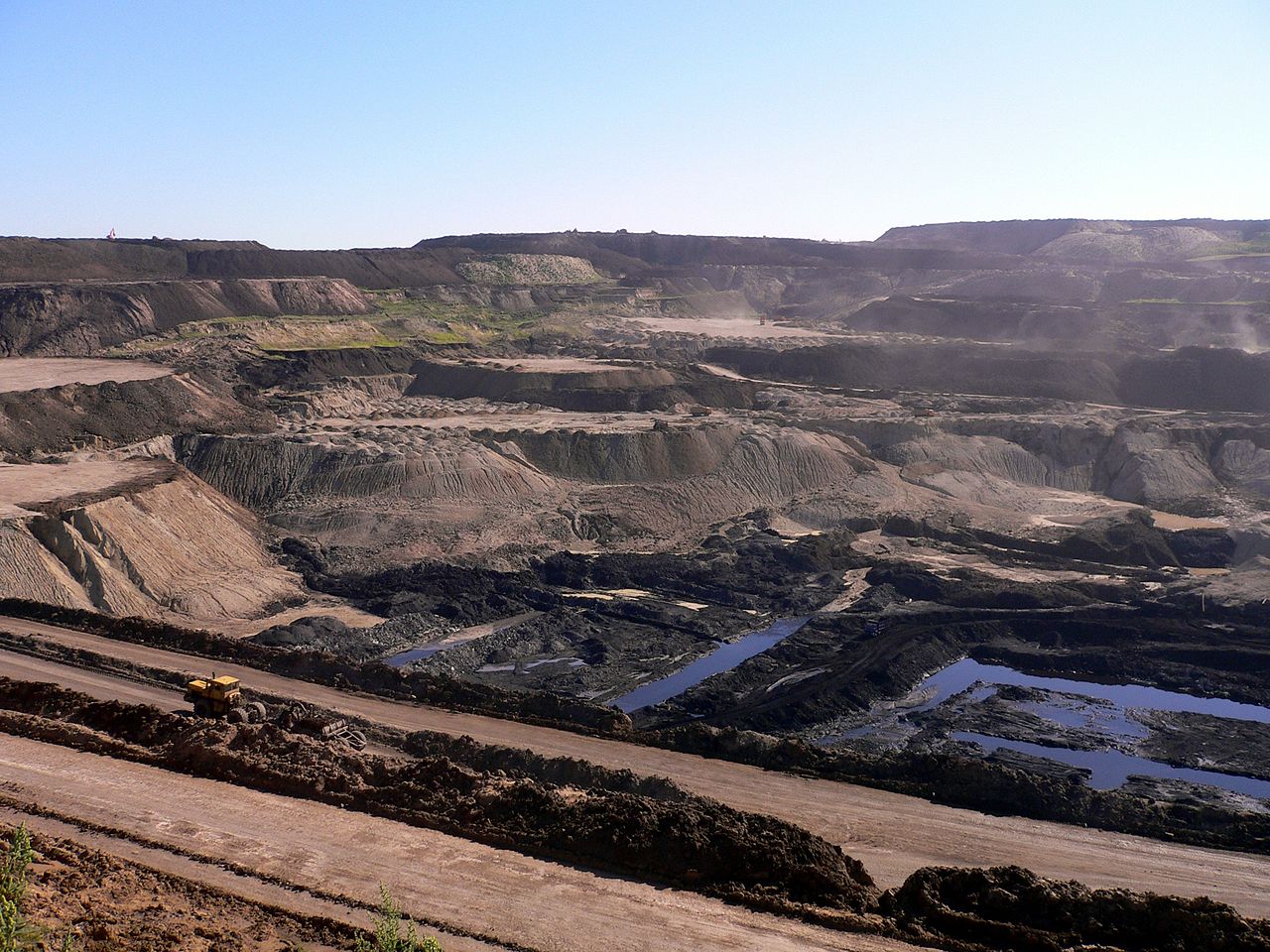
China is well endowed with mineral resources,[225] the most important of which is coal. China's mineral resources include large reserves of coal and iron ore, plus adequate to abundant supplies of nearly all other industrial minerals. Although coal deposits are widely scattered (some coal is found in every province), most of the total is located in the northern part of the country. The province of Shanxi, in fact, is thought to contain about half of the total; other important coal-bearing provinces include Heilongjiang, Liaoning, Jilin, Hebei, and Shandong.[226] Apart from these northern provinces, significant quantities of coal are present in Sichuan, and there are some deposits of importance in Guangdong, Guangxi, Yunnan, and Guizhou.[226] A large part of the country's reserves consists of good bituminous coal, but there are also large deposits of lignite. Anthracite is present in several places (especially Liaoning, Guizhou, and Henan), but overall, it is not very significant.[227]
To ensure a more even distribution of coal supplies and to reduce the strain on the less than adequate transportation network, the authorities pressed for the development of a large number of small, locally run mines throughout the country. This campaign was energetically pursued after the 1960s, with the result that thousands of small pits have been established, and they produce more than half the country's coal. This output, however, is typically expensive and is used for local consumption. It has also led to a less than stringent implementation of safety measures in these unregulated mines, which cause several thousands of deaths each year.[228]
Coal makes up the bulk of China's energy consumption (70% in 2005, 55% in 2021), and China is the largest producer and consumer of coal in the world. As China's economy continues to grow, China's coal demand is projected to rise significantly. Although coal's share of China's overall energy consumption will decrease, coal consumption will continue to rise in absolute terms. China's continued and increasing reliance on coal as a power source has contributed significantly to putting China on the path to becoming the world's largest emitter of acid rain-causing sulfur dioxide and greenhouse gases, including carbon dioxide.
Oil and natural gas

China's onshore oil resources are mostly located in the Northeast and in Xinjiang, Gansu, Qinghai, Sichuan, Shandong, and Henan provinces. Oil shale is found in a number of places, especially at Fushun in Liaoning, where the deposits overlie the coal reserves, as well as in Guangdong. High quality light oil has been found in the Pearl River estuary of the South China Sea, the Qaidam Basin in Qinghai, and the Tarim Basin in Xinjiang. The country consumes most of its oil output but does export some crude oil and oil products. China has explored and developed oil deposits in the South China Sea and East China Sea, the Yellow Sea, the Gulf of Tonkin, and the Bohai Sea.
In 2013, the pace of China's economic growth exceeded the domestic oil capacity and floods damaged the nation's oil fields in the middle of the year. Consequently, China imported oil to compensate for the supply reduction and surpassed the US in September 2013 to become the world's largest importer of oil.[229]
The total extent of China's natural gas reserves is unknown, as relatively little exploration for natural gas has been done.[230] Sichuan accounts for almost half of the known natural gas reserves and production.[231] Most of the rest of China's natural gas is associated gas produced in the Northeast's major oil fields, especially Daqing oilfield. Other gas deposits have been found in the Qaidam Basin, Hebei, Jiangsu, Shanghai, and Zhejiang, and offshore to the southwest of Hainan.[232] According to an article published in Energy Economics in 2011 by economists Mete Feridun (University of Greenwich) and Abdul Jalil (Wuhan University in China), financial development in China has not taken place at the expense of environmental pollution and financial development has led to a decrease in environmental pollution. Authors conclude that carbon emissions are mainly determined by income, energy consumption and trade openness and their findings confirm the existence of an Environmental Kuznets Curve in the case of China.[233]
Metals and nonmetals
Iron ore reserves are found in most provinces, including Hainan. Gansu, Guizhou, southern Sichuan, and Guangdong provinces have rich deposits. The largest mined reserves are located north of the Yangtze River and supply neighboring iron and steel enterprises. With the exception of nickel, chromium, and cobalt, China is well supplied with ferroalloys and manganese. Reserves of tungsten are also known to be fairly large. Copper resources are moderate, and high-quality ore is present only in a few deposits. Discoveries have been reported from Ningxia. Lead and zinc are available, and bauxite resources are thought to be plentiful. China's antimony reserves are the largest in the world. Tin resources are plentiful, and there are fairly rich deposits of gold. China is the world's fifth largest producer of gold and in the early 21st century became an important producer and exporter of rare metals needed in high-technology industries.
China also produces a fairly wide range of nonmetallic minerals. One of the most important of these is salt, which is derived from coastal evaporation sites in Jiangsu, Hebei, Shandong, and Liaoning, as well as from extensive salt fields in Sichuan, Ningxia, and the Qaidam Basin. There are important deposits of phosphate rock in a number of areas, Jiangxi, Guangxi, Yunnan and Hubei. Production has been accelerating every year. As of 2013 China is producing 97,000,000 metric tons of phosphate rock a year.[234] Pyrites occur in several places; Liaoning, Hebei, Shandong, and Shanxi have the most important deposits. China also has large resources of fluorite (fluorspar), gypsum, asbestos, and has the world's largest reserves and production of cement, clinker and limestone.
Industry and manufacturing

.jpg/1280px-CR400BF-GZ-5205@IFP_(20220213095454).jpg)

China has a strong global position in the production of industrial goods and some of its companies are global leader in the areas of steel, solar energy, and telecommunications accessories.[235]: 131 As of 2023[update], industry accounts for 38.3% of China's GDP.[5] From 2010 until at least 2023, China produces more industrial goods than any other country.[113]: 1 As of 2023, China manufactures approximately one fifth of the world's total output of industrial products.[235]: 133
Major industries include mining and ore processing; iron and steel; aluminium; coal; machinery; armaments; textiles and apparel; petroleum; cement; chemical; fertilizers; food processing; automobiles and other transportation equipment including rail cars and locomotives, ships, and aircraft; consumer products including footwear, toys, and electronics; telecommunications and information technology.
Since the founding of the People's Republic, industrial development has been given considerable attention; as of 2011 46% of China's national output continued to be devoted to investment; a percentage far higher than any other nation.[236] Among the various industrial branches the machine-building and metallurgical industries have received the highest priority. These two areas alone now account for about 20–30 percent of the total gross value of industrial output.[237] In these, as in most other areas of industry, however, innovation has generally suffered at the hands of a system that has rewarded increases in gross output rather than improvements in variety, sophistication and quality. China, therefore, still imports significant quantities of specialized steels. Overall industrial output has grown at an average rate of more than ten percent per year, having surpassed all other sectors in economic growth and degree of modernization.[238]
The predominant focus of development in the chemical industry is to expand the output of chemical fertilizers, plastics, and synthetic fibers. The growth of this industry has placed China among the world's leading producers of nitrogenous fertilizers. In the consumer goods sector the main emphasis is on textiles and clothing, which also form an important part of China's exports. Textile manufacturing, a rapidly growing proportion of which consists of synthetics, account for about ten percent of the gross industrial output and continues to be important, but less so than before. The industry tends to be scattered throughout the country, but there are a number of important textile centers, including Shanghai, Guangzhou, and Harbin.[239][240] There is a growing consumer culture in China.
As of at least 2024, China has significant industrial capacity in excess of its domestic needs.[113]: 34 The government has sought to alleviate industrial capacity by channeling it abroad, including through the Belt and Road Initiative.[113]: 34
Steel industry

In 2020, China produced over 1053 million tonnes of steel, over half of the world total. This was an increase of 5.6% over the previous year as global steel production fell by 0.9%. China's share of global crude steel production increased from 53.3% in 2019 to 56.5% in 2020. Decreasing -2.1% in 2021.[241]
Iron ore production kept pace with steel production in the early 1990s but was soon outpaced by imported iron ore and other metals in the early 2000s. Steel production, an estimated 140 million tons in 2000 increased to 419 million tons in 2006 and 928 million tons by 2018.
China was the top exporter of steel in the world in 2018; export volumes in 2018 were 66.9 million tons, a nine percent decrease over the previous year. It again decreased in 2021 to 66.2 million tons.[242] The decline slowed China's decade-old steel export growth. As of 2012 steel exports faced widespread anti-dumping taxes and had not returned to pre-2008 levels.[243] Domestic demand remained strong, particularly in the developing west where steel production in Xinjiang was expanding.[244]
Of the 45 largest steel producing companies in the world, 21 are Chinese, including the world's largest, China Baowu Steel Group.
Automotive industry
China is the world's largest automobile producer, manufacturing more than 30.16 million vehicles in 2023, with 4.91 million of those being exported overseas.[245] As of 2024[update], China is the world's largest automobile market in terms of both sales and ownership.[112]: 105
By 2006 China had become the world's third largest automotive vehicle manufacturer (after US and Japan) and the second largest consumer (only after the US). However, four years later, in 2010, China was manufacturing more vehicles than the U.S. and Japan combined. Automobile manufacturing has soared during the reform period. In 1975 only 139,800 automobiles were produced annually, but by 1985 production had reached 443,377, then jumped to nearly 1.1 million by 1992 and increased fairly evenly each year up until 2001, when it reached 2.3 million. In 2002 production rose to nearly 3.25 million and then jumped to 4.44 million in 2003, 5.07 million in 2004, 5.71 million in 2005, 7.28 million in 2006, 8.88 million in 2007, 9.35 million in 2008 and 13.83 million in 2009. China has become the number-one automaker in the world as of 2009. Domestic sales have kept pace with production. After respectable annual increases in the mid- and late 1990s, passenger car sales soared in the early 2000s.
In 2010, China became the world's largest automotive vehicle manufacturer as well as the largest consumer ahead of the United States with an estimated 18 million new cars sold.[246]
China's automotive industry has been so successful that it began exporting car parts in 1999. China began to plan major moves into the automobile and components export business starting in 2005. A new Honda factory in Guangzhou was built in 2004 solely for the export market and was expected to ship 30,000 passenger vehicles to Europe in 2005. By 2004, twelve major foreign automotive manufacturers had joint-venture plants in China. They produced a wide range of automobiles, minivans, sport utility vehicles, buses, and trucks. In 2003 China exported US$4.7 billion worth of vehicles and components. The vehicle export was 78,000 units in 2004, 173,000 units in 2005, and 340,000 units in 2006. The vehicle and component export is targeted to reach US$70 billion by 2010.[citation needed] China's exports of cars increased significantly since 2020, boosted by new energy vehicles. It overtook Germany and Japan in 2022 and 2023 respectively in vehicle exports, becoming the world's largest exporter of cars.[247]
The market for domestically produced cars, under a local name, is likely to continue to grow both inside China and outside. Companies such as Geely, Qiantu and Chery are constantly evaluating new international locations, both in developing and developed countries.[248]
Electric vehicle industry

The electric vehicle industry in China is the largest in the world, accounting for around 58% of global consumption of EVs.[249] In 2023, CAAM reported China had sold 9.05 million passenger electric vehicles, consisting 6.26 million BEVs (battery-only EVs) and 2.79 million PHEV (plug-in hybrid electric vehicles).[250] China also dominates the plug-in electric bus and light commercial vehicle market, reaching over 500,000 buses (98% of global stock) and 247,500 electric commercial vehicles (65% of global stock) in 2019,[251] and recording new sales of 447,000 commercial EVs in 2023.[250]
Plug-in electric vehicle (BEV and PHEV) sales were 37% of the overall automotive sales in China in 2023, with BEVs and PHEVs having 25% and 12% market share respectively. This is a significant increase from 2020, when plug-in electric vehicles accounted for only 6.3% of total sales.[252] The plug-in market in China was dominated by Chinese companies, with BYD Auto and SAIC Motor occupying the top two spots, and 5 out of the top 7 spots.[253]

The battery industry is closely related to the EV industry as batteries constitute around 1/3 of the cost of EVs[255] and around 80% of lithium-ion batteries in the world are used in EVs.[256] The industry also has significant Chinese presence, with major players including world's largest CATL, BYD, CALB, Gotion, SVOLT and WeLion.[257]
Semiconductor industry
The Chinese semiconductor industry, including IC design and manufacturing, forms a major part of China's IT industry. China's semiconductor industry consists of a wide variety of companies, from integrated device manufacturers to pure-play foundries to fabless semiconductor companies. Integrated device manufacturers (IDMs) design and manufacture integrated circuits. Pure-play foundries only manufacture devices for other companies, without designing them, while fabless semiconductor companies only design devices. Examples of Chinese IDMs are YMTC and CXMT, examples of Chinese pure-play foundries are SMIC, Hua Hong Semiconductor and Wingtech, and examples of Chinese fabless companies are Zhaoxin, HiSilicon and UNISOC.
China is the currently the world's largest semiconductor market in terms of consumption. In 2020, China represented 53.7% of worldwide chip sales, or $239.45 billion out of $446.1 billion. However, a large percentage are imported from multinational suppliers. In 2020, imports took up 83.38% ($199.7 billion) of total chip sales. In response, the country has launched a number of initiatives to close the gap, including investing $150 billion into its domestic IC industry, with a "Made in China 2025" goal of 70% domestic production.[258][259][260]
China leads the world in terms of number of new fabs under construction, with 8 out of 19 worldwide in 2021, and 17 fabs in total are expected to start construction from 2021 to 2023. Total installed capacity of Chinese-owned chipmakers will also increase from 2.96 million wafers per month (wpm) in 2020 to 3.572 million wpm in 2021.[258]
Other industries
Substantial investments were made in the manufacture of solar panels and wind generators by a number of companies, supported by liberal loans by banks and local governments. However, by 2012 manufacturing capacity had far outstripped domestic and global demand for both products, particularly solar panels, which were subjected to anti-dumping penalties by both the United States and Europe. The global oversupply has resulted in bankruptcies and production cutbacks both inside and outside China. China has budgeted $50 billion to subsidize production of solar power over the two decades following 2015 but, even at the sharply reduced price resulting from oversupply, as of 2012 cost of solar power in China remained three times that of power produced by conventional coal-fired power plants.[261]
.jpg/1280px-Huawei_MateBook_-_Mobile_World_Congress_2016_(25472304356).jpg)
China is the world's biggest sex toy producer and accounts for 70% of the worldwide sex toys production.[262] In the country, 1,000 manufacturers are active in this industry, which generates about two billion dollars a year.[262]
As of 2011, China was the world's largest market for personal computers.[263] China has the second largest reserve of computers in the world as of at least 2024.[112]: 16-17
Services
Prior to the onset of economic reforms in 1978, China's services sector was characterized by state-operated shops, rationing, and regulated prices – with reform came private markets, individual entrepreneurs, and a commercial sector. The wholesale and retail trade has expanded quickly, with numerous shopping malls, retail shops, restaurant chains and hotels constructed in urban areas. Public administration remains a main component of the service sector, while tourism has become a significant factor in employment and a source of foreign exchange.[264]
Telecommunications
The affordability of mobile phones and internet data in China has resulted in the number of mobile internet users in China surpassing the number of computer internet users.[265]: 178
By 2023, the number of Internet users in China increased to over 1.09 billion. The proportions of Chinese netizens accessing the Internet via mobile phones, desktop computers, laptop computers. TVs and tablet computers were 99.9%, 33.9%, 30.3%, 22.5% and 26.6%, respectively.[266]
Consumer internet
China's economy is one of the world's leaders in consumer internet and mobile payments.[235]: 130 As of 2024[update], China has more internet users than any other country.[112]: 18 Internet users in China generate large amounts of data, thereby providing a competitive benefit in the development of machine learning for artificial intelligence technology.[112]: 18
Mobile payment methods via apps including Alipay and WeChat Pay were quickly adopted in China in part due to the relative lack of credit cards in the country.[235]: 130 This technological leapfrogging also led to a boom in online shopping and retail banking.[235]: 130
Platform economy
China's platform economy has grown substantially since the early 2010s, with its transactional volume reaching RMB 3.7 trillion in 2021.[161]: 155 The platform economy has absorbed a large number of workers from China's decreasing manufacturing workforce and from its population of internal migrant workers.[161]: 155 As of 2020, 84 million people worked as platform economy service providers and 6 million were employees of platform companies.[161]: 155
The platform economy sector is highly concentrated in Alibaba and Tencent, both of which have ride-hailing and food delivery businesses as key assets in their investment portfolios.[161]: 155 Ride-hailing and food delivery businesses have significantly consolidated since 2016.[161]: 155–156
Mass media
In 2020, China's market for films surpassed the U.S. market to become the largest such market in the world.[112]: 16
Tourism

China hosts the world's largest number of World Heritage Sites (59). China's tourism industry is one of the fastest-growing industries in the national economy and is also one of the industries with a very distinct global competitive edge. According to the World Travel and Tourism Council, travel and tourism directly contributed CNY 1,362 billion (US$216 billion) to the Chinese economy (about 2.6% of GDP).[267] In 2011, total international tourist arrivals was 58 million, and international tourism receipts were US$48 billion.[268]
The Chinese tourism industry has been hit hard by both the Covid lockdowns and strained relations with many foreign nations.[269][270] Foreign flights into China, both for business and tourism are way down, especially from the US.[271][272][273] Recent much increased internal security activity decreases the desire of foreigners to live in China, or to go to China, for fear of being targeted and not allowed to leave. Thus many foreigners are leaving and others crossing it off as a travel destination.[274][275]
Luxury goods
Hong Kong and Macau benefit from favorable taxation rules and are favored locations for tourists from elsewhere in China to purchase luxury goods like cosmetics, jewelry, and designer fashion goods.[276]: 116
Porcelain has long been one of China's most important luxury exports.[276]: 226 It was especially important to early trade between China and the West, with much of that trade being conducted through Macau.[276]: 226
After a 2012 ban on government agencies purchasing luxury goods, often used as "gifts", sales of luxury goods in China remained strong but slowed, even falling slightly for luxury retailers in the 4th quarter of 2012,[277] with sales of shark fins and edible swallow nests, once staples of lavish government banquets, down sharply.[278]
Many shops in international travel destinations have specialized staff devoted to Chinese customers.[277]
Income and wealth
According to Credit Suisse, China has had the world's largest middle class population since 2015.[279] As of 2020, China had 400 million middle-income citizens.[112]: 159 It is projected to reach 1.2 billion by 2027, making up one fourth of the world total.[280] According to a 2021 Pew Research Center survey, there were 23 million Chinese individuals with a per capita daily income of $50 or more, 242 million with a daily income between $20–50 per day, 493 million between $10–20, 641 million $2–10 per day, and 4 million under $2 per day; all the figures are expressed in international dollars and 2011 purchasing power parity values.[281] In 2022, the National Bureau of Statistics reported that China's average disposable income per capita was ¥36,883, of which ¥20,590 was from wages and salaries, ¥6,175 was net business income, ¥3,227 was net income from property, and ¥6,892 was net transfer income.[282]
As of April 2023[update], China was second in the world, after the US, in total number of billionaires and total number of millionaires, with 495 Chinese billionaires[283] and 6.2 million millionaires in 2022.[284] According to the Hurun Global Rich Report In 2020, China had the world's highest number of billionaires, which is more than the US and India combined,[285] and as of March 2021, the number of billionaires in China reach 1,058 with the combined wealth of US$4.5 trillion.[286] According to the 2019 Global Wealth Report by Credit Suisse Group, China surpassed the US in the wealth of the top ten percent of the world's population.[287][note 3] In other words, as of 2019, a hundred million Chinese are in the top ten percent of the wealthiest individuals in the world – those who have a net personal wealth of at least $110,000.[288] According to the list in 2021, China is home to six of the world's top ten cities (Beijing, Shanghai, Shenzhen, Hong Kong, Hangzhou and Guangzhou in the 1st, 2nd, 4th, 5th, 8th and 9th spots, respectively) by the highest number of billionaires, which is more than any other country.[286] As of January 2021, China had 85 female billionaires, two-thirds of the global total.[289]
The average income of a rural resident in China is 30% of the average income for an urban resident.[112]: 191 The rural population in relatively older as the rural youth migrate to cities for higher earning jobs while the aged stay behind. Much of this rural population works small plots of land in order to survive and have little earning power. Former Chinese Premier Li Keqiang stated, in 2020, that 600 million Chinese live on or under 1,000 yuan per month.[290][291] At a conversion rate of 7 yuan to the dollar, this translates to $143 per month. A family of 3 at this income level would have a yearly income of $5,150. The difference in income is also a reflection of the difference in retirement payments to urban retirees versus rural retirees. Urban workers receive much more a month in retirement benefits on average compared to rural/farm workers who receive a pittance.[292][293]
In terms of domestic saving, defined as combined saving of households, businesses, and governments, China is the world's largest saving country as of at least 2022.[294]: 27
Wages
In 1979–1980, the state reformed factories by giving wage increases to workers, which was immediately offset by sharply rising inflation rates of 6–7%. The reforms also dismantled the iron rice bowl, which meant it witnessed a rise in unemployment in the economy. In 1979–80 there were twenty million unemployed people.[295]
Urban wages rose rapidly from 2004 to 2007, at a rate of 13 to 19% per year with average wages near $200/month in 2007.[296] By 2016 the average monthly wage for workers engaged in manufacturing goods for export was $424. This wage, combined with other costs of doing business in China, had, more or less, equalized any Chinese cost advantage with respect to developed economies.[297]
A law approved February 2013 will mandate a nationwide minimum wage at 40% average urban salaries to be phased in fully by 2015.[298]
Taxes
The government's tax revenues primarily result from indirect taxes like the value added tax.[161]: 6 China's personal income tax accounts for about 6.5% of tax revenues, as of at least 2024.[161]: 6 It is a progressive tax, with the top income tax bracket is taxed at 45% of income.[161]: 6


External trade

International trade makes up a sizeable portion of China's overall economy. In 2010, China became the world's largest exporter, and has continued to be the world's largest exporter as of at least 2023.[299]: 88 It has free trade agreements with several nations, including ASEAN, Australia, Cambodia, New Zealand, Pakistan, South Korea and Switzerland.[300][301] By 2020, China became the largest trading partner of more than 120 countries.[183]: 228 As of 2022[update], China's largest trading partners are ASEAN, the European Union, Japan, South Korea, Taiwan, Australia, Russia, Brazil, India, Canada, and the United Kingdom.[17]
During the Cold War, a meaningful segment of China's trade with the Third World was financed through grants, credits, and other forms of assistance. However, after Mao Zedong's death in 1976, these efforts were scaled back. After which, trade with developing countries became negligible, though during that time, Hong Kong and Taiwan both began to emerge as major trading partners.
Since economic reforms began in the late 1970s, China sought to decentralize its foreign trade system to integrate itself into the international trading system. In November 1991, China joined the Asia-Pacific Economic Cooperation (APEC) group, which promotes free trade and cooperation in the economic, trade, investment, and technology spheres. China served as APEC chair in 2001, and Shanghai hosted the annual APEC leaders meeting in October of that year.
China became a member of the World Trade Organization in 2001.[302] The completion of its accession protocol and Working Party Report paved the way for its entry into the WTO on 11 December 2001, after 16 years of negotiations, the longest in the history of the General Agreement on Tariffs and Trade. However, U.S. exporters continue to have concerns about fair market access due to China's restrictive trade policies and U.S. export restrictions. In October 2019, Chinese Vice Premier Han Zheng promised to further decrease tariffs and remove non-tariff barriers for global investors, he also welcomed multinational companies to invest more in China.[303]

China's global trade exceeded $4.16 trillion at the end of 2013, having broken the hundred-billion mark in 1988 and half a trillion by 2001. China global trade exceeded US$6 Trillion in 2021[305] The table below shows the average annual growth (in nominal US dollar terms) of China's foreign trade during the reform era:[306]
The vast majority of China's imports consists of industrial supplies and capital goods, notably machinery and high-technology equipment, the majority of which comes from the developed countries, primarily Japan[citation needed] and the United States[citation needed]. Regionally, almost half of China's imports come from East and Southeast Asia, and about a fourth of China's exports go to the same destinations[citation needed]. About 80 percent of China's exports consist of manufactured goods, most of which are textiles and electronic equipment, with agricultural products and chemicals constituting the remainder. Out of the five busiest ports in the world, three are in China. The U.S. trade deficit with China reached $233 billion in 2006, as imports grew 18%. China's share of total U.S. imports has grown from 7% to 15% since 1996.
Trade volume between China and Russia reached $29.1 billion in 2005, an increase of 37.1% compared with 2004. A spokesman for the Ministry of Commerce, Van Jingsun, said that the volume of trade between China and Russia could exceed forty billion dollars in 2007.[307] China's export of machinery and electronic goods to Russia grew 70%, which is 24% of China's total export to Russia in the first eleven months of 2005. During the same time, China's export of high-tech products to Russia increased by 58%, and that is 7% of China's total exports to Russia. Also at that time period, border trade between the two countries reached $5.13 billion, growing 35% and accounting for nearly 20% of the total trade. Most of China's exports to Russia remain apparel and footwear. Russia is China's eighth largest trade partner and China is now Russia's fourth largest trade partner, and China now has over 750 investment projects in Russia, involving $1.05 billion. China's contracted investment in Russia totaled $368 million during January–September 2005, twice that in 2004. By 2022, trade between China and Russia reached a record $190 billion,[17] with China becoming Russia's trading partner.[308]

Chinese imports from Russia are mainly those of energy sources, such as crude oil, which is mostly transported by rail, and electricity exports from neighboring Siberian and Far Eastern regions. In the near future, exports of both of these commodities are set to increase, as Russia is building the Eastern Siberia-Pacific Ocean oil pipeline with a branch going to the Chinese border, and Russian power grid monopoly UES is building some of its hydropower stations with a view of future exports to China.
Export growth has continued to be a major component supporting China's rapid economic growth. To increase exports, China pursued policies such as fostering the rapid development of foreign-invested factories, which assembled imported components into consumer goods for export and liberalizing trading rights. In its 11th Five-Year Program, adopted in 2005, China placed greater emphasis on developing a consumer demand-driven economy to sustain economic growth and address imbalances.
China is a member of the Regional Comprehensive Economic Partnership (RCEP), the world's largest free-trade area which was signed into agreement in November 2020. The RCEP, which includes China, Japan, South Korea, Australia, New Zealand and the ASEAN nations, represents about a third of the world's population and 29% of global gross domestic product. The RCEP aims to eliminate tariffs on a variety of products within 20 years.[309] On 17 September 2021, China formally applied to join another large Asia-Pacific free-trade pact, the Comprehensive and Progressive Agreement for Trans-Pacific Partnership (CPTPP).[310]
Foreign investment
From 1992 until at least 2023, China has been either the number one or number two worldwide destination for foreign direct investment.[112]: 81 In 2022, China attracted $180 billion.[311] As of the end of June 2020, FDI stock in China reached US$2.947 trillion, and China's outgoing FDI stock stood at US$2.128 trillion. The total foreign financial assets owned by China reached US$7.860 trillion, and its foreign financial liabilities US$5.716 trillion, making China the second largest creditor nation after Japan in the world.[312]
China's investment climate has changed dramatically with more than two decades of reform. In the early 1980s, China restricted foreign investments to export-oriented operations and required foreign investors to form joint-venture partnerships with Chinese firms. The Encouraged Industry Catalogue sets out the degree of foreign involvement allowed in various industry sectors. From the beginning of the reforms legalizing foreign investment, capital inflows expanded every year until 1999.[313] Foreign-invested enterprises account for 58–60% of China's imports and exports.[314]
Since the early 1990s, the government has allowed foreign investors to manufacture and sell a wide range of goods on the domestic market, eliminated time restrictions on the establishment of joint ventures, provided some assurances against nationalization, allowed foreign partners to become chairs of joint venture boards, and authorized the establishment of wholly foreign-owned enterprises, now the preferred form of FDI. In 1991, China granted more preferential tax treatment for Wholly Foreign Owned Enterprises and contractual ventures and for foreign companies, which invested in selected economic zones or in projects encouraged by the state.
China also authorized some foreign banks to open branches in Shanghai and allowed foreign investors to purchase special "B" shares of stock in selected companies listed on the Shanghai and Shenzhen Securities Exchanges. These "B" shares sold to foreigners carried no ownership rights in a company. In 1997, China approved 21,046 foreign investment projects and received over $45 billion in foreign direct investment. China revised significantly its laws on Wholly Foreign-Owned Enterprises and China Foreign Equity Joint Ventures in 2000 and 2001. The Vice Minister of Finance Zhu Guangyao announced, foreign investors will be allowed to own up to 51% on domestic financial service companies. Formerly foreign ownership was limited to a 49% stake in these firms.[315]
Foreign investment remains a strong element in China's rapid expansion in world trade and has been an important factor in the growth of urban jobs. China's economic leadership on global capital flows emphasizes long-term infrastructure and development finance over short-term flows which, under the current order, have imposed large costs on many economies.[316] In 1998, foreign-invested enterprises produced about 40% of China's exports, and foreign exchange reserves totaled about $145 billion. Foreign-invested enterprises today produce about half of China's exports (the majority of China's foreign investment come from Hong Kong, Macau and Taiwan), and China continues to attract large investment inflows. However, the Chinese government's emphasis on guiding FDI into manufacturing has led to market saturation in some industries, while leaving China's services sectors underdeveloped. From 1993 to 2001, China was the world's second-largest recipient of foreign direct investment (FDI) after the United States, receiving $39 billion in 1999 and $41 billion in 2000. China is now one of the leading FDI recipients in the world, receiving almost $80 billion in 2005 according to World Bank statistics. In 2006, China received $69.47 billion.[317] By 2011, with the U.S. seeing a decline in foreign investment following the 2008 financial crisis, China overtook it as the top destination for FDI, receiving over $280 billion that year.[318]
Amid slowing economic conditions and a weakening yuan in 2015, December of that year saw a 5.8% drop in FDI to China.[319] While China's rank as the top receiver of FDI continued through 2014, the slowing of inbound investment in 2015 combined with a massive rebound in foreign investment to the United States resulted in the U.S. reclaiming its position as the top investment destination.[320] Data from the American Chamber of Commerce in China's 2016 China Business Climate Survey confirms this trend, although it also demonstrates that China remains a top investment destination. This survey of over 500 members found that "China remains a top three investment priority for six out of ten member companies," though this is a decline from the 2012 high of eight out of ten respondents considering China a top priority.[321]
Foreign exchange reserves totaled $155 billion in 1999 and $165 billion in 2000. Foreign exchange reserves exceeded $800 billion in 2005, more than doubling from 2003. Foreign exchange reserves were $819 billion at the end of 2005, $1.066 trillion at the end of 2006, $1.9 trillion by June 2008. In addition, by the end of September 2008 China replaced Japan for the first time as the largest foreign holder of US treasury securities with a total of $585 billion, vs Japan $573 billion. China's foreign exchange reserves are the largest in the world.[322]
As part of its WTO accession, China undertook to eliminate certain trade-related investment measures and to open up specified sectors that had previously been closed to foreign investment. New laws, regulations, and administrative measures to implement these commitments are being issued. Major remaining barriers to foreign investment include opaque and inconsistently enforced laws and regulations and the lack of a rules-based legal infrastructure. Warner Bros., for instance, withdrew its cinema business in China as a result of a regulation that requires Chinese investors to own at least a 51 percent stake or play a leading role in a foreign joint venture.[323]
Another major development in the history of foreign investment in China was the establishment of the Shanghai Free Trade Zone in September 2013.[324] The Zone is considered a testing ground for a number of economic and social reforms.[325][326] Critically, foreign investment is controlled via a "negative list" approach, where FDI is permitted in all sectors unless explicitly prohibited by the inclusion of a given sector on the negative list published by the Shanghai Municipal Government.[327]
On 15 March 2019, China's National People's Congress adopted the Foreign Investment Law,[328] which comes into effect on 1 January 2020. Foreign investment in China comes with a number of ethical risks which pose major challenges which investors must navigate.[329]
Chinese investment abroad
.jpg/1280px-TCL_4K_tv_(24478123585).jpg)


Outward foreign direct investment is a new feature of Chinese globalization, where local Chinese firms seek to make investments in both developing and developed countries.[330] It was reported in 2011 that there was increasing investment by capital rich Chinese firms in promising firms in the United States. Such investments offer access to expertise in marketing and distribution potentially useful in exploiting the developing Chinese domestic market.[331]
Since 2005, Chinese companies have been actively expanding outside of China, in both developed and developing countries. In 2013, Chinese companies invested US$90 billion globally in non-financial sectors, 16% more than 2012.[332]
Between January 2009 and December 2013, China contributed a total of $161.03bn in outward FDI, creating almost 300,000 jobs. Western Europe was the largest regional recipient of Chinese outward FDI, with Germany receiving the highest number of FDI projects for any country globally.[333]
China is willing to invest in riskier countries.[113]: 1
During the administration of Xi Jinping, outbound foreign investment and infrastructure projects have often been construed as part of the Belt and Road Initiative.[113]: 1 Between 2013 and 2021, the Middle East was a prominent recipient of China's outbound FDI, particularly because of the importance of its energy supplies for China.[113]: 83
There are two ways Chinese companies choose to enter a foreign market: organic growth and Merge & Acquisition (M&A). Many Chinese companies would prefer M&A for the following reasons:
- Fast. M&A is the fastest way for a company to expand into another country by acquiring brand, distribution, talents, and technology. Chinese CEOs has been used to growing at 50%+ speed and do not want to spend capital.
- China market. China has become the world's largest economy. Many Chinese acquire foreign companies and then bring their products/services to China, anything from premium cars to fashion clothing to meat to Hollywood movies.
- Cheap capital access. The huge Chinese domestic market help many Chinese companies accumulated financial capital to do M&A. Chinese government also provides long-term, low-interest capital for companies to expand abroad.
- Low risk. M&A helped Chinese companies avoid risk of failure of organic growth as they got an established company with everything in place.
- Cheap labor. Some companies may move part of the manufacturing in high labor cost countries to China to reduce the cost and make the product more attractive in price.
- Trade and policy barrier. Chinese companies in many sectors face quota limitation and high tax, which prevent them from being competitive in foreign markets.
- Depressed assets. 2008–2010 global economic crisis created liquidity problems for a lot of western companies and reduced their market value. Chinese companies believe it is a great opportunity for them to buy these depressed assets at discount. China's direct foreign investment in non-financial sector growth from US$25 billion in 2007 to US$90 billion in 2013, more than three times.[334]
- China is growing in investments and influencing power over Europe, and the EU has begun to take notice.[335]
At the beginning, state-owned enterprises dominate the foreign acquisition and most of the money goes to oil and minerals. Since 2005, more and more private companies start to acquire non-raw material foreign companies. As of 2018, the top 15 outbound deals from Chinese companies:[336]
However, the fast growth and M&A deals did not change consumers' low quality and low-price perception of Chinese goods and brands. According to market consecutive research by the Monogram Group, a Chicago-based advertising agency, in 2007, 2009, 2011 and 2012, American consumers' willingness to purchase Chinese products across all categories except PC remained the same or became worse during 2007–2012. The only sector in which Americans were more likely to purchase was personal computers.[337]

Mergers and acquisitions
From 1993 to 2010, Chinese companies have been involved as either an acquiror or acquired company in 25,284 mergers and acquisitions with a total known value of US$969 billion.[338]
Labor force

China's estimated employed labor force in 2005 totaled 791 million persons, about 60% of the total population. During 2003, 49% of the labor force worked in agriculture, forestry, and fishing; 22% in mining, manufacturing, energy, and construction industries; and 29% in the services sector and other categories. In 2004 some 25 million persons were employed by 743,000 private enterprises.[citation needed]
The 2010 census found that China was now half urban and rapidly aging due to the one child policy. This is expected to lead to increased demand for labor to take care of an elderly population and a reduced supply of migrant labor from the countryside.[340]
In January 2016, a two-child policy replaced the one-child policy,[341] which was in turn was replaced with a three-child policy in May 2021.[342] In July 2021, all family size limits as well as penalties for exceeding them were removed.[343]
In the decade up to 2014, ten million Chinese emigrated to other countries, taking assets and their technical skills.[344]
The All-China Federation of Trade Unions is the country's only legally permissible trade union. Attempts to form trade unions independent of the ACFTU have been rare and short-lived. One notable example is the Beijing Workers' Autonomous Federation formed during the 1989 Tiananmen Square protests and massacre. Martial Law Command Headquarters issued a public notice declaring the BWAF an illegal organization and ordering it to disband on the grounds that Federation leaders were among "the main instigators and organizers in the capital of the counterrevolutionary rebellion.[345][346]
As of at least 2024, China has one of the lowest retirement ages among major world economies, with many working women eligible for retirement at 50 and men at 60.[347]: 167
Transportation and infrastructure
China's transportation policy, influenced by political, military, and economic concerns, have undergone major changes since 1949.
Immediately after the People's Republic was founded, the primary goal was to repair existing transportation infrastructure in order to meet military transport and logistics needs as well as to strengthen territorial integrity. During most of the 1950s, new road and rail links were built, while at the same time old ones were improved. During the 1960s much of the improvement of regional transportation became the responsibility of the local governments, and many small railways were constructed. Emphasis was also placed on developing transportation in remote rural, mountainous, and forested areas, in order to integrate poorer regions of the country and to help promote economies of scale in the agricultural sector.[citation needed]
Before the reform era began in the late 1970s, China's transportation links were mostly concentrated in the coastal areas and access to the inner regions was generally poor. This situation has been improved considerably since then, as railways and highways have been built in the remote and frontier regions of the northwest and southwest. At the same time, the development of international transportation was also pursued, and the scope of ocean shipping was broadened considerably.[citation needed]
Freight haulage is mainly provided by rail transport. The rail sector is monopolized by China Railway and there is wide variation in services provided. In late 2007 China became one of the few countries in the world to launch its own indigenously developed high-speed train.[348] As rail capacity is struggling to meet demand for the transport of goods and raw materials such as coal, air routes, roads and waterways are rapidly being developed to provide an increasing proportion of China's overall transportation needs.[349]
Some economic experts have argued that the development gap between China and other emerging economies such as Brazil, Argentina and India can be attributed to a large extent to China's early focus on ambitious infrastructure projects: while China invested roughly 9% of its GDP on infrastructure in the 1990s and 2000s, most emerging economies invested only 2% to 5% of their GDP. This considerable spending gap allowed the Chinese economy to grow at near optimal conditions while many South American economies suffered from various development bottlenecks such as poor transportation networks, aging power grids and mediocre schools.[350]
Science and technology
Science and technology in China has in recent decades developed rapidly. The Chinese government has placed emphasis through funding, reform, and societal status on science and technology as a fundamental part of the socio-economic development of the country as well as for national prestige. China has made rapid advances in areas such as education, infrastructure, high-tech manufacturing, artificial intelligence,[351] academic publishing, patents and commercial applications. China is now increasingly targeting indigenous innovation and aims to reform remaining weaknesses. Its Thousand Talents Plan aims to attract innovative Chinese academics living abroad (as well as some foreigners) back to China in support of its economic innovation goals.[352]
See also

- Bamboo network
- Beijing Consensus
- Central Financial Work Commission
- China Securities Regulatory Commission
- China Beijing Equity Exchange
- China Circle
- China Economic Databases
- China Milan Equity Exchange
- Dual circulation
- E-commerce in China
- Economy of the Han dynasty
- Economy of the Ming dynasty
- Economy of the Song dynasty
- Grasping the large, letting go of the small
- Group buying
- Guo jin min tui
- Hukou
- Imperial Bank of China
- Leading stocks
- List of companies of China
- List of largest Chinese companies
- Oil shale in China
- Panda bonds
- Rural credit cooperative
- Silk Road
- Township and Village Enterprises
- Three Rural Issues
- Yangtze Delta
Notes
- ^ Higher income inequality is partly driven by unequal regional income distribution.
- ^ GDP figures exclude Taiwan, and the special administrative regions of Hong Kong and Macau
- ^ China had a hundred million wealthy people (each owning a net wealth of over US$110,000) and the US 99 million. At US$63.8 trillion as of end of 2019, representing a 17-fold increase from US$3.7 trillion in 2001, the total amount of China's household wealth stood behind only that of the US with US$105.6 trillion.
References
- ^ a b c d e f g "World Economic Outlook Database, October 2023 Edition. (China)". IMF.org. International Monetary Fund. 10 October 2023. Archived from the original on 20 October 2023. Retrieved 10 October 2023.
- ^ "World Bank Country and Lending Groups – World Bank Data Help Desk". datahelpdesk.worldbank.org. Archived from the original on 28 October 2019. Retrieved 4 January 2024.
- ^ "World Bank Country and Lending Groups". datahelpdesk.worldbank.org. World Bank. Archived from the original on 21 August 2016. Retrieved 29 September 2019.
- ^ a b c d e f "World Economic Outlook database: April 2024". imf.org. International Monetary Fund. Archived from the original on 25 June 2024. Retrieved 25 June 2024.
- ^ a b c d e f g h i j "National Data". National Bureau of Statistics of China. 1 March 2022. Archived from the original on 11 August 2021. Retrieved 23 March 2022.
- ^ "Poverty headcount ratio at $6.85 a day (2017 PPP) (% of population) - China". data.worldbank.org. World Bank. Archived from the original on 23 January 2022. Retrieved 1 March 2022.
- ^ "Gini index – China". World Bank. Archived from the original on 19 March 2024. Retrieved 24 May 2022.
- ^ a b "Human Development Report 2023/2024" (PDF). United Nations Development Programme. 13 March 2024. Archived (PDF) from the original on 13 March 2024. Retrieved 26 July 2024.
- ^ "CPI 2023". Transparency International. 30 January 2024. Archived from the original on 4 February 2023. Retrieved 30 January 2024.
- ^ "Labor force, total – China". data.worldbank.org. World Bank & ILO. Archived from the original on 11 November 2019. Retrieved 22 September 2020.
- ^ "Employment to population ratio, 15+, total (%) (national estimate) – China". data.worldbank.org. World Bank & ILO. Archived from the original on 6 March 2023. Retrieved 22 September 2020.
- ^ "China's unemployment rate drops to 5.2 pct in 2023". Xinhua News Agency. 17 January 2024. Archived from the original on 17 January 2024. Retrieved 17 January 2024.
- ^ "China's Youth Jobless Rate Fell in May". Barron's. 19 June 2024. Archived from the original on 24 June 2024. Retrieved 24 June 2024.
- ^ "CGB Yield Curve and Others". yield.chinabond.com.cn.
- ^ "China PMI". ycharts.com. Archived from the original on 18 April 2023. Retrieved 18 April 2023.
- ^ "China Non-Manufacturing PMI". ycharts.com. Archived from the original on 18 April 2023. Retrieved 18 April 2023.
- ^ a b c d e f "Total Value of Import and Export Commodities by Major Countries (Regions) in January-December 2023 (US Dollar Value)". customs.gov.cn. Retrieved 12 January 2024.[permanent dead link]
- ^ a b "China – WTO Statistics Database". World Trade Organization. Archived from the original on 1 September 2017. Retrieved 1 March 2017.
- ^ a b "UNCTAD 2022" (PDF). UNCTAD. Archived (PDF) from the original on 12 December 2022. Retrieved 6 January 2022.
- ^ "China sets GDP target of 'around 5%' for 2023". CNBC. 4 March 2023. Archived from the original on 6 March 2023. Retrieved 6 March 2023.
- ^ "Sovereigns rating list". Standard & Poor's. 26 January 2017. Archived from the original on 26 September 2017. Retrieved 26 September 2017.
On Jan. 26, 2017, S&P Global Ratings affirmed the 'AA-' long-term and 'A-1+' short-term sovereign credit ratings on China. The outlook on the long-term rating remains negative
- ^ "Moody's affirms China's A1 rating, changes outlook to negative from stable". moodys.com. 5 December 2023. Archived from the original on 5 December 2023. Retrieved 5 December 2023.
- ^ "Fitch – Complete Sovereign Rating History". fitchratings.com. Archived from the original on 6 August 2017. Retrieved 25 February 2013.
- ^ "Scope affirms the People's Republic of China's A credit ratings, maintains Stable Outlook". Scope Ratings. 26 July 2024. Retrieved 26 July 2024.
- ^ "Money and Banking Statistics". Archived from the original on 4 November 2020. Retrieved 28 July 2019.
- ^ "Official reserve assets". pbc.gov.cn. Archived from the original on 30 January 2023. Retrieved 9 November 2019.
- ^
—Xu, Chenggang. "The Fundamental Institutions of China’s Reforms and Development." Journal of Economic Literature, vol. 49, no. 4, American Economic Association, 2011, pp. 1076–151, JSTOR 23071664.
—Nee, Victor, and Sonja Opper. "Political Capital in a Market Economy." Social Forces, vol. 88, no. 5, Oxford University Press, 2010, pp. 2105–32, JSTOR 40927540.
—Shue Tuck Wong & Sun Sheng Han (1998) Whither China's Market Economy? The Case of Lijin Zhen, Geographical Review, 88:1, 29–46, doi:10.1111/j.1931-0846.1998.tb00094.x
—Gregory C. Chow (2005) The Role of Planning in China's Market Economy, Journal of Chinese Economic and Business Studies, 3:3, 193–203, doi:10.1080/14765280500317866
—HUA, HUANG. "The Market Economy in China." Security Dialogue, vol. 24, no. 2, SAGE Publications, Ltd., 1993, pp. 175–79, JSTOR 44471339.
—Chow, Gregory C. "Development of a More Market-Oriented Economy in China." Science, vol. 235, no. 4786, American Association for the Advancement of Science, 1987, pp. 295–99, JSTOR 1698592. - ^ "GDP, current prices". www.imf.org. Retrieved 23 August 2024.
- ^ a b "Global Economy Watch - Projections > Real GDP / Inflation > Share of 2016 world GDP". PWC. Archived from the original on 19 October 2015. Retrieved 23 June 2017.
- ^ Tang, Frank; Wang, Orange (18 January 2022). "China GDP growth slows as population crisis, Covid-19 cloud economic outlook". South China Morning Post. Archived from the original on 5 December 2022. Retrieved 14 August 2022.
- ^ For the exchange rate of the latest year, refer to the Statistical Communiqué of that year "Statistical communiqué of the People's Republic of China on the national economic and social development" (Press release). China NBS. Archived from the original on 5 March 2024. Retrieved 7 June 2024.; Refer to the national statistical database for the historical exchange rates "national data - annual - foreign tarde and economic cooperation - reference exchange rate of renminbi (period average)" (Press release). China NBS. Archived from the original on 26 January 2024. Retrieved 7 June 2024., and for the historical exchange rates also published on the statistical yearbooks "statistical yearbooks (Chinese / English)" (Press release). China NBS. Archived from the original on 9 February 2024. Retrieved 7 June 2024.
- ^ the annual data of China'GDP: published on China NBS National data. "National data - annual - national accounts - Gross Domestic Product" (Press release). China NBS. March 2024. Archived from the original on 26 January 2024. Retrieved 7 June 2024.
- ^ Edward, Cunningham. "What is the future of China's private sector?". hks.harvard.edu. harvard. Archived from the original on 12 June 2024. Retrieved 9 September 2024.
- ^ "China Widens Lead as World's Largest Manufacturer". thomasnet.com. Archived from the original on 27 July 2013. Retrieved 25 August 2013.
- ^ "China's Economy Is Catching Up to the U.S." Archived from the original on 17 March 2018. Retrieved 8 March 2018.
- ^ "Trade recovery expected in 2017 and 2018, amid policy uncertainty". Geneva, Switzerland: World Trade Organization. 12 April 2017. Archived from the original on 3 July 2017. Retrieved 22 June 2017.
- ^ "China: Fastest Growing Consumer Market in the World". IMF direct – The IMF Blog. 2 December 2013. Archived from the original on 2 December 2013. Retrieved 8 December 2013.
- ^ Baffes, John; Kabundi, Alain Ntumba; Nagle, Peter Stephen Oliver; Ohnsorge, Franziska Lieselotte (26 June 2018). "The role of major emerging markets in global commodity demand". Policy Research Working Paper Series. Archived from the original on 6 March 2023. Retrieved 16 May 2022.
- ^ "intracen.org" (PDF). Archived from the original (PDF) on 30 October 2014.
- ^ Higgins, Tucker (24 January 2021). "China surpasses U.S. as largest recipient of foreign direct investment during Covid pandemic". CNBC. Archived from the original on 18 March 2021. Retrieved 18 March 2021.
- ^ "Foreign investment in China falls to lowest level on record". Nikkei Asia. Archived from the original on 19 December 2023. Retrieved 8 March 2024.
- ^ https://www.axios.com/2023/11/07/china-economy-negative-foreign-investments Archived 19 December 2023 at the Wayback Machine Foreign investment in China goes negative for first time in decades In Q3 2023 it was -$11.8 billion
- ^ Tjan, Sie Tek (18 September 2020). "China's outbound foreign investment posts modest Decline since Start of 2020". China Banking News. Archived from the original on 18 October 2020. Retrieved 16 October 2020.
- ^ "官方储备资产 (Official reserve assets)". Archived from the original on 10 April 2020. Retrieved 29 October 2020.
- ^ "If China's economy is so strong, why isn't its currency stronger?". The Economist. Archived from the original on 29 October 2020. Retrieved 29 October 2020.
- ^ "China May Ease 'Three Red Lines' Property Rules in Big Shift". Bloomberg.com. 6 January 2023. Archived from the original on 15 August 2024. Retrieved 10 July 2024.
- ^ He, Laura (6 October 2023). "Analysis: China's economy will be hobbled for years by the real estate crisis | CNN Business". CNN. Archived from the original on 16 December 2023. Retrieved 10 July 2024.
- ^ "China's bursting housing bubble is doing more damage than official data suggest". Fortune. Archived from the original on 24 December 2023. Retrieved 10 July 2024.
- ^ Evie Steele (2 February 2024). "IMF Predicts China Economy Slowing Over Next Four Years". Voice of America. Archived from the original on 3 March 2024. Retrieved 20 February 2024.
- ^ "World Official Gold Holdings - International Financial Statistics, March 2024". World Gold Council. 5 March 2024. Retrieved 8 March 2024.
- ^ Our World in Data. "Research & development spending as a share of GDP". ourworldindata.org. Archived from the original on 18 May 2024. Retrieved 10 January 2024.
- ^ Organisation for Economic Co-operation and Development. "Gross domestic spending on R&D". data.oecd.org. Archived from the original on 14 January 2017. Retrieved 10 January 2024.
- ^ a b Dutta, Soumitra; Lanvin, Bruno; Wunsch-Vincent, Sacha; León, Lorena Rivera; World Intellectual Property Organization (2022). Global Innovation Index 2022 – Which are the most innovative countries. World Intellectual Property Organization. doi:10.34667/tind.46596. ISBN 9789280534320. Archived from the original on 3 December 2022. Retrieved 29 September 2022.
- ^ Dominik, Boddin (2016). The Role of Newly Industrialized Economies in Global Value Chains. International Monetary Fund.
- ^ "China Becomes Top Filer of International Patents in 2019 Amid Robust Growth for WIPO's IP Services, Treaties and Finances". World Intellectual Property Organization. 7 April 2020. Archived from the original on 1 November 2020. Retrieved 7 April 2020.
- ^ Emma Farge (2 March 2021). "China extends lead over U.S. in global patents filings, U.N. says". Reuters. Archived from the original on 2 March 2021. Retrieved 2 March 2021.
- ^ Wagner, Caroline (10 January 2023). "China now publishes more high-quality science than any other nation – should the US be worried?". The Conversation. Archived from the original on 20 April 2024. Retrieved 20 April 2024.
- ^ "High-technology exports". World Bank Open Data. Archived from the original on 15 April 2023. Retrieved 15 April 2023.
- ^ "Allianz Global Wealth Report 2021" (PDF). Archived (PDF) from the original on 7 October 2021. Retrieved 5 March 2022.
- ^ Zhao, Suisheng (2023). The dragon roars back : transformational leaders and dynamics of Chinese foreign policy. Stanford, California: Stanford University Press. pp. 219–220. ISBN 978-1-5036-3088-8. OCLC 1331741429.
- ^ "China's middle-income population passes 500 million mark: state-run newspaper". South China Morning Post. 3 March 2024. Archived from the original on 20 April 2024. Retrieved 20 April 2024.
- ^ "China's Free Trade Agreements". Archived from the original on 12 July 2009. Retrieved 25 April 2011.
- ^ * Bijun Wang & Xiang Li (2017) From world factory to world investor: the new way of China integrating into the world, China Economic Journal, 10:2, 175–193, doi:10.1080/17538963.2017.1320047
- Chen Li, Mee Kam Ng, Yuanzhou Tang & Tung Fung (2022) From a ‘World Factory’ to China’s Bay Area: A Review of the Outline of the Development Plan for the Guangdong-Hong Kong-Macao Greater Bay Area, Planning Theory & Practice, 23:2, 310–314, doi:10.1080/14649357.2021.1958539
- Mees, H. (2016). China as the World’s Factory. In: The Chinese Birdcage. Palgrave Macmillan, New York. doi:10.1057/978-1-137-58886-9_3
- Yuwan Duan; Erik Dietzenbacher; Bart Los; Cuihong Yang (2021). "How much did China's emergence as "the world's factory" contribute to its national income?" (PDF). China Economic Review. 69. 101658. doi:10.1016/j.chieco.2021.101658. ISSN 1043-951X. S2CID 237676638. Archived (PDF) from the original on 5 April 2023. Retrieved 29 March 2023.
- ^ "Global 500". Fortune Global 500. Archived from the original on 16 January 2023. Retrieved 3 August 2023.
- ^ a b "The Global Financial Centres Index 28" (PDF). Long Finance. September 2020. Archived (PDF) from the original on 9 October 2022. Retrieved 26 September 2020.
- ^ a b "Top 10 Largest Stock Exchanges in the World By Market Capitalization". ValueWalk. 19 February 2019. Archived from the original on 15 May 2019. Retrieved 28 November 2019.
- ^ "Home". Archived from the original on 24 April 2024. Retrieved 24 April 2024.
- ^ Hanming Fang; Jin Feng. "The Chinese Pension System" (PDF). Archived (PDF) from the original on 12 June 2019. Retrieved 24 April 2024.
- ^ Maddison, Angus (2008). Chinese Economic Performance in the Long Run: 960-2030 AD. Organization for Economic Cooperation and Development. pp. 43. ISBN 978-9264037625.
- ^ Dahlman, Carl J.; Aubert, Jean-Eric (2001). China and the Knowledge Economy: Seizing the 21st Century. World Bank Publications. p. 170. ISBN 978-0-8213-5005-8. Archived from the original on 15 August 2024. Retrieved 25 May 2020.
- ^ Maddison, Angus (2007). Contours of the World Economy 1-2030 AD: Essays in Macro-Economic History. Oxford University Press. p. 379. ISBN 978-0-191-64758-1. Archived from the original on 28 March 2024. Retrieved 19 October 2020.
- ^ Bairoch, Paul (1995). Economics and World History: Myths and Paradoxes. University of Chicago Press. p. 95. ISBN 978-0-226-03463-8.
- ^ Maddison, Angus (2007). Chinese Economic Performance in the Long Run (PDF). Development Centre Studies (2nd ed.). OECD. p. 29. ISBN 978-92-64-03762-5. Archived from the original (PDF) on 15 October 2014. See the "Table 1.3. Levels of Chinese and European GDP Per Capita, 1–1700 AD" in page 29, Chinese GDP Per Capita was 450 and European GDP Per Capital was 422 in 960AD. Chinese GDP Per Capita was 600 while European was 576. During this time, Chinese per capita income rose by about a third.
- ^ Thompson, Derek (19 June 2012). "The Economic History of the Last 2,000 Years in 1 Little Graph". The Atlantic. Archived from the original on 24 September 2020. Retrieved 9 December 2017.
- ^ Holcombe, Charles (2010). A History of East Asia: From the Origins of Civilization to the Twenty-First Century. Cambridge University Press. p. 1. ISBN 978-0521731645.
- ^ Hu, Angang (2006). Economic and Social Transformation in China: Challenges and Opportunities. Routledge. pp. 12–13. ISBN 978-0415380676.
- ^ Arnander, Christopher; Wood, Frances (2016). Betrayed Ally: China in the Great War. Pen and Sword (published 28 September 2016). p. 20. ISBN 978-1473875012.
- ^ "12 Facts on China's Economic History". The Globalist. 10 November 2014. Archived from the original on 24 September 2020. Retrieved 26 February 2018.
- ^ a b c Karl, Rebecca E. (2010). Mao Zedong and China in the twentieth-century world : a concise history. Durham [NC]: Duke University Press. p. 75. ISBN 978-0-8223-4780-4. OCLC 503828045.
- ^ Liu, Zongyuan Zoe (2023). Sovereign Funds: How the Communist Party of China Finances its Global Ambitions. The Belknap Press of Harvard University Press. doi:10.2307/jj.2915805. ISBN 9780674271913. JSTOR jj.2915805. S2CID 259402050.
- ^ a b Frost, Adam K.; Li, Zeren (31 July 2023). "Markets under Mao: Measuring Underground Activity in the Early PRC". The China Quarterly. 258: 309–328. doi:10.1017/S0305741023001133. ISSN 0305-7410.
- ^ Nelson D. Schwartz; Rachel Abrams (24 August 2015). "Advisers Work to Calm Fearful Investors". The New York Times. Archived from the original on 26 August 2015. Retrieved 25 August 2015.
Even the most pessimistic observers think China will still grow by 4 or 5 percent
- ^ "Report for Selected Countries and Subjects". International Monetary Fund. 16 April 2013. Archived from the original on 2 November 2013. Retrieved 16 April 2013.
- ^ McGregor, James (6 November 2012). No Ancient Wisdom, No Followers: The Challenges of Chinese Authoritarian Capitalism. Easton Studio Press, LLC. ISBN 978-1-935212-81-2. Archived from the original on 8 April 2023. Retrieved 26 February 2023.
- ^ Gruin, Julian; Knaack, Peter (15 April 2020). "Not Just Another Shadow Bank: Chinese Authoritarian Capitalism and the 'Developmental' Promise of Digital Financial Innovation". New Political Economy. 25 (3): 370–387. doi:10.1080/13563467.2018.1562437. hdl:11245.1/336bf4c0-6cf3-402d-a0ed-da06b78edc9c. ISSN 1356-3467. S2CID 159282907.
- ^ Andrew Szamosszegi and Cole Kyle. "An Analysis of State-owned Enterprises and State Capitalism in China" (PDF). U.S.-China Economic and Security Review Commission. Archived (PDF) from the original on 2 April 2023. Retrieved 26 February 2023.
- ^ Pearson, Margaret; Rithmire, Meg; Tsai, Kellee S. (1 September 2021). "Party-State Capitalism in China". Current History. 120 (827): 207–213. doi:10.1525/curh.2021.120.827.207. ISSN 0011-3530.
- ^ Pearson, Margaret M.; Rithmire, Meg; Tsai, Kellee S. (1 October 2022). "China's Party-State Capitalism and International Backlash: From Interdependence to Insecurity". International Security. 47 (2): 135–176. doi:10.1162/isec_a_00447. ISSN 0162-2889.
- ^ "China lifting 800 million people out of poverty is historic: World Bank". Business Standard India. Press Trust of India. 13 October 2017. Archived from the original on 22 February 2019. Retrieved 22 February 2019.
- ^ Four Decades of Poverty Reduction in China: Drivers, Insights for the World, and the Way Ahead. World Bank Publications. 2022. p. ix. ISBN 9781464818783.
By any measure, the speed and scale of China's poverty reduction is historically unprecedented.
- ^ "China's Approach to Reduce Poverty: Taking Targeted Measures to Lift People out of Poverty" (PDF). United Nations. Archived (PDF) from the original on 20 March 2019. Retrieved 21 February 2019.
- ^ "Regional aggregation using 2017 PPP and $2.15/day poverty line". iresearch.worldbank.org. World Bank. Retrieved 13 May 2022.
- ^ "Current account balance (BoP, current US$) – China". worldbank.org. World Bank. Archived from the original on 3 December 2020. Retrieved 18 March 2021.
- ^ "China's Next Leap in Manufacturing". bcg.com. Boston Consulting Group. 19 August 2020. Archived from the original on 31 March 2021. Retrieved 18 March 2021.
- ^ Dutta, Soumitra; Lanvin, Bruno; Wunsch-Vincent, Sacha; León, Lorena Rivera; World Intellectual Property Organization (2022). Global Innovation Index 2022: Switzerland, the U.S., and Sweden lead the Global Innovation Ranking; China Approaches Top 10. World Intellectual Property Organization. doi:10.34667/tind.46596. ISBN 9789280534320. Archived from the original on 29 September 2022. Retrieved 29 September 2022.
- ^ "The World Factbook". CIA.gov. Central Intelligence Agency. Archived from the original on 20 December 2021. Retrieved 5 April 2019.
- ^ a b Marquis, Christopher; Qiao, Kunyuan (15 November 2022). Mao and Markets: The Communist Roots of Chinese Enterprise. Yale University Press. doi:10.2307/j.ctv3006z6k. ISBN 978-0-300-26883-6. JSTOR j.ctv3006z6k. S2CID 253067190.
- ^ He, Laura (17 January 2023). "China posts one of its worst economic performances in decades because of Covid". CNN. Archived from the original on 15 August 2024. Retrieved 21 April 2023.
- ^ "A Rocky Recovery". World Economic Outlook. International Monetary Fund. April 2023. Archived from the original on 13 April 2023. Retrieved 11 April 2023.
The outlook is uncertain again amid financial sector turmoil, high inflation, ongoing effects of Russia's invasion of Ukraine, and three years of COVID
- ^ a b c World Bank. "China Country Climate and Development Report" (PDF). Archived (PDF) from the original on 14 October 2022. Retrieved 10 October 2022.
- ^ Fan, Shenggen; Kanbur, Ravi; Zhang, Xiaobo (2011). "China's regional disparities: Experience and policy☆". Review of Development Finance. 1: 47–56. doi:10.1016/j.rdf.2010.10.001. hdl:1813/58114. ISSN 1879-9337.
- ^ "Shenzhen is a hothouse of innovation". The Economist. Archived from the original on 14 January 2018. Retrieved 13 January 2018.
- ^ Murphy, Flynn (17 May 2017). "China's Silicon Valley". Nature. 545 (7654): S29–S31. Bibcode:2017Natur.545S..29M. doi:10.1038/545S29a. PMID 28514437.
- ^ "These will be the most important cities by 2035". World Economic Forum. 31 October 2019. Archived from the original on 3 November 2020. Retrieved 2 November 2020.
- ^ Pomfret, James (27 June 2022). "Explainer: Hong Kong's rocky political road since the 1997 handover". Reuters. Archived from the original on 29 July 2023. Retrieved 29 July 2023.
- ^ Campbell, Matthew (29 July 2023). "What Happens to Hong Kong When 'One Country, Two Systems' Expires in 2047". Bloomberg News. Archived from the original on 9 March 2022. Retrieved 29 July 2023.
- ^ "World Bank World Development Indicators". World Bank. Archived from the original on 20 August 2016. Retrieved 8 December 2014.
- ^ "Five-year plan: China moves to technology self-sufficiency". South China Morning Post. 30 October 2020. Archived from the original on 18 March 2021. Retrieved 18 March 2021.
- ^ Pei, Changhong; Yang, Chunxue; Yang, Xinming (4 July 2019). The Basic Economic System of China. Springer. ISBN 978-981-13-6894-3. Archived from the original on 13 June 2020. Retrieved 13 June 2020.
- ^ Nathan, Andrew (25 June 2021). "An Anxious 100th Birthday for China's Communist Party". The Wall Street Journal. Archived from the original on 26 May 2023. Retrieved 23 May 2023.
- ^ a b c d Heilmann, Sebastian (2018). Red Swan: How Unorthodox Policy-Making Facilitated China's Rise. The Chinese University of Hong Kong Press. doi:10.2307/j.ctv2n7q6b. ISBN 978-962-996-827-4. JSTOR j.ctv2n7q6b.
- ^ a b c d e f g h i j k l m Li, David Daokui (2024). China's World View: Demystifying China to Prevent Global Conflict. New York, NY: W. W. Norton & Company. ISBN 978-0393292398.
- ^ a b c d e f g Garlick, Jeremy (2024). Advantage China: Agent of Change in an Era of Global Disruption. Bloomsbury Academic. ISBN 978-1-350-25231-8.
- ^ a b c Frank N. Pieke; Bert Hofman, eds. (2022). CPC Futures The New Era of Socialism with Chinese Characteristics. Singapore: National University of Singapore Press. p. 138. doi:10.56159/eai.52060. ISBN 978-981-18-5206-0. OCLC 1354535847.
- ^ a b "Xi Jinping really is unshakeably committed to the private sector". The Economist. 11 July 2024. ISSN 0013-0613. Archived from the original on 15 August 2024. Retrieved 13 July 2024.
- ^ Hissey, Ian (17 December 2019). "Investing in Chinese State-Owned Enterprises". insight.factset.com. Archived from the original on 18 April 2021. Retrieved 15 March 2021.
- ^ Tjan, Sie Tek (21 May 2020). "How reform has made China's state-owned enterprises stronger". www.weforum.org. Archived from the original on 11 October 2020. Retrieved 19 October 2020.
- ^ CBNEditor (18 January 2021). "China's GDP Breaches 100 Trillion Yuan Threshold after Posting 2.3% Growth in 2020, Disposable Income up 4.7%". China Banking News. Archived from the original on 7 May 2021. Retrieved 13 April 2021.
- ^ Tjan, Sie Tek (17 October 2020). "China State Firms' Assets grow even as the Government presses for lighter debt". www.caixinglobal.com. Archived from the original on 7 January 2022. Retrieved 19 October 2020.
- ^ Tjan, Sie tek (18 August 2020). "The Biggest but not the Strongest: China's place in the Fortune Global 500". www.csis.org. Archived from the original on 24 May 2023. Retrieved 19 October 2020.
- ^ a b Tang, Frank (20 January 2017). "Can you still trust China's economic data after province admits cooking books?". South China Morning Post. Archived from the original on 13 August 2019. Retrieved 19 November 2019.
- ^ a b c Fernald, John G.; Malkin, Israel; Spiegel, Mark M. (2013). "On the reliability of Chinese output figures". FRBSF Economic Letter. Archived from the original on 27 October 2020. Retrieved 25 October 2020.
- ^ "Recent challenges in reading China's GDP". Economist Intelligence Unit. 4 March 2021. Archived from the original on 18 August 2022. Retrieved 18 August 2022.
- ^ Rosen, Daniel H.; Wright, Logan; Vest, Charlie; Quinn, Rogan (29 December 2023). "Through the Looking Glass: China's 2023 GDP and the Year Ahead". Rhodium Group. Archived from the original on 21 July 2024. Retrieved 21 July 2024.
- ^ "Gap in China's Soybean Trade Casts Doubt on Data Reliability". Bloomberg News. 27 March 2024. Archived from the original on 27 March 2024. Retrieved 5 August 2024.
- ^ "Is China Cooking the Books on Economic Expansion? | Civic". US News. Archived from the original on 20 April 2018. Retrieved 19 April 2018.
- ^ "Some Alternative Methods for Tracking Chinese GDP". Federal Reserve Bank of St. Louis. 12 September 2017. Archived from the original on 31 July 2020. Retrieved 6 May 2020.
- ^ Woo, Yawen Chen (17 January 2018). "Another Chinese city admits 'fake' economic data". Reuters. Archived from the original on 13 August 2019. Retrieved 19 November 2019 – via www.reuters.com.
- ^ "Why Chinese officials are coming clean over cooking the books". South China Morning Post. 16 January 2018. Archived from the original on 2 October 2019. Retrieved 19 November 2019.
- ^ Wei Chen; Xilu Chen; Chang-Tai Hsieh; Zheng (Michael) Song (7 March 2019). "A forensic examination of China's national accounts". Brookings. Archived from the original on 20 July 2019. Retrieved 20 July 2019.
- ^ a b Wildau, Gabriel (7 March 2019). "China's economy is 12% smaller than official data say, study finds". Financial Times. Archived from the original on 20 July 2019. Retrieved 20 July 2019.
- ^ "China's economy might be nearly a seventh smaller than reported". The Economist. 7 March 2019. ISSN 0013-0613. Archived from the original on 20 July 2019. Retrieved 20 July 2019.
- ^ a b Clark, Hunter; Pinkovskiy, Maxim; Sala-i-Martin, Xavier (1 August 2020). "China's GDP growth may be understated" (PDF). China Economic Review. 62: 101243. doi:10.1016/j.chieco.2018.10.010. ISSN 1043-951X. S2CID 157898394. Archived (PDF) from the original on 2 May 2019. Retrieved 19 November 2019.
- ^ Chandran, Nyshka (16 October 2015). "These guys think China's economy is much larger". CNBC. Archived from the original on 28 October 2020. Retrieved 25 October 2020.
- ^ a b Arvind, Subramanian (13 January 2011). "Is China Already Number One? New GDP Estimates". Peterson Institute for International Economics (PIIE). Archived from the original on 26 October 2020. Retrieved 25 October 2020.
- ^ a b Rosen, Daniel; Bao, Beibei (2015). Broken Abacus? A More Accurate Gauge of China's Economy. Center for Strategic and International Studies. pp. X–XV. ISBN 978-1442240841.
- ^ Allison, Graham (15 October 2020). "China Is Now the World's Largest Economy. We Shouldn't Be Shocked". The National Interest. Archived from the original on 16 December 2020. Retrieved 25 October 2020.
- ^ Williamson, Peter J.; Hoenderop, Simon; Hoenderop, Jochem (3 April 2018). "An alternative benchmark for the validity of China's GDP growth statistics". Journal of Chinese Economic and Business Studies. 16 (2): 171–191. doi:10.1080/14765284.2018.1438867. ISSN 1476-5284. S2CID 158464860.
- ^ "China'S GDP Growth May Be Understated" (PDF). National Bureau of Economic Research. April 2017. Archived (PDF) from the original on 9 October 2022. Retrieved 26 January 2021.
- ^ "Estimating Chinese GDP Using Night-Lights Data". Federal Reserve Bank of St. Louis. 14 September 2017. Archived from the original on 30 July 2020. Retrieved 6 May 2020.
- ^ "Challenges in Measuring China's Economic Growth". Federal Reserve Bank of St. Louis. 11 September 2017. Archived from the original on 29 October 2020. Retrieved 29 October 2020.
- ^ a b "Report for Selected Countries and Subjects". IMF. Archived from the original on 2 January 2024. Retrieved 11 October 2023.
- ^ "The great hole of China" Archived 30 August 2017 at the Wayback Machine, The Economist, 18 October 2014
- ^ Kenneth Rapoza (9 May 2015), "China's Total Debt Load Now Over 280% Of GDP" Archived 23 September 2017 at the Wayback Machine, Forbes
- ^ Ye Xie (15 July 2015), "China's Debt-to-GDP Ratio Just Climbed to a Record High" Archived 10 April 2017 at the Wayback Machine, Bloomberg
- ^ Adair Turner (3 December 2015), "How will China tackle its debt dilemma?" Archived 12 March 2016 at the Wayback Machine, Institute for New Economic Thinking, World Economic Forum
- ^ "People's Republic of China 2015 Article IV Consultation – Press Release; Staff Report; and Statement by the Executive Director for the PRC" Archived 16 March 2016 at the Wayback Machine IMF Country Report No. 15/234
- ^ World Economic Outlook Database, October 2015 Archived 12 March 2016 at the Wayback Machine, IMF
- ^ IMF Country Report No. 15/234, People's Republic of China: Staff Report for the 2015 Article IV Consultation Archived 16 March 2016 at the Wayback Machine (7 July 2015).
- ^ Xiaoyi Shao and Lisa Twaronite (7 March 2016), "China's fiscal income to slow but room for more government debt – Finance Minister" Archived 12 March 2016 at the Wayback Machine, Reuters
- ^ Joyce Ho (19 January 2016), "Bernanke downplays China impact on world economy" Archived 12 March 2016 at the Wayback Machine Nikkei Asian Review
- ^ OECD Economic Surveys: China 2019. 16 May 2019. p. 10. doi:10.1787/eco_surveys-chn-2019-en. ISBN 9789264312258. S2CID 241605811. Archived from the original on 26 October 2019. Retrieved 28 June 2019.
- ^ Noah Smith, Be Scared of China's Debt, Not Its Stocks Archived 29 April 2016 at the Wayback Machine, Bloomberg View (7 January 2016).
- ^ Chinese Banks Look to Shadow Banking for Growth: Risks increase as third-quarter earnings show banks pushing deeper into gray markets Archived 10 July 2017 at the Wayback Machine, The Wall Street Journal (30 October 2015), p. 76.
- ^ "China's LGFV Insiders Say $9 Trillion Debt Problem Is Worsening". Bloomberg.com. 24 August 2023. Archived from the original on 7 February 2024. Retrieved 10 July 2024.
- ^ JIA, Yuxuan. "China's local govt debt in 2020 was 50% higher than WB, IMF estimates: David Daokui Li". www.eastisread.com. Archived from the original on 25 December 2023. Retrieved 10 July 2024.
- ^ An, Alex and An, David, "Media control and the Erosion of an Accountable Party-State in China". China Brief, 7 October 2008. [1] [permanent dead link]
- ^ Lung, Tiffany. "How China's Antitrust And Monopoly Probe Will Disrupt Tech Titans In Retail". Forbes. Archived from the original on 2 January 2021. Retrieved 3 January 2021.
- ^ Zhong, Raymond (24 December 2020). "With Alibaba Investigation, China Gets Tougher on Tech". The New York Times. ISSN 0362-4331. Archived from the original on 24 December 2020. Retrieved 3 January 2021.
- ^ 澎湃新闻 (18 December 2020). "中央经济工作会议:强化反垄断和防止资本无序扩张". tech.sina.com.cn. Retrieved 3 January 2021.
- ^ a b c d e f g h i j k l Zhang, Angela Huyue (2024). High Wire: How China Regulates Big Tech and Governs Its Economy. Oxford University Press. doi:10.1093/oso/9780197682258.001.0001. ISBN 9780197682258.
- ^ Keith Bradsher (8 June 2007). "Rise in China's Pork Prices Signals End to Cheap Output". The New York Times. p. C1. Archived from the original on 27 February 2019. Retrieved 27 January 2019.
- ^ Eckstein, Alexander (1976). China's Economic Development: The Interplay of Scarcity and Ideology. University of Michigan Press. ISBN 978-0-472-08310-7.
- ^ DeWeaver, Mark (2012). Animal Spirits with Chinese Characteristics: Investment Booms and Busts in the World's Emerging Economic Giant. Palgrave Macmillan. ISBN 978-0230115699.
- ^ Zhou, Li'an (2004), "Jinsheng Boyi Zhong Zhengfu Guanyuan de Jili yu Hezuo" [Cooperation and Government Officials' Incentives in Promotion Competitions], Jingji Yanjiu [Economic Research], 6: 33–40.
- ^ Zhou, Li'an (2007), "Zhongguo Difang Guanyuan de Jinsheng Jinbiaosai Moshi Yanjiu" [A Tournament Model of Local Government Official Promotions], Jingji Yanjiu [Economic Research], 7: 36–50.
- ^ Jin, Sanlin (2004), "Chengben Ruanyueshu Shi Touzi Guore de Zhongyau Yuanyin" [Soft Budget Constraints Are an Important Cause of Investment Overheating], Zhongguo Touzi [China Investment], June: 37–39.
- ^ Fan Gang; Zhang Xiaojing (2004). Zenme You Guo Re Le? Xin Yilun Jingji Bodong yu Hongguan Tiaokong Fenxi [Why Is There Overheating Yet Again? The New Round of Economic Fluctuation and an Analysis of Macroeconomic Adjustment]. Jiangxi People's Publishing House. ISBN 978-7-210-03077-5.
- ^ DeWeaver, 2012
- ^ Tjan, Sie Tek (15 September 2020). "Assets and Liabilities Statistics of Financial Institutions as of 2nd quarter 2020". pbc.gov.cn. Archived from the original on 18 October 2020. Retrieved 16 October 2020.
- ^ p.205 Chui and Lewis Reforming China's State-Owned Enterprises and Banks 2006
- ^ "Silk Road Fund". www.silkroadfund.com.cn. Archived from the original on 30 October 2020. Retrieved 26 October 2020.
- ^ p.11 Chui and Lewis Reforming China's State Owned Enterprises and Banks 2006
- ^ Tatlow, Didi Kirsten (21 September 2011). "More Stimulus May Not Be an Option for China". The New York Times. Archived from the original on 22 September 2011. Retrieved 22 September 2011.
- ^ "The bees get busy". The Economist. 3 March 2012. Archived from the original on 3 March 2012. Retrieved 3 March 2012.
- ^ Lingling Wei (29 February 2012). "Yuan Move Chips at Capital Controls". The Wall Street Journal. Archived from the original on 23 September 2017. Retrieved 4 August 2017.
- ^ "Monthly Reports – World Federation of Exchanges". WFE. Archived from the original on 12 September 2019. Retrieved 6 September 2019.
- ^ Tjan, Sie Tek (13 October 2020). "China's stock market tops $10 trillion". Bloomberg. Archived from the original on 31 October 2020. Retrieved 22 October 2020.
- ^ Tjan, Sie Tek (7 July 2020). "Overseas investor snap up Chinese stocks so fast, they are hitting foreign ownership caps such as home appliance maker Midea". Th South China Morning Post. Archived from the original on 20 October 2020. Retrieved 22 October 2020.
- ^ Tjan, Sie Tek (3 September 2020). "China moves to ease Access to $15.4 Trillion Bond Market". Caixin Global. Archived from the original on 28 October 2020. Retrieved 20 October 2020.
- ^ Tjan, Sie Tek (19 October 2020). "China greenlights Shenzhen to issue Offshore Local Government Bonds". Archived from the original on 19 October 2020. Retrieved 20 October 2020.
- ^ a b c Curtis, Simon; Klaus, Ian (2024). The Belt and Road City: Geopolitics, Urbanization, and China's Search for a New International Order. New Haven and London: Yale University Press. doi:10.2307/jj.11589102. ISBN 9780300266900. JSTOR jj.11589102.
- ^ a b c d e f g Jin, Keyu (2023). The New China Playbook: Beyond Socialism and Capitalism. New York: Viking. ISBN 978-1-9848-7828-1.
- ^ "China's Currency: Brief Overview of U.S. Options Archived 23 September 2017 at the Wayback Machine CRS Report for Congress by Jonathan E. Sanford Congressional Research Service The Library of Congress Order Code RS22338 29 November 2005
- ^ Lipman, Joshua Klein (April 2011). "Law of Yuan Price: Estimating Equilibrium of the Renminbi" (PDF). Michigan Journal of Business. 4 (2). Archived from the original (PDF) on 27 July 2011. Retrieved 23 May 2011.
- ^ Worstall, Tim. "Bad News For Allegations of Currency Manipulation: IMF Says China's Yuan Correctly Valued". Forbes. Archived from the original on 23 September 2017. Retrieved 22 August 2017.
- ^ Keith Bradsher )29 December 2007), "China Lets Currency Appreciate a Bit Faster" Archived 8 February 2017 at the Wayback Machine The New York Times
- ^ Jalil, Abdul, Feridun, Mete and Ma, Ying (2010) Finance-growth nexus in China revisited: New evidence from principal components and ARDL bounds tests. International Review of Economics & Finance, 19 (2). pp. 189–195. ISSN 1059-0560 (doi:10.1016/j.iref.2009.10.005)
- ^ Neil Gough (13 August 2015). "China Seeks to Calm Markets as It Devalues Currency for 3rd Consecutive Day". The New York Times. Archived from the original on 13 August 2015. Retrieved 13 August 2015.
... policy makers say they will give market forces greater sway over currency's value. The official exchange rate will be set based on the renminbi's trading performance. ...
- ^ "Progress for Reform as Yuan Inches toward SDR". Caixin. 19 August 2015. Archived from the original on 21 August 2015. Retrieved 19 August 2015.
- ^ "Currency Reform" (PDF). brookings.edu. Archived (PDF) from the original on 2 April 2015. Retrieved 28 March 2015.
- ^ "RMB now 8th most widely traded currency in the world". Society for Worldwide Interbank Financial Telecommunication. Archived from the original on 5 November 2015. Retrieved 10 October 2013.
- ^ Talley, Ian,"Chinese Yuan Should Be an IMF Reserve Currency, Christine Lagarde Says" Archived 10 September 2016 at the Wayback Machine, The Wall Street Journal, 13 November 2015, retrieved 14 November 2015.
- ^ "Global 500". Fortune. Archived from the original on 16 January 2023. Retrieved 11 July 2024.
- ^ "The Global 2000 2022". Forbes. Archived from the original on 13 May 2021. Retrieved 14 June 2022.
- ^ "Chinese report counts 206 unicorns. That's more than America". CNN. 23 October 2019. Archived from the original on 9 July 2021. Retrieved 18 March 2021.
- ^ "Output of Farming, Animal Husbandry and Fishery". China Statistical Book. 2005. Archived from the original on 4 December 2010. Retrieved 19 November 2009.
- ^ "China | World Food Programme". www.wfp.org. 31 March 2023. Archived from the original on 9 July 2023. Retrieved 9 July 2023.
- ^ Urbina, Ian. "How China's Massive Fishing Fleet Is Transforming the World's Ocean Archived 24 September 2020 at the Wayback Machine." www.slate.com. Slate. Retrieved 2 September 2020
- ^ Plantation Study in China: Research Outline Archived 16 February 2008 at the Wayback Machine Forest Conservation Project, Institute for Global Environmental Strategies, Japan; February 2006.
- ^ Stanway, David (14 November 2012). "Analysis: China turns to machines as farmers seek fresh fields". Reuters. Archived from the original on 1 December 2017. Retrieved 26 November 2017.
- ^ Cheng, Fang. "Development of Agricultural Mechanization in China" (PDF). Eurasian Food Economy Forum 2017. UN Food and Agriculture Organization. Archived (PDF) from the original on 1 December 2017. Retrieved 26 November 2017.
- ^ Schaer, Lilian (24 March 2017). "China powers up: The world's most populous country gets serious about farming machinery". Country Guide. Archived from the original on 1 December 2017. Retrieved 26 November 2017.
- ^ "China's Real Estate Meltdown Is Battering Middle Class Wealth". Bloomberg News. 18 December 2023. Archived from the original on 17 December 2023. Retrieved 18 December 2023.
- ^ "Can China's long property boom hold?". The Economist. 25 January 2021. ISSN 0013-0613. Archived from the original on 28 March 2021. Retrieved 28 March 2021.
- ^ Stella Yifan Xie; Mike Bird (17 July 2020). "The $52 Trillion Bubble: China Grapples With Epic Property Boom". The Wall Street Journal. ISSN 0099-9660. Archived from the original on 28 March 2021. Retrieved 28 March 2021.
- ^ "China overtakes U.S. in national net worth to grab top spot". Nikkei Asia. Archived from the original on 17 April 2022. Retrieved 18 April 2022.
- ^ "Downloads | Energy economics | Home". BP global. Archived from the original on 15 June 2018. Retrieved 15 June 2018.
- ^ "Global Electricity Review 2024: Analysis of key power sector emitters in 2023". Ember. 8 May 2024. Archived from the original on 14 May 2024. Retrieved 21 May 2024.
- ^ Chen, Aizhu (13 January 2023). "China 2022 crude oil imports fall for second year despite Q4 pickup". Reuters. Archived from the original on 26 May 2023. Retrieved 23 May 2023.
- ^ Anthony, Craig (12 September 2016). "10 Countries with the Most Natural Resources". Investopedia. Archived from the original on 16 September 2017. Retrieved 15 September 2017.
- ^ Hiroshi Satō. Unemployment, Inequality and Poverty in Urban China. (2006) Routledge. ISBN 0-415-33872-7
- ^ World Nuclear Association. Nuclear Power in China Archived 12 February 2013 at the Wayback Machine (November 2007)
- ^ Cheung, Fanny M.; Hong, Ying-yi, eds. (26 October 2018). Regional Connection under the Belt and Road Initiative: The Prospects for Economic and Financial Cooperation (1st ed.). Routledge. doi:10.4324/9780429467172-5. ISBN 978-0-429-46717-2.
- ^ a b Lewis, Joanna I. (2023). Cooperating for the Climate: Learning from International Partnerships in China's Clean Energy Sector. Cambridge, Massachusetts: The MIT Press. ISBN 978-0-262-54482-5.
- ^ Keith Bradsher (5 July 2010), "China Fears Consumer Class Impact on Global Warming" Archived 23 July 2016 at the Wayback Machine, The New York Times
- ^ "China's Greenhouse Gas Emissions Exceeded the Developed World for the First Time in 2019". Rhodium Group. 6 May 2021. Archived from the original on 17 June 2021. Retrieved 24 March 2023.
- ^ "Welcome to World Bank Intranet" (PDF). message.worldbank.org. Archived from the original on 21 July 2015.
- ^ Xu, Beina. "China's Environmental Crisis". Archived from the original on 20 August 2015.
- ^ "Worst air pollution in China and the U.S." Archived from the original on 17 November 2015. Retrieved 16 August 2015 – via www.washingtonpost.com.
- ^ Fergus Green; Nicholas Stern. "An innovative and sustainable growth path for China: a critical decade" (PDF). Archived (PDF) from the original on 17 November 2015.
'... China is ... planning to grow its high technology and high value-added industries. It is championing seven "strategic emerging industries": energy efficient and environmental technologies; new energy; new-energy vehicles; next generation information technology; biotechnology; advanced equipment manufacture; and new materials.'
- ^ Davidson, Helen (29 August 2023). "China continues coal spree despite climate goals". The Guardian. ISSN 0261-3077. Archived from the original on 15 August 2024. Retrieved 10 July 2024.
- ^ "China is building six times more new coal plants than other countries, report finds". npr.org. 2 March 2023. Archived from the original on 18 December 2023.
- ^ Case Study of Electrification: China Archived 16 February 2008 at the Wayback Machine Worldwide Electrification from the 1950s to the 1970s. (Chapter 2; page 33).
- ^ MSN Encarta. Asia: Mineral Resources. Archived 31 October 2009.
- ^ a b TED Case Studies. China and Coal Archived 12 February 2017 at the Wayback Machine
- ^ Heping, Xie; Golosinski, Tad S. (1999). Mining Science and Technology '99. Taylor & Francis. pp. 252–256. ISBN 978-90-5809-067-6.
- ^ Creedy, David; Lijie, Wang; Xinquan, Zhou; Haibin, Liu; Campbell, Gary (February 2006). "Transforming China's coal mines: A case history of the Shuangliu Mine". Natural Resources Forum. 30 (1). Blackwell Publishing: 15–26. Bibcode:2006NRF....30...15C. doi:10.1111/j.1477-8947.2006.00154.x.
- ^ "China overtakes US as the biggest importer of oil". BBC News. 10 October 2013. Archived from the original on 10 October 2013. Retrieved 11 October 2013.
- ^ Xinhua. China to calculate oil and gas reserves Archived 20 January 2008 at the Wayback Machine 25 November 2004.
- ^ "Puguang Named 2nd Largest Gas Field". Chinapage.com. Archived from the original on 8 May 2013. Retrieved 28 February 2012.
- ^ Kaoru YAMAGUCHI, Keii CHO. Natural Gas in China Archived 31 October 2007 at the Wayback Machine IEEJ: August 2003.
- ^ Jalil, Abdul and Feridun, Mete (2011) "The impact of growth, energy and financial development on the environment in China: a cointegration analysis". Energy Economics, 33 (2). pp. 284–291. ISSN 0140-9883 (doi:10.1016/j.eneco.2010.10.003)
- ^ "Phosphate Rock Statistics and Information" (PDF). Archived (PDF) from the original on 13 May 2017. Retrieved 15 June 2017.
- ^ a b c d e Šebeňa, Martin (2023). "Technological Power". In Kironska, Kristina; Turscanyi, Richard Q. (eds.). Contemporary China: a New Superpower?. Routledge. ISBN 978-1-03-239508-1.
- ^ Keith Bradsher (6 November 2012). "Facing Protests, China's Business Investment Slows". The New York Times. Archived from the original on 7 November 2012. Retrieved 7 November 2012.
- ^ "Florida Forestry China Trade Mission Report" (PDF). Archived (PDF) from the original on 6 March 2012. Retrieved 28 February 2012.
- ^ "Industrial output growth 1978–2006". Chinability.com. Archived from the original on 28 February 2012. Retrieved 28 February 2012.
- ^ "14–19: Output of Major Industrial Products". Allcountries.org. 26 April 2006. Archived from the original on 11 February 2012. Retrieved 28 February 2012.
- ^ Shanghai's GDP Keeps Growing Archived 30 August 2005 at the Wayback Machine Xinhua News Agency 1 February 2003.
- ^ "Global crude steel output decreases by 0.9% in 2020". worldsteel.org. 26 January 2021. Archived from the original on 10 January 2022. Retrieved 10 February 2022.
- ^ Steel exports fall in 2008 – People's Daily Online Archived 2 November 2009 at the Wayback Machine. English.people.com.cn (12 February 2009). Retrieved on 6 August 2010.
- ^ "Steel Exports Report: China" (PDF). US Department of Commerce. Archived from the original (PDF) on 23 June 2019. Retrieved 23 June 2019.
- ^ "In China's Floundering Steel Sector, the Burden of Politics". The New York Times. Reuters. 3 May 2012. Archived from the original on 5 May 2012. Retrieved 4 May 2012.
- ^ Lew, Linda (11 January 2024). "China Produces a Record 30 Million Cars and Exports Soar". Bloomberg News. Archived from the original on 1 May 2024. Retrieved 24 June 2024.
- ^ "China 2010 Auto Sales Reach 18 Million, Extend Lead". Bloomberg. 10 January 2011. Archived from the original on 22 June 2011. Retrieved 27 December 2011.
- ^ Peter, Hoskins (19 May 2023). "China overtakes Japan as world's top car exporter". BBC News. Archived from the original on 14 November 2023. Retrieved 24 June 2024.
- ^ Alon, Ilan, Marc Fetscherin, Marc Sardy (2008), "Geely Motors: A Chinese Automaker Enters International Markets", International Journal of Chinese Culture and Management, 1 (4), 489–498.
- ^ Oxford, Dwayne (20 April 2024). "Are Chinese electric vehicles taking over the world?". Al Jazeera. Archived from the original on 24 June 2024. Retrieved 24 June 2024.
- ^ a b "Sales of New Energy Vehicles in December 2023". China Association of Automobile Manufacturers. 12 January 2024. Archived from the original on 24 June 2024. Retrieved 24 June 2024.
- ^ IEA (18 June 2020). Global EV Outlook 2020: Entering the decade of electric drive? (Report). Global EV Outlook. OECD Publishing. doi:10.1787/d394399e-en. ISBN 9789264616226. Archived from the original on 26 November 2023. Retrieved 26 November 2023. See Statistical annex, pp. 247–252 (See Tables A.1 and A.12). The global stock of plug-in electric passenger vehicles totaled 7.2 million cars at the end of 2019, of which, 47% were on the road in China. The stock of plug-in cars consist of 4.8 million battery electric cars (66.6%) and 2.4 million plug-in hybrids (33.3%). In addition, the stock of light commercial plug-in electric vehicles in use totaled 378 thousand units in 2019, and about half a million electric buses were in circulation, most of which are in China.
- ^ Kane, Mark (5 February 2024). "China Plug-In Car Sales Hit A New 8 Million Record In 2023". Inside EVs. Archived from the original on 24 June 2024. Retrieved 24 June 2024.
- ^ "China Sets Massive Record: 500,000 Plug-In Cars Sold in December 2021". Archived from the original on 26 April 2022. Retrieved 6 April 2022.
- ^ "Batteries and secure energy transitions". Paris: IEA. 2024.
- ^ "Japan battery material producers lose spark as China races ahead". Archived from the original on 4 April 2023. Retrieved 6 April 2022.
- ^ "Global lithium-ion battery capacity to rise five-fold by 2030". 22 March 2022. Archived from the original on 2 April 2023. Retrieved 6 April 2022.
- ^ "CATL outgrows the battery competition". 8 February 2022. Archived from the original on 6 April 2022. Retrieved 6 April 2022.
- ^ a b "China Accelerates Foundry, Power Semi Efforts". 22 November 2021. Archived from the original on 5 November 2022. Retrieved 14 March 2024.
- ^ "The Impending Chinese NAND Apocalypse – YMTC 128 Layer NAND is the First Semiconductor Where China is Technologically Competitive". 28 September 2021. Archived from the original on 7 May 2022. Retrieved 29 March 2022.
- ^ Allen, Gregory C. (3 May 2023). "China's New Strategy for Waging the Microchip Tech War". Center for Strategic and International Studies. Archived from the original on 3 July 2023. Retrieved 3 July 2023.
- ^ Keith Bradsher (4 October 2012). "Glut of Solar Panels Poses a New Threat to China". The New York Times. Archived from the original on 5 October 2012. Retrieved 5 October 2012.
- ^ a b "Nation becomes world's biggest sex-toy producer". China Daily. 10 July 2010. Archived from the original on 15 September 2010. Retrieved 11 July 2010.
- ^ Fletcher, Owen (24 August 2011). "China Passes U.S. as World's Biggest PC Market". The Wall Street Journal. Archived from the original on 23 September 2017. Retrieved 3 August 2017.
- ^ Alon, Ilan, ed. (2003). Chinese Economic Transition and International Marketing Strategy. Westport, CN: Praeger. ISBN 9781567205879. Archived from the original on 24 June 2016. Retrieved 11 November 2015.
- ^ Parzyan, Anahit (2023). "China's Digital Silk Road: Empowering Capabilities for Digital Leadership in Eurasia". In Sahakyan, Mher (ed.). China and Eurasian Powers in a Multipolar World Order 2.0: Security, Diplomacy, Economy and Cyberspace. New York: Routledge. ISBN 978-1-003-35258-7. OCLC 1353290533.
- ^ "The 53rd Statistical Report on China's Internet Development" (PDF). CNNIC. March 2024. Archived (PDF) from the original on 11 July 2024. Retrieved 11 July 2024.
- ^ China Travel & Tourism Economic Impact Report (PDF) (Report). World Travel and Tourism Council. 2013. Archived from the original (PDF) on 29 October 2013.
- ^ UNWTO Tourism Highlights (PDF) (Report). World Tourism Organization. 2013. Archived from the original (PDF) on 18 July 2013.
- ^ Flannery, Russell. "China's Domestic Tourism Shrinks Amid Covid Lockdowns". Forbes. Archived from the original on 18 December 2023. Retrieved 10 July 2024.
- ^ https://www.wsj.com/articles/worlds-biggest-tourism-spenders-arent-travelingand-may-not-for-years-3195de39 Archived 18 December 2023 at the Wayback Machine Limited flights and other bottlenecks are keeping many Chinese from venturing abroad, depriving the world of needed spending
- ^ "U.S.-China flights still down 94% as post-COVID recovery delayed". Nikkei Asia. Archived from the original on 18 December 2023. Retrieved 10 July 2024.
- ^ "U.S. and China agree to double air connectivity". www.travelweekly.com. Archived from the original on 18 August 2023. Retrieved 10 July 2024.
- ^ Gaines, Cork. "Tourists are still not returning to China and that's not good for anybody". Business Insider. Retrieved 10 July 2024.
- ^ Marsh, Jenni (10 March 2021). "As risk of being jailed in China grows, some Westerners cut ties with the country". CNN. Archived from the original on 18 December 2023. Retrieved 10 July 2024.
- ^ "China 'barring thousands of citizens and foreigners from leaving country'". The Guardian. 2 May 2023. ISSN 0261-3077. Archived from the original on 15 August 2024. Retrieved 10 July 2024.
- ^ a b c Simpson, Tim (2023). Betting on Macau: Casino Capitalism and China's Consumer Revolution. Globalization and Community series. Minneapolis: University of Minnesota Press. ISBN 978-1-5179-0031-1.
- ^ a b Qu Yunxu (26 February 2013). "China's Frills and Posh Market Springs a Leak: Wealthy Chinese consumers continue to drive global demand for luxury goods, but the engine is losing steam". Caixin. Archived from the original on 2 March 2013. Retrieved 26 February 2013.
- ^ Andrew Jacobs (27 March 2013). "Elite in China Face Austerity Under Xi's Rule". The New York Times. Archived from the original on 28 March 2013. Retrieved 28 March 2013.
- ^ Zheping, Huang (14 October 2015). "China's middle class has overtaken the US's to become the world's largest". Quartz. Archived from the original on 22 June 2019. Retrieved 22 June 2019.
- ^ Kharas, Homi; Dooley, Meagan (2020). China's Influence on the Global Middle Class (PDF). Brookings Institution. p. 1. Archived (PDF) from the original on 9 October 2022. Retrieved 8 November 2020.
- ^ Kochhar, Rakesh (18 December 2021). "In the pandemic, India's middle class shrinks and poverty spreads while China sees smaller changes". Pew Research Center. Archived from the original on 5 December 2023. Retrieved 19 December 2023.
- ^ "Households' Income and Consumption Expenditure in 2022". National Bureau of Statistic of China. 18 January 2023. Archived from the original on 8 December 2023. Retrieved 19 December 2023.
- ^ "Forbes World's Billionaires List: The Richest People in the World 2023". Forbes. Archived from the original on 4 January 2019. Retrieved 15 May 2023.
- ^ Shorrocks, Anthony; Davies, James; Lluberas, Rodrigo (2022). Global Wealth Databook 2022 (PDF). Credit Suisse Research Institute. Archived (PDF) from the original on 19 October 2022. Retrieved 18 December 2023.
- ^ "China Has More Billionaires Than U.S. And India Combined: Hurun Report – Caixin Global". www.caixinglobal.com. Archived from the original on 2 November 2020. Retrieved 8 November 2020.
- ^ a b "Hurun Report – Info – Hurun Global Rich List 2021". www.hurun.net. Retrieved 19 March 2021.
- ^ Tjan, Sie Tek (24 December 2020). "China surpasses the US in Wealth of Top 10%". The US News & World Report. Retrieved 20 October 2020.
- ^ Dawkins, David (21 October 2019). "China Overtakes U.S. In Global Household Wealth Rankings 'Despite' Trade Tensions – Report". Forbes. Retrieved 12 November 2019.
- ^ "China is now home to two-thirds of the world's top women billionaires". South China Morning Post. 27 March 2021. Retrieved 26 November 2021.
- ^ "China faces outcry after premier admits 40% of population struggles". www.ft.com. Retrieved 10 July 2024.
- ^ "China Claims It Has Eliminated Poverty But Is That True?". Voice of America. 3 March 2021. Retrieved 10 July 2024.
- ^ Liu, Zongyuan Zoe (10 July 2024). "China's Pensions System Is Buckling Under an Aging Population". Foreign Policy. Retrieved 10 July 2024.
- ^ "China's social security system | China Labour Bulletin". clb.org.hk. Retrieved 10 July 2024.
- ^ Roach, Stephen (2022). Accidental Conflict: America, China, and the Clash of False Narratives. Yale University Press. doi:10.2307/j.ctv2z0vv2v. ISBN 978-0-300-26901-7. JSTOR j.ctv2z0vv2v. S2CID 252800309.
- ^ Vice-Premier Li Xiannian's speech, published in the Hong Kong newspaper Ming Pao on 14 June 1979.
- ^ "Average Wage of On-Duty Staff and Workers in Urban Areas Jumped in the First Three Quarters" Archived 17 July 2010 at the Wayback Machine. National Bureau of Statistics of China. 2007-10-29, 15:35:2.
- ^ Schuman, Michael (22 July 2016). "Is China Stealing Jobs? It May Be Losing Them, Instead". The New York Times. Archived from the original on 24 July 2016. Retrieved 23 July 2016.
- ^ "China promises rise in minimum wage to close income gap" Archived 27 November 2017 at the Wayback Machine BBC News, 6 February 2013
- ^ Brown, Kerry (2023). China Incorporated: The Politics of a World Where China is Number One. London: Bloomsbury Academic. ISBN 978-1-350-26724-4.
- ^ "China, Switzerland sign free trade agreement". eubusiness.com. Archived from the original on 24 October 2013. Retrieved 14 November 2013.
- ^ "China FTA Network". fta.mofcom.gov.cn. Retrieved 3 June 2022.
- ^ "China – Member information". WTO. Archived from the original on 1 September 2014. Retrieved 28 August 2014.
- ^ "China to further reduce tariffs and remove non-tariff barriers for foreign investors: Xinhua". Reuters. 19 October 2019. Archived from the original on 19 October 2019. Retrieved 19 October 2019.
- ^ China emerges India's top trade partner Archived 7 September 2008 at the Wayback Machine. News.tootoo.com (25 March 2008). Retrieved on 6 August 2010.
- ^ "China's foreign trade hits new high in 2021-Xinhua". Xinhuanet.com. 14 January 2022. Retrieved 10 February 2022.
- ^ "Chinese foreign trade in figures". Santandertrade.com. 15 November 2020. Retrieved 10 February 2022.
- ^ "Trade between China and Russia could exceed $40 bln in 2007". The Voice of Russia. 2 August 2007. Archived from the original on 27 September 2007. Retrieved 4 August 2007.
- ^ Prokopenko, Alexandra (2 February 2023). "The Risks of Russia's Growing Dependence on the Yuan". Carnegie Endowment for International Peace. Retrieved 2 March 2023.
- ^ "RCEP: Asia-Pacific countries form world's largest trading bloc". BBC. 16 September 2020. Retrieved 30 September 2020.
- ^ "China applies to join Pacific trade pact to boost economic clout". Reuters. 17 September 2021. Retrieved 23 May 2023.
- ^ "China Foreign Investment Posts Record Slump as Covid Zero Ended". Bloomberg News. 19 January 2023. Retrieved 15 May 2023.
- ^ Tjan, Sie Tek (25 September 2020). "SAFE releases China's net International Investment Position (NIIP) as of the end of June 2020". www.safe.gov.cn. Retrieved 19 October 2020.
- ^ China Statistical Yearbook 2007, Table 18-14: http://www.stats.gov.cn/tjsj/ndsj/2007/indexeh.htm Archived 20 December 2008 at the Wayback Machine
- ^ China Statistical Yearbook 2007, Table 18-13: http://www.stats.gov.cn/tjsj/ndsj/2007/indexeh.htm Archived 20 December 2008 at the Wayback Machine
- ^ "Öffnung des Finanzmarktes: Ausländer dürfen Mehrheit an chinesischen Banken übernehmen". Faz.net – via www.faz.net.
- ^ Broz, J. Lawrence; Zhang, Zhiwen; Wang, Gaoyang (2020). "Explaining Foreign Support for China's Global Economic Leadership". International Organization. 74 (3): 417–452. doi:10.1017/S0020818320000120. S2CID 226865956.
- ^ "Foreign investment in China rebounds". International Herald Tribune. 15 January 2007. Archived from the original on 13 October 2007. Retrieved 28 February 2012.
- ^ "Foreign direct investment, net inflows (BoP, current US$) | Data | Table". World Bank. Archived from the original on 17 February 2016. Retrieved 29 January 2016.
- ^ Enda Curran; Jonathan Browning. "Foreign Investment into China Falls as Weaker Yuan Dents Inflows". Bloomberg. Archived from the original on 2 February 2016. Retrieved 29 January 2016.
- ^ Hannon, Paul. "U.S. Overtakes China as Top Destination for Foreign Investment". The Wall Street Journal. Archived from the original on 26 January 2016. Retrieved 29 January 2016.
- ^ 2016 China Business Climate Survey. Beijing, China: American Chamber of Commerce in China. 2016. p. 4. Archived from the original on 10 February 2016. Retrieved 29 January 2016.
- ^ "The World Factbook – Central Intelligence Agency". cia.gov. Archived from the original on 13 June 2007. Retrieved 28 June 2019.
- ^ Warner Bros to withdraw from Chinese mainland Archived 13 October 2007 at the Wayback Machine (Xinhuanet.com, with source from China Radio International)
- ^ "Shanghai's New Free Trade Zone – General Plan and Regulations" Archived 25 February 2014 at the Wayback Machine, China Briefing, Shanghai, 28 September 2013
- ^ "China opens free trade zone in Shanghai". Deutsche Welle. Archived from the original on 8 July 2014. Retrieved 8 May 2014.
- ^ 中国(上海)自由贸易试验区门户网站 [China (Shanghai) Pilot Free Trade Zone Portal] (in Chinese (China)). waigaoqiao.gov.cn. Archived from the original on 2 March 2001.
- ^ "Shanghai Releases 'Negative List' for Foreign Investment in Shanghai Free Trade Zone" Archived 18 July 2014 at the Wayback Machine, China Briefing, Shanghai, 9 September 2013.
- ^ "Foreign Investment Law of the People's Republic of China". mofcom.gov.cn. Archived from the original on 16 October 2019. Retrieved 25 November 2019.
- ^ Kaplan, Seth D. (26 January 2022). "How to Navigate the Ethical Risks of Doing Business in China". Harvard Business Review. HBR. Retrieved 5 March 2022.
- ^ Alon, Ilan and John McIntyre, eds. (2008), The Globalization of Chinese Enterprises, New York: Palgrave Macmillan.
- ^ James Flanigan (6 July 2011). "A Wave of Chinese Money Gives a Lift to Companies Struggling in Tough Times". The New York Times. Archived from the original on 9 July 2011. Retrieved 7 July 2011.
- ^ "Ministry of Commerce of China". Archived from the original on 14 July 2014. Retrieved 3 July 2014.
- ^ "Where is China investing?". FDi Magazine. 12 August 2014. Archived from the original on 21 August 2014. Retrieved 21 August 2014.
- ^ 2007年度中国全行业对外直接投资统计数据 [China's total foreign direct investment statistics for the whole year 2007] (in Chinese (China)). China Daily. 30 October 2008. Archived from the original on 14 July 2014. Retrieved 3 July 2014.
- ^ "Chinese investment, and influence, in Europe is growing". The Economist. Archived from the original on 8 October 2018. Retrieved 8 October 2018.
- ^ "M&A in China – IMAA-Institute". IMAA-Institute. Archived from the original on 22 February 2018. Retrieved 22 February 2018.
- ^ American Consumer's Attitude towards China and Chinese Brands (2007, 2009, 2011, 2012), The Monogram Group.
- ^ "Statistics on Mergers & Acquisitions (M&A) – M&A Courses | Company Valuation Courses | Mergers & Acquisitions Courses". Imaa-institute.org. Archived from the original on 6 January 2012. Retrieved 27 December 2011.
- ^ "Labour Market Employment By Sectors".
- ^ "China is ageing and growing more slowly" Archived 28 April 2011 at the Wayback Machine. Al Jazeera, 28 April 2011.
- ^ Sridahan, Vasudevan (27 December 2015). "China formally abolishes decades-old one-child policy". International Business Times. Archived from the original on 28 August 2019. Retrieved 7 September 2019.
- ^ Wee, Sui-Lee (31 May 2021). "China Says It Will Allow Couples to Have 3 Children, Up From 2". The New York Times. ISSN 0362-4331. Archived from the original on 4 November 2021. Retrieved 11 August 2022.
- ^ Cheng, Evelyn (21 July 2021). "China scraps fines, will let families have as many children as they'd like". CNBC. Archived from the original on 28 January 2023. Retrieved 29 April 2022.
- ^ "Migration gap in China alarming: report". Want China Times. 23 January 2014. Archived from the original on 1 February 2014. Retrieved 23 January 2014.
- ^ Andrew G. Walder; Gong Xiaoxia (January 1993). "Workers in the Tiananmen Protests: The Politics of the Beijing Workers' Autonomous Federation". The Australian Journal of Chinese Affairs. 29 (29): 1–29. doi:10.2307/2949950. JSTOR 2949950. S2CID 155448546.
- ^ ZHANG, YUERAN. "The Forgotten Socialists of Tiananmen Square". Jacobin Magazine. Archived from the original on 12 July 2019. Retrieved 12 July 2019.
- ^ Bachulska, Alicja; Leonard, Mark; Oertel, Janka (2 July 2024). The Idea of China: Chinese Thinkers on Power, Progress, and People (EPUB). Berlin, Germany: European Council on Foreign Relations. ISBN 978-1-916682-42-9. Archived from the original on 17 July 2024. Retrieved 22 July 2024.
- ^ "China produces first home-grown bullet train: report". 22 December 2007. Archived from the original on 26 December 2007. Retrieved 28 February 2012.
- ^ "China: Logistics is key to inland shift". Financial Times. 10 December 2007. Archived from the original on 7 March 2008. Retrieved 28 February 2012.
- ^ Bazi, Vincent; Firzli, M. Nicolas J. (2011). "Infrastructure Investments in an Age of Austerity : The Pension and Sovereign Funds Perspective". Revue Analyse Financière. Vol. 41, no. Q4. pp. 19–22. Archived from the original on 17 September 2011.
- ^ Allen, Gregory. "Understanding China's AI Strategy". Understanding China's AI Strategy. Center for a New American Security. Archived from the original on 17 March 2019. Retrieved 11 March 2019.
- ^ Fedasiuk, Ryan (17 September 2020). "If You Want to Keep Talent Out of China, Invest at Home". Foreign Policy. Retrieved 11 September 2022.
Further reading
- Sit Tsui, Erebus Wong, Lau Kin Chi and Wen Tiejun. One Belt, One Road: China's Strategy for a New Global Financial Order (January 2017), Monthly Review, Volume 68, Issue 08
- Cheng Enfu and Ding Xiaoqin. A Theory of China's 'Miracle': Eight Principles of Contemporary Chinese Political Economy (January 2017), Monthly Review, Volume 68, Issue 08
- Cardenal, Juan Pablo; Araújo, Heriberto (2011). La silenciosa conquista china (in Spanish). Barcelona: Crítica. ISBN 9788498922578.
- China: Country Studies – Federal Research Division, Library of Congress. Lcweb2.loc.gov (27 July 2010)
- Heilmann, Sebastian (2017). China's Political System. Lanham; Boulder; New York; London: Rowman & Littlefield. Archived from the original on 6 May 2017.
- Sullivan, Dylan; Hickel, Jason; Moatsos, Michail (7 January 2024). "China's capitalist reforms are said to have moved 800 million out of extreme poverty – new data suggests the opposite". The Conversation.
- Yin-Wong Cheung; Jakob de Haan (2013). The Evolving Role of China in the Global Economy. MIT Press. ISBN 978-0-262-01823-4.
- Journals
- China Economic Journal Taylor & Francis Journals: Welcome. Tandf.co.uk. Retrieved on 6 August 2010.
- China Economic Quarterly
- China & World Economy China & World Economy – Journal Information. Blackwellpublishing.com (2010-05-07). Retrieved on 6 August 2010.
- Journal of Chinese Economic and Business Studies (JCEBS) Taylor & Francis Journals: Welcome. Tandf.co.uk. Retrieved on 6 August 2010. is the official journal of the Chinese Economic Association (UK). CEA Publications – Journal of Chinese Economic and Business Studies. Ceauk.org.uk. Retrieved on 6 August 2010.
- Journal of Chinese Economic and Foreign Trade Studies Emerald, Journal of Chinese Economic and Foreign Trade Studies information. Emeraldinsight.com. Retrieved on 6 August 2010.
- The China Quarterly Journals.cambridge.org Archived 19 June 2016 at the Wayback Machine
- The Chinese Economy M. E. Sharpe, Inc. – Journal Information. Mesharpe.com. Retrieved on 6 August 2010.
- Journal of Chinese Economic Studies (ISSN 1348-2521)
- Journal of the Chinese Statistical Association (ISSN 0529-6528)
- China: An International Journal (ISSN 0219-7472)
- China Economic Review (ISSN 1043-951X)
- China Review (ISSN 1680-2012)
- Frontiers of Economics in China (ISSN 1673-3444)
- China 2030: Building a Modern, Harmonious, and Creative High-Income Society (pre-publication version)
- Citation: "World Bank; Development Research Center of the State Council, P.R.C. 2012. China 2030 : Building a Modern, Harmonious, and Creative High-Income Society [pre-publication version]. Washington, DC: World Bank. China 2030 : Building a Modern, Harmonious, and Creative High-Income Society [pre-publication version] License: Creative Commons license CC BY 3.0 Unported."
- URI: China 2030 : Building a Modern, Harmonious, and Creative High-Income Society [pre-publication version]
- Date: 2012-02-27
- Author(s): World Bank; Development Research Center of the State Council, P.R.C.
- China 2030
- Citation: "World Bank; Development Research Center of the State Council, P.R.C. 2012. China 2030 : Building a Modern, Harmonious, and Creative High-Income Society [pre-publication version]. Washington, DC: World Bank. China 2030 : Building a Modern, Harmonious, and Creative High-Income Society [pre-publication version] License: Creative Commons license CC BY 3.0 Unported."