Hispanopedia Wiki

Los títulos principales de la serie de juegos de lucha Street Fighter han presentado un elenco variado de 87 personajes de la serie principal y 34 de varios spin-offs, para un total de 121 personajes jugables que se originan en 24 países, cada uno con su estilo de lucha único. Esta es una lista de personajes jugables y oponentes no jugables de toda la franquicia. Están categorizados en función del juego en el que se volvieron jugables por primera vez, incluido el juego original de Street Fighter , la serie Street Fighter II , la serie Street Fighter Alpha , la serie Street Fighter III , la serie Street Fighter IV , Street Fighter V , Street Fighter 6 y otros juegos relacionados.
Personajes
La siguiente tabla resume cada uno de los luchadores de la serie principal. Una celda verde indica que el personaje es jugable, con el número indicando la revisión o versión del juego en la que se introduce (por ejemplo, los números en Street Fighter V y Street Fighter 6 indican la temporada de contenido descargable ; el número 0 indica que el personaje era parte de la lista original o del juego base), una celda roja indica que el personaje no aparece en el juego de ninguna manera, mientras que una celda amarilla indica que el personaje hace una aparición como un personaje no jugable. El texto en negrita indica la primera aparición jugable del personaje en la serie.
Varios títulos también han introducido personajes a la serie Street Fighter que se consideran canon solo para sus respectivos medios. Esto incluye al Monitor Cyborg para Street Fighter II: The Animated Movie y el juego relacionado, Shin del videojuego de navegador Street Fighter Online: Mouse Generation y los personajes Blade, Arkane, Kyber, F7 y Sawada del juego arcade basado en la película Street Fighter de 1994. Varios personajes de la franquicia Street Fighter también aparecen en Street Fighter EX y sus posteriores relanzamientos y secuelas. Si bien estos juegos introducen nuevos personajes, desde entonces se han expandido a su propia franquicia bajo la serie Fighting EX Layer y se eliminaron los vínculos con el elenco de Street Fighter . Street Fighter 6 fue la primera entrada de la serie principal en incluir personajes invitados de terceros jugables, agregando dos luchadores de la serie Fatal Fury de SNK .
Notas
- ^ abcdefghij Todos los personajes del Street Fighter original , excepto Ryu y Ken, son oponentes solo de CPU.
- ^ abcd Balrog, Vega, Sagat y M. Bison eran jefes no jugables en el Street Fighter II original , y luego se volvieron jugables después de Street Fighter II: Champion Edition .
- ^ abc Oponentes no jugables en A Shadow Falls .
- ^ abcdefghijklm Caracteres exclusivos de la consola.
- ^ Oponente no jugable en el modo World Tour.
- ^ Shin Akuma solo aparece como personaje jugable en las versiones de consola de 2nd Impact y no aparece en 3rd Strike .
Introducido enluchador callejero
Adón
- Voces de: Wataru Takagi ( serie SFA ), Atsushi Imaruoka ( SFIV ) (japonés); R. Martin Klein ( SFA: The Animation ), Taliesin Jaffe ( SFIV ) (inglés)
Adon (アドン) fue introducido en el Street Fighter original como un guerrero de Muay Thai . También aparece en Alpha , Alpha 2 y Alpha 3. En los dos primeros juegos de Alpha , Adon se caracteriza por ser un ex alumno de Sagat, que busca superar a su deshonrado maestro al derrotarlo, lo que logra en el segundo juego Alpha . [1] En Alpha 3 , intenta rastrear y desafiar a Akuma. [2] Aparece brevemente en el prólogo de Street Fighter IV de Sagat , donde es derrotado por Sagat. Adon es un personaje jugable en Super Street Fighter IV , [3] donde decide unirse al torneo SIN y obtiene su revancha con Sagat, derrotándolo allí. [4] En su final, se burla del redundante Sagat y desde entonces se refiere a sí mismo como un nuevo maestro de Muay Thai. [5] Al igual que Birdie y Eagle, Adon y Sagat comparten un motivo: los movimientos especiales de ambos personajes están inspirados en los grandes felinos , y Adon en particular está basado en el jaguar .
Adon aparece en un episodio de la serie de dibujos animados Street Fighter en un papel sin diálogo. También hace un breve cameo en Street Fighter Alpha: The Animation .
Fue el único personaje creado por Keiji Inafune para el Street Fighter original . [6] Adon fue incluido en una lista de deseos de personajes por GamesRadar para su inclusión en Street Fighter X Tekken . [7] Adon ocupa el puesto 22 en una encuesta mundial de personajes de Street Fighter realizada entre 2017 y 2018. [8]
Pajarito
Águila
- Expresado por: Jin Yamanoi ( SFA3 , Capcom vs. SNK 2 )
Eagle (イーグル, Īguru ) es un portero de Inglaterra y un maestro de la lucha con palos derivada de la combinación de Eskrima y Singlestick . Anhela experimentar todas las artes de lucha, buscando el duelo perfecto. [9] Se le presenta en el primer Street Fighter como uno de los oponentes. Tras su reaparición en títulos posteriores, Eagle fue rediseñado e inspirado por el cantante principal de Queen, Freddie Mercury: Una de sus frases de victoria con voz es "el espectáculo debe continuar", basada en la canción del mismo nombre. Aparece como un personaje seleccionable en el juego crossover Capcom vs. SNK 2 , habiéndose convertido en un agente secreto del MI6 . [ cita requerida ] A partir de ahí, se incluye en la GBAInformación sobre herramientas de Game Boy Advancey PSPInformación sobre herramientas de PlayStation Portableversiones de Street Fighter Alpha 3. Tiene movimientos especiales que llevan el nombre de ciudades británicas, como Canterbury , Liverpool , Manchester , Oxford y St. Andrews .
El campeón europeo de Street Fighter, Ryan Hart, incluyó a Eagle en la parte superior de su lista de los mejores personajes de Street Fighter . [10] Eagle fue incluido en el top 50 de personajes de Street Fighter de UGO.com . [11] Eagle fue nominado en octavo lugar por Heavy.com como uno de los 10 personajes que querían ver en Ultra Street Fighter IV . [12]
Geki
Geki (激) es un ninja japonés que lucha con garras y shuriken y tiene la capacidad de teletransportarse . Es el segundo oponente japonés en el Street Fighter original , [13] una batalla que tiene lugar cerca del Monte Fuji . En un número del cómic Street Fighter de UDON , Geki aparece como un asesino enviado para matar a Gen. [ volumen y número necesarios ] En la miniserie de cómics Street Fighter Legends: Ibuki , Geki es representado como un clan rival al clan de Ibuki. En el sitio web oficial de Street Fighter V , se da a entender que el original fue asesinado y tuvo un sucesor llamado Geki II. Hace un cameo en el final de Street Fighter V de Vega .
Gen
- Voz de: Wataru Takagi ( serie Alpha ), Yōhei Tadano ( SFIV –actualidad), Kazuhiko Inoue ( The Legend of Chun-Li ) (japonés); Michael Sorich ( SFIV –actualidad) (inglés)
- Interpretado por: Robin Shou ( La leyenda de Chun-Li )
Gen (元) es un anciano artista marcial chino y ex asesino con vínculos con la historia de fondo de Chun-Li, presentado por primera vez como un oponente en el Street Fighter original . Gen resurge como un personaje jugable en Street Fighter Alpha 2 , Street Fighter Alpha 3 , así como Street Fighter IV y sus actualizaciones. El estilo de lucha de Gen incorpora varios estilos de kung fu que ha utilizado en sus asesinatos. A partir de Street Fighter Alpha 2 , esto se refleja en la capacidad de Gen para cambiar entre dos estilos de lucha durante el juego ( mantis y grulla ). Gen también hace apariciones menores en Street Fighter V y Super Gem Fighter: Mini Mix .
Gen ha aparecido en medios fuera de los videojuegos. La adaptación del cómic de UDON profundiza en parte de la historia de Gen y le da un papel bastante fundamental en el segundo arco de la serie. Gen aparece como uno de los personajes principales de la película de acción real, Street Fighter: The Legend of Chun-Li , interpretado por Robin Shou . Representado como un maestro de artes marciales más joven, se desempeña como líder de una organización secreta contra el crimen conocida como la Orden de la Web y le enseña a Chun-Li sus movimientos más avanzados, incluido el Kikoken [ aclaración necesaria ] , y la acompaña en la lucha contra M. Bison y Shadaloo. Gouken lo menciona en el segundo episodio Street Fighter: Assassin's Fist .
Gen ha sido recibido positivamente por su longevidad en el universo y por ser uno de los pocos personajes en los juegos de lucha que tiene múltiples conjuntos de movimientos y que es un desafío para la mayoría de los jugadores dominar. IGN clasificó a Gen en el puesto número dieciocho en su artículo "Los 25 mejores personajes de Street Fighter". [14] Ocupó el puesto 20 en la lista de los mejores personajes de Street Fighter de UGO.com . [15] Complex clasificó a Gen como el "21º mejor personaje de Street Fighter"." [16] Now Gamer enumeró a Gen y Heihachi Mishima como una de las rivalidades que quieren ver en Street Fighter X Tekken . [17] En un artículo de GamesRadar de Michael Grimm, una pelea entre Gen y Wang Jinrei fue escrita como una de las que los jugadores querían ver en Street Fighter X Tekken. [18] En 2015, Gamer Headlines clasificó a Gen como el "9º mejor personaje de videojuego de más de 50 años en los juegos". [19] Paste Magazine colocó a Gen en el puesto 41. [20] Den of Geek clasificó a Gen como el "34º mejor personaje de Street Fighter". [21]
José
Joe (ジョー, Jō ) , que aparece como el primer oponente estadounidense en el Street Fighter original , es un campeón de kickboxing clandestino que practica participando en peleas callejeras. Las similitudes entre Joe y "Ghost", el luchador clandestino rubio con jeans rojos del juego de Capcom Final Fight: Streetwise , han llevado a muchos a creer que son el mismo personaje. [22]
Conocido
Sotavento
Lee (李(リー) , Rī , pinyin : Lǐ ) es un artista marcial chino que busca probar sus habilidades contra oponentes dignos. Es el primer oponente chino en el Street Fighter original , [23] encontrado en la Gran Muralla China . Más tarde aparece en el manga Street Fighter: Sakura Ganbaru! como un oponente que desafía a Sakura en un evento de lucha callejera patrocinado por Karin Kanzuki en el Barrio Setagaya. Aparece en Street Fighter Legends: Chun-Li de UDON , donde desafía a Fei Long por el honor de revelar un artefacto chino. Se revela que Lee es un pariente lejano de Yun y Yang.
Micro
Mike (マイク, Maiku ) es un boxeador afroamericano que anteriormente compitió profesionalmente, hasta que mató accidentalmente a un oponente durante un combate. Es el segundo oponente en los EE. UU. en el Street Fighter original . Se cree que es un precursor de Balrog (conocido como M. Bison en Japón) de Street Fighter II debido a su perfil similar y apariencia externa. [24] [25] La Street Fighter: World Warrior Encyclopedia los enumera notablemente como individuos separados [26] al igual que el sitio web japonés Street Fighter V , que tiene una página de personaje separada para Mike con ilustraciones rediseñadas para él. Hace un cameo en Street Fighter V Arcade Edition . [27]
Retsu
- Voces de: Takeshi Aono ( CD drama de SFII ), Yōji Ueda ( SF6 ) (japonés); Ben Balmaceda ( SF6 ) (inglés)
Retsu (烈) es un ex instructor de Shorinji Kempo que fue expulsado de su templo después de involucrarse en demasiadas peleas. Es el primer oponente japonés en el Street Fighter original . [28] Más tarde aparece en Street Fighter 6 como un NPC en el modo World Tour del juego, y ha sido representado en otros medios relacionados con Street Fighter , incluidos dos álbumes de audiodramas japoneses de Street Fighter II , una aparición en el cómic estadounidense Street Fighter y como una carta en Card Fighters 2 .
Ryu
Saga
- Expresado por: Shigezō Sasaoka ( SFII: The Animated Movie ), Shin-ichiro Miki ( Real Battle on Film , serie SFA , serie Capcom vs. SNK ), Banjō Ginga ( SFII V ), Sakai Albright ( serie SFEX ), Kōji Suizu ( SNK vs. Capcom: SVC Chaos ), Daisuke Endō ( SFIV –presente) (japonés); Peter Spellos ( SFII: La película animada , SFII V Animaze) (inglés)
Sagat aparece por primera vez como el antagonista principal del Street Fighter original . Después de ser derrotado, Sagat le dice al personaje del jugador que es el "Street Fighter más fuerte del mundo". Su siguiente aparición fue en Street Fighter II: The World Warrior , donde aparece como uno de los cuatro Grandes Maestros. Aparece en este juego con múltiples cicatrices, incluida una gran en diagonal en el pecho que recibió de Ryu como resultado de su derrota en el primer juego. Esta cicatriz le recuerda a Sagat el rencor que alberga contra Ryu después de la derrota en el primer torneo. [29] Al igual que los otros jefes, se convirtió en un personaje jugable en las revisiones posteriores del juego comenzando con Street Fighter II': Champion Edition .
Sagat aparece en la serie precuela Street Fighter Alpha . Además de desarrollar su rivalidad con Ryu, también se introduce allí una rivalidad con su antiguo aprendiz Adon, junto con el nuevo personaje Dan Hibiki , cuyo padre, Go, fue asesinado por Sagat en una pelea años antes. También se reveló que Sagat perdió su ojo derecho durante esa pelea. La serie Alpha también muestra a Sagat uniéndose a la organización criminal Shadaloo de M. Bison, solo para irse en Street Fighter Alpha 3 después de descubrir que Bison había querido experimentar su Psycho Power contra Ryu, lo que le permitió darse cuenta de la mezquindad de su venganza contra Ryu. Sagat es un personaje desbloqueable en Street Fighter EX3 , donde su historia hace que su resentimiento por Ryu se desvanezca.
Sagat regresa en Street Fighter IV como un personaje jugable, sin la animosidad que sentía por su pelea con Ryu, e incluso se refiere a él en su final como un "amigo". En Street Fighter V, Sagat aparece como parte de la tercera temporada de contenido descargable. Durante su historia, se siente tentado brevemente por Satsui no Hadō, pero lo supera, llegando a comprender las luchas de Ryu en el proceso.
Sagat también aparece en juegos crossover como Capcom vs. SNK 2 y Street Fighter X Tekken , en el que forma pareja con Dhalsim y en otros títulos, incluido el juego de rompecabezas móvil Street Fighter: Puzzle Spirits , donde es un personaje súper deformado . [30]
Basim Usmani de Dualshockers lo describió como el villano más creíble de la serie, un célebre kickboxer de más de 2 metros de altura que usaba muy pocas palabras. También elogiaron su diseño en comparación con otros luchadores de la serie, afirmando que "es gigantesco, arrogante y musculoso de una manera que es solo un poco exagerada, [...] Vive para luchar y generalmente parece estar pasándolo bien". [31] DF Smith de IGN señaló que, si bien gran parte de su diseño no se destacó, "pero si agregas esa cara, todo cambia", y agregó que elementos como su cicatriz y parche en el ojo "se unen para hacer un tipo que habla en serio". Smith destacó además su importancia como uno de los pocos personajes del Street Fighter original que aparece en entregas posteriores de la serie, afirmando que, si bien no era tan popular como Ryu, "ciertamente ha reunido a sus propios seguidores". [32] Gavin Jasper de Den of Geek lo describió como "una especie de antihéroe", cuya personalidad se refleja en su forma de pelear, comparándolo con Ryu pero describiéndolo como "mucho más brusco, implacable y controlador". Además, elogió su historia por ser una de redención, y cómo finalmente llega a ver el mundo de la misma manera que lo hace su rival Ryu. [33]
Aunque Capcom no ha declarado las inspiraciones para el personaje de Sagat, IGN notó un gran parecido con el antagonista del manga Karate Baka Ichidai, Reiba. [ 34 ] El sitio web tailandés Sanook también sugirió que el nombre del personaje probablemente fue tomado prestado del del luchador de Muay Thai Sagat Petchyindee , quien hizo varias apariciones de lucha en Japón en la década de 1980. [35]
Introducido en elLuchador callejero IIserie
Akuma
Balrog
- Expresado por: Daisuke Gōri ( CD dramáticos de SFII ), Joji Nakata ( SFII: The Animated Movie ), Tomomichi Nishimura ( SFII V ), Koichi Yamadera ( SFA3 , serie Capcom vs.SNK ), Sōnosuke Nagashiro ( SNK vs.Capcom: SVC Chaos ), Satoshi Tsuruoka ( SFIV , SFXTK , SFV ) (japonés); Paul Dobson ( serie animada SF ), Joe Romersa ( SFII: The Animated Movie , doblaje SFII V Animaze), Werner Richmond ( doblaje SFII V ADV), Bob Carter ( SFIV –presente) (inglés)
Balrog aparece en Street Fighter II como uno de los oponentes, y se convertiría en un personaje jugable en revisiones posteriores del juego, comenzando con Street Fighter II: Champion Edition . Se caracteriza por ser un matón o un rufián que es un boxeador callejero duro, agresivo y beligerante que busca el " sueño americano " y uno de los "Cuatro Devas" ( Shitennou , "Cuatro Reyes Celestiales" ) de Shadaloo. Balrog es un boxeador profesional afroamericano de casi 6 pies 6 pulgadas de alto que viste calzoncillos azules con ribetes blancos y una camisa blanca rota debajo de una camiseta sin mangas azul, así como guantes de boxeo rojos y zapatos de boxeo. En Japón, se le llama M. Bison, con la letra que significa "Mike", en honor al boxeador Mike Tyson . Cuando los desarrolladores de Street Fighter II estaban trabajando en las versiones extranjeras, cambiaron los nombres de tres de los personajes jefes para la localización en inglés, incluido M. Bison, ya que temían que nombrarlo "Mike Bison" pudiera causar problemas legales. [36] Años después, Mike Tyson reveló que no conocía al personaje, pero se sintió honrado por el homenaje. [37] La historia de Street Fighter 6 reconoció este cambio dentro del contexto de su narrativa, afirmando que los tres nombres eran alias bajo los cuales operaba el liderazgo de Shadaloo para proteger sus verdaderas identidades. [38]
Su siguiente aparición importante fue en Street Fighter Alpha 3 , donde era un subjefe en la versión arcade que se enfrentaba a ciertos personajes y se volvía jugable después de que se cumplieran ciertos requisitos, pero también se podía jugar a través de un código secreto. Se convirtió en un personaje jugable regular en la actualización arcade y las versiones caseras posteriores y se le dio su propia trama, escenario y finales en el juego. Esta encarnación de Balrog también aparece en Capcom vs. SNK y Capcom vs. SNK 2. Más tarde aparece en otros juegos de Street Fighter , como Street Fighter IV , Street Fighter X Tekken y Street Fighter V. Balrog aparece en la película Street Fighter II: The Animated Movie , donde cumple una función similar a su papel en el videojuego. En la versión cinematográfica de acción real de 1994 de Street Fighter , Balrog es interpretado por Grand L. Bush y es un protagonista secundario y el camarógrafo del equipo de noticias de Chun-Li . Más tarde aparece en la película de 2009 Street Fighter: The Legend of Chun-Li , interpretado por Michael Clarke Duncan . También apareció en la serie animada Street Fighter de 1995.
En blanco
Cammy
Chun Li
Dee Jay
Dhalsim
E. Honda
Fei largo
- Expresado por: Masakatsu Funaki ( SFII: The Animated Movie ), Kazuki Yao ( SFII V ), Kōsuke Toriumi ( SFA3 ), Yuichi Nakamura ( SFIV ) (japonés); Bryan Cranston ( SFII: The Animated Movie ), Paul Dobson ( serie animada SF ), Andrew Klimko (doblaje SFII V ADV), Randy McPherson ( doblaje SFII V Animaze), Matthew Mercer ( SFIV ) (inglés)
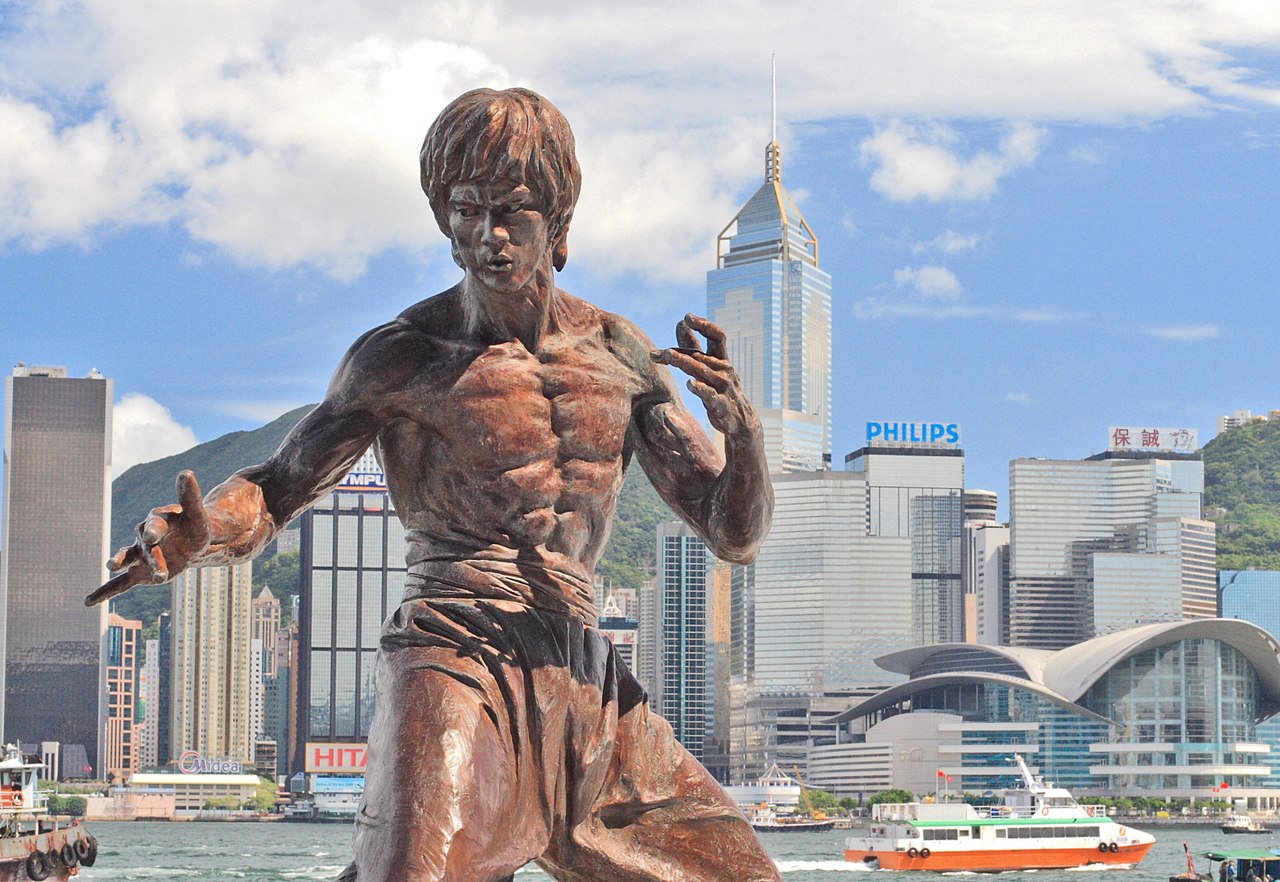
Inspirado por Bruce Lee , Fei Long es una estrella de cine de acción de Hong Kong que ingresa al torneo World Warrior para probar sus habilidades como artista marcial en Super Street Fighter II . En su final para Super Street Fighter II , abandona su carrera cinematográfica y forma su propio estilo de kung-fu conocido como el estilo Soaring-Heaven (飛天流, Hitenryū, que significa "estilo de vuelo celestial" ) . Más tarde aparece en otros juegos, incluidos Street Fighter Alpha 3 y Street Fighter IV . También aparece en otras obras, incluidas Street Fighter II: The Animated Movie , Street Fighter II V y la adaptación cómica de UDON de la historia de Street Fighter .
Engaño
Sr. Bisonte
T. Halcón
- Voz de: Shōzō Iizuka ( SFII: The Animated Movie , SFA3 ), Tōru Nara ( SSFIV ) (japonés); Steve Blum ( SFII: The Animated Movie ), Paul Dobson (serie animada), David Vincent ( SSFIV ) (inglés)
T. Hawk es uno de los cuatro nuevos personajes introducidos en Super Street Fighter II . Es miembro del clan indígena estadounidense ficticio Thunderfoot , cuya tierra natal fue tomada más de 30 años antes de los eventos del juego por M. Bison, quien también asesinó a su padre, Arroyo Hawk. [40] [41] Fue presentado como un luchador; a pesar de su altura de más de 7 pies, es mucho más rápido y más maniobrable que otros personajes de tipo grande de la serie, como Zangief y Sagat , a pesar de su enorme cuerpo. [42] [43] Como se ve con movimientos como el "Condor Dive" de largo alcance, su objetivo estratégico principal no implica agarrar a los oponentes de cerca. [44] Durante el desarrollo de Super Street Fighter II , T. Hawk fue nombrado " Geronimo ", pero su nombre fue cambiado después de que un miembro del personal estadounidense sugiriera que el nombre "Geronimo" podría verse como racialmente ofensivo. [45] El peinado de T. Hawk también fue cambiado de un corte de pelo estilo Elvis a uno más acorde con su herencia por sugerencia de Steve Patton, un miembro del personal de la oficina estadounidense de Capcom que es de ascendencia nativa americana. [44] Desde entonces ha aparecido en múltiples juegos futuros, incluidos Street Fighter Alpha 3 y Super Street Fighter IV . También aparece en películas, como la versión cinematográfica de acción real de 1994 de Street Fighter (interpretado por Gregg Rainwater ) y Street Fighter II: The Animated Movie , y la serie de dibujos animados Street Fighter .
Vega
Ken violento
Zangief
Introducido en elStreet Fighter Alfaserie
Cody
- Voces de: Nobutoshi Canna ( CD Final Fight ), Koichi Yamadera ( SFA3 ), Nobuyuki Hiyama ( Álbum de drama de SFA3 ), Daisuke Kishio ( SSFIV , SFXTK , SFV ) (japonés); Michael T. Coleman ( SSFIV , SFXT , SFV ) (inglés)
Cody Travers (コーディー・トラバース, Kōdī Torabāsu ) aparece por primera vez como el personaje principal del beat-em-up de 1989 Final Fight , donde es uno de los tres personajes jugables del juego. En el juego, es un artista marcial cuya novia Jessica ha sido secuestrada por Mad Gear Gang. Forma equipo con su amigo, Guy , y el padre de Jessica, Mike Haggar .
Después de los eventos de Final Fight , Cody es mencionado en la secuela de SNES , Final Fight 2 , donde se lo muestra en el flashback de apertura como el que da el golpe final al líder de la pandilla Mad Gear, Belger, del primer juego, pero el propio Cody no aparece en el segundo juego en absoluto. Su ausencia del segundo juego recibió una explicación en la historia de que se estaba tomando unas vacaciones con Jessica durante el tiempo de Final Fight 2.
Cody hace un cameo en el escenario de Guy, ambientado en la pelea final , en Street Fighter Alpha 2 , junto a su novia, Jessica. La pareja hace un cameo similar en Marvel Super Heroes vs. Street Fighter , en el que están entre los espectadores que miran la pelea en el fondo del escenario "Mall Madness".
Su siguiente aparición importante fue en Street Fighter Alpha 3 de 1998. En el juego, Cody había terminado su relación con Jessica (que desde entonces dejó Metro City para estudiar en el extranjero en Europa) y se convirtió en un delincuente convicto, habiendo sido encarcelado después de convertirse en un justiciero. Aburrido de su vida, Cody había vagado por las calles en busca de cualquier gentuza que pudiera encontrar, y posteriormente los golpeó hasta que finalmente fue atrapado y encarcelado. En lugar de sus jeans y camiseta blanca de Final Fight , el guardarropa de Cody ahora consiste en un uniforme de prisión a rayas azules y blancas con esposas en las muñecas (que en realidad puede quitarse cuando se burla de su oponente, pero pelea usándolas de todos modos) y barba incipiente en la cara. Su estilo de lucha en el juego está inspirado en sus habilidades de Final Fight . Durante su historia, Cody es desafiado por Birdie y termina uniendo fuerzas con su amigo y ex aliado, Guy, en su lucha contra M. Bison.
Cody aparecería en dos juegos de Final Fight posteriores a su aparición en Alpha 3. Final Fight Revenge , un juego de lucha en 3D basado en Final Fight también lanzado en 1998, presenta a Cody desde su representación en el Final Fight original . En el final de su personaje, es arrestado por el oficial de policía Edi E. después de ser incriminado por los miembros sobrevivientes de Mad Gear y se lo muestra en el final de Poison con el mismo atuendo de presidiario que usa en Street Fighter Alpha 3. En el segundo spin-off de Final Fight , Final Fight: Streetwise de 2006 , presenta a Cody [46] como el hermano mayor y mentor del nuevo personaje principal, Kyle. Cody fue encarcelado voluntariamente por un crimen no especificado cometido por Guy, lo que provocó una pelea entre los dos ex amigos. Al salir de prisión, las constantes peleas de Cody habían pasado factura a sus propias rodillas, en las que había desarrollado artritis desde dentro de ellas y que el propio Cody se vio obligado a retirarse de la lucha convencional, convirtiéndose en un esquinero para Kyle durante su carrera desde dentro del circuito de lucha subterránea de Metro City. Durante los eventos de Final Fight Streetwise , Kyle se entera de que Cody había estado tomando una nueva droga callejera conocida como "GLOW", que se dice que da al usuario una fuerza y poder inmensos, pero los vuelve violentos y peligrosos al mismo tiempo. Finalmente, Cody es secuestrado por el padre Bella (que luego se revela como el hermano menor de Belger) y Bella lo usa como conejillo de indias con lavado de cerebro, que busca venganza contra él por la muerte de su hermano. Al final, Cody recupera sus sentidos y ayuda a Kyle a derrotar a Bella. Pocos días después, el efecto del GLOW cura a Cody de la artritis cuando regresa a su antiguo yo humano.
Cody regresó en Super Street Fighter IV , escapando de la prisión para tratar de curar su aburrimiento. Su rival es Guy, quien intenta convencerlo de que se una a él para luchar contra Seth. Después de derrotar a Seth, Cody se encuentra con Guy una vez más y después de desviar los elogios de Guy, se va para regresar a su celda donde dice que pertenece. Cody también aparece como un personaje DLC en Street Fighter X Tekken , con Guy como su compañero de equipo oficial. [47]
Cody regresó como personaje jugable en Street Fighter V. Ahora libre de prisión y ya no obligado a usar el uniforme y las esposas, Cody sucede a Mike Haggar como el nuevo alcalde de Metro City. Aunque está aburrido de la burocracia del puesto y extraña luchar contra las pandillas de la ciudad, disfruta en secreto de su nueva vida. Bajo la dirección de Cody, a partir de Street Fighter 6 World Tour, Metro City se vuelve mayormente animada. [48]
Un episodio de la serie animada estadounidense Street Fighter titulado "Final Fight" adapta la trama del juego beat-em-up original de 1989, con Cody retratado como un personaje de ingenio lento y mal genio con acento sureño. En el episodio, Cody y Guy, después de enterarse de que la novia de Cody y la hija de Haggar, Jessica, es secuestrada por la pandilla Mad Gear, se van a luchar contra ellos por su propia cuenta, mientras que Ryu y Ken son contratados por Haggar para infiltrarse en la pandilla con el fin de salvar a su hija. Cody golpea a Belger desde la ventana superior de su ático (aunque Belger no muere) y rescata a Jessica. También aparece en algunos de los cómics de Street Fighter de UDON . En Resident Evil Zero , Billy Coen puede tener el traje de prisión de Cody como un traje adicional como DLC. El luchador profesional Kenny Omega interpretó a Cody para un tráiler de acción en vivo de Street Fighter V. [49]
Y
Ryu malvado
Chico
- Voces de: Yūsuke Numata ( Final Fight CD ), Tetsuya Iwanaga ( serie SFA , FFR , Capcom Fighting Evolution , Namco × Capcom ), Tsuguo Mogami ( SSFIV , SFXTK ) (japonés); Jason C. Miller ( SSFIV , SFXTK ) (inglés)
Guy es uno de los tres personajes jugables en la versión arcade original de Final Fight , lanzada para las salas de juegos por Capcom en 1989. En la historia de fondo del Final Fight original , Guy es establecido como el 39º sucesor del estilo Bushin Ninpo. Ayuda a su amigo Cody, así como al alcalde de Metro City, Mike Haggar, a rescatar a Jessica, que es la hija de Haggar y la novia de Cody, de la pandilla Mad Gear.
Debido a limitaciones de espacio, Guy fue omitido inicialmente del puerto de SNES del juego, con Cody y Haggar siendo los únicos personajes jugables en esa versión. Capcom produjo más tarde una segunda versión de SNES titulada Final Fight Guy , que reemplazó al personaje de Cody con el de Guy (que es el único personaje que aparece en la portada del juego). Las versiones posteriores del juego, como Final Fight CD para Sega CD y Final Fight One para Game Boy Advance , incluirían a los tres personajes. Capcom también produjo un juego de NES titulado Mighty Final Fight , una parodia del Final Fight original que presenta a los tres personajes.
En 1993, Capcom lanzó Final Fight 2 , una secuela creada específicamente para SNES. En esta entrega, el sensei de Guy , Genryusai, y su hija Rena (la prometida de Guy), son secuestrados por la nueva encarnación de Mad Gear. En la historia del juego, Guy se encuentra en una misión de entrenamiento y no puede rescatar a su prometida y maestra. En cambio, el juego presenta a la cuñada de Guy, Maki Genryusai , que también ha sido entrenada en el mismo estilo de lucha, y Carlos Miyamoto, un espadachín sudamericano. Guy solo aparece al final del juego, aunque el juego presenta íconos de potenciadores con la forma de su personaje.
En Final Fight 3 , lanzado en 1995, Guy finalmente regresa a Metro City y se une a Haggar para librar a Metro City de la pandilla Skull Cross, la última pandilla que intenta continuar donde Mad Gear lo había dejado. A ellos se unen la oficial de la SCU de Metro City, Lucia Morgan, y el ex miembro de la pandilla que traicionó a la pandilla, Dean (que quería venganza cuando Skull Cross asesinó a su familia). Los cuatro tienen éxito y pueden librar a Metro City de los criminales. Metro City queda en ruinas, pero a Guy no parece importarle y deja eso en manos de Haggar.
En 1998, Guy apareció en Final Fight Revenge , el juego de lucha de producción estadounidense para arcades y Sega Saturn . En 2006, se lanzó la segunda secuela de Final Fight de producción estadounidense , Final Fight: Streetwise , un personaje de Guy reinventado como un señor del crimen japonés en el distrito Japan Town de Metro City.
Cuando Capcom produjo el Street Fighter Alpha original en 1995, Guy sería uno de los dos personajes de Final Fight que se incluirían en el juego junto con el jefe de la segunda etapa del juego, Sodom . Fue seleccionado para su inclusión debido a su gran popularidad en ese momento. [50] Guy y Sodom se unirían a Rolento en Street Fighter Alpha 2 de 1996 y a Cody en Street Fighter Alpha 3 de 1998 , seguido de la aparición de Maki en las versiones portátiles de Alpha 3. En los juegos Alpha , se revela que el predecesor Bushin de Guy es un hombre llamado Zeku, que aparecería en el final de Guy en Street Fighter Alpha 2 para probar a Guy para su sucesor. La presencia de Zeku en el juego contradice Final Fight 2 , que identifica a Genryusai como el sensei de Guy, ya que los diseñadores de los juegos Alpha no tuvieron en cuenta las secuelas de Final Fight de SNES al desarrollar los juegos. Zeku fue mencionado una vez más en la biografía de Guy en Street Fighter Alpha 3 .
En Street Fighter IV , Guy fue uno de los nuevos personajes agregados en Super Street Fighter IV . [51] En su final, se lo muestra rescatando a una Rose inconsciente de Bison. En el final de Rose se insinúa que podría ser el único lo suficientemente poderoso como para detener a Bison (aunque en Street Fighter V , Bison es destruido de una vez por todas por Ryu), y en el final de Cody, se muestra a Guy tratando de persuadirlo para que regrese al lado correcto de la ley. Guy también es el que lanzó el kunai en el final de Fei Long en el Street Fighter IV original , ya que Ibuki no tiene ninguna participación con SIN.
Guy es un personaje jugable en Capcom Fighting Jam , un juego de lucha crossover que también presenta personajes de Darkstalkers y Red Earth . Guy es un personaje jugable en el juego de rol táctico exclusivo para Japón Namco × Capcom , en el que se combina con Sho (Ginzu) de Captain Commando como una sola unidad, la historia del juego representa a Sho como su futuro sucesor de Bushin-ryu. También aparece como un personaje jugable a través de DLC (en realidad contenido en el disco del juego [52] ) en el juego de lucha crossover de la serie Tekken y Street Fighter Street Fighter X Tekken , en el que también Raven de Tekken puede vestirse con el traje de Guy. [53 ]
Guy aparece en la serie animada estadounidense Street Fighter en un episodio titulado "Final Fight", que adapta la trama de su homónimo. En este episodio, Guy y Cody se hacen amigos de Ryu y Ken , quienes los ayudan a luchar contra Mad Gear Gang para salvar a Jessica. También hace una aparición en Street Fighter Alpha: The Animation como uno de los guerreros que han aceptado acompañar a Ryu, Ken y Chun-Li a la base del profesor Sadler y rescatar a Shun, el supuesto hermano de Ryu. Mientras los luchadores luchan entre sí fuera de la base de Sadler para demostrar sus habilidades, Guy lucha contra Dhalsim. Cuando se revelan las verdaderas intenciones de Sadler, Guy y los otros luchadores son liberados por Ken y Chun-Li.
Guy hace una aparición en el cómic Street Fighter II Turbo de UDON , en el que M. Bison le dio una invitación para luchar en la rama japonesa del Street Fighter Tournament . Dan intenta quitarle la invitación a Guy por la fuerza, pero es derrotado rápidamente. Por la noche, Dan irrumpe en la casa de Guy y le roba su invitación; Guy presencia todo el evento, pero decide darle una oportunidad a Dan, ya que no planeaba unirse a la competencia en primer lugar. Guy también aparece en la adaptación al manga de Street Fighter Alpha de Masahiko Nakahira, donde se lo representa como un conocido ninja justiciero al que se le atribuye el fin de varias organizaciones criminales. Guy se disfrazó de miembro de Shadaloo para enfrentarse a M. Bison, pero se ve obligado a revelar su identidad cuando Vega intenta matar tanto a Adon como a un Ryu poseído . Después de acabar rápidamente con Vega, Guy patea varios bidones de aceite hacia Ryu (un guiño a la serie Final Fight ), luego procede a luchar contra Ryu. Gracias a la velocidad superior de Guy y a su entrenamiento para luchar contra varios enemigos a la vez, Guy puede bloquear todos los ataques del Shun Goku Satsu de Ryu y derrotarlo. Se lo ve por última vez observando la batalla entre Ryu y Sagat.
El personaje de Guy fue creado y diseñado originalmente por Akira "Akiman" Yasuda , quien sintió que era una tradición de la compañía Capcom presentar a menudo un personaje ninja, incluso en el juego de temática occidental Gun.Smoke . Su nombre en progreso era simplemente "Ninja", [54] inspirado en el actor Sho Kosugi [55] que a menudo interpretó personajes ninja durante la década de 1980. Según Tatsuya Minami de Capcom, Guy fue incluido en Street Fighter porque era extremadamente popular y fácil de traducir al género de lucha uno contra uno. [56]
Ingrid
- Expresado por: Masako Jō
Ingrid (イングリッド, Inguriddo ) estaba programada para aparecer en el juego arcade cancelado Capcom Fighting All-Stars usando el apodo de "Diosa Eterna", pero sus animaciones fueron completamente rediseñadas en 2D, y fue presentada como un personaje jugable en Capcom Fighting Jam para las salas de juegos, Xbox y PlayStation 2. Entró en el universo de Street Fighter en Street Fighter Alpha 3 MAX para PSP. Poco se sabe sobre ella, aunque Alpha 3 MAX presenta algunas posibilidades sobre sus verdaderos orígenes. Su fuente de poder aparentemente se deriva de Psycho Power , pero no es puramente malvada como la de M. Bison ; aunque aparentemente bastante similar al Soul Power de Rose. Ingrid afirma que ella es la verdadera portadora de lo que se llama "Psycho Power", diciéndole a M. Bison que el Psycho Power es "su poder" y que lo ha robado. Su poder es tan intenso que, si se le da la oportunidad, puede romper la locura de Ryu si alguna vez sucumbe al Satsui no Hado. [57] Nunca se explica cómo M. Bison llegó a poseer el objeto, aunque tiene un parecido con las crestas en su cabeza. Cuando M. Bison finalmente es derrotado, comenta que un ser humano normal como él no podría controlar tal poder y se lleva todo el Psycho Drive con ella cuando se va. Ingrid también posee habilidades psíquicas similares a las de Rose. Se dirige a Ryu y Rose por su nombre, a pesar de que los dos nunca le revelan sus nombres. Rose tampoco puede mirar hacia el futuro de Ingrid, como lo hizo con otros Street Fighter. [58] El final de arcade de Ingrid revela que tiene el poder de viajar en el tiempo, enviándose al año 201X donde se da cuenta de que Ryu "está tramando algo interesante". El perfil del personaje de Ingrid en Street Fighter V ignora su historia de Street Fighter Alpha 3 MAX , modificando su historia de fondo para que esté más en línea con cómo originalmente iba a ser retratada en Capcom Fighting All-Stars . [59] Ingrid también juega un papel en la historia de fondo de Street Fighter X Tekken . Aparece como una unidad en solitario en Project X Zone 2. [ 60] Además, su imagen aparece como un traje alternativo descargable para Karin en Street Fighter V.
En la encuesta oficial de personajes de Street Fighter de Capcom , Ingrid ocupó el cuarto lugar como personaje más popular en el ranking japonés. [61] En otra encuesta oficial realizada por Bandai Namco , Ingrid fue el tercer personaje de Street Fighter más solicitado para ser agregado a la lista de Tekken X Street Fighter , habiendo recibido el 15,38% de los votos. [62] Ingrid también se ubicó en el décimo lugar por Heavy.com como uno de los 10 personajes que querían ver en Ultra Street Fighter IV . [12] En una encuesta de 2014 realizada por la revista de juegos japonesa Famitsu , Ingrid fue clasificada como uno de los tres personajes más solicitados para ser agregados a Ultra Street Fighter IV . [63]
Según Matt Moylan, director de publicaciones de UDON Entertainment , Ingrid no puede usarse en los cómics de Street Fighter sin un permiso especial, ya que Capcom aparentemente la ha reclasificado como personaje invitado. [64] [65] A pesar de esto, Ingrid todavía se incluyó como una opción en la encuesta Who's Your Top Tier Street Fighter character dentro del Battle Hub de Street Fighter 6 en junio de 2024, que presentó la lista completa de luchadores de la serie principal Street Fighter además del Capitán Sawada. [66]
Julio y junio
- Voces: Akiko Komoto ( SFA3 , Namco × Capcom ), Sachiko Kojima ( SSFIV OVA), Kumi Tanaka ( SFV ) (japonés); Michelle Ruff ( SSFIV OVA), Elizabeth Maxwell ( SFV ) (julio) (inglés)
- Voces: Akiko Komoto ( SFA3 , Namco × Capcom , SFV ), Haruka Kimura ( SSFIV OVA) (japonés); Michelle Ruff ( SSFIV – SFV ) (junio) (inglés)
Juli (ユーリ, Yūri ) y Juni (ユーニ, Yūni ) hacen su primera aparición en la versión arcade de Street Fighter Alpha 3 como un par de sub-jefes. Antes de la batalla final contra M. Bison en el modo para un jugador , el jugador se enfrenta a ellos simultáneamente en una pelea de dos contra uno similar al combate de Batalla Dramática. Los dos personajes se pueden desbloquear en la versión arcade, pero no tienen una historia en el juego real, compartiendo su final con M. Bison. Son similares a Cammy en el diseño de personajes, pero tienen sus propios movimientos especiales y súper combos. Juli y Juni son los únicos personajes en Alpha 3 que tienen movimientos especiales combinados y súper combos; estos se usan exclusivamente cuando ambos personajes luchan en pareja durante el modo Batalla Dramática. [67] Juli y Juni son miembros de una unidad especial dentro de Shadaloo llamada las "Dolls", o Bison Elite Guard (ベガ親衛隊, Bega Shin'eitai ) , que está compuesta por doce mujeres jóvenes a las que se les ha lavado el cerebro para que sirvan como asesinas personales de Bison. Los doce miembros de las Dolls llevan el nombre de los meses del calendario gregoriano en varios idiomas, siendo Juli y Juni la palabra alemana para julio y junio. [68] [69] A Juli y Juni se les dio su propia historia y final individual cuando se convirtieron en parte de la lista de personajes regulares en las versiones de consola de Alpha 3 , en las que Juli es asignada para rastrear a Cammy y Juni para rastrear a Ryu. La historia de fondo de Juli se desarrolla aún más en las versiones de consola de Alpha 3 con la incorporación de T. Hawk al elenco. En la historia para un jugador de T. Hawk, se revela que Juli es Julia, su novia que solía vivir en su pueblo natal hasta que Shadaloo la secuestra y le lava el cerebro. [70]
Juli y Juni aparecen en Namco × Capcom como dos personajes enemigos a los que se enfrentan los protagonistas a lo largo del juego. Hacen apariciones especiales en SNK vs. Capcom: SVC Chaos , y siguen siendo NPC en los juegos principales de Street Fighter posteriores desde Super Street Fighter IV . Desde Street Fighter IV , como se muestra en la segunda precuela OVA que conmemoró Super Street Fighter IV , Juni fue la primera Doll en ser salvada y bajo la protección de Delta Red. En Street Fighter V , Juli y las otras Dolls tienen su mente original alterada por FANG, hasta que el miembro de las Dolls, Decapre, se convierte en un segundo para ser salvado y ayuda a Cammy y otros héroes en una incursión final en la Base Shadaloo, lo que le permite a Rashid usar un código dado por su difunta amiga a quien FANG asesinó para liberar a todas las Dolls. El modo World Tour de Street Fighter 6 revela que Juli y su compañera de la tribu Thunderfoot y también ex miembro de Shadaloo Dolls, Noebellum, regresaron a sus tribus de origen en algún momento posterior mientras permanecían en contacto con Delta Red, y la primera ahora está casada con T. Hawk.
Karin Kanzuki
- Voces: Miho Yamada ( SFA3 , Namco × Capcom ), Aya Endō ( SFV ) (japonés); Lauren Landa ( SFV ) (inglés)
Karin Kanzuki aparece originalmente como compañera de escuela de Sakura en el manga Street Fighter: Sakura Ganbaru! de Masahiko Nakahira , publicado entre 1996 y 1998. [71] La rivalidad de Karin con Sakura es análoga a la relación entre Ken y Ryu, la diferencia es que su personalidad es "más fría y egocéntrica". [72] Su apellido es un homenaje a Masaomi Kanzaki , un artista de manga que trabajó en el manga relacionado con Street Fighter II a principios de la década de 1990. [73] La primera aparición de Karin en un videojuego originalmente estaba destinada a ser Marvel Super Heroes vs. Street Fighter , pero finalmente fue eliminada. [72] Más tarde se integró en la serie de videojuegos Street Fighter como un personaje jugable en Street Fighter Alpha 3. El equipo de desarrollo de Street Fighter Alpha 3 presentó a Karin para proporcionar un contraste con R. Mika , un personaje diseñado para ser "complicado y técnico". [74] Para su aparición original en Street Fighter Alpha 3 , Karin, al igual que su rival Sakura, usa un sailor fuku con un esquema de color predominantemente rojo y una cinta azul. Su cabello está peinado en rizos largos y de gran tamaño al estilo de la era victoriana europea. [ cita requerida ] Su estilo de lucha es Kanzuki-ryū kakutōjutsu , un estilo de artes marciales mixtas que afirma haber creado ella misma.
En la historia de la serie, Karin es considerada la única hija de una familia corporativa ultra rica , que se comporta como una chica rica elitista estereotipada con una risa desagradable. [75] [76] Ella es atendida por al menos dos empleados que sirven como sus mayordomos. Su motivación original era "ser la ganadora de todo", y recurre a viajar por el mundo para rastrear y derrotar a Sakura para reparar una pérdida anterior en sus manos. Sin embargo, después de ganar su revancha con Sakura, Karin se da cuenta de que luchar para ganar sus victorias es, en última instancia, más importante que las victorias en sí mismas, [77] hasta el punto de que más tarde modifica el lema de la familia a "[uno] debe obtener lo que [quiere] por [su] propio esfuerzo". [78] Más adelante en la serie Sakura Ganbaru!, Karin compra la mayoría de las acciones de la corporación familiar Kanzuki Zaibatsu y derroca a su padre como su líder. A pesar de ello, él reflexiona para sí mismo que ella tiene un potencial excelente, aunque originalmente deseaba un hijo.
Karin aparece como un personaje jugable en el juego crossover Namco x Capcom , donde está emparejada con Sakura. También es jugable en Capcom Fighting Evolution . [79]
Karin es un personaje jugable en Street Fighter V , y conserva los mismos gestos y peculiaridades de personalidad observados en sus apariciones anteriores. [80] Ella está rediseñada con leggings ajustados y un abrigo marcial con mangas largas con volantes. [81] En V , Karin juega un papel importante como quien coordina los esfuerzos de su facción anti-Shadaloo en el asalto a la base principal de M. Bison, lo que lleva a su derrota final.
Maki
- Doblado por: Miki Nagasawa
Maki Genryusai (源柳斎 真紀, Genryūsai Maki ) aparece por primera vez en Final Fight 2. Ella y su hermana mayor, Rena, eran viejas amigas de Guy, quien luego se convierte en el prometido de su hermana y su futuro cuñado. Al igual que Guy, Maki también fue instruida por el sucesor de su padre, Zeku. [82] [83]
La trama de Final Fight 2 gira en torno al secuestro de Rena y su padre por parte de la recién revivida pandilla Mad Gear durante la ausencia de Guy. Maki solicita la ayuda de Mike Haggar y su amigo Carlos Miyamoto para rescatarlos. [84] Maki aparece en el manga Sakura Ganbaru!, vinculado a Street Fighter Alpha 2 , donde es una de las competidoras de Sakura Kasugano en un torneo patrocinado por la familia Kanzuki.
Maki hizo su debut en los juegos de lucha en Capcom vs. SNK 2: Mark of the Millennium 2001. El final de Maki en Capcom vs. SNK 2 implica que está buscando a Guy para desafiarlo por la sucesión del estilo Bushin luego de la muerte de su padre. [85] La historia de Maki en la versión de PSP de Alpha 3 juega con esta premisa y tiene a Maki luchando contra Guy como su penúltimo oponente en el modo para un jugador, antes de M. Bison ; en un guiño a su aparición en Sakura Ganbaru!, Maki también se enfrenta a Sakura como su quinto oponente.
Maki también aparece en la serie de videojuegos SNK vs. Capcom: Card Fighters Clash de SNK Playmore y en la serie de cómics Street Fighter de UDON , y hace cameos en los videojuegos Final Fight Revenge (en el final de Damnd) y Capcom Fighting Evolution , y en la serie de dibujos animados estadounidense Street Fighter (en el episodio "Final Fight"). Una figura de cuatro pulgadas de Maki fue lanzada solo en Japón como parte de un set de tres figuras Capcom vs. SNK 2 de Capcom , basado en la obra de arte de Kinu Nishimura para este juego; [86] Las figuras de Street Fighter Zero 3 de Maki también fueron lanzadas por otras compañías en 2002 y 2011. [87] [88]
Maki ha sido generalmente muy bien recibida por los periodistas de videojuegos. Según la reseña de Hyper de Final Fight 2 , "Capcom obtiene puntos PC por incluir un personaje femenino. Con demasiada frecuencia, las chicas son solo las víctimas indefensas del secuestro, pero Maki es tan dura y rápida como los chicos, y tiene algunas patadas muy dañinas en su repertorio". [89] Video Games & Computer Entertainment en su propia reseña agregó "La pelirroja y de piernas largas Maki seguramente llamará mucho la atención de los fanáticos de las luchas". [90] GamePower, a su vez, elogió su inclusión, afirmando que "Maki promete romper corazones (como el mío) y compartir el escenario con Chun-Li ". [91] Jeremy Parish para USGamer la describió como "la respuesta de Capcom a Mai Shiranui de The King of Fighters , [92] una declaración que Paste repitió al describirla como "una versión más modesta" que "prueba que el motivo de la ninja femenina no tiene por qué conducir a un mal diseño de personajes". [93] Al discutir los personajes "subutilizados" de Street Fighter , Todd Ciolek de Anime News Network opinó que "Maki podría haber sido enorme si CAPCOM la hubiera incluido en Super Street Fighter II en lugar de en una secuela de Final Fight ". [94]
El personaje también fue bien recibido en sus apariciones más allá de Final Fight 2. Den of Geek se quejó de que todas sus apariciones se definieron al tratar de demostrar que no era Guy, y a diferencia de otros "personajes obsesionados, como Sakura y Rufus, Maki no tenía mucho a lo que aferrarse", agregando además que les gustaría verla regresar, pero también que Capcom le dé una dirección diferente. [95] La revista australiana Cube agregó con respecto a su aparición en Street Fighter Alpha 3 que "puede verse linda, pero puede mezclarse con los luchadores más duros". [96]
Nash
- Voces de: Daiki Nakamura ( CD drama de SFII ), Toshiyuki Morikawa ( serie SFA – MVC2 ), Ryōichi Tanaka ( SFII V ), Kōsuke Toriumi ( SFV ) (japonés); Scott McNeil ( serie animada de SF ), Dean Wein ( doblaje de SFII V Animaze), Jay Hickman ( doblaje de SFII V ADV), Mike McFarland ( SFV ), Michael Daingerfield ( Puzzle Fighter ) (inglés)
Charlie Nash (チャーリー・ナッシュ, Chārī Nasshu ) es un soldado y antiguo compañero de armas de Guile. Originalmente, antes de Street Fighter V, el personaje era conocido simplemente como Nash (ナッシュ, Nasshu ) en Japón y como Charlie en las versiones extranjeras. El cambio de nombre se realizó siguiendo una sugerencia de un miembro del personal de la subsidiaria estadounidense de Capcom que sintió que "Nash" no sonaba lo suficientemente natural para que los jugadores estadounidenses se identificaran con él. [97] [98] Los dos nombres luego se combinarían en ciertos medios con licencia de Street Fighter , particularmente la serie de cómics de Udon , para formar el nombre completo "Charlie Nash", que fue adoptado oficialmente por los juegos a partir de Street Fighter IV . [98] Como resultado, Street Fighter V fue el primer juego en abandonar la práctica habitual de cambiar el nombre del personaje a "Charlie" en las versiones extranjeras, refiriéndose a él principalmente como "Nash" en cada región. [98]
Nash es mencionado por primera vez por Guile , donde su motivo para ingresar al torneo es confrontar al anfitrión del torneo, M. Bison, por un incidente en Camboya que lo involucró a él, Bison y Charlie Nash. [98] Las secuelas posteriores de la serie desarrollaron su historia de fondo, donde es el camarada militar y amigo cercano de Guile, que busca vengar la muerte de su amigo que fue asesinado por Bison en algún momento antes de los eventos del juego. [98]
Nash aparece por primera vez como personaje jugable en Street Fighter Alpha , donde es un primer teniente de la Fuerza Aérea de los Estados Unidos, [99] asignado para rastrear a Bison y descubrir la corrupción dentro del ejército estadounidense. La secuencia final de Charlie en el Alpha original , así como en Street Fighter Alpha 2 , terminan con él siendo asesinado después de derrotar a Bison: en Alpha , Bison lo ataca por la espalda cuando pide refuerzos y en Alpha 2 , un oficial corrupto que pilotea su helicóptero de respaldo previsto le dispara para Bison y lo envía cayendo por una cascada. Street Fighter Alpha 3 fue inicialmente la única excepción a esta convención, que en realidad tiene a Charlie sobreviviendo en su final. Sin embargo, su escena de muerte en Alpha 2 es tratada por Street Fighter V como canon, lo que hace que la aparición de Charlie en Alpha 3 sea semi-canónica.
A pesar de la aparente muerte de Nash, Street Fighter IV proporcionaría pistas de su supervivencia en la historia del juego. Charlie regresa como un luchador jugable en Street Fighter V , que revela que se sometió a una cirugía reconstructiva después de ser herido mortalmente por M. Bison, dejándolo con puntos de sutura en todo el cuerpo y la cabeza con parches de piel grises, como muertos, así como una joya verde en la frente. En realidad, es obra de los Illuminati, y su proyecto de resurgimiento fue encabezado por Kolin (bajo la apariencia de Helen ), utilizando la versión prototipo de muestra corporal de Twelve, Eleven, creada por Urien. Después de ser revivido, la vida útil de Nash es limitada, ya que Nash debe ahorrar su energía para enfrentarse a Bison. Nash sacrifica su vida al intentar una misión suicida absorbiendo los poderes de Bison tanto como puede, debilitándolo lo suficiente para que Ryu acabe con Bison. [100]
Charlie también aparece como un luchador jugable en X-Men vs. Street Fighter y Marvel vs. Capcom 2 , así como en el inédito Capcom Fighting All-Stars . Además de las apariciones en juegos de lucha, Charlie es un personaje jugable en el juego de disparos Cannon Spike . Una versión alternativa de Charlie llamada Shadow aparece como un personaje oculto en el juego crossover Marvel Super Heroes vs. Street Fighter . El sprite de Shadow es el mismo que el de Charlie, pero con casi todo su cuerpo ennegrecido y un ojo blanco brillando detrás de sus gafas. Tiene todos los movimientos de Charlie. Shadow también aparece en Marvel vs. Capcom como un personaje secundario que puede ayudar al jugador en el combate.
En Super Smash Bros. Ultimate , Nash aparece como un espíritu en el modo aventura.
En la adaptación cinematográfica de 1994 Street Fighter , Charlie se fusiona con el personaje de Blanka para formar el personaje Carlos "Charlie" Blanka , un amigo brasileño de Guile y un soldado de su unidad, que es tomado prisionero en el complejo Shadaloo de Bison. Cuando Bison descubre la amistad entre Charlie y Guile, envía a Charlie para que el Dr. Dhalsim le lave el cerebro y lo transforme en la máquina de matar de piel verde y cabello rojo conocida simplemente como Blanka.
Charlie Nash es interpretado por Chris Klein en Street Fighter: The Legend of Chun-Li , donde es retratado como miembro de la Interpol. [101] [102]
Nash es un personaje central en la miniserie Street Fighter: Resurrection interpretado por Alain Moussi . [103]
Aunque no aparece físicamente en la película, Charlie es aludido varias veces en Street Fighter II: The Animated Movie . El diálogo revela que antes de los eventos de la película, fue asesinado por Bison, y ahora sirve como el motivo principal de Guile para la venganza personal contra el señor de la guerra. Aunque simpatiza con Guile por perder a Charlie, Chun-Li convence con éxito a Guile de dejar de lado su venganza personal y ayudar a la Interpol a luchar contra Shadaloo. Guile luego intenta luchar contra Bison, quien se burla abiertamente de Charlie para provocarlo antes de derrotarlo, pero lo perdona como un insulto.
En la serie de televisión de anime de 1995 Street Fighter II V , Nash aparece por primera vez en el episodio 19, cuando él y Guile son contratados por el padre de Ken para rescatarlo de Bison. Nash es asesinado más tarde en el episodio 26 después de que Bison lo estrangula hasta la muerte. Conserva el nombre de "Nash" para el doblaje en inglés, aunque Guile lo llama "Charlie" justo antes de su muerte en el episodio 26, y el narrador se refiere a él como "Charlie Nash". Como la serie se produjo mientras Street Fighter Alpha todavía estaba en sus primeras etapas de desarrollo, Charlie no se parece en nada a su contraparte del videojuego, sino que luce cabello castaño peinado hacia atrás y barba, vagamente similar al actor Jean Reno .
La serie animada estadounidense Street Fighter , que se emitió entre 1995 y 1997, adapta el origen de Blanka de la película de 1994, combinando a Charlie y Blanka en un solo personaje. El color de pelo y el tono de piel de Charlie también se cambiaron para adaptarse a la diferente etnia del personaje en el programa. En "Eye of the Beholder".
En la adaptación al manga de Street Fighter II de Masaomi Kanzaki , Guile es directamente responsable de la muerte de Charlie. Años antes de los eventos del manga, Bison usa a Charlie y otros miembros de la unidad de Guile como sujetos de prueba inconscientes para una sustancia que controla la mente. Charlie se volvió loco durante una misión y comenzó a atacar a aldeanos desarmados, lo que provocó que Guile lo matara. Charlie solo se muestra en un panel en el manga, que lo representa como una silueta con una sonrisa demente.
En la serie de cómics estadounidense Street Fighter , el nombre japonés de Charlie se convierte en su apellido, lo que le da el nombre completo de Charlie Nash. El cómic continúa incluyendo que, de hecho, fue Charlie quien le enseñó a Guile cómo usar la técnica "Sonic Boom" y, de hecho, cómo luchar. Udon también incluiría a Shadow como parte de la historia del cómic: Bison captura a Charlie, lo convierte en Shadow y lo usa como agente. Intenta que Shadow mate a Guile y Chun Li en Japón, pero Charlie recupera su memoria en la pelea y huye. Más tarde intenta reunirse con sus amigos, pero es abatido a tiros por el helicóptero de Bison. Con lo último de su fuerza, Charlie se sacrifica usando su Somersault Justice para destruir el acantilado en el que estaban luchando, enviando tanto a Bison como a él mismo al mar. También tiene un nuevo cómic llamado Street Fighter V: The Life and Deaths of Charlie Nash que explica lo que le sucedió antes de Street Fighter V y por qué se ve como se ve.
Gavin Jasper de Den of Geek lo describió como simplemente más genial que Guile en todos los sentidos, y agregó elogios por su aparición en Street Fighter V y agregó: "Su historia en el último juego es trágica, pero también es una buena pieza de cierre, incluso si no tuvimos suficiente interacción Guile/Charlie". [33]
R. Mika
Rolento
- Voz de: Jin Yamanoi ( serie SFA , CVS2 , SFXTK , USFIV ), Katsuhiro Harasawa ( SFA: The Animation ) (japonés); Dameon Clarke ( SFXTK , USFIV ) (acreditado como Alan Smithe ) (inglés)
Rolento hizo su debut como jefe de la cuarta etapa en el Final Fight original . Es un ex miembro de la unidad ficticia de fuerzas especiales Red Beret y sirve como supervisor de la planta de armas de la pandilla Mad Gear. Cuando es derrotado, en lugar de simplemente desvanecerse mientras yace en el suelo como la mayoría de los enemigos en el juego, se pone de pie y se explota con sus propias granadas, desapareciendo completamente chamuscado. Rolento y su etapa "Industrial Area" no se incluyeron en el puerto de Super Nintendo Entertainment System de Final Fight , ni en su relanzamiento Final Fight Guy , pero se incluyeron en otros puertos del juego, como las versiones de Sega CD y Game Boy Advance (si el jugador se enfrenta a Rolento como " Alpha Cody " en la versión de GBA, Cody bromeará sobre la omisión de Rolento en la versión de SNES). En la secuela exclusiva de SNES , Final Fight 2 , Rolento sirve como el jefe de la quinta etapa, Italia (su nombre está transcrito como " Rolent " tanto en el juego como en el folleto de instrucciones).
Su debut como luchador jugable fue en el juego de lucha Street Fighter Alpha 2 en 1996, en el que busca construir una utopía militar tras la caída de la pandilla Mad Gear y quiere reclutar a su antiguo aliado y némesis, Sodom y Guy respectivamente, para su causa. El final de Rolento en Alpha 2 lo muestra invadiendo las calles de Metro City después de formar su propio ejército. En Street Fighter Alpha 3 , Rolento intenta persuadir a Cody, otro antiguo némesis, para que se una a su ejército. En su final, Rolento intenta infiltrarse en la base subterránea de Shadaloo para obtener el arma secreta de M. Bison , el Psycho Drive, solo para destruirlo con la ayuda de Sodom. [23] Su encarnación de la serie Alpha también aparece como un personaje jugable en el juego de lucha crossover de 2001 Capcom vs. SNK 2 , así como en el juego de lucha de 1999 Final Fight Revenge que sigue su historia de fondo de la serie Alpha .
Rolento regresa como personaje jugable en el juego de lucha crossover de 2012 Street Fighter X Tekken , donde su compañera oficial es la chica ninja Ibuki . En 2013, se anunció que aparecería como personaje jugable en Ultra Street Fighter IV . [104]
Rolento hizo su primera aparición fuera de la serie Final Fight en el Street Fighter Alpha: Warriors' Dreams original , donde hace un cameo en el final de Sodom entre otros ex miembros de Mad Gear reunidos por Sodom para ayudar a reconstruir la pandilla. Aunque no aparece en Street Fighter EX , Rolento también juega un papel en la historia de fondo de Doctrine Dark en este juego, como el responsable de paralizarlo físicamente y causar su crisis psicótica.
Está disponible en la serie SNK vs. Capcom: Card Fighters Clash , y aparece en Capcom World 2. Fuera de los videojuegos, Rolento aparece en la serie animada Street Fighter , en la miniserie de anime OAV Street Fighter Alpha: The Animation , en el cómic de Street Fighter, Street Fighter II Turbo , y en el manga Sakura Ganbaru . En 2012, Rolento regresó al papel de jefe en el juego de plataformas Street Fighter X Mega Man , como enemigo de Mega Man . [105]
Rosa
- Voces: Yūko Miyamura ( SFA , SFA2 ), Michiko Neya ( SFA3 , Namco × Capcom , Capcom Fighting Evolution ), Ai Orikasa ( SFA: The Animation ), Akeno Watanabe ( SFIV , SFV ) (japonés); Teryl Rothery (serie animada), Carolyn Hennesy ( SFA: The Animation ), Gina Grad ( SFIV , SFV ) (inglés)
Rose aparece por primera vez en Street Fighter Alpha , caracterizada como una adivina mística de Génova , Italia, que busca en el mundo a M. Bison para erradicar su poder maligno con su habilidad única, conocida como Soul Power. Al final del juego, Rose se enfrenta a Bison en combate y parece matarlo. Sin embargo, en el final de Street Fighter Alpha 2 , consulta sus cartas del tarot y se entera de que Bison sobrevivió. [106] Rose se inspiró en el personaje de JoJo's Bizarre Adventure, Lisa Lisa. [107]
En el clímax de Street Fighter Alpha 3 , Rose se enfrenta a Bison una vez más y le clava el puño en el pecho, canalizando su energía hacia su cuerpo. Mientras Bison lucha con Rose, revela que ambos comparten la mitad de "la misma alma". Al final, la forma física de Bison se evapora y Rose colapsa por agotamiento. Poco después, Guy la recupera y la lleva a un lugar seguro. [108] Aunque parece que Bison ha sido asesinado, ha transferido su conciencia a Rose, reclamando efectivamente su cuerpo. En el período entre la serie Alpha y Street Fighter II: The World Warrior , Bison permanece dentro del cuerpo de Rose hasta que sus científicos puedan formar uno nuevo (aunque más débil) para él. Bison aparece como el jefe final de Street Fighter II . La Guía de entrenamiento de Street Fighter IV revela que Rose sobrevivió a la posesión pero no tiene memoria de ella. [109]
Rose regresa en las versiones caseras de Street Fighter IV como un personaje adicional, con la voz de Gina Grad. Su propósito es rastrear a Bison y detenerlo para siempre después de enterarse de que sobrevivió al ataque de Akuma al final del segundo torneo World Warrior. [109] Mientras compite en el torneo, se encuentra con Ryu . Ella está decidida a detener su avance para su propia protección, diciendo que él es "la última esperanza", y luchan a regañadientes. En su final, se enfrenta a Bison, quien le quita el poder restante, lo que la hace caer al suelo inconsciente. Mientras Bison se para sobre ella, declara su intención de mantenerla con vida para satisfacer su alma. La situación se resuelve en el final de Guy de Super Street Fighter IV , cuando Guy rescata a Rose de Bison mientras intenta huir con ella. Rose aparece como un personaje jugable en la quinta temporada de Street Fighter V , donde ha asumido un nuevo aprendiz, Menat.
Rose aparece en Namco × Capcom , primero como una unidad enemiga, siendo obligada a servir a Black Valkyrie de Valkyrie no Densetsu a través de un contrato de almas junto a Armor King de Tekken , luego como un aliado completamente jugable, después de que Heihachi Mishima llega con la Semilla Dorada, dándosela a Valkyrie quien luego la usa para permitir que sus almas escapen; después de ser liberada, Rose intenta usar su Soul Power para detener a M. Bison y se une al grupo por el resto del juego. También es un personaje jugable en Capcom Fighting Evolution y un jefe en Street Fighter X Mega Man .
Rose hace un cameo en un episodio de la primera temporada de la serie de dibujos animados estadounidense Street Fighter ("The Medium is the Message") como competidora en un torneo de Street Fighter en India junto con otros personajes de Street Fighter Alpha . Tiene un papel más destacado en el episodio de la segunda temporada "The Flame and the Rose", donde se une a Ken y Blanka para luchar contra Bison.
Rose también juega un papel importante en la adaptación al manga de 1995 de Street Fighter Alpha de Masahiko Nakahira, donde es una adivina que guía a Ryu en su búsqueda para controlar a Dark Hadou. Ella juega un papel similar en el OVA de 1999 de Street Fighter Alpha: The Movie .
Rose aparece en Street Fighter: The Legend of Chun-Li interpretada por Elizaveta Kiryukhina como el objetivo ulterior de M. Bison en la historia, habiéndola buscado en Bangkok , donde fue abandonada después de que su madre muriera. Al igual que en los juegos, se la representa como la manifestación del lado bueno de M. Bison, aunque nace en lugar de ser creada, lo que la convierte en la hija de M. Bison. Por razones de seguridad, se la conoce alternativamente como la "Rosa Blanca" para ocultar su identidad. Debido a que ha vivido toda su vida en Bangkok, es incapaz de hablar inglés. En las escenas eliminadas de la película, hay una parte en la que se enfrenta a Nash y sus ojos se ponen rojos, lo que significa que probablemente estaba destinada a ser poseída por M. Bison como lo estaba en los juegos.
En los cómics de Street Fighter de UDON en estrecha colaboración con Capcom, se cuenta que Rose era miembro de una tribu de Roma (también conocidos como gitanos) que seguían a una mujer de pelo blanco conocida simplemente como Master. La mujer tenía un rayo amarillo brillante en la frente y un peinado muy similar al de Rose. Cuando Rose era una niña (aproximadamente diez años de edad), M. Bison, un ex alumno de Master, regresó a la tribu y declaró que iba a matar a Master, ya que su conocimiento del Soul Power era una amenaza para él. Aunque Master luchó valientemente, el Psycho Power de Bison (el Soul Power corrupto) finalmente la mató a ella y a casi todas las demás personas presentes en el pueblo. Solo sobrevivió un hombre que estaba cortando leña lejos del pueblo. Regresó después de la explosión y descubrió a Rose inconsciente que ahora tenía el rayo de Master en la frente (eventos en Street Fighter II #1). En Street Fighter #2, Cammy estaba rastreando a Ken y Ryu en San Francisco , donde fue interceptada por Rose. Más tarde, Rose limpió por completo a Cammy de la influencia del Psycho Power y borró su lavado de cerebro. Más tarde depositó a Cammy en la puerta de la Embajada Británica en Italia, donde su respuesta instintiva a un ataque terrorista la llevó directamente a ser reclutada por Delta Red, la organización para la que trabaja en Super Street Fighter II . Rose se angustia cuando Cammy, bajo el empleo del MI5 , no solo regresa a una vida de violencia, sino que también se involucra en misiones que inevitablemente la llevarán de regreso a Bison. Al final de la línea de cómics de Street Fighter II (número 6), Rose se enfrenta directamente a Bison (junto con Cammy) e intenta finalmente acabar con él. Sin embargo, la domina con facilidad y termina drenando su fuerza vital. El cuerpo de Rose muere, pero su alma continúa viva y viene a perseguir a Bison en la siguiente serie de cómics (basada en Street Fighter II Turbo ).
Sakura
Shin Akuma
Sodom
- Voiced by: Wataru Takagi (SFA series), Sadao Nunome (SFA: The Animation)
Sodom originally appeared in the 1989 beat-em-up game Final Fight, where he is the boss of the Subway stage. An underground wrestling promoter dressed in a samurai-style helmet and gear, Sodom fights the player in an underground ring in the Metro City's subway, wielding two katana swords. In 1993's Mighty Final Fight, there are three Sodoms (or Katanas, as the character is called in the English version), known as the Three Katana Brothers. In the English-language localization of Final Fight for the Super NES and Sega CD, Sodom was renamed Katana. The name change was repeated in the SNES version of Street Fighter Alpha 2 to maintain consistency. The initial name change was due to its reference to sodomy, as well as a possible religious reference to Sodom and Gomorrah.
Sodom's first appearance in the Street Fighter series was in the original Street Fighter Alpha: Warriors' Dreams in 1995. According to Tatsuya Minami, senior manager of Capcom's Product Planning and Design section, Capcom included Sodom in the game because he was popular and easy to translate to the one-on-one fighting genre.[110] In the Alpha series, he is characterized as an American Japanophile, who is greatly fascinated by Japanese culture but misunderstands it. After being defeated by Guy in Final Fight, Sodom recognizes his wrong perception of Japan and travels there to re-educate himself. He develops a new fighting style based on Japanese and Western martial arts and trades his swords for a pair of jitte. In the first Alpha, he seeks to rebuild the Mad Gear gang by defeating his rival Guy in combat. In his ending, he reforms the gang and holds up a poster reading "Mad Gear" (魔奴義亜, mado gia, written in ateji). In his ending in 1996's Street Fighter Alpha 2, Sodom goes to a sumo ring in Japan to seek new members for the reformed Mad Gear and ends up being challenged by E. Honda. In 1998's Street Fighter Alpha 3, he seeks a new hideout for his gang and goes to claim Shadaloo's new underground base as his own when he learns about it from his former ally Rolento. He crashes his truck into M. Bison's Psycho Drive to foil his plot. Though he is presumed by Chun-Li and Charlie to have died in the explosion, Rolento expresses his belief that Sodom may still be alive.
Apart from the Alpha series, Sodom appears as a playable character in 1999's Final Fight Revenge and makes two cameos in 1997's Super Gem Fighter Mini Mix. Sodom makes a cameo in the background of a stage in 2012's Street Fighter X Tekken.
Sodom makes a cameo appearance in the 1999 anime film Street Fighter Alpha: The Animation as a fighter who travels with Ryu, Ken, Chun-Li and some other fighters to Dr. Sadler's laboratory to find and rescue Ryu's alleged younger brother, Shun, though Sodom's comments hint that he is only doing it to prove he is not a coward. As the fighters battle it out to demonstrate their skills to Sadler, Sodom takes on Ken, but is beaten. He and the other fighters are later imprisoned in a cell to have their fighting Ki stripped, but they are released by Ken and Chun-Li.
For Capcom's 15th anniversary of Street Fighter, SOTA Toys released a series of action figures, amongst which was Sodom. The figure was fully posable with 16 points of articulation, and modeled after his Street Fighter Alpha appearance.[111]
UGO Networks stated that "Street Fighter series has seen its share of oddball characters, but few are as goofy as Sodom," further describing him as having one of the "nuttiest backstory of any fighters".[112] Basim Usmani of Dualshockers praised his design, stating "Sometimes Capcom takes a wild swing on a character, and the Japanophile Metro City gang leader, Sodom, is as high concept as they come."[31] On the other hand, Doug Perry from IGN specifically singled out as a character in Street Fighter Alpha 3 he'd never play due to its oversized cast, calling him "stupid" and adding "Sorry to those of you who play him. I just have one question... Why?"[113] Paste described his story as interesting, but felt the character was a footnote in terms of the series overall, adding "He's little more than a comical and fun addition from the Final Fight roster."[93] Den of Geek added that they were torn about the character, calling his introduction "the epitome of badass" due to his size and presentation, but responded negatively after he was brought to Street Fighter Alpha with "I mean…it's funny, don't get me wrong. [...] I just feel that it wasn't the best way to answer his mystique."[33]
Introduced in the Street Fighter III series
Alex
- Voiced by: Hiroki Yasumoto (Tatsunoko vs Capcom), Shintaro Asanuma (SFV) (Japanese), Michael X Sommers (New Generation, 2nd Impact), Patrick Galligan (3rd Strike, Capcom Fighting Evolution), Mark Whitten (SFV) (English)
Alex (アレックス, Arekkusu) is a wrestler from New York who first appears in Street Fighter III: New Generation, and his design and character are based on Hulk Hogan.[114] He serves as a protagonist of Street Fighter III. His parents died at a young age, so he was raised by his father's friend, Tom, who trained him in fighting. In New Generation, Tom loses a fight with Gill, the president of the Illuminati and gets injured as a result. This angered Alex and prompted him to enter the third World Warrior tournament hosted by Gill in order kill him. Alex beats Gill and wins the tournament, but spares Gill, who is impressed about Alex's skills after their encounter. Alex eventually returns to Tom as a changed person after fighting various people around the world.[115][116][117] Street Fighter III: 2nd Impact[118] retcons New Generation, but Alex's story stays the same, but he now has a rivalry with Hugo, a German pro wrestler of extreme height. Alex returns in Street Fighter III: 3rd Strike[119] with a slightly different personality. He meets Ryu and fought him, only to lose, in which Ryu told Alex to explore the world and find worthy fighters.[120]
Alex makes an appearance in Tatsunoko vs. Capcom: Ultimate All-Stars as a playable character, alongside other Street Fighter characters, Ryu and Chun-Li. He also appears in Capcom Fighting All-Stars and Capcom Fighting Evolution.[79][121] Alex reappears as a playable character in Street Fighter V as the first of 6 characters to be released after the game's launch in 2016.[122] In the story mode of Street Fighter V, "A Shadow Falls", Alex is first shown winning a pro-wrestling tournament. He then competes in a tag-team exhibition match with Laura against Zangief and R. Mika, which is broadcast live on television. However the signal cuts out due to a Black Moon detonating over New York City, causing a blackout. Dhalsim comes to his trailer, wanting the chess piece, but Alex believes Dhalsim is a mugger and fights him. Dhalsim successfully convinces Alex otherwise and receives the chess piece from Alex. Dhalsim then tells Alex that big things will happen to him in the future, foreshadowing his role as the main character of the Street Fighter III series, and teleports away.[123][124]
In December 1997, Alex ranked 44th on Gamest's "Top 50" video game characters, tying with Goro Daimon, and in January 1998 was named the 22nd-best character of the preceding year, tying with Ryuji Yamazaki.[125][126] IGN voted Alex one of their top 25 fighters.[127] He was ranked as the sixth-best Street Fighter character by UGO.com.[128] Alex was named by Heavy.com as the character they wanted to see the most in Ultra Street Fighter IV.[12] Alex was also named as 10th-best character in the series by Complex.[129] In the official poll by Bandai Namco, Alex was the second most requested Street Fighter side character to be added to the roster of Tekken X Street Fighter, as of August 2012 racking up 17.97% of votes.[62]
Dudley
- Voiced by: Naomi Kusumi (SSFIV, SFXTK) (Japanese); Bruce Robertson (New Generation, 2nd Impact), Stuart McLean (SSFIV, SFXTK) (English)
Dudley (ダッドリー, Daddorī) is an upper class heavyweight boxer from Britain with powerful techniques and speed. He seeks perfection both in and out of the ring, always behaving as an impeccable gentleman. He is also the son of an athlete who later became a successful businessman. When his father's business began to fail when he was in college, Dudley was able to recover his losses thanks to his boxing career.[115][130] In Street Fighter III: 2nd Impact,[131] he fights outside a London pub called the Sherlock Holmes, while Knightsbridge tube station and the Harrods department store can be seen in his 3rd Strike background. When his father's prized Jaguar XK120 is purchased from a debtor's auction, Dudley goes after the buyer, a man named Gill. In Street Fighter III: 3rd Strike, Dudley has received the honorary title of "Sir"[132] after making a comeback and winning the championship title, and is invited into a contest that will be held in the presence of the royal family. Now known as Sir Dudlington, he decides to travel the world and improve himself before the day of the match.[120] He is also shown to have a great interest in the gardens of his illustrious country estate, occasionally losing track of time, or getting lost, as shown in his Third Strike ending.
In Super Street Fighter IV, Dudley returns as a playable character and joins the tournament in search of new roses for his garden. He also claims he needs something to get his mind off of his missing car and encounters Balrog who challenges him to a fight. In his ending, he is shown lamenting the fact that he was unable to procure the new roses for his garden. As he does so, Dudley notices a flower bloom and comments on its beauty to his butler, Mr Gotch. He also appears via DLC in Street Fighter X Tekken with his official tag partner, Elena.[47] In a small cameo, Dudley can be seen in the background of the England stage in Capcom vs. SNK 2, reading a newspaper while wearing boxing gloves, and he has another small cameo in Pyron's ending in Capcom Fighting Jam.
Alex Donaldson of VG247 described Dudley as "the reverse of [Street Fighter]'s most famous Boxer", adding "He's some of Street Fighter's design at its best – simple, understandable, and with a fighting style that is a perfect match for the style and personality of the fighter."[133] Ash Bates of Cultured Vultures described Dudley as the "infinitely better option" compared to Balrog, praising the character's style and sophistication that he brought to his appearances, further adding "There's just something charismatic about a well-dressed man battering seven shades out of you, before throwing a solitary rose on your unconscious body and declaring you to be 'guttertrash'."[134] Gavin Jasper of Den of Geek shared similar sentiments, adding that the character "oozes style in everything he does, [...] Dudley simply is the man."[33]
Elena
Gill
- Voiced by: Fumihiko Tachiki (SFV) (Japanese); Bruce Robertson (New Generation, 2nd Impact), Lawrence Bayne (3rd Strike), Liam O'Brien (SFV) (English)
Gill (ギル, Giru) is the main antagonist and final boss of the Street Fighter III series.[135] At the start of the series he is the President of the Illuminati, a secret society that has controlled the underworld for thousands of years and seeks to turn the whole world into a utopia by causing an armageddon. His ultimate goal is to test the skills of several warriors and coerce them into his cause. Gill appears in his default costume as a tall, muscular man with flowing blond hair, the right side of his body colored red, and the left side colored blue, wearing nothing but a loincloth. 2nd Impact introduces Gill's younger brother Urien as a player character of similar build and attire but with short hair; in addition, Urien's body is the same color on both sides. In Urien's ending, Gill is revealed to have been promoted to "Emperor" (天帝, Tentei, "Celestial Emperor") after Urien takes over Gill's former presidency, which he still holds by the time of 3rd Strike[136] The blond woman who assists Gill before battle in 3rd Strike is his secretary Kolin (コーリン, Kōrin), who also appears in Dudley's ending in the first two games, handing him the keys to Dudley's car.[137] Gill is not playable in any of the arcade versions of the Street Fighter III games. However, he is selectable once he is unlocked from within the console versions of 2nd Impact and 3rd Strike. He appears in the ending of Street Fighter V revealing that Helen is in fact his secretary Kolin. Gill makes his playable debut in Street Fighter V as a playable character in the Champion Edition update.
Hugo
- Voiced by: Wataru Takagi (2nd Impact, SVC Chaos, SFXTK, USFIV) (Japanese); Len Carlson (3rd Strike), Jim Wallace (Final Fight Revenge), Gerardo Sprigg (Final Fight: Streetwise), Patrick Seitz (SFXTK, USFIV) (English)
Hugo (ヒューゴー, Hyūgō) is a massive professional wrestler from Germany (7ft10in ) (438lbs 200 kg) who first appears in Final Fight under the name Andore (アンドレ). He made his first Street Fighter appearance in Street Fighter III: 2nd Impact,[138] in which he wears a similar pink leopard-print shirt and pants with chains around his waist. Because of his physical appearance and strength, Hugo is often compared to André the Giant, a real-life wrestler who worked for the WWF in the mid-80's and inspired the Andore character, extending as far as Hugo's rivalry with Alex, mirroring that between André and Hulk Hogan. Hugo is the son of a farmer from the German countryside and was raised alongside his two younger sisters. After leaving his hometown at the age of 20, he becomes a popular wrestler in the US, with former street warrior Poison, another enemy character from Final Fight, as his manager.[115][130] In 2nd Impact, Hugo seeks a partner for an upcoming tag team wrestling tournament due to take place in a few months. Hugo's final opponent in the single-player mode varies, the four possibilities being Gill, Ryu, Elena and Necro. Afterwards, Hugo and his rival go on to form a tag team to compete in the CWA tag tournament. In 3rd Strike,[139] Hugo achieves such an overwhelming victory in the tag tournament that no other wrestler dares to challenge him anymore. Worried about the lack of matches for Hugo, Poison forms a new wrestling organization with him, recruiting only the best fighters. In Hugo's ending, he and Poison form the Huge Wrestling Army (H.W.A.), which includes other 3rd Strike characters.[120][140] Outside the Street Fighter III series, Hugo appears as a playable character in SNK vs. Capcom: SVC Chaos and Capcom USA's Final Fight Revenge. He also appears as a playable character in Street Fighter X Tekken with his official tag partner, Poison. He is an optional pit-fight opponent in Final Fight Streetwise. He also appears as a playable character in Ultra Street Fighter IV.
Ibuki
- Voiced by: Yuri Amano (SFIII series, Pocket Fighter), Ayumi Fujimura (SSFIV, SFXTK, SFV pre-Season 5), Kana Ueda (SFV Season 5) (Japanese); Kat Steel (SSFIV, SFXTK, SFV pre-Season 5), Cristina Vee (SFV Season 5) (English)
Designed by Akira "Akiman" Yasuda for Street Fighter III: New Generation, the team had implemented legacy character Ryu into the game, and wanted to include a female character, but found her difficult to come up with. Akiman then suggested "Let the girl be a ninja. Ninjas are absolutely cool!"[141] Her initial design was drastically different, consisting of a short haired muscular girl with glasses, wearing an outfit similar to Guy from Final Fight, another character he had developed. However they felt this design looked "more like a martial artist than a high-flying ninja".[142] Another pass was done with a focus on a more traditional ninja, the next drawing giving her a full bodysuit and armor over her hands, ankles and crotch.[143] Her appearance and outfit were refined further,[144] giving her a look he described as cute "even though she looks shabby". Series artist and fellow character designer Kinu Nishimura took that statement to heart and emphasized that cute aspect of her art of Ibuki, as well as designing a school outfit for the character.[145][146] Producer Tomoshi Sadamoto recalled that because they were located in Japan Ibuki was much easier to find reference materials than other characters. Her unique ponytail proved a bit of a problem for the animation team, as to do it properly she had "1.2 to 1.3x the character data" of other fighters, requiring several months to complete with Sadamoto himself helping at the end.[147]
In the plots of the original Street Fighter III and 2nd Impact,[148] Ibuki is sent by her clan to retrieve a mysterious "G file" from Gill's organization, the Illuminati. In Ibuki's game end sequence, Gill hands her the file after their battle. In 3rd Strike,[149] she is shown preparing to graduate from high school and is studying for her college application exams, hoping to move away from home to enjoy a normal campus life and find a boyfriend. As part of her final exam, Ibuki is sent to find and defeat the elderly martial artist, Oro. In her 3rd Strike ending, she is accepted into the fictional Sarusuberi University (私立百日紅大学, Shiritsu Sarusuberi Daigaku), at first without knowledge of its cover for an elite ninja training camp.[150]
A kunai resembling her is seen in Fei Long's ending in Street Fighter IV (2008). She became playable in Super Street Fighter IV (2010), where her introductory sequence shows her interacting with a fellow ninja Guy for the first time.[151] Her story for the game depicts her looking for fun and boys to date. Ibuki also meets Sakura Kasugano, as she tries to get Sakura to introduce her to a boy.
Ibuki reappears as a playable character in Street Fighter V as a DLC character.[152] In her prologue story, Ibuki finally finishes her ninja assignment and is informed by her friend Sakura about the party invitation sent from her rival Karin Kanzuki. Arriving at the Kanzuki Estate, Ibuki fights and defeat Birdie and Karin. After the fight, Karin lets her stay at the party with handsome boys and gives her the contract which has been approved by the Shinobi village to work with her. Ibuki also appears in the ending of R. Mika's prologue story, rejecting her offer in muscle training which angers R. Mika who beats her in a fight. Ibuki and R. Mika continue to argue and bicker through the course of the game's main story, "A Shadow Falls", which begins when they and Karin travel to the New York City to find out who is behind the activation of the seven Black Moons, eventually finding out it is a Shadaloo plot. During the first infiltration of the Shadaloo base, Ibuki fights Balrog but fails to beat him. She then uses her smoke bomb to distract the enemies and the two successfully escape with it until they reunited with Karin. They witness Zangief beat Abel, Ibuki watching in disgust while R. Mika idolizes him. In the final assault against Shadaloo, Ibuki and R. Mika fight off Shadaloo soldiers. Ibuki is last seen watching Shadaloo's destruction with the other fighters.[153]
A super deformed version of Ibuki is a playable character in the fighting game Super Gem Fighter Mini Mix / Pocket Fighter (1997),[154] in which she sneaks off from her ninja training for an ice cream in Tokyo.[155] Ibuki is playable in the mobile puzzle game Street Fighter: Puzzle Spirits (2014),[156] and appears as a card in the browser-based social game Onimusha Soul (2012)[157] and in person in Street Fighter Battle Combination (2015).[158][159] Her cards also appear in SNK vs. Capcom: Card Fighters Clash (1999) and SNK vs. Capcom: Card Fighters DS (2007). She has a cameo in Capcom Fighting Evolution / Capcom Fighting Jam (2004).
Ibuki also appears in the crossover fighting game, Street Fighter X Tekken (2012), with Rolento as her tag team partner.[160] In it, she is persuaded by her village leaders to accept Rolento's request for a joint mission to the South Pole, serving as his advisor on infiltration.[161] In the story mode, Rolento initially addresses the very annoyed Ibuki as private but "promotes" her to the rank of sergeant by the end of the game. According to a backstory for the Street Fighter X Tekken DLC ninja costume-swap for the Tekken series' Asuka Kazama, Asuka was sent Ibuki's village to learn the ninja arts from her.[162] Ibuki's own Tekken swap costume is in the style of Yoshimitsu, with her latest assignment having her join his Manji Clan.[163]
Ryota Niitsuma originally considered her for inclusion as a playable character in Tatsunoko vs. Capcom: Ultimate All-Stars (2008), but she was ultimately cut due to time constraints.[164] The "head student at Ibuki's ninja village" was supposed to be a new player character in the rejected concept of Street Fighter IV Flashback by Backbone Entertainment,[165]
IGN's Jesse Schedeen stated "Ibuki is an apple that falls a bit far from the ninja tree. She's not a musclebound brute, but a young, quirky girl still finding her way in the world," adding that her eccentric nature was "part of what makes her so fun."[166] Martin Robinson of AskMen stated "ninjas might be ten-a-penny in videogames, but none are as effortlessly cool as Ibuki" and added that she "is one of a handful of characters worth salvaging from Street Fighter III."[167] Gavin Jasper of Den of Geek praised her as "too fun not to like", noting her complex life specifically and giving additional praise to her role as the straight man to Rolento's eccentric behavior in Street Fighter X Tekken.[33] Paste stated "her design, both aesthetically and as a fighter, is actually pretty strong", further calling her the best ninja of the series "by far".[168] Amanda LaPergola and Becky Chambers of The Mary Sue praised her status as a ninja, but criticized the emphasis of her story on her story on meeting boys, a trait they felt was too common amongst female characters in the Street Fighter universe.[169]
Makoto
Necro
- Voiced by: Michael X. Sommers (New Generation, 2nd Impact), Lawrence Bayne (3rd Strike)
Necro (ネクロ, Nekuro), whose real name is Illia (イリヤ, Iriya), was born in a poor Russian village near a lake. He is the third of four children, with two older brothers and a younger sister. He also has massive data. After the collapse of the Soviet Union, he wanders off from his home village and into the vicinity of Moscow, where he comes into contact with Gill's organization, which remodels his DNA to turn him into a living weapon, granting him superhuman flexibility.[170] His fighting style is simulated by a computer, then programmed into his brain with cyber implants.[115][171] Necro has a long reach and can use throws and electrocution. In his ending, he is tricked by Gill and left for dead in a facility, until he is rescued by a young girl named Effie (エフィー, Efī), and the pair go on a journey together. Necro's story is the same in 2nd Impact, in which he gains the nickname "super electromagnetic alien". In this game, however, he also has a role as one of Hugo's potential final bosses and tag partners, forming the tag team "Thunderbolt". In 3rd Strike,[172] Necro and Effie are pursued by agents of the organization, but still live in hope of "truth and liberty". In his ending, Necro saves Effie from falling and thwarts agents of the Illuminati at the Siberian railroad.[120][173]
Oro
- Voiced by: Kan Tokumaru (New Generation, 2nd Impact), Takashi Matsuyama (3rd Strike, SFV) (Japanese); Dave Fennoy (SFV) (English)
Oro (オロ)[174] is an ancient martial arts master who lives a secluded life of an immortal hermit.[175] His lack of attachments has allowed him to exceed his legendary fighting skills beyond those of an ordinary person, though he does seem to have a weakness for cute girls. He attained such extraordinary abilities through the mastery of an extreme fighting style known as senjutsu (仙術). He sets out on a journey to find a worthy successor of his secrets in order to kill time. Through the use of magic, he sealed one of his arms in order to even the odds in favor of his opponents as he could accidentally seriously injure or kill his opponent if he did not.[176][171] Oro decides that the only martial artist he met worthy of inheriting his secrets was Ryu.
Oro later reappears in Street Fighter V during Dhalsim's character story as Dhalsim encounters him while teaching a police officer named Mahesh how to breathe fire. Oro engages a discussion with the yoga master about mastering one skill before he leaves sensing another interesting person in the area. He was later mentioned in Karin's character story as Karin travels to India to find Oro, but is told by Dhalsim that he had already left a few days prior. He is also seen in Menat's character story when Menat, sent by her master Rose, warns him of an evil power in their world, which Oro is already aware of. He was made a playable character in the game's fifth season, in which he confers with Rose and Dhalsim about this lingering Psycho Power left behind after M. Bison's defeat. He once again fights using only one arm, carrying a tortoise named Yamasen in the other. Outside of the video game series, Oro also appears in the Street Fighter Legends: Ibuki comic book miniseries where Ibuki's final ninja exam is to challenge him. Together with her friends Elena and Makoto, she goes to the shrine on Mount Atago, where Oro has travelled to meditate. After the fight, Oro says that she actually made him think about using both hands and commends her on an entertaining challenge.
Despite appearing only in SFIII at the time, Oro was voted 35th-most popular out of 85 Street Fighter characters in Capcom's own poll for the 15th anniversary of Street Fighter.[177] Oro also ranked 21st in a worldwide Street Fighter character poll held between 2017 and 2018.[178] UGO Networks listed Oro as one of the top 50 Street Fighter characters due to his "unorthodox, powerful, and unique" design.[179] He also ranked in Den of Geek, Complex, and Paste Magazine's favorite Street Fighter characters lists.[180][181][182] Meanwhile, GamesRadar named Oro one of the worst Street Fighter characters.[183]
Q
- Voiced by: Len Carlson
Q, who first appears in Street Fighter III: 3rd Strike, is a mysterious individual in a trenchcoat and hat, whose face is concealed by an expressionless metal mask, based on the main character from Tokusatsu series Robot Detective (Robot Keiji K). Q is being tracked by the CIA because of his presence in numerous strange disasters.[120][184] Nothing of his background has yet been revealed. All of Q's techniques are named in "descriptive" form rather than with traditionally-styled move names, as if they are given by people who have watched him fight. Q was nominated third by Heavy.com as one of 10 Characters they wanted to see in Ultra Street Fighter IV.[12]
Remy
- Voiced by: Eiji Sekiguchi
Remy (レミー, Remī), who first appears in Street Fighter III: 3rd Strike, is a young turquoise-haired savateur from Paris who seeks revenge against his father, a martial artist who abandoned him and his sister. After Remy's sister died, he encased her body in an iced casket, which he keeps in an underwater cove in the Bay of Biscay. Remy takes his aggression out on other martial artists by challenging them to battle. Remy's rival match illustrates this, as his sudden appearance and challenge surprise Alex, who thinks him nothing but a troubled man. In his ending, Remy realizes that he has been inadvertently following in his father's footsteps. He makes peace with his sister and follows a new path. His attacks are similar to that of Guile and Charlie, but no notable connection to them has been established.[28] Remy was voted 8th in Capcom's popularity poll of 85 characters for the 15th anniversary of Street Fighter.[177]
Sean
- Voiced by: Isshin Chiba (New Generation, 2nd Impact), Mitsuo Iwata (3rd Strike), Ayumu Murase (V) (Japanese), Chris Rickabaugh (V) (English)
Sean Matsuda (ショーン・マツダ, Shōn Matsuda) is a young boy from an average home in Brazil and the younger brother of Laura. Impressed by Ken's performance at a martial arts rally, Sean seeks to become his disciple, calling him "Master Ken". An intense but courteous young man, Sean is determined to win no matter what. He was once trained by his grandfather, who was of Japanese descent. Sean's greatest weakness is receiving attacks while attacking. He dreams of creating his original special moves.[115][185][186] It is Sean who leads the basketball parry bonus round in 3rd Strike. In his ending, he becomes Ken's disciple, only to be told that he needs to defeat Ryu to become worthy. In 3rd Strike,[187] Sean is allowed to participate in a martial arts tournament, but Ken tells him that his current skills will not even get him through the preliminaries and that he needs to develop his own style. In his 3rd Strike ending, Sean dreams that he has won the championship title, but in fact he loses in the qualifying rounds as a result of his lack of training.[22][120] Sean makes a cameo appearance in Ryu's ending and intro in Marvel vs. Capcom, and as a supporting character in Street Fighter V.
Twelve
- Voiced by: Lawrence Bayne
Twelve (トゥエルヴ, Tueruvu) is a humanoid creature introduced as a playable character in Street Fighter III: 3rd Strike. His stage background, shared with Necro, is Saint Basil's Cathedral. Twelve is the ultimate humanoid weapon developed by Gill's organization. He has a shapeshifting body that is an improved and strengthened version of the prototype body given to Necro. Via the X.C.O.P.Y. super art, Twelve has the ability to briefly copy his opponent's form and moves. His targets are filled with despair when he corners them.[120] His objective is to track down Necro and Effie, who are fleeing from the organization.[188] Twelve is considered a bottom tier character due to his low damage output and health.
Urien
- Voiced by: Yūji Ueda (2nd Impact), Masayuki Katou (SFV) (Japanese); Lawrence Bayne (3rd Strike), Bill Rogers (SFV) (English)
Within series lore, Gill and Urien (ユリアン, Yurian) are the children of gifted parents who excelled physically and intellectually.[189] The Illuminati separated the brothers from their birth parents at the age of six and gave them a specialized education to become candidates for the organization's presidency. Gill was ultimately chosen, leaving Urien bitter with resentment.[115][190] In 2nd Impact, Urien challenges Gill for the presidency. He eventually gains the title, only to learn that Gill has been promoted to Emperor, the true leader of the Illuminati, whose existence is known only to its presidents and chairmen. In 3rd Strike, in spite of his new position, Urien still resents the supremacy of his brother.[191] He decides to eliminate Gill permanently and destroys the preservation facility where Gill is still recovering.[70] During the character introduction that precedes every match in Street Fighter III, he is presented as wearing business attire prior to the beginning of his fight, where shortly afterwards his skin darkens and his clothes disappear, leaving him wearing only a white loincloth like Gill.
Gavin Jasper from Den of Geek placed Urien 34th place in a ranking list of Street Fighter characters, noted that his role as a disgruntled underling plotting to usurp his brother calls into question who is the true main villain of the Street Fighter III series.[192] As Urien is essentially a head and palette swap of Gill's in-game model and gameplay mechanics, Jasper praised the developers of 2nd Impact for differentiating both characters by applying select variations to Gill's moveset and visual design to create Urien. Ian Walker from Kotaku noted that Urien was popular with players in both casual and competitive spheres of Street Fighter III due to his distinct look and abilities.[193]
Yun and Yang
- Voiced by: Koji Tobe (New Generation and 2nd Impact), Kentarō Itō (3rd Strike, SSFIV:AE) (Japanese); Ted Sroka (SFIV), Todd Haberkorn (SSFIV:AE) (English) (Yun)
- Voiced by: Wataru Takagi (New Generation and 2nd Impact), Masakazu Suzuki (3rd Strike, SSFIV:AE) (Japanese); Ted Sroka (SFIV), Johnny Yong Bosch (SSFIV:AE) (English) (Yang)
In their backstory,[194] The Lee Brothers, Yun (ユン) and Yang (ヤン) were separated from their birth parents when they were young. They were raised by an adoptive grandfather who runs a restaurant in Hong Kong and have eight underground bosses as godfathers. By the time of Street Fighter III, the two brothers are the leaders of their local town. Yun, the elder of the two, is described as being more responsible, while his younger brother Yang is calmer and more analytical.[195]
In Street Fighter III: 3rd Strike,[196][197] Yun and Yang set off to fight a mysterious organization (Gill's group, the Illuminati) threatening to take over their village.[198] In their respective endings, Yun and Yang end up driving away Gill from their home town and the two return home to be greeted by their female friend Houmei and her younger sister Shaomei, who both harbor a respective crush on Yun and Yang.
Prior to Street Fighter 6, when their cousin, Jamie was still a young kid, the brothers saved him from being beaten by common thugs, thus serving as Jamie's inspiration to be a fighter like them.
After the Street Fighter III series, Yun appeared as a playable character Capcom vs. SNK 2, in the portable versions of Street Fighter Alpha 3 for the Game Boy Advance and PlayStation Portable and in Capcom Fighting Jam. They both later appeared as playable characters in Super Street Fighter IV: Arcade Edition.
The twins later made a cameo in Chun-Li's introductory cutscene in the console versions of Street Fighter IV and in again in her ending in Super Street Fighter IV. They also made a cameo in the Half Pipe stage in Street Fighter X Tekken.
Introduced in the Street Fighter IV series
Abel
- Voiced by: Kenji Takahashi (Japanese); Jason Liebrecht (English)
Abel (アベル, Aberu) is a heavily scarred French martial artist described as an amnesiac. He serves as a protagonist of Street Fighter IV. Obsessively following every lead on the whereabouts of Shadaloo's remnants, he was found in the burning remains of a Shadaloo base and nursed back to health by a group of mercenaries, working alongside them to rediscover his past and to defeat Shadaloo once and for all. He recognizes Guile's "Sonic Boom" technique, but refuses to comment when Guile presses him for information about Charlie, its originator. It is hinted in his original ending that Abel may have been abducted in his youth to serve as a "replacement body" for M.Bison, or created by Shadaloo as a prototype of Seth, a later replacement body. This is reinforced by dialogue from both Bison and Seth, who refer to him as "the one that got away". The appearance of his eyes change to resemble Seth's during the initiation of his Ultra Combo 1, Soulless. It is also hinted that Charlie was the person that helped him as Abel recognizes Guile's fighting style and Abel even comments to Chun-Li about the soldier that rescued him from Shadaloo.[clarification needed] In Abel's rival encounter, Abel mentions that he recognizes Guile's Sonic Boom, leading to speculation that he may have spent time with Charlie. Abel's fighting style has elements from Judo, Kyokushin style of karate, Wrestling, Sambo and Mixed martial arts. He obsesses big judo or wrestling type of throws and slams as well his signature move Flying wheel kick (Jap. kaiten geri) which is originally a full contact karate technique. He usually wears sambo like composition; blue judogi or sambo kurtka with white shorts and belt and also pair of shin pads and MMA gloves. In Street Fighter IV his alternate outfit is like the original, only with blue wrestling singlets with embroidered French flag on his chest.
Abel appears as a playable character in the crossover fighting game Street Fighter X Tekken, with his official tag partner, Guile. In the original design, he was a young judo fighter who wore pigtails and "could be mistaken for a girl".[199] He appears as part of Street Fighter V's story, going undercover within Shadaloo at Guile's request to find out the truth behind Operation C.H.A.I.N.S.
C. Viper
- Voiced by: Mie Sonozaki (Japanese); Michelle Ruff (English)
Crimson Viper is an American double agent, who is posing as an employee of the S.I.N. organization. She is in fact an undercover CIA agent, whose goal is to acquire data for the BLECE Project. She wears a S.I.N form-fitting suit which enables her to perform electrical, seismic, and pyrotechnic moves. Her fighting style greatly revolves around baiting, fakes, high jump cancels, and rushdown.[200] She is often seen speaking to her daughter Lauren on her mobile phone. In Street Fighter V, Viper appears in M. Bison's story mode and serves as the main narrator of events while spying on the dictator. Crimson Viper also appears as a playable character in the crossover fighting games Marvel vs. Capcom 3: Fate of Two Worlds and Ultimate Marvel vs. Capcom 3.[201] She is also a boss character in Street Fighter X Mega Man.
Designed by Daigo Ikeno,[202] Viper was designed around the concept of a 20-year-old single mother.[203] Viper was designed based upon marketing research on what sorts of characters an American audience would enjoy playing.[204] She was tailored towards Western tastes, as an experiment to see how audiences would receive the character.[205] Street Fighter IV executive producer Yoshinori Ono has described her as the most "unorthodox" of the four new characters introduced in the title, emphasizing this aspect as one he felt would appeal to American players.[206] She was reportedly his favorite character when the game was early in development.[207]
Writing for VideoGamer.com, Wesley Yin-Poole described Crimson Viper as looking "ridiculous", and called her a "SNK character lost in a Capcom game",[208] with Eurogamer's sharing the latter sentiment.[209] Todd Ciolek from Anime News Network felt the character fit comfortably in the "Street Fighter mold", in spite of her design's deliberate similarity to characters from the King of Fighters series.[210] A reviewer for the New Straits Times described her as the best of the new characters, praising both her appearance and attack arsenal.[211] In response to claims that the character resembled one found more commonly in SNK developed games, Ono retorted that the resemblance was unintended, and that she was created from the best parts of several proposed designs during early development.[212] He went on to state that she was also an attempt to create a character with a "cool" design, which he feels are predominant in SNK titles.[213]
Decapre
- Voiced by: Miyuki Sawashiro (Japanese); Caitlin Glass (English)
- Portrayed by: Katrina Durden
Decapre (ディカープリ, Dikāpuri, Декапри) is a character who makes her first playable appearance in Ultra Street Fighter IV. She is a member of a special unit within Shadaloo called the "Dolls", or Bison Elite Guard (ベガ親衛隊, Bega Shin'eitai), which is composed of twelve young women brainwashed to serve as Bison's personal assassins. She first appears as a non-player character in Street Fighter Alpha 3, making a cameo in Juli and Juni's introduction. In Ultra Street Fighter IV, it is revealed that she is an earlier, imperfect product of Shadaloo's cloning experiments that would eventually result in Cammy's creation. Years later, during the S.I.N. fighting tournament, she escapes the Shadaloo testing facility that houses her and goes on a murderous rampage. In Street Fighter V however, Decapre is eventually being rescued by Cammy, with the help from Juri, and fully recovers to aid them in the final battle against the Shadaloo. As of Street Fighter 6, Decapre becomes a Delta Red soldier, like Cammy before her.
The twelve members of the Dolls are named after the months of the Gregorian calendar in various languages, "Decapre" alluding to the Russian word for December, which is actually "Dekabr" (Декабрь).[68][69] She bears a strong resemblance to Cammy (even without her mask), though she speaks with a heavy Russian accent and wears a metallic mask to conceal a large scar covering most of her face, until she discard it in the end of Street Fighter V.[214][215] Katrina Durden portrays Decapre in the miniseries Street Fighter: Resurrection. Paste noted that while her character model was taken from Cammy, much of her character was completely different, adding "It makes you wish they'd come up with a completely different concept and backstory for the character, honestly."[216]
El Fuerte
- Voiced by: Daisuke Ono (Japanese); JB Blanc (English)
El Fuerte (エル・フォルテ, Eru Forute), meaning "The Strong One" in Spanish, is a masked Mexican luchador. He is an aspiring chef who seeks out the greatest fighters to learn what they eat and incorporate their recipes into his cooking. Despite his love of cooking, he seems to be an incompetent chef. Many of his moves have names referring to Mexican food. The UDON comic series of Street Fighter shows El Fuerte as a big fan of R. Mika. He immediately recognizes fellow wrestler Zangief as "Tornado Rojo" (Red Twister), and then announces his own title as "The Hurricane of the Gulf of Mexico". He has a friendly rivalry with T. Hawk, who bested him before the events of Super Street Fighter IV and told him to challenge him again when he got stronger. The character of El Fuerte is inspired by real wrestlers from Mexico, in particular El Santo, a prominent Mexican wrestler who also wore a silver mask. He makes a cameo appearance in Street Fighter X Tekken.
Gouken
- Voiced by: Hideyo Amamoto (SFII:TAM), Ken Yamaguchi (SFA:TM), Tadashi Saito (SFA:G), Kenyu Horiuchi (young; SFA:G), Tōru Ōkawa (SFIV–present) (Japanese); Michael Forest (SFII:TAM), Dave Mallow (SFA:G), Bern Sundstedt (SF motion comics),[217] Douglas Lee (SFIV series), Keith Silverstein (SFV) (English)
In the storyline of Street Fighter II: Ryu, Gouken trained Ryu and Ken in his temple somewhere in the Japanese wilderness.[218] One day, Akuma stormed Gouken's dojo and killed him, leaving Ryu and Ken with the duty to avenge their master's death. While the novel took liberties with the established canon of the games, Gouken's character would be adapted in the storyline of the later games in the series following Akuma's introduction in Super Street Fighter II Turbo.
According to the backstory that was developed for Super Street Fighter II Turbo and the Street Fighter Alpha series, Gouken and Akuma learned a murderous martial art style from their master, Goutetsu (轟鉄, Gōtetsu). It included the special techniques the Hadouken, the Shoryuken and the Tatsumaki Senpukyaku, 20 years before the Street Fighter tournament. After Goutetsu was killed by Akuma, Gouken refined these special techniques, eliminating the "murderous energy" they possessed and developed them into a purely combative martial art. He would then teach this new style to two students, Ryu and Ken. Gouken also trained Dan at one time, but then expelled him after seeing that Dan was motivated by revenge.[219]
Gouken makes an appearance in Akuma's ending in the original Street Fighter Alpha, in which he is depicted as a white-bearded old man with bushy eyebrows. Akuma's dialogue exchange with Ryu in Street Fighter Alpha 2 suggest that Akuma killed Gouken prior to the events of the Alpha series. Suzaku Castle, Ryu's home stage in the Street Fighter II series, Street Fighter Alpha 2 and Street Fighter III 3rd Strike, is the apparent resting place of Gouken.[220]
Gouken makes his first full-fledged appearance as a fighter in the arcade version of Street Fighter IV, where he appears as a secret computer-controlled challenger.[221] Capcom retconned Gouken's apparent death during his battle with Akuma. In Gouken's animated opening he reveals that after losing in battle to Akuma, he did not die but was simply rendered unconscious for an extended period of time. Gouken survived the Shun Goku Satsu by completely emptying his soul of emotions, which left him in a deep coma. He is shown watching as Ryu and Ken walk off, believing him, Gouken, to be dead. He is not concerned, however, what Ryu and Ken believe as he knows that their path is a righteous one and that he looks forward to reuniting with them once more someday. Gouken's mid-game cutscene show him confront Ryu, much to Ryu's disbelief, for a friendly master versus student spar in which Gouken is victorious. In his animated ending, Gouken faces Ryu again, finding that his student is being overtaken by the murderous energy, defeats him and suppresses, after which he notices Akuma is in the area. He also appears again in Akuma's animated ending. In this scene, after Ryu has been defeated by Gouken, Akuma appears and challenges his brother to a fight to the death with the winner claiming Ryu. Gouken also reveals that he has reached a new level of mastery known as "the power of nothingness" (無の拳, Mu no Ken) and has now become even stronger, to the point where Akuma stops his Raging Demon attack after sensing Gouken's power of Nothingness.[222][223]
Hakan
- Voiced by: Shintaro Ohata (Japanese); Lance J. Holt (English)
Hakan (ハカン, Hakan) is a 6ft 3 in tall oil wrestler from Turkey and is the second new addition to Super Street Fighter IV. His fighting style is based on Yağlı güreş and involves him coating himself in oil to make his body slippery. This enables him to slide across the ground and launch his opponents by squeezing them through his bulging muscles. Hakan is the father of seven young children and the president of a company that seeks to create the perfect olive oil. He is apparently old friends with E. Honda, his fighting rival in Super Street Fighter IV.
Juri
Oni
Poison
Rufus
Seth
In Street Fighter IV, Seth is presented as the CEO of the weapons corporation S.I.N., and has altered himself using highly advanced technology, which has changed him on a seemingly structural level and made him much more than human. Having collected data on some of the world's best fighters, Seth borrows moves from a number of different characters to create a fighting style of his own. Seth is intent on completing BLECE (Boiling Liquid Expanding Cell Explosion), which spurs the creation of a new fighting tournament.[224] Seth is a non-playable final boss in the arcade version of Street Fighter IV, but is selectable in the home console version.[225] In the character's ending, Seth is revealed to be "Number 15", one of many androids created by Bison which are intended to be a replacement body for him. Number 15 rebels against his programming, tries to overthrow Bison and pursue his own agenda. Another major character introduced in the game, Abel, is also revealed to be a prototype of Seth's model.[226] Outside of the Street Fighter series, Seth appears as a rival unit in Project X Zone, interacting with Alisa Bosconovitch, Juri, Ryu and Jin Kazama.
Seth appears in Street Fighter V as a post-launch DLC character for the game's season 4, and is included with the Champion Edition update. It is revealed that Seth has survived the events of IV after transferring his consciousness from his damaged original body into "Doll Unit 0", a feminine body type used in Bison's Doll Program.[227] An updated version of Seth's original design from Street Fighter IV is available as an alternate costume for the character.[228]
The character is named after Seth Killian, Capcom's former[229] senior manager.[230] Killian explained in an interview dated April 2009 that it was not his idea to have the character named after himself, though he felt honored as a Street Fighter fan for being part of the series' history.[230] In an interview with Eurogamer to promote the release of Street Fighter IV, series producer Yoshinori Ono explained that Seth is a new character who has connections to other major characters in the game's narrative, in particular recurring series antagonist M. Bison and his Shadaloo organization who were presumed to have met their demise at the end of Street Fighter II. Ono drew attention to his vacant facial expression, strange skin coloration, and the Tanden Engine device embedded in his stomach as visual markers indicating his "unique-looking" visual design and that he is clearly not an ordinary human being.[231]
At the conclusion of the 2019 edition of Capcom Cup, Ono and professional wrestler Kenny Omega appeared on stage to announce the unveiling of Seth as the 40th and newest addition to the Street Fighter V: Champion Edition roster, the full version of which will be released on February 14, 2020.[232][233] For the character's redesign, the development team began with an “antique/old-fashioned” concept, as the goal was to make the “First” Seth. The team was also exploring the idea of an apprentice character for Gen at the time, and eventually decided to combine that idea with Seth's look in Street Fighter IV.[234] The design direction then began to shift toward the character's finalized appearance in Street Fighter V, with a hair knot replacing the character's bald head, and inspiration for the character's silhouette drew from fierce Buddhist statues like Kongo Rikishi and Nio statues.[235] Seth's physiology is based on the idea of a human-like being found by some organization who would “continue evolving” by absorbing the DNA of other individuals.[234] The developers also explored the idea of Seth’s arms and legs transforming in the manner seen in Steampunk-themed movies and books, and fans would be added to the character's back to suggest a cooling down mechanism is in place to prevent overheating issues during battle.[234] Small Tanden Engines are also implemented to work as spherical joints; when the character's epidermis expands, the power flow from the Tanden Engine becomes visible.[234]
Introduced in Street Fighter V
Abigail
- Voiced by: Ryōta Takeuchi (Japanese); Xander Mobus (English)
Abigail (アビゲイル, Abigeiru) is a character who makes his playable debut in Street Fighter V Season 2 DLC. He is a hot-temperered Canadian member of Metro City's Mad Gear gang who originally appeared as a boss character in 1989's Final Fight. Seeking to clean up his act and try his best to control his temperament, he starts up a legitimate scrap metal business in Metro City, aided by fellow former Mad Gear members Roxy, Axl and J. He is the game's largest character, towering over other heavyweights such as Zangief and Birdie. He has a move called the Ontario drop, and likes to mimic car sounds. Despite fighting out of Metro City, he is noted for being the first playable character in the series who is a Canadian national.[236] Streamline Studios, based in Malaysia, was responsible for modeling and rigging of his model.
Akira
- Voiced by: Akira Sekine (Japanese); Kayli Mills (English)
Akira Kazama (風間 アキラ, Kazama Akira) is a character who makes her playable debut in Street Fighter V Season 5 DLC. She was first introduced in 1997's Rival Schools: United by Fate as a high school student from Seijyun High who initially posed as a male biker to go undercover at Gedo High and find her missing brother Daigo, then investigate the suspicions behind Daigo's personality change during its sequel Project Justice. In Street Fighter V, Akira is invited by Karin to join her, Sakura and Ibuki for a tea party at her mansion, where she retells the story of how she and Sakura first met during the events of Rival Schools. Her fighting style is derived from Bajiquan, a Chinese martial art that utilizes elbow and shoulder strikes, while Daigo assists her in certain attacks. While the Rival Schools series has long been established as taking place in the same world as the Street Fighter series, Akira is the first Rival Schools character to appear as a playable character in a mainline Street Fighter game.[237]
Ed
- Voiced by: Hiroyuki Yoshino (Japanese); Edward Bosco (English)
Ed (エド, Edo) is a character who made his playable debut in Street Fighter V Season 2 DLC. He first appears in a non-playable capacity in Street Fighter IV during Balrog's ending, created as a potential replacement body for Bison before being stolen by S.I.N. He is found as a child and freed by Balrog, who believes Ed's ability to channel Psycho Power like Bison could be useful. He is featured in Street Fighter V: A Shadow Falls, having undergone accelerated aging and working alongside Balrog for Shadaloo. He later joins the playable roster during the game's second season of DLC content, now a grown adult and leader of Neo Shadaloo, an organization seeking to help others who were victims of Shadaloo's experiments. Due to his struggling to fight off the fragment of Bison's soul in him, Ed parts away from Balrog, in order to save themselves, and being forced to fight him one last time before both departing for new lives. Despite parting ways, Ed and Balrog still share a bond with each other, as shown in his Arcade ending artwork where they have an official boxing match, as well as Ed's past life after Neo Shadaloo's full assemble in Street Fighter 6 where Balrog usually pays them a visit.[238] Several years during Street Fighter 6, where he return as one of the four Season 1 DLC fighters, an organization of Shadaloo remnants led by JP attempt to abduct Ed into the would be revived Shadaloo organization. However, Ed can see JP's lies and had been leading Neo Shadaloo, fighting against every remnant loyalist of a now defunct terrorist organization. Currently, Ed resides at Metro City underground subway where he and his fellow Neo Shadaloo members usually meets up with each other. However, makes matters worst, the Shadaloo remnants has a once notorious Metro City criminal gang Mad Gear to get involve into their cause; whereas Falke went missing during her mission at Nayshall.
His gameplay can be considered a mixture between Balrog and M.Bison, as he has the boxing (particularly kickboxing outside fist-only official match) prowess of the former and psychokinetic powers of the latter. He is specialized in Flicker Jab techniques. Until in Street Fighter 6, he is discarded his kickboxing fighting style in exchange for a pure boxing, with a similar prowess to that of Dudley's.
Eleven
Eleven (イレヴン, Irevun) is a character who made his playable debut in Street Fighter V Season 5 DLC. He is a humanoid weapon created by Gill's organization, and a prototype of Twelve from Street Fighter III. Though capable of imitating other fighters, Eleven is heavily damaged during a training exercise with Urien and deemed a failure, resulting in the design being further modified to create Twelve. Despite being considered a failure, Eleven's raw material was later used by Kolin for the reconstruction of Charlie Nash. Eleven does not have his own fighting style, but instead functions as a mimic character, transforming into a random fighter with a randomly-selected V-Skill and V-Trigger at the start of each match.[239]
F.A.N.G.
Falke
- Voiced by: Sumire Uesaka (Japanese); Kira Buckland (English)
Falke (ファルケ, Faruke) is a character introduced in Street Fighter V Season 3 DLC, stated to be of German descent. Falke was built by Shadaloo to be an alternative clone for M. Bison and forced to undergo relentless experimentation and training. After being rescued by Ed, the duo became founding members of Neo Shadaloo. Several years later in Street Fighter 6, it is revealed that Falke went missing while investigating JP's cause at Nayshall.
Due to the experiments performed on her, she can channel Psycho Power through her staff "Harmony".
G
- Voiced by: Kazuhiro Yamaji (Japanese); Christopher Corey Smith (English)
G is a character introduced in Street Fighter V Season 3 DLC, who claims to be the "President of the World" and seeks to unite all of its people, using social media to spread his message and streaming video of his battles with strong fighters. During battle, he can perform a "G Charge" to increase his presidentiality level, enhancing his special moves. He can also create a momentary shield to protect him from single-hit projectile attacks.
G's English voice actor, Christopher Corey Smith also portrayed a live version of himself for his character's Street Fighter V gameplay reveal during EVO 2018.
Kage
- Voiced by: Hiroki Takahashi (Japanese); Kyle Hebert (English)
Kage (影ナル者 Kagenaru Mono, lit. "The Shadowed One") is a physical manifestation of the Satsui no Hadō separated from Ryu's body, introduced in Street Fighter V Season 4 DLC. The Satsui no Hadō is purged from Ryu's body during the events of Street Fighter V: A Shadow Falls, but somehow develops sentience and manifests as an independent physical entity calling itself Kagenaru Mono. As a sentient version of Evil Ryu, Kage's fighting style is reminiscent of pre-sentient counterpart from the earlier games, including Akuma's Oni form from Street Fighter IV updates. His own character story ends with him fading away from existence after Ryu overwhelms him by tapping to the Power of Nothingness.
Kolin
- Voiced by: Romi Park (Japanese); Cindy Robinson (English)
- Portrayed by: Amy Olivia Bell
Kolin (コーリン, Kōrin) is a character who made her playable debut in Street Fighter V Season 2 DLC. She first appears in Street Fighter III in a non-playable capacity as Gill's assistant. She is featured prominently in Street Fighter V: A Shadow Falls, operating under the name "Helen" and organizing a group of fighters to help stop Bison's plan in order to advance the Illuminati's goals. She later joins the playable roster during the game's second season of DLC content.[240] Her ice attacks that drain the opponent's stun meter will end up freezing them, rather than simply leaving them dizzy. The fighting style she uses is Systema, a hybrid Russian martial arts that can be seen in her use of counters, throws and strikes.[241]
Laura
Lucia
- Voiced by: Rika Tachibana (Japanese); Jeannie Tirado (English)
Lucia Morgan (ルシア・モーガン, Rushia Mōgan) is a character who makes her playable debut in Street Fighter V Season 4 DLC. She was first introduced in 1995's Final Fight 3 as a detective with Metro City's Special Crimes Unit and one of the game's player characters. There, she worked with Guy and Mike Haggar to take down the Skull Cross gang as thanks for Haggar clearing her of a false corruption charge in the past. In Street Fighter V, she continues to work with the Metro City Police Department under Mayor Cody, while remaining in touch with former Mayor Haggar. She is asked by Haggar to investigate rumors of a new plot by the Mad Gear gang.
Luke
- Voiced by: Tomoaki Maeno (Japanese); Aleks Le (English)
Luke Sullivan (ルーク・サリバン, Rūku Sariban) is a character introduced in Street Fighter V Season 5 DLC as the final character of the game. He is an American MMA fighter who joined the military to become stronger after his father, Robert, was killed in a terrorist attack during his childhood. However, he finds his military training is not bringing him the type of strength he seeks. Guile suggests he find his own path instead, leading Luke to leave the army and become a competitive fighter to honor his father's memory. In Street Fighter 6, Luke lives in Metro City where he teaches his military MMA at the Buckler Security Service, following his past experiences as a contractor for a PMC. Luke was also being assigned to be a bodyguard of Ken's son, Mel in the same week where a terrorist group known as Amnesia framed Ken for a crime he did not commit at Nayshall.[242] Between Street Fighter V and 6, he removed the star design tattoos he sported during V when he found out his father had embroidered stars on his jacket for every comrade he couldn't save, and deeming it as disrespectful out of embarrassment.[243]
Luke was originally created for Street Fighter 6, but was added to Street Fighter V as a preview for the new game. He was described by director Takayuki Nakayama as an important character to the future of the Street Fighter franchise who was created to help expand the universe in which the series takes place.[244] On February 20, 2022 (February 21 in Japan) when Street Fighter 6 was announced, he appeared alongside Ryu as one of the two first characters revealed.
Menat
- Voiced by: Aoi Yūki (Japanese); Erica Lindbeck (English)
Menat (メナト, Menato, from Arabic منات, Egyptian 𓅓𓈖𓏏) is a character introduced in Street Fighter V Season 2 DLC. She is the youthful, Egyptian apprentice of Rose, and like her is able to wield Soul Power and foresee future events. She can summon multiple orbs that can be shot away or retrieved. Her name may be a reference to the menat, an artifact linked to the cult of the Egyptian goddess Hathor. She also serves as the shopkeeper for the game's loot box system.
Based on Japanese only Street Fighter V: Arcade Edition – Visionary Book II, a crystal ball she owned, the "Left Eye of the Lion" was stated by the current director Takayuki Nakayama to be created from a product of a god-beast believed to have once protected the phantom desert kingdom of Sangypt, a home territory of Red Earth villain Ravange. This suspects that Red Earth may or may likely take place in a feudal timeline of a Street Fighter shared universe.
Necalli
- Voiced by: Takashi Matsuyama (Japanese); Marc Swint (English)
Necalli (ネカリ, Nekari) is a character introduced in Street Fighter V. Necalli is an ancient Aztec spiritual entity who descends from time to time to challenge the strongest living fighters and devour their souls after defeating them. Necalli is the only character in Street Fighter V who does not have a skeleton when electrocuted. In A Shadow Falls, he appears as an antagonist on his own, unrelated to Shadaloo nor the Secret Society. He is apparently permanently destroyed by Akuma in the latter's character story. His model was created by David Giraud of Volta, based in Montreal.
Rashid
- Voiced by: Tarusuke Shingaki (Japanese); Ian Sinclair (English)
Rashid (ラシード, Rashīdo, from Arabic راشد) is a character introduced as the protagonist of Street Fighter V, according to Capcom, and is the eldest son of an old Middle Eastern family, who lost their old lands to Gill's ancestors in a single night. Accompanied by his attendant and teacher Azam, he is searching for a missing female friend, who used to work as a S.I.N. engineer before being kidnapped by Bison and Shadaloo. During a final battle against Shadaloo, he found out that his friend sacrifices her life to countermeasure Shadaloo's plan before F.A.N.G. killed her. Rashid has an obsession with the newest technology and is capable of producing small tornadoes, earning him the nickname "Rashid of the Turbulent Wind". Sometimes later in Street Fighter 6, he begins his career as a FooTuber, often being scolded by Azam whenever he gets carried away with his silly antics. He also began patrolling Amnesia's criminal activities in Nayshall ever since they framed Ken Masters, and suspects its leader, JP, is a former Shadaloo member. The creation of Rashid was a close collaboration between Capcom Japan, Sony, and Pluto Games.[245] Rashid's appearance was announced by Yoshinori Ono during the Games15 event in Dubai.[246] Rashid's model was created by NXA Studios, based in China.
Zeku
- Voiced by: Nobuo Tobita (Japanese); David Wald (English)
Zeku (是空, Zekū) is a character is a character who makes his playable debut in Street Fighter V Season 2 DLC. He first appears as a non-playable character in Street Fighter Alpha 2 as Guy's teacher and the 38th Master of the Bushinryu school. After Guy defeats him, he passes on his title as Master and disappears. In Street Fighter V, he re-emerges to establish his own ninja clan and develop a new fighting style. During gameplay, he can vanish and reappear as a younger version of himself, which bears a strong resemblance to another Capcom character, Strider Hiryu. Ironically, Strider is one of Zeku's planned clan names, during a conversation between both of his older and younger-selves, therefore possibly connecting the Strider series to the Street Fighter shared universe. Streamline Studios, based in Malaysia, was responsible for modeling and rigging of his model.
Introduced in Street Fighter 6
A.K.I.
- Voiced by: Mutsumi Tamura[247] (Japanese); Faye Mata[248] (English)
A.K.I. is a white haired Chinese woman who trained under F.A.N.G. Like her master, she fights with poison techniques. However, in contrast to her master's crane kung fu, she uses a snake kung fu which involves flexibility. She was revealed to be one of the Season 1 Pass DLC characters of Street Fighter 6, with her brief gameplay shown during EVO 2023, and was announced at the end of August 2023 to be released after Tokyo Game Show event on September 27, 2023.
She is later revealed to be formerly known as Phantom (鬼, Ki), who first appeared in Street Fighter V side-story Toxicity, where she was a teenager who was adopted by F.A.N.G and has since developed an unhealthy obsession towards him. Her pale appearance, particularly her white hair came from a regimen training result to gain resistance to poison. During Street Fighter 6, she was sent to give JP a warning not to leave her master behind, so as to revive Shadaloo's legacy.
Jamie
- Voiced by: Shunsuke Takeuchi[249] (Japanese); Stephen Fu[250] (English)
Jamie Siu (ジェイミー・ショウ, Jeimī Shou)[251] was revealed in the PlayStation's State of Play trailer on June 2, 2022. He is a Hong Kong Chinese drunken kung fu break dancer who is a rival of Luke since childhood, and idolizes the Lee brothers, Yun and Yang, who saved his life from being killed by group of thugs. Afterwards, Jamie was sent by his parents to be trained by his kind grandmother, and thanked her for disciplining him. After growing up as a seasoned fighter, he lives in the Metro City Chinatown where Yun and Yang's acquaintances, Chun-Li and Li Fen are. The drink jug he uses in battle boosts his fighting skill, but contains Yakuyu (薬湯), a herbal tea, instead of alcohol.[252]
JP
- Voiced by: Tomokazu Sugita[253] (Japanese); Wally Wingert[254] (English)
JP (ジェイピー, Jeipī) is a mysterious Bartitsu fighter, head of the NGO Terra Network Partners (Geo Plan (ジオ・プラン, Jio Puran) in the Japanese version) at Nayshall (ナイシャール, Naishāru). In reality, he is a greedy leader of a terrorist group known as Amnesia (アムネジア, Amunejia) and the main antagonist of Street Fighter 6, having been responsible for the many conspiracies and incidents in the past, with the current ones surrounding Luke, Kimberly and Ken's lives, as Kimberly's uncle, Albert was involved in Nayshall incident where he accompanied Ken. Aside from having a pet cat named Cybele (シベール, Shibēru), he is secretly revealed to be a former finance officer for Shadaloo, having been gifted with a Psycho power by its leader, M. Bison prior to his death in Street Fighter V, and can hide his true intentions from the public view far better than his proclaimed predecessor. To cover his illegal activities to manipulate government systems and steal their finances behind the scenes, he uses different front businessman aliases such as Jean-Philippe (ジャン・フィリップ, Jan Firippu), and currently at Nayshall as a Russian individual named Johann Petrovich (ヨハン・ペトロビッチ, Yohan Petorobitchi). During a near end chapters of World Tour's base storyline, JP begins to infect the Avatar with his Psycho power to be his potential vessels like M. Bison did before him, as well as when learning Amnesia's other opposing group, Neo Shadaloo infect Bosch Waraya.[242]
Kimberly
Lily
- Voiced by: Rie Kugimiya[255] (Japanese); Tiana Camacho[256] (English)
Lily Hawk (リリー・ホーク, Rirī Hōku) is the youngest member of the Thunderfoot tribe, and has a close relationship with T. Hawk and Juli, the former being Lily's inspiration for leaving the tribe to explore the world. She speaks with the spirits of nature, primarily wind, trusting in their guidance as she travels the globe, while carrying an old era camera around her. In the battle, she wields two pairs of ball-headed war clubs known as "Pogamoggans". She is also a friend of a fellow spirit shaman, Elena, and helps Blanka to be himself under the guidance of spirit of jungle during his tour guiding job.
Mai
Manon
- Voiced by: Ayaka Fukuhara[257] (Japanese); Cherami Leigh[258] (English)
Manon Legrand (マノン・ルグラン, Manon Ruguran) is an idealistic French ballerina, judoka champion, and celebrity who joined the competitive world fighting circuits to pursue true beauty through self-improvement. She is a friend of her own fan, Dee Jay, and has strong distaste towards JP. Manon was responsible for suggesting that E. Honda should open his chanko restaurant-sumo arena hybrid place, Chanko House Edomon, in Metro City instead of at Paris' traveling carnival area, which then proves to be successful.
Marisa
- Voiced by: Mitsuki Saiga[259] (Japanese); Allegra Clark[260] (English)
Marisa Rossetti (マリーザ・ロセッティ, Marīza Rosetti) is a giant muscular Italian jewelry designer and an MMA-pankratiast of Greek-descent, whose medium-length red hair resembles a gladiator helmet, and owns a pet lion named Lucius (ルキウス, Rukiusu). Inspired by Greco-Roman gladiator culture of her ancestors' ancient lineage, she enters competitive fighting to seek both glorious beauty and strength. While hinted to be bisexual, she develops a friendly rivalry with Manon and falls in love with a fellow wrestler, Zangief. She was briefly seen in the first full trailer of PlayStation's State of Play 2022 in summer before being fully revealed in Tokyo Game Show 2022.
Terry
References
- ^ Capcom. Street Fighter Alpha 2. Capcom. Level/area: Adon arcade ending.
- ^ Capcom. Street Fighter Alpha 3. Capcom. Level/area: Adon arcade introduction profile.
- ^ "Who Is Beating Up Chun-Li?". Kotaku.com. 20 November 2009. Archived from the original on 5 May 2010. Retrieved 2 July 2010.
- ^ Capcom. Super Street Fighter IV Level/area: Adon's introduction.
- ^ Capcom Super Street Fighter IV Level/area: Adon's ending.
- ^ "Keiji Inafune en México". Atomix.vg. 28 April 2013. Archived from the original on 1 May 2013. Retrieved 2 May 2013.
- ^ "Street Fighter X Tekken character rejects: 20 fighters we wish: 20 fighters we wish were included". GamesRadar. Archived from the original on 4 November 2012. Retrieved 28 August 2012.
- ^ "Character Popularity Poll – CAPCOM:Shadaloo C.R.I." game.capcom.com. Archived from the original on 25 February 2018. Retrieved 28 December 2020.
- ^ Capcom. Street Fighter Alpha 3 MAX. Capcom. Level/area: Eagle arcade introduction profile.
- ^ Stuart, Keith (28 April 2010). "Ryan Hart's Top 20 Street Fighter characters – Part 2". The Guardian. London. Archived from the original on 14 April 2017. Retrieved 17 December 2016.
- ^ "Top 50 Street Fighter Characters". UGO.com. Archived from the original on 28 August 2010. Retrieved 18 August 2012.
- ^ a b c d "Ultra Street Fighter 4: Top 10 Characters We Really Wanted in the Game". Heavy.com. Archived from the original on 4 March 2016. Retrieved 11 August 2013.
- ^ All About Capcom Head-to-Head Fighting Game 1987–2000, page 310
- ^ "Top 25 Street Fighter Characters". IGN. 6 August 2008. Retrieved 14 March 2015.[dead link]
- ^ "Top 50 Street Fighter Characters". UGO.com. 25 August 2010. Archived from the original on 25 December 2013. Retrieved 14 March 2015.
- ^ ""Street Fighter": The Best Warriors in the History of the Series". Complex. 13 August 2013. Archived from the original on 25 June 2022. Retrieved 14 March 2015.
- ^ "Street Fighter X Tekken Character Wishlist". NowGamer. 27 July 2010. Archived from the original on 5 February 2013. Retrieved 14 March 2015.
- ^ "12 matchups we want to see in Street Fighter X Tekken". GamesRadar. 3 August 2010. Archived from the original on 24 October 2013. Retrieved 14 March 2015.
- ^ "Top 10 Over 50 Video Game Characters in Gaming". Gamer Headlines. 13 March 2015. Archived from the original on 7 April 2015. Retrieved 12 April 2015.
- ^ "Ranking Every Street Fighter Character Part 3". Paste Magazine. 21 March 2016. Archived from the original on 23 October 2017. Retrieved 30 November 2016.
- ^ "Street Fighter: Ranking All the Characters". Den of Geek. 17 July 2016. Archived from the original on 29 November 2016. Retrieved 28 November 2016.
- ^ a b All About Capcom Head-to-Head Fighting Game 1987–2000, page 320
- ^ a b All About Capcom Head-to-Head Fighting Game 1987–2000, page 345.
- ^ All About Capcom Head-to-Head Fighting Game 1987–2000, page 340
- ^ "It is likely he was a prototype for Balrog, judging by outward appearance and profile." (その外見やプロフィールなどから察するに, おそらくM.バイソンの原型と思われる。, Sono gaiken ya purofīru nado kara sassuru ni, osoraku Emu Baison no genkei to omowareru.)
- ^ Street Fighter: World Warrior Encyclopedia Hardcover, page 143
- ^ CAPCOM. "キャラ図鑑013:マイク". Archived from the original on 16 June 2016. Retrieved 7 June 2016.
- ^ a b All About Capcom Head-to-Head Fighting Game 1987–2000, page 347
- ^ Capcom. Street Fighter II ' – Champion Edition.
Sagat: COME BACK RYU! GET TOUGHER AND LEARN WHAT IT IS TO BE A LOSER... TODAY, MY GREAT SCAR SHOWS I HAVE LEARNED AND OVERCOME... UNTIL THEN, I'LL BE WAITING!
- ^ "Capcom Announces New Street Fighter Mobile Title with Puzzle Element". MMOsite. 12 October 2014. Archived from the original on 15 October 2014. Retrieved 24 May 2023.
- ^ a b Usmani, Basim (22 December 2022). "10 Unannounced Street Fighter 6 Characters Fans Want To See". Dualshockers. Archived from the original on 3 May 2023. Retrieved 3 May 2023.
- ^ Smith, D. F. (14 June 2012). "Top 25 Street Fighter Characters – Day III". IGN. Archived from the original on 7 April 2023. Retrieved 15 July 2023.
- ^ a b c d e Jasper, Gavin (22 February 2019). "Street Fighter Characters Ranked". Den of Geek. Archived from the original on 7 April 2023. Retrieved 30 April 2023.
- ^ McLaughlin, Rus (16 February 2009). "IGN Presents the History of Street Fighter". IGN. Archived from the original on 9 November 2020. Retrieved 11 September 2023.
- ^ "ไขความจริง : "Sagat" ตัวละครเกม Street Fighter มีต้นแบบมาจากนักมวยไทยที่มีตัวตนจริงหรือไม่?" [Was Street Fighter character Sagat based on a real Thai boxer?]. Main Stand (in Thai). 12 April 2019. Archived from the original on 7 October 2023. Retrieved 11 September 2023 – via Sanook.
- ^ "Street Fighter IV character profiles, Street Fighter IV Xbox 360 Features". GamesRadar. 14 January 2009. Archived from the original on 9 April 2023. Retrieved 5 November 2011.
- ^ The Legend Mike Tyson – Playing abit of Mario Kart and Discovering Balrog(SF2) for the First Time!!, 17 July 2019, archived from the original on 15 May 2023, retrieved 21 September 2022
- ^ Capcom. Street Fighter 6.
My name is Vega. You may call me by that name, if you wish. Some also call me Balrog. Neither are my true name, of course. They are no different than my title as one of the kings of Shadaloo. These names are but a smokescreen meant to protect the leadership of the organization from identification.
- ^ TJ Denzer (13 May 2022). "Bruce Lee estate refutes rumors about keeping Fei Long out of Street Fighter". Shacknews. Archived from the original on 8 July 2023. Retrieved 8 July 2023.
- ^ All About Capcom Head-to-Head Fighting Games 1987–2000, pg. 316.
- ^ All About Capcom Head-to-Head Fighting Games 1987–2000, pg. 327.
- ^ "Super Street Fighter 4". UGO.com. 24 January 2010. Archived from the original on 30 January 2010. Retrieved 8 February 2014.
- ^ "Page 2 – Page 2 – Super Street Fighter IV". GamesRadar. 14 June 2013. Archived from the original on 8 April 2023. Retrieved 8 February 2014.
- ^ a b Henderstot, Steve; Lapetino, Tim (15 November 2017). Undisputed Street Fighter: The Art And Innovation Behind The Game-Changing Series. Dynamite Entertainment. p. 142. ISBN 978-1-52410-469-6.
- ^ All About Capcom Head-to-Head Fighting Games 1987–2000, pg. 275
- ^ Capcom. Final Fight: Streetwise (PlayStation 2/Xbox).
- ^ a b "Street Fighter X Tekken out on Vita this fall with 12 more characters". Joystiq. Archived from the original on 8 February 2015. Retrieved 16 April 2012.
- ^ Gordon, Justin (11 December 2017). "All Street Fighter 5 Season 3 characters revealed – Sakura, Blanka, Cody, G, Sagat, and Falke". eventhubs.com. Archived from the original on 11 December 2017. Retrieved 11 December 2017.
- ^ Kenny Omega [@KennyOmegamanX] (27 May 2018). "A little something I worked on in secrecy. A proud moment to assume the role of my favorite SF fighter! Thanks to @CapcomFighters and all of the kind staff I met on set. You were all great. (Well, I never met the guy on the phone but I'm sure you're swell)" (Tweet). Retrieved 28 May 2018 – via Twitter.
- ^ Harrod, Gus and Gary (February 1996). "Capcom Speak". Mean Machines Sega. No. 40. p. 23.
- ^ Final Fight Characters Join Super Street Fighter IV Archived 2011-06-29 at the Wayback Machine, 1UP.com, 11/25/2009
- ^ "UPDATE: Street Fighter x Tekken DLC on Disc – Elena, Guy, Cody, Blanka, Bryan, Lei, Lars, Mega Man, Pac-Man, Alisa, Sakura, Christie, Dudley Gameplay « Shoryuken". Shoryuken.com. 5 March 2012. Archived from the original on 16 July 2021. Retrieved 26 July 2012.
- ^ "Capcom:Street Fighter X Tekken|System". Capcom.co.jp. Archived from the original on 6 January 2015. Retrieved 14 October 2016.
- ^ "FF開発者インタビュー". game.capcom.com (in Japanese). Archived from the original on 21 March 2023. Retrieved 24 November 2018.
- ^ Hendershot, Steve (2017). Undisputed Street Fighter. Dynamite. p. 256.
- ^ "The Maximum Street Fighter Alpha R&D Interview". Maximum: The Video Game Magazine (4): 68–69. March 1996.
- ^ Ryu: "Unghh... Huh?! Wha... Where am I? You... you saved me...Thank you.." / "Ingrid: It seems someone was controlling you like an evil puppet." SFA3 MAX in-game storyline
- ^ Rose: "I can't see your future, or your past. All I see is a white haze." SFA3 MAX in-game storyline.
- ^ "キャラ図鑑番外編:イングリッド | The Character Guides | Activity Reports". CAPCOM:Shadaloo C.R.I. Archived from the original on 16 April 2021. Retrieved 16 April 2021.
- ^ "『プロジェクトクロスゾーン2』シェンムー「芭月涼」の姿が韓国版スクリーンショットで確認される!TOV「エステル」とZERO3「イングリッド」の姿も! | ゲーム情報!ゲームのはなし". gamestalk.net. 24 September 2015. Archived from the original on 19 February 2016. Retrieved 11 February 2016.
- ^ "Street Fighter Character Poll Results". capcom-unity.com. Archived from the original on 1 July 2016. Retrieved 4 September 2015.
- ^ a b "BANDAI NAMCO Entertainment America – More fun for everyone!". www.bandainamcoent.com. Archived from the original on 13 August 2012.
- ^ Cheng Kai 'KarbyP' Sim (30 July 2014). "Ryu and Cammy sit atop the Ultra Street Fighter 4 popularity rankings in Japan, you'll never guess who came in dead last" Archived 6 October 2015 at the Wayback Machine. Event Hubs. Retrieved 23 November 2015.
- ^ @LilFormers (11 May 2023). "Sure go ahead. though its' [sic] been some time since we used Ingrid, and she actually no longer allowed to be used for Street Fighter projects" (Tweet) – via Twitter.
- ^ @LilFormers (11 May 2023). "It seems Capcom more reclassified her as a guest character. So we can't use her in the SF comics. (same way we can't use say, Captain Commando unless we got special permission)" (Tweet) – via Twitter.
- ^ Hills, Dakota (11 December 2017). "Street Fighter 6 may be gauging interest on future DLC characters, but who do you most want to see added to the cast?". eventhubs.com. Retrieved 8 June 2024.
- ^ All About Capcom Head-to-Head Fighting Game 1987–2000, page 49
- ^ a b "第23回ZEROから始まる" (in Japanese). Archived from the original on 27 December 2008.
- ^ a b All About Capcom Head-to-Head Fighting Game 1987–2000, page 338
- ^ a b All About Capcom Head-to-Head Fighting Game 1987–2000, page 344
- ^ Masahiko Nakahira (2007). Sakura Ganbaru!. Vol. 1. UDON Entertainment Corporation. ISBN 978-1-897376-52-2.
- ^ a b Gavin Jasper (5 June 2020). "The Legacy of Street Fighter Alpha". Den of Geek. Archived from the original on 11 January 2024. Retrieved 28 December 2020.
- ^ Valladolid, Noe (2008-01-29). Ryu Final, the real Street Fighter III and IV. 1Up.com. Retrieved 2008-07-02.
- ^ "An Interview with Noritaka Funamizu". Game Informer. No. 70. February 1999. p. 10.
- ^ Jason Thompson (19 April 2012). "Jason Thompson's House of 1000 Manga - Masahiko Nakahira". Anime News Network. Archived from the original on 8 February 2024. Retrieved 29 December 2020.
- ^ Ashcraft, Brian (17 September 2015). "Street Fighter V's Latest Character Has an Annoying Laugh". Kotaku. Archived from the original on 8 February 2024. Retrieved 29 December 2020.
- ^ Capcom. Street Fighter Alpha 3 (1998).
- ^ Capcom. Street Fighter V (2016).
- ^ a b Kashavin, Greg (2005-06-16). Capcom Fighting Evolution (XBox) XBox Game Reviews Archived 22 January 2009 at the Wayback Machine. CNet. Retrieved 2008-07-03.
- ^ Mitch Dyer (17 September 2015). "TGS 2015: Karin Confirmed for Street Fighter 5". IGN. Archived from the original on 18 September 2015. Retrieved 17 September 2015.
- ^ Chappell, Bill (17 September 2015). "Snooty And Lethal, A Blonde Brawler Returns To 'Street Fighter' Game". NPR. Archived from the original on 24 January 2024. Retrieved 29 December 2020.
- ^ “武神流の人っぽいですね。どうやらガイや真紀のお師匠さんだったらしいです。と言う事はかなりのつわもの?” from Street Fighter V Character Encyclopedia: Zeku Archived 6 May 2023 at the Wayback Machine
- ^ Guy (ガイ) -> Childhood friend (幼なじみ) -> Maki (マキ) from Final Fight 2 character relationship chart Archived 3 May 2023 at the Wayback Machine
- ^ Final Fight 2 instruction manual Archived 21 August 2008 at the Wayback Machine, p. 5. Capcom. Retrieved 2008-07-01.
- ^ Capcom. Capcom vs. SNK 2. Level/area: Maki's ending.
After her father died, Maki's been searching for Guy to see who is more qualified to be the next master. She did not find him this time. She says, 'I will see him someday...'
- ^ Japanese Import Capcom vs. SNK series 3 set of 3 Figures Archived 3 May 2016 at the Wayback Machine. ToyWiz. Retrieved 2008-07-01.
- ^ "Street Fighter Zero 3 – Genryusai Maki – SR Capcom vs SNK Part 2 (Yujin)". MyFigureCollection.net. Archived from the original on 2 May 2023. Retrieved 20 July 2013.
- ^ "Street Fighter Zero 3 – Genryusai Maki – 1/8 (Shin Oyaji Tengoku)". MyFigureCollection.net. Archived from the original on 4 May 2023. Retrieved 20 July 2013.
- ^ Hyper 1 (1993–12), page 47.
- ^ "Final Fight 2". Video Games & Computer Entertainment. No. 55. August 1993. p. 47.
- ^ "SNES Lancamento: Final Fight 2". GamePower (in Portuguese). Vol. 1, no. 11. May 1993.
- ^ Jeremy Parish (10 October 2013). "Virtual Spotlight: Final Fight 3". USgamer. Archived from the original on 6 September 2015. Retrieved 25 August 2015.
- ^ a b Vazquez, Suriel; Van Allen, Eric (15 March 2016). "Ranking Every Street Fighter Character Part 2". Paste. Archived from the original on 18 January 2021. Retrieved 7 May 2023.
- ^ "Vanishing Point – The X Button". Anime News Network. 26 November 2015. Archived from the original on 4 April 2023. Retrieved 6 February 2016.
- ^ Jasper, Gavin (22 February 2019). "Street Fighter Characters Ranked". Den of Geek. Archived from the original on 7 April 2023. Retrieved 30 April 2023.
- ^ "Street Fighter Alpha 3". Cube. No. 4. November 2002. p. 103.
- ^ "Street Fighter II: An Oral History". Polygon. Archived from the original on 6 November 2015. Retrieved 5 May 2023.
- ^ a b c d e Jasper, Gavin (12 March 2015). "Street Fighter V: A Look at Charlie Nash". Den of Geek. Archived from the original on 29 May 2023. Retrieved 10 December 2020.
- ^ Street Fighter Alpha 3, Charlie introduction sequence, Capcom, 1998.
- ^ Street Fighter (13 December 2014). "Street Fighter V Gameplay Video Capcom Cup Extended Cut". Archived from the original on 22 December 2021. Retrieved 13 December 2016 – via YouTube.
- ^ "'American Reunion' Star Chris Klein Talks About Playing Characters 'I Probably Wasn't Right For'". The Hollywood Reporter. 3 April 2012. Archived from the original on 20 April 2021. Retrieved 25 August 2013.
- ^ "Interview: Chris Klein on Street Fighter: The Legend of Chun Li". CanMag. 25 February 2009. Archived from the original on 21 October 2020. Retrieved 25 August 2013.
{{cite web}}: CS1 maint: unfit URL (link) - ^ "Alain Moussi Talks Charlie Nash in Street Fighter: Resurrection". MovieWeb. 15 March 2016. Archived from the original on 22 March 2023. Retrieved 10 December 2020.
- ^ "Rolento, Elena, Hugo, Poison Heading to Street Fighter IV in Next Update; Unannounced Fifth Character Never Seen in Street Fighter Before". Shoryuken. 13 July 2013. Archived from the original on 14 February 2023. Retrieved 14 July 2013.
- ^ "Street Fighter X Mega Man; or, A Fan's Dream Come True". EGMNOW. 9 December 2012. Archived from the original on 12 November 2018. Retrieved 18 December 2013.
- ^ Ending for Street Fighter Alpha 2 – Rose Archived 6 March 2009 at the Wayback Machine. VGMuseum Archived 12 October 2009 at the Wayback Machine. Retrieved 2008-04-02.
- ^ "The World Warriors 01 – You got to have soul!". YouTube. 19 January 2015. Archived from the original on 13 December 2021. Retrieved 15 July 2016.
- ^ Ending for Street Fighter Alpha 3 – Rose Archived 25 February 2009 at the Wayback Machine. VGMuseum Archived 12 October 2009 at the Wayback Machine. Retrieved 2008-04-09.
- ^ a b "You must read the Street Fighter IV 'Training Manual' to stand a chance — Photo". Destructoid. 16 March 2006. Archived from the original on 13 August 2009. Retrieved 2 July 2010.
- ^ "The Maximum Street Fighter Alpha R&D Interview". Maximum: The Video Game Magazine (4): 68–69. March 1996.
- ^ Series 1 Street Fighter Action Figures Archived 2 May 2023 at the Wayback Machine. Toymania. Retrieved 2008-07-02.
- ^ "Sodom – Craziest Fighting Game Characters". UGO.com. 7 March 2012. Archived from the original on 21 December 2013. Retrieved 28 January 2014.
- ^ Perry, Doug (7 May 1999). "Street Fighter Alpha 3". IGN. Ziff Davis Media. Archived from the original on 8 May 2023. Retrieved 28 January 2014.
- ^ Sheridan, Connor (4 November 2015). "Street Fighter 5's six secret DLC characters may have already leaked". GamesRadar+. Retrieved 22 June 2024.
- ^ a b c d e f "Street Fighter III 2nd Impact character introductions (waybacked)" (in Japanese). Archived from the original on 5 December 1998.
- ^ All About Capcom Head-to-Head Fighting Game 1987–2000, page 299
- ^ Capcom. p. 12. Street Fighter III: Double Impact, instruction manual. Retrieved 2008-07-03.
- ^ Official Street Fighter 2 2nd Impact Alex character biography (in Japanese): Family. Young fighter living in Manhattan, New York City. He was separated from his parents when he was a boy. He now spends his days training with his father's best friend Tom at the martial arts gym he runs. Tom is a veteran, but he often travels around the base as one of the best combat instructors in the US military. He usually lives with Tom and his 14-year-old daughter Patricia. Personality. He has a split bamboo personality and is insensitive. He is not a man of many words, but he often gets into trouble because he says things out loud. However, she is not easy to hate. Fighting style A fighter who uses his instantaneous force and strong physical strength to leap into his opponent's bosom and fight with powerful throwing and punching techniques, without making him feel his large frame.
- ^ Official Street Fighter 3 3rd Strike Alex character biography (in Japanese): Fighting with the best fighters in the world, Alex learned the fear and depth of fighting. He could not suppress the mysterious feeling of elation that welled up inside him without his knowing it. Driven by the desire to fight a "strong man," he once again left Tom in search of a stronger foe yet unknown.
- ^ a b c d e f g "Street Fighter III 3rd Strike character introductions" (in Japanese). Archived from the original on 17 October 2012.
- ^ Ashcraft, Brian (2008-07-01). Two New Tatsunoko vs. Capcom Characters Revealed! Archived 3 July 2008 at the Wayback Machine. Kotaku. Retrieved 2008-07-03.
- ^ Yin-Poole, Wesley (10 February 2016). "Street Fighter 5's first DLC character, Alex, live in March". eurogamer.net. Eurogamer. Archived from the original on 4 March 2016. Retrieved 28 February 2016.
- ^ All About Capcom got Head from Fighting Games 1987–2000, page 74
- ^ "The History of Street Fighter Comics". Den of Geek. Archived from the original on 16 August 2014. Retrieved 6 September 2014.
- ^ Gamest, ed. (1997). ゲームキャラBEST 50 [Best 50 Video Game Characters] (in Japanese). Vol. 208. Shinseisha. p. 240.
- ^ ベストキャラクター賞 [Best Character Award]. Gamest (in Japanese). 212. Shinseisha: 102. 30 January 1998.
- ^ "Top 25 Street Fighter Characters". IGN. Archived from the original on 21 February 2009. Retrieved 18 August 2012.
- ^ "Top 25 Street Fighter Characters". UGO.com. Archived from the original on 28 August 2010. Retrieved 18 August 2012.
- ^ "Alex — "Street Fighter": The Best Warriors in the History of the Series". Complex. Archived from the original on 21 August 2013. Retrieved 21 August 2013.
- ^ a b Capcom. p. 18. Street Fighter III: Double Impact, instruction manual. Retrieved 3 July 2008
- ^ Official Street Fighter 2 2nd Impact Dudley character biography (in Japanese): Family. Father was a successful sportsman and successful businessman in the UK. Dudley had an unencumbered childhood. He was able to recover from his father's business failures during his university years, this time by becoming a successful professional boxer. Character. A proud dandy, he strives for perfection in everything he does, but is quite lenient towards others. Fighting style He is a small heavyweight boxer, but he has the speed and technique as well as the destructive power. His techniques range from out-boxing to in-feinting with his feet, and he is able to play with his opponents without any difficulty. However, in his pursuit of the perfect fight and finish, he can be a bit lax in his technique.
- ^ Official Street Fighter 3 3rd Strike Dudley character biography (in Japanese): Dudley, who successfully returned to the championship title and was awarded the special title of "Sir". He was invited by the royal family to perform an imperial match. The day is still young. There are still days left. There is still time enough for him to tour the world and further improve his skills.
- ^ Donaldson, Alex (20 April 2022). "6 lesser-known characters that should return in Street Fighter 6". VG247. Archived from the original on 5 May 2023. Retrieved 5 May 2023.
- ^ Bates, Ash (25 April 2022). "10 Potential Street Fighter 6 Characters We'd Love To See". Cultured Vultures. Archived from the original on 24 May 2023. Retrieved 24 May 2023.
- ^ "Street Fighter III: New Generation: Final Boss Update". Electronic Gaming Monthly. No. 94. Ziff Davis. May 1997. p. 80.
- ^ All About Capcom Head-to-Head Fighting 1987–2000, page 309
- ^ All About Capcom Head-to-Head Fighting 1987–2000, page 312
- ^ Official Street Fighter 2 2nd Impact Hugo character biography (in Japanese): Family. Born into a farming family in rural Germany. His parents are both alive and well and he has two younger sisters, but since he left home at the age of 20 and moved to the USA, he has never returned to his homeland, although he has returned to Germany. After moving to the USA, she became a professional wrestler, but her manager was Poison, a former street warrior. He and Poison have split up on two or three occasions, but they are still best partners. Personality. With his huge body and monstrous strength, he has never been completely defeated in a fight. His confidence comes from this, and he is indifferent to recognising those around him. He has the vitality to go toe-to-toe with the bashers, even when he gets bashed as a result, and he seems to have a lot of allies because of his boldness. He is also quite tearful in detail. Fighting style. A giant of a man, standing 240 cm tall and weighing more than 200 kg, he wields his massive body with no difficulty thanks to his strong muscles. His wrestling techniques and throws have megaton-class destructive power, and his reach more than compensates for the slow start-up speed of his massive body. In particular, his powerful lariat with his log-like arms puts his opponents' sense of speed in disarray and puts them under so much pressure that they are forced to stand still.
- ^ Official Street Fighter 3 3rd Strike Hugo character biography (in Japanese): After his overwhelming victory in the previous tournament, everyone began to shun Hugo. Poison, the manager, was so frustrated with the inability to organize matches that he proposed the "establishment of a new corps and scouting for strongmen. I've had enough of these weaklings. Gather the strong, leave the weak. Their new challenge has begun.
- ^ All About Capcom Head-to-Head Fighting Game 1987–2000, page 335
- ^ Street Fighter III: New Generation (Soundtrack) (Liner notes) (in Japanese). Victor. 1997. p. 3.
- ^ "Street Fighter III – New Generation". Capcom Secret File (in Japanese). No. 10. 1997. p. 3. Archived from the original on 9 May 2023. Retrieved 8 May 2023.
- ^ @takanakayama (7 June 2016). "いぶきさんのアニメパターンの原画です。セクシーな事になってますね。 #シャド研" (Tweet) – via Twitter.
- ^ @akiman7 (8 January 2018). "会社員の時に描いた、いぶきデザイン画" (Tweet) (in Japanese) – via Twitter.
- ^ @nishi_katsu (11 August 2021). "こんなん描いてたのか…まるで覚えてなかったスケッチちょっとかわいすぎたんでエンディングデモの絶妙にダサい制服にしたんでしょうかね?あきまんさんがいぶきの事をみすぼらしい格好なのにめちゃくちゃ可愛いとおっしゃっててかわいく描こうと必死だった感があります" (Tweet) (in Japanese) – via Twitter.
- ^ @nishi_katsu (15 April 2022). "当時出た食玩でお菓子がついてたはず なるべく自分がキャラデザインしたり関わったキャラを選抜したところ(いぶきの制服など)だいぶ地味なラインナップにデビロット姫とジンサオトメ、いぶきがとくに出来が良くデビロットは畳をつけてヴィネット風にしてもらったり大変よくしていただきました" (Tweet) (in Japanese) – via Twitter.
- ^ "Round 4: Tomoshi Sadamoto Part 3". game.capcom.com. Archived from the original on 25 November 2018. Retrieved 24 November 2018.
- ^ Official Street Fighter 2 2nd Impact Ibuki character biography (in Japanese): Family. Ibuki is an ordinary high school student in a small mountain town, but this town is the home of ninja who have been active from the Warring States period to the present day. Despite her ninja training, Ibuki is an idol-loving high school student with a very normal adolescent lifestyle. She uses ninja body techniques, a combination of ancient Japanese martial arts. She slips into her opponent's bosom with sharp, lean movements and strikes a killing blow to the vital spot.
- ^ Official Street Fighter 3 3rd Strike Ibuki character biography (in Japanese): Ibuki is about to graduate from high school. She strongly hopes to go on to an ordinary university instead of getting a school-recommended job. To do so, she must pass a rigorous graduation exam. Just the thought of meeting someone new and having a sweet love awaiting her makes her put a lot of effort into her bitter polishing. I'm definitely going to enjoy campus life with a wonderful boyfriend!
- ^ All About Capcom Head-to-Head Fighting Games 1987–2000, page 300.
- ^ Super Street Fighter IV Video Game, Opening Cinematic HD Archived 4 September 2011 at the Wayback Machine, GameTrailers.com, 03/30/2010.
- ^ "Capcom Confirms Alex, Guile, Balrog, Ibuki, Juri, and Urien in Street Fighter V". Shoryuken.com. Archived from the original on 20 February 2016. Retrieved 15 March 2016.
- ^ "Street Fighter V's story mode is a little disappointing". Lazygamer.net. 20 June 2014. Archived from the original on 6 October 2016. Retrieved 6 July 2016.
- ^ "The History of Street Fighter: Ibuki". Archived from the original on 30 January 2010. Retrieved 16 November 2013.
- ^ "Ending for Super Gem Fighter Mini Mix-Ibuki(Arcade)". Vgmuseum.com. Archived from the original on 19 May 2023. Retrieved 16 November 2013.
- ^ "Capcom Announces New Street Fighter Mobile Title with Puzzle Element". MMOsite. 12 October 2014. Archived from the original on 15 October 2014. Retrieved 20 October 2014.
- ^ "Galería: Onimusha Soul". SOSGamers. 17 March 2012. Archived from the original on 13 March 2014. Retrieved 4 May 2014.
- ^ "「ストリートファイター バトルコンビネーション」,イベントで「いぶき」が新登場". 4Gamer.net. 30 March 2015. Archived from the original on 25 May 2023. Retrieved 6 July 2016.
- ^ "カプコン、『ストリートファイター バトルコンビネーション』で、さくら、いぶき、エレナの3人が可愛くて甘い「バレンタインアーツ」になって登場 | Social Game Info". Gamebiz.jp. 30 January 2016. Archived from the original on 14 September 2016. Retrieved 6 July 2016.
- ^ JC Fletcher, Street Fighter X Tekken trailer reveals Ibuki, Hugo, Raven Archived 10 February 2015 at the Wayback Machine, Joystiq, Aug 15th 2011.
- ^ "CAPCOM:STREET FIGHTER X TEKKEN|Character: Ibuki". Capcom.co.jp. Archived from the original on 26 September 2019. Retrieved 16 November 2013.
- ^ "Street Fighter X Tekken: Asuka (Swap Costume)". Store.steampowered.com. 20 July 2012. Archived from the original on 19 April 2023. Retrieved 16 November 2013.
- ^ "Street Fighter X Tekken: Ibuki (Swap Costume)". Store.steampowered.com. 20 July 2012. Archived from the original on 24 May 2023. Retrieved 16 November 2013.
- ^ "タツノコ Vs. Capcom Cross Generation Of Heroes|コラム" (in Japanese). 7 January 2009. Archived from the original on 7 January 2009. Retrieved 16 November 2013.
- ^ "Street Fighter IV Flashback concept document" (PDF). Archived (PDF) from the original on 1 May 2023. Retrieved 16 November 2013.
- ^ Jesse Schedeen, Players Wanted: Street Fighter IV Archived 2 February 2009 at the Wayback Machine, IGN, January 8, 2009.
- ^ Martin Robinson, Five Fighters We Want in Super Street Fighter IV, AskMen.com.
- ^ Vazquez, Suriel; Van Allen, Eric (21 March 2016). "Ranking Every Street Fighter Character Part 3". Paste. Archived from the original on 8 April 2016.
- ^ LaPergola, Amanda; Chambers, Becky (21 September 2012). "Amanda and Becky Talk About Street Fighter, Part 3: Street Fighter III". The Mary Sue. Archived from the original on 4 May 2023. Retrieved 3 May 2023.
- ^ Official Street Fighter 2 2nd Impact Necro character biography (in Japanese): Family. Born in a cold Russian village by a lake; third son of four siblings, two brothers and a sister. After the collapse of the Soviet Union, he left his village and wandered around the Moscow area, where he came into contact with Gil's organisation. Character. Although he tends to be radical in his hopes for freedom in the turbulent Russia, he is in fact a man of principle and lives naturally. Fighting style He was DNA-modified by a secret organisation as a weaponised human experiment and given superhuman flexibility in his body. The fighting techniques to utilise his super powers were built by computer and imprinted on his brain at once by cyber technology.
- ^ a b Capcom. p. 17. Street Fighter III: Double Impact, instruction manual. Retrieved 3 July 2008
- ^ Official Street Fighter 3 3rd Strike Necro character biography (in Japanese): The organization's relentless pursuit gave Necro and Effie no respite. Whether they raced in the darkness or hid in the backcountry, black shadows would appear before them, snatching away the faintest glimmer of hope. But Necro believed. One day, they would have true freedom.
- ^ All About Capcom Head-to-Head Fighting Game 1987–2000, page 331
- ^ Official Street Fighter 2 3rd Strike Oro character biography (in Japanese): "...I'm bored~" Oro's boredom had reached its limit. He tried taking young fighters on as apprentices, but they never lasted long. One day, he happened to hear an intriguing worldly rumor. He was told that a mysterious organization had a fighter who had mastered the art of fist fighting. ...... Well, he would have a good time.
- ^ Official Street Fighter 2 2nd Impact Oro character biography (in Japanese): Family. Over 140 years old and live in caves in the Amazon jungle. He is said to be of Japanese descent, but details are unknown. He has mastered the art of hermitage and has become a hermit. Personality He appears to be a bit dim, but he is only slightly obsessive and is several times more capable than ordinary people in all aspects of his abilities. In his spare time, he sets out on a journey to find a successor to the art of hermitry. Fighting style Several times more experience than others and undiminished athleticism allow him a free and natural physical style. His seemingly futile movements leave no room for intrusion.
- ^ "Street Fighter III 2nd Impact character introductions (waybacked)" (in Japanese). Archived from the original on 5 December 1998.
- ^ a b "キャラクターランキング". 19 December 2005. Archived from the original on 19 December 2005. Retrieved 5 November 2011.
- ^ CAPCOM. "Character Popularity Poll – CAPCOM:Shadaloo C.R.I." game.capcom.com. Archived from the original on 25 February 2018. Retrieved 25 February 2018.
- ^ Furfari, Paul (25 August 2010). "Top 50 Street Fighter Characters". UGO.com. Archived from the original on 16 June 2012. Retrieved 4 August 2012.
- ^ Jasper, Gavin (22 February 2019). "Street Fighter Characters Ranked". Den of Geek. Archived from the original on 7 April 2023. Retrieved 30 December 2020.
- ^ ""Street Fighter": The Best Warriors in the History of the Series". Complex. 13 August 2013. Archived from the original on 10 August 2022. Retrieved 28 November 2016.
- ^ "Ranking Every Street Fighter Character Part 3". Paste Magazine. 21 March 2016. Archived from the original on 23 October 2017. Retrieved 30 November 2016.
- ^ "The worst Street Fighter characters ever". GamesRadar. 21 March 2008. Archived from the original on 30 August 2008. Retrieved 4 August 2012.
- ^ All About Capcom Head-to-Head Fighting Game 1987–2000, page 308
- ^ Capcom. p. 15. Street Fighter III: Double Impact, instruction manual. Retrieved 3 July 2008
- ^ Official Street Fighter 2 2nd Impact Sean character biography (in Japanese): Family. Sporty boy from a very average Brazilian family. He was impressed by Ken's fighting style at a martial arts tournament and followed Ken as an apprentice. Personality. A hot-blooded boy who hates to lose, even if he loses today, he will win tomorrow. His Japanese-American grandfather taught him to be polite and respectful. Fighting style He is an aggressive fighter, idealising Ken's fighting style, but he does not have the sharpness of Ken's techniques. As a result, even though he seems to be on the offensive, he himself takes a lot of punches, and it seems that he cannot win unscathed. His dream is to eventually have his own original special move.
- ^ Official Street Fighter 2 3rd Strike Sean character biography (in Japanese): Sean finally decided to participate in the martial arts championship. However, his master, Ken, sternly declares. "Your current ability will only embarrass you." No matter what, I have to master my own "style" that makes Ken groan!
- ^ All About Capcom Head-to-Head Fighting Game 1987–2000, p
- ^ Official Street Fighter 2 2nd Impact Urien character biography (in Japanese): Family. One of those educated as a candidate for the organisation's presidency with Gil. Both parents of the candidates are intelligent, physically sound and talented. Urien's parents both hold doctorates, especially his mother, who is active in the field of sports mechanics and is herself an Olympic athlete. However, children who are selected as substantial candidates are separated from their parents when they reach the age of six and are taught imperialism by the organisation. Therefore, the people they feel closest to are the few other führer candidates with whom they have studied imperialism. Personality. As leaders of mankind, they have been trained in Imperialism from an early age, and their personalities are the very qualities of Emperors. However, the fact that he had to hand over his only führership to Gil is nothing but a humiliation for a man who was educated to be a führer. The day is not far off when he will realise the dark, writhing emotions that are growing deeper and deeper in his heart day by day, and will be troubled by his own conflicts. Fighting style The fighting techniques he has learnt are the culmination of the organisation's thousands of years of history and the secret traditions handed down only to the candidates for the presidency. It is considered impossible to master all of its fighting techniques, but Gil has progressed to the final level of mastery and has mastered one of its 66 secrets, the Resurrection. Among Urien's techniques, the Aegis Reflector is one of his profound techniques.
- ^ Capcom. p. 16. Street Fighter III: Double Impact, instruction manual. Retrieved 3 July 2008
- ^ Official Street Fighter 3 3rd Strike Urien character biography (in Japanese): Urien has fulfilled his ambition and became the new president of the organization. But he was extremely dissatisfied. As before, Gil is still sitting at the shadow top of the organization as the "Emperor of Heaven". Can you forgive such absurdity? "I should be the ruler! I will punish my foolish brother with despair!!"
- ^ Jasper, Gavin (22 February 2019). "Street Fighter Characters Ranked". Den of Geek. Archived from the original on 7 April 2023. Retrieved 28 December 2020.
- ^ Walker, Ian (28 February 2017). "Street Fighter V Newbie Shows Everyone How To Take Down Supposedly Overpowered Character". Kotaku. Archived from the original on 24 May 2023. Retrieved 24 May 2023.
- ^ Official Street Fighter 2 2nd Impact Yun & Yang character biography (in Japanese): I separated from my parents when I was a baby. He was raised by his grandfather, who runs a restaurant in Shanghai and has eight bosses from the underworld as his godmother. Together, they are now trusted as the young leaders of the town. Personality. The older brother (Yun) is a cheerful, active young general with excellent intuitive decision-making skills. The younger brother (Yang) is a calm and collected generalissimo who helps his elder brother with his insight and ability to see the bigger picture. Fighting style Both brothers were trained in various Chinese martial arts by their grandfather. They use a series of quick techniques to kill the momentum of their opponents, and use a strong, powerful, and deadly blow. The sharpness of their techniques is hard to compare, but the older brother, Yun (Hat), uses a momentary flash of inspiration to knock out his opponents with a series of gale-force moves. The younger brother, Yang, uses a series of techniques that are like the swell of a great wave, winding his opponents into his own pace and knocking them down.
- ^ "Character profiles from Street Fighter III 2nd Impact" (in Japanese). Archived from the original on 5 December 1998.
- ^ Official Street Fighter 3 3rd Strike Yun character biography (in Japanese): Hong Kong is a city where people's zest for life fills the air with a pleasant sense of tension. When Yun and his team discover the existence of a mysterious organization that threatens the peace, they decide to take the initiative and venture into the depths of the organization. Yun's heart beats wildly in anticipation of the inevitable battle. I will protect our city.
- ^ Official Street Fighter 3 3rd Strike Yang character biography (in Japanese): Keeping the peace in the city is a proud job. Naturally, we must not allow the selfishness of the "mysterious organization". His older brother Yoon is also burning with a sense of mission. "Well, leave it to me this time too," Yang murmured to Yun who was proud. "I can't keep relying on you forever. Look at me, big brother!"
- ^ "Character profiles from Street Fighter III 3rd Strike" (in Japanese). Archived from the original on 17 October 2012. Retrieved 3 October 2008.
- ^ Gantayat, Anoop. "Was Street Fighter IV's Abel Once a Little French Girl?". andriasang.com. Archived from the original on 15 October 2012.
- ^ Ryan Clements (21 January 2009). "Street Fighter IV: Crimson Viper". Archived from the original on 12 January 2021. Retrieved 14 January 2021.
- ^ "Marvel vs. Capcom 3: Fate of Two Worlds – C. Viper Character Reveal". Archived from the original on 16 April 2021. Retrieved 16 April 2021.
- ^ Mielke, James (24 December 2007). "Capcom art director Daigo Ikeno discusses Street Fighter IV's new visual style". 1UP.com. UGO Networks. Archived from the original on 18 July 2012. Retrieved 9 August 2009.
- ^ SF20: The Art of Street Fighter. UDON. October 2009. ISBN 978-1-897376-58-4. Archived from the original on 24 July 2009. Retrieved 13 September 2009.
- ^ Anderson, Lars (25 July 2008). "Capcom: The Making of Street Fighter IV". GameSpot. Retrieved 9 August 2009.
- ^ Doree, Adam (5 September 2008). "Street Fighter IV Capcom Interview". Kikizo. p. 2. Archived from the original on 2 June 2009. Retrieved 9 August 2009.
- ^ Villoria, Gerrard (28 July 2008). "Street Fighter IV Interview with Yoshinori Ono". GameSpy. p. 2. Archived from the original on 25 March 2009. Retrieved 9 August 2009.
- ^ "Das Interview: Street Fighter IV Producer Yoshinori Ono, Part 2". DasGamer.com. 26 September 2008. Archived from the original on 29 September 2008. Retrieved 9 August 2009.
- ^ Yin-Poole, Wesley (16 February 2009). "Street Fighter IV Review for PS3". VideoGamer.com. Archived from the original on 25 February 2012. Retrieved 17 May 2009.
- ^ Parkin, Simon (16 February 2009). "Street Fighter IV Review". Eurogamer. p. 2. Archived from the original on 1 July 2009. Retrieved 8 August 2009.
- ^ Ciolek, Todd (25 February 2009). "The World Warriors – The X Button". Anime News Network. Archived from the original on 11 June 2009. Retrieved 17 May 2009.
- ^ Saiful, Faizul Azim (21 February 2009). "Street Fighter strikes the right balance". New Straits Times. p. 16.
- ^ Yin-Poole, Wesley (26 August 2008). "Street Fighter IV Interview". VideoGamer.com. Archived from the original on 12 June 2012. Retrieved 9 August 2009.
- ^ "CES '09: Ono Interview". GameTrailers. 17 February 2009. Archived from the original on 24 July 2009. Retrieved 9 August 2009.
- ^ Kubba, Sinan (17 March 2014). "Capcom reveals Decapre as fifth Ultra Street Fighter 4 newbie". Joystiq. Archived from the original on 7 April 2014. Retrieved 19 March 2014.
- ^ Cook, Dave (18 March 2014). "Ultra Street Fighter 4: Decapre art shows early character designs". VG247. Archived from the original on 18 March 2014. Retrieved 19 March 2014.
- ^ Vazquez, Suriel; Van Allen, Eric (15 March 2016). "Ranking Every Street Fighter Character Part 2". Paste. Archived from the original on 18 March 2016. Retrieved 7 May 2023.
- ^ Braun, Georgette (26 September 2009). "Roscoe man lends voice to Street Fighter show". Rockford Register Star. Rockford, IL: GateHouse Media. Archived from the original on 8 July 2012. Retrieved 31 January 2024.
- ^ Ware, Nicholas (2010). You Must Defeat Shen Long To Stand A Chance": Street Fighter, Race, Play, and Player (MA). Bowling Green State University.
- ^ All About Capcom Fighting Games 1987-2000. Dempa Shimbunsha. 2000. p. 311. ISBN 978-4-88554-676-1.
- ^ All About Capcom Fighting Games 1987-2000. Dempa Shimbunsha. 2000. p. 321. ISBN 978-4-88554-676-1.
- ^ "『ストリートファイターIV』リュウの師匠が登場 - ファミ通.com" (in Japanese). Archived from the original on 30 September 2023. Retrieved 27 January 2024.
- ^ Capcom (2008). Street Fighter IV (Arcade). Capcom. Level/area: Gouken ending.
- ^ Capcom (2008). Street Fighter IV (Arcade). Capcom. Level/area: Akuma ending.
- ^ Clements, Ryan (20 February 2009). "Street Fighter IV: Seth". IGN. Archived from the original on 21 January 2012. Retrieved 30 December 2020.
- ^ "『ストリートファイターIV』家庭用ではセスが使用可能に! プロデューサー一問一答も掲載!! - ファミ通.com" (in Japanese). Archived from the original on 21 April 2021. Retrieved 30 December 2020.
- ^ "One More SFIV Update". Archived from the original on 1 April 2013. Retrieved 15 February 2008.
- ^ Lee, Julia (16 December 2019). "Seth is coming to Street Fighter 5 in a new female form". Polygon. Archived from the original on 8 March 2021. Retrieved 30 December 2020.
- ^ Matthews, Emma (13 February 2020). "Here's everything included in Street Fighter V: Champion Edition". Pc Gamer. Archived from the original on 16 February 2020. Retrieved 30 December 2020.
- ^ "s-kill > Manage Blog". capcom-unity.com. Archived from the original on 19 January 2021. Retrieved 30 December 2020.
- ^ a b Staff (1 April 2009). "Interview: Seth Killian (Capcom Senior Manager)". Thick. p. 2. Archived from the original on 13 August 2009. Retrieved 28 December 2020.
- ^ Bramwell, Tom (3 June 2008). "Street Fighter IV producer talks Seth". Eurogamer. Archived from the original on 30 March 2021. Retrieved 30 December 2020.
- ^ "Seth Announced for Street Fighter V: Champion Edition; Gill and New Gameplay Content Out Today!". Archived from the original on 21 April 2021. Retrieved 30 December 2020.
- ^ "Street Fighter V: Seth Joins Champion Edition". Den of Geek. 7 January 2020. Archived from the original on 6 May 2021. Retrieved 30 December 2020.
- ^ a b c d "Street Fighter V: Champion Edition and New Character Seth Available Now on PS4". 13 February 2020. Archived from the original on 30 December 2020. Retrieved 30 December 2020.
- ^ "See Everything Street Fighter 5 Seth Can Do". 14 February 2020. Archived from the original on 16 January 2021. Retrieved 30 December 2020.
- ^ "CAPCOM:STREET FIGHTER V ARCADE EDITION 公式サイト". capcom.co.jp. Archived from the original on 20 June 2018. Retrieved 20 June 2018.
- ^ McWhertor, Michael (5 August 2020). "Street Fighter 5 will bring back Dan, Rose, and Oro for season 5". polygon.com. Archived from the original on 20 April 2021. Retrieved 5 August 2020.
- ^ Good, Owen S. (8 May 2017). "Street Fighter 5's next character is Ed". polygon.com. Archived from the original on 6 June 2017. Retrieved 8 May 2017.
- ^ McWhertor, Michael (11 February 2021). "Street Fighter 5's new character is the game's most random". Polygon. Archived from the original on 11 February 2021. Retrieved 11 February 2021.
- ^ Yin-Poole, Wesley (9 February 2017). "The next Street Fighter 5 DLC character is Kolin". eurogamer.net. Archived from the original on 9 February 2017. Retrieved 10 February 2017.
- ^ "Street Fighter Kolin – Phantasm of Snow and Ice | Street Fighter V". Street Fighter V. Archived from the original on 20 June 2018. Retrieved 20 June 2018.
- ^ a b "Street Fighter 6: Days of Eclipse". StreetFighter.com. 5 May 2023. Archived from the original on 14 May 2023. Retrieved 5 May 2023.
- ^ "Street Fighter 6 Introducing Outfit 3 by the design team". StreetFighter.com. 23 November 2023.
- ^ "Street Fighter 5's final character, Luke, is a look at Street Fighter's future". Polygon. 4 August 2021. Archived from the original on 9 December 2023. Retrieved 9 December 2023.
- ^ Jisr, Lynn (11 September 2015). "Street Fighter V Features Middle Eastern Character". IGN. Archived from the original on 8 November 2020. Retrieved 10 November 2020.
- ^ Rashid announcement and gameplay. Archived 15 September 2015 at the Wayback Machine Go3rab. 11 September 2015.
- ^ "A.K.I. | STREET FIGHTER 6(ストリートファイター6)". streetfighter.com. Archived from the original on 11 September 2023. Retrieved 5 September 2023.
- ^ "A.K.I. | STREET FIGHTER 6 | CAPCOM". streetfighter.com. Archived from the original on 28 September 2023. Retrieved 5 September 2023.
- ^ "JAMIE | STREET FIGHTER 6(ストリートファイター6)". streetfighter.com. Archived from the original on 3 June 2022. Retrieved 3 June 2022.
- ^ "JAMIE | STREET FIGHTER 6 | CAPCOM". streetfighter.com. Archived from the original on 3 June 2022. Retrieved 3 June 2022.
- ^ @takaNakayama (17 November 2022). "ショウ、ですー" (Tweet) – via Twitter.
- ^ "『ストリートファイター6』は3本分相当の大規模プロジェクト!? 開発者が圧倒的な野心を語る". IGN. 13 June 2022. Archived from the original on 13 June 2022. Retrieved 13 June 2022.
- ^ "JP | STREET FIGHTER 6(ストリートファイター6)". streetfighter.com. Archived from the original on 9 December 2022. Retrieved 8 December 2022.
- ^ "JP | STREET FIGHTER 6 | CAPCOM". streetfighter.com. Archived from the original on 9 December 2022. Retrieved 8 December 2022.
- ^ "LILY | STREET FIGHTER 6(ストリートファイター6)". streetfighter.com. Archived from the original on 23 February 2023. Retrieved 23 February 2023.
- ^ "LILY | STREET FIGHTER 6 | CAPCOM". streetfighter.com. Archived from the original on 23 February 2023. Retrieved 23 February 2023.
- ^ "MANON | STREET FIGHTER 6(ストリートファイター6)". streetfighter.com. Archived from the original on 9 December 2022. Retrieved 8 December 2022.
- ^ "MANON | STREET FIGHTER 6 | CAPCOM". streetfighter.com. Archived from the original on 9 December 2022. Retrieved 8 December 2022.
- ^ "MARISA | STREET FIGHTER 6(ストリートファイター6)". streetfighter.com. Archived from the original on 9 December 2022. Retrieved 8 December 2022.
- ^ "MARISA | STREET FIGHTER 6 | CAPCOM". streetfighter.com. Archived from the original on 9 December 2022. Retrieved 8 December 2022.
Further reading
- Studio Bent Stuff (September 2000). All About Capcom Head-to-Head Fighting Game 1987–2000. A.A. Game History Series (Vol. 1) (in Japanese). Dempa Publications, Inc. ISBN 978-4-88554-676-1.