 Hispanopedia Wiki

Casi todos los países del mundo participaron en la Segunda Guerra Mundial . La mayoría eran neutrales al principio, pero solo unas pocas naciones permanecieron neutrales hasta el final. La Segunda Guerra Mundial enfrentó a dos alianzas entre sí, las potencias del Eje y las potencias aliadas . Se estima que murieron 74 millones de personas, con estimaciones que van desde 40 millones a 90 millones de muertos (incluyendo todas las víctimas del genocidio). [1] Las principales potencias del Eje fueron la Alemania nazi , el Imperio del Japón y el Reino de Italia ; mientras que el Reino Unido , los Estados Unidos , la Unión Soviética y China fueron las " Cuatro Grandes " potencias aliadas. [2]
Los países involucrados o afectados por la Segunda Guerra Mundial se enumeran en orden alfabético, con una descripción de su papel en el conflicto:
Participantes y no participantes durante la Segunda Guerra Mundial
Poderes neutrales
 España
 Ciudad del Vaticano
 Irlanda
 Afganistán
 Tíbet
Tíbet Irán (antes de agosto de 1941)
 Lituania
 Letonia
 Estonia
- Bután
 Suecia
 Suiza
Suiza Portugal
.svg/1280px-Flag_of_Spain_(1938%E2%80%931945).svg.png)
.svg/1280px-Flag_of_Vatican_City_(2023%E2%80%93present).svg.png)
.svg/1280px-Flag_of_Afghanistan_(1931%E2%80%931973).svg.png)

.svg/1280px-State_flag_of_Iran_(1933%E2%80%931964).svg.png)


.svg/1280px-Flag_of_Switzerland_(Pantone).svg.png)
Potencias del eje
 Alemania
 Italia
 Japón
Japón Hungría
 Rumania
 Bulgaria
 Eslovaquia
 Croacia
 Tailandia
 Irak
Irak Finlandia
 Vichy Francia
 Birmania
 Azad Hind
 Manchukuo
 Mengjiang
 Porcelana
.svg/1280px-Flag_of_Germany_(1935%E2%80%931945).svg.png)
_crowned.svg/1280px-Flag_of_Italy_(1861-1946)_crowned.svg.png)
.svg/1280px-Flag_of_Japan_(1870%E2%80%931999).svg.png)
.svg/1280px-Flag_of_Hungary_(1915-1918,_1919-1946).svg.png)

.svg/1280px-Flag_of_Slovakia_(1939%E2%80%931945).svg.png)
.svg/1280px-Flag_of_Croatia_(1941%E2%80%931945).svg.png)

.svg/1280px-Flag_of_Iraq_(1924%E2%80%931959).svg.png)

.svg/1280px-Flag_of_France_(1794%E2%80%931815,_1830%E2%80%931974,_2020%E2%80%93present).svg.png)


Potencias aliadas
 Unión Soviética
 Mongolia
 Estados Unidos
 Reino Unido
- Porcelana
 Polonia
- Francia
 Arabia Saudita
 Canadá
 India
India Australia
 Nueva Zelanda
 Cuba
Cuba República Dominicana
 Haití
Haití México
 Bélgica
 Países Bajos
 Luxemburgo
 Noruega
 Brasil
 Egipto
 Sudáfrica
 Yugoslavia
 Grecia
- Irán
 Nepal
Nepal Etiopía
 Liberia
 Chile
Chile Dinamarca (1940)
.svg/1280px-Flag_of_the_Soviet_Union_(1936_%E2%80%93_1955).svg.png)
.svg/1280px-Flag_of_the_Mongolian_People's_Republic_(1945%E2%80%931992).svg.png)
.svg/1280px-Flag_of_the_United_States_(1912-1959).svg.png)

.svg/1280px-Flag_of_Poland_(1928%E2%80%931980).svg.png)
.svg/1280px-Flag_of_Saudi_Arabia_(1938%E2%80%931973).svg.png)
.svg/1280px-Flag_of_Canada_(1921%E2%80%931957).svg.png)
.svg/1280px-Flag_of_Australia_(converted).svg.png)
.svg/1280px-Flag_of_Cuba_(sky_blue).svg.png)

.svg/1280px-Flag_of_Haiti_(1859%E2%80%931964).svg.png)


.svg/1280px-Flag_of_Brazil_(1960%E2%80%931968).svg.png)
.svg/1280px-Flag_of_Egypt_(1922%E2%80%931952).svg.png)
.svg/1280px-Flag_of_South_Africa_(1928-1982).svg.png)
.svg/1280px-Flag_of_Yugoslavia_(1918%E2%80%931941).svg.png)
.svg/1280px-State_Flag_of_Greece_(1863-1924_and_1935-1973).svg.png)

.svg/1280px-Flag_of_Ethiopia_(1897%E2%80%931974).svg.png)

Afganistán
Bajo el Primer Ministro Mohammad Hashim Khan , Afganistán se mantuvo neutral. El reino tenía comercio c. [3] A pesar de la presión británica, Afganistán mantuvo relaciones amistosas con el Eje durante la guerra, con la esperanza de que el Eje ayudara a detener la influencia británica en la región, que provenía del Raj británico y Mesopotamia . [4] En 1940, la legación de Afganistán en Berlín preguntó si Alemania cedería tierras en el Raj británico a Afganistán si ganaba la guerra; específicamente, el rey y el ministro querían adquirir todas las tierras étnicas pastunes entre la Línea Durand y el río Indo . [5] A pesar de este objetivo declarado, Afganistán se mantuvo al margen de la guerra, sin sufrir un ataque ni atacar a ningún otro país.
En 1941, la prensa occidental informó que Amanullah Khan , un ex rey que perdió su trono en una guerra civil en la década de 1920 , estaba trabajando como agente de la Alemania nazi en Berlín. [6] Se cree que estuvo involucrado en planes para recuperar su trono con la ayuda del Eje . [7] Después de la pérdida del Eje en Stalingrado en 1943, los planes se enfriaron y nunca se ejecutaron. [8]
Albania
.svg/1280px-Flag_of_Albania_(1939%E2%80%931943).svg.png)

Tras la invasión italiana de Albania en abril de 1939, se establecieron en el país 100.000 soldados italianos y 11.000 colonos italianos que querían integrar Albania en el Imperio italiano . En un principio, el Partido Fascista Albanés recibió el apoyo de la población, sobre todo debido a la unificación de Kosovo y otros territorios poblados por albaneses con Albania propiamente dicha tras la conquista de Yugoslavia y Grecia por el Eje en la primavera de 1941. Benito Mussolini se jactó en mayo de 1941 ante un grupo de fascistas albaneses de haber logrado la Gran Albania tan ansiada por los nacionalistas de Tirana. El 22 de junio de 1941, Alemania lanzó la Operación Barbarroja y el 28 de junio Albania también declaró la guerra a la URSS.
En octubre de 1941, pequeños grupos comunistas albaneses establecieron un Partido Comunista Albanés en Tirana de 130 miembros bajo el liderazgo de Enver Hoxha . Sin embargo, a mediados de 1942, los líderes del partido aumentaron su popularidad al llamar a los jóvenes a luchar por la liberación de su país de Italia. En septiembre de 1942, el partido organizó el Frente Nacional Antifascista Albanés , a partir de varios grupos de resistencia, incluidos varios que eran fuertemente anticomunistas. Reunieron un Ejército de Liberación Nacional.
Alemania ocupó Albania en septiembre de 1943, lanzando paracaidistas sobre Tirana antes de que las guerrillas albanesas pudieran tomar la capital, y pronto expulsó a las guerrillas hacia las colinas y el sur. Posteriormente, Berlín anunció que reconocería la independencia de una Albania neutral y organizó un gobierno, una policía y un ejército albaneses. Muchas unidades y líderes del Balli Kombëtar colaboraron. Los partisanos liberaron completamente Albania de la ocupación alemana el 29 de noviembre de 1944. Los partisanos albaneses también ayudaron en la liberación de Kosovo y partes de Yugoslavia.
Argelia

Después de la caída de Francia , Argelia , junto con otras posesiones de Francia en África , quedaron bajo el control de la Alemania nazi y la Francia de Vichy . A continuación, el Imperio británico lanzó un escuadrón de la Marina Real para atacar el puerto de Mers-El-Kébir , cerca de Orán porque estaba lleno de buques de guerra franceses. El 8 de noviembre de 1942, los aliados lanzaron una gran ofensiva llamada Operación Antorcha . Después, los italianos bombardearon Argel . Luego, los aliados intentaron capturar las ciudades de Orán y Argel mediante desembarco naval, pero las tropas y la marina francesas estaban en gran cantidad. Entonces, primero tomaron Marruecos y luego Argelia en el camino, estableciendo la liberación del norte de África.
Durante la guerra, un gran número de argelinos, tanto musulmanes como europeos, sirvieron en el ejército francés. Las tropas argelinas se distinguieron especialmente en el Cuerpo Expedicionario Francés bajo el mando del general Juin durante la campaña italiana de 1943 y en la Operación Dragoon , la invasión aliada del sur de Francia en 1944.
Andorra

Andorra permaneció políticamente neutral durante toda la guerra, pero fue utilizada como ruta de contrabando por el personal francés de Vichy del Eje y el español alineado con el Eje .
Sudán anglo-egipcio


El condominio del Sudán anglo-egipcio estuvo en guerra desde el momento de la declaración del Reino Unido en 1939. Los combates llegaron a Sudán en 1940 cuando Italia entró en la guerra. Sudán tenía una larga frontera con el África Oriental Italiana y, por lo tanto, se convirtió en el Frente Norte en la campaña de África Oriental . Las fuerzas italianas capturaron el cruce ferroviario en Kassala y otras ciudades y atacaron tan al norte como Port Sudan . [9] Las unidades de la Fuerza de Defensa de Sudán (SDF) se combinaron con el 1.er Regimiento de Caballería indio para formar la Fuerza Gazelle , que ayudó a expulsar a las fuerzas italianas del territorio sudanés en enero de 1941. [10]
Otro batallón de las SDF formó parte de la Fuerza Gideon , que invadió Etiopía , mientras que otros participaron en la invasión de Eritrea . Las SDF participaron en la campaña del desierto occidental a lo largo de la frontera norte de Sudán con Libia, abasteciendo a la Francia Libre y luego al Grupo del Desierto de Largo Alcance estacionado allí. [11]
Antártida


La competencia internacional se extendió al continente antártico durante la Segunda Guerra Mundial, aunque la región no vio combates. Durante el preludio de la guerra, la Alemania nazi organizó la Tercera Expedición Antártica Alemana de 1938 para adelantarse al reclamo de Noruega sobre la Tierra de la Reina Maud . [12] La expedición sirvió como base para un nuevo reclamo alemán, llamado Nueva Suabia . [13] Un año después, la Expedición del Servicio Antártico de los Estados Unidos estableció dos bases, que operaron durante dos años antes de ser abandonadas. [14] En respuesta a estas invasiones y aprovechando la agitación de Europa en tiempos de guerra, las naciones cercanas de Chile y Argentina hicieron sus propios reclamos. En 1940, Chile proclamó el Territorio Antártico Chileno en áreas ya reclamadas por Gran Bretaña, mientras que Argentina proclamó la Antártida Argentina en 1943 en un área superpuesta.
En respuesta a las actividades de Alemania, Chile, Argentina y Estados Unidos, Gran Bretaña lanzó la Operación Tabarin en 1943. Su objetivo era establecer una presencia permanente y afirmar el reclamo de Gran Bretaña sobre las Dependencias de las Islas Malvinas , [15] así como negar el uso del área a la Kriegsmarine , que era conocida por usar islas remotas como puntos de encuentro. También existía el temor de que Japón pudiera intentar apoderarse de las Islas Malvinas . La expedición al mando del teniente James Marr [16] partió de las Malvinas el 29 de enero de 1944. Se establecieron bases en la isla Decepción , la costa de la Tierra de Graham y en la bahía Hope . La investigación iniciada por la Operación Tabarin continuó en los años siguientes, convirtiéndose finalmente en el British Antarctic Survey . [17]
En el período de posguerra, la competencia continuó entre las potencias que aspiraban a la Antártida, así como entre Estados Unidos y la Unión Soviética . A fines de la década de 1950, esta competencia daría paso a un marco internacional de cooperación con el Año Geofísico Internacional y el Tratado Antártico .Antigua y Barbuda
Argentina
Antes del inicio de la Segunda Guerra Mundial en 1939 , Argentina había mantenido una larga tradición de neutralidad con respecto a las guerras europeas, que había sido sostenida y defendida por todos los principales partidos políticos desde el siglo XIX. Una de las principales razones de esta política estaba relacionada con la posición económica de Argentina como uno de los principales exportadores mundiales de alimentos y productos agrícolas, a Europa en general y al Reino Unido en particular. [18] Así, inicialmente, aunque el gobierno de Argentina simpatizaba con los Aliados [19] y brindaba asistencia económica al Reino Unido , [20] prevaleció la tradición política de neutralismo del país. Tras el ataque japonés a Pearl Harbor y la posterior declaración de guerra estadounidense a Japón , la presión estadounidense para la entrada de Argentina en la guerra comenzó a aumentar. [19] Las relaciones empeoraron aún más después de un golpe militar en 1943 , ya que los conspiradores fueron acusados de simpatizar con el Eje . [20] Debido a las fuertes divisiones y disputas internas entre los miembros del ejército argentino , el país seguiría siendo neutral , incluso después de las sanciones estadounidenses. [20] Sin embargo, Argentina finalmente cedió a la presión de los Aliados, rompió relaciones con las potencias del Eje el 26 de enero de 1944, [20] y declaró la guerra el 27 de marzo de 1945. [20] Más de 4.000 voluntarios argentinos lucharon en el lado aliado . [21] A partir de las últimas etapas de la guerra y durante algunos años después, las Ratlines eran sistemas de rutas de escape para los nazis alemanes y otros fascistas que huían de Europa. Argentina, con el apoyo clandestino y el estímulo de Juan Perón y su gobierno, fue el principal destino de estas rutas de escape y se convirtió en un refugio para miles de personas asociadas con el régimen de Hitler. [22]
Australia

Australia fue uno de los primeros países en anunciar que estaba en guerra con Alemania, el 3 de septiembre de 1939. El Primer Ministro , Robert Menzies, consideró que la declaración británica vinculaba legalmente a Australia y anunció un estado de guerra entre Australia y Alemania como consecuencia directa de la declaración británica. [23]
Más de un millón de hombres australianos sirvieron en la guerra de una población total de alrededor de siete millones. Aunque estaba mal preparado para la guerra, el gobierno australiano pronto envió escuadrones y personal para servir con la Real Fuerza Aérea . La Marina Real Australiana (RAN) comenzó a operar contra Italia en junio de 1940. Más tarde ese año, el Ejército australiano entró en la campaña del norte de África y luchó en Grecia. Los submarinos alemanes y los barcos de asalto operaron en aguas australianas durante toda la guerra. Después del estallido de hostilidades con Japón a fines de 1941, la aviación japonesa lanzó un ataque de bombardeo sobre Darwin en febrero de 1941 y ataques aéreos más pequeños sobre Australia, 1942-43 .
Durante el resto de la guerra, el esfuerzo bélico australiano se concentró en el sudeste asiático y el área del Pacífico sudoccidental : desde enero de 1942, estuvieron involucrados en Malasia , las Indias Orientales Holandesas y el territorio australiano de Nueva Guinea . A mediados de 1942, las tropas de la milicia lucharon en la campaña de Kokoda Track , y la campaña de Nueva Guinea llegó a ocupar la atención de la mayoría de las fuerzas armadas australianas hasta 1945.
Papúa y Nueva Guinea

Lo que ahora es Papúa Nueva Guinea consistía en dos territorios bajo administración australiana, los Territorios de Papúa y Nueva Guinea . Al estallar la Segunda Guerra Mundial, los Fusileros Voluntarios de Nueva Guinea se organizaron como una unidad de milicia de expatriados blancos en el territorio de Nueva Guinea, mientras que la mayor parte del ejército australiano se desplegó en el Mediterráneo. Las fuerzas japonesas invadieron a partir de enero de 1942 con la Batalla de Rabaul ; en los meses siguientes Japón ocupó la mayor parte del Territorio de Nueva Guinea. Desde finales de 1942 hasta la rendición japonesa, los Aliados , en su mayoría fuerzas australianas y estadounidenses, expulsaron a los japoneses primero de Papúa, luego del Territorio de Nueva Guinea y finalmente de Nueva Guinea Occidental Holandesa . La campaña resultó en grandes pérdidas para Japón. Las enfermedades y el hambre se cobraron más vidas japonesas que el combate. Las fuerzas aliadas sitiaron eficazmente las guarniciones enemigas, cortándoles el acceso a alimentos y suministros médicos. [24]
Durante la guerra, la administración civil en ambos territorios cesó y toda la zona quedó bajo la ley marcial. Sólo un único batallón, el Batallón de Infantería de Papúa , fue reclutado entre la población nativa de Papúa. Se reclutó a muchas otras personas para llevar suministros al frente y transportar a las tropas australianas heridas: los llamados Ángeles Fuzzy Wuzzy . El gobierno civil fue restaurado después de la guerra y en 1949 los dos territorios se unificaron como el Territorio de Papúa y Nueva Guinea .
Bahamas
Como parte del Acuerdo de Destructores por Bases de 1940, la Armada de los Estados Unidos estableció una base y una pista de aterrizaje en George Town en Gran Exuma . [25] Algunos bahameños se alistaron en el Regimiento del Caribe y otras unidades británicas.
El duque de Windsor , el ex rey Eduardo VIII, fue instalado como gobernador de las Bahamas en agosto de 1940. Se cree ampliamente que el duque y la duquesa simpatizaban con el fascismo antes y durante la guerra, y fueron trasladados a las Bahamas para minimizar sus oportunidades de actuar según esos sentimientos. [26] El duque fue elogiado por sus esfuerzos para combatir la pobreza en las islas, aunque despreciaba a los bahameños tanto como a la mayoría de los pueblos no blancos del Imperio. [27] También fue elogiado por su resolución de los disturbios civiles por los bajos salarios en Nasáu en junio de 1942, cuando hubo un "motín a gran escala", [28] aunque culpó del problema a "alborotadores - comunistas" y "hombres de ascendencia judía de Europa Central". [29] El duque renunció al cargo el 16 de marzo de 1945. [30] En abril de 1942, el Reino Unido solicitó a Canadá que brindara apoyo militar en Nasáu, en parte para proteger al duque. Una compañía de la Guardia de Veteranos de Canadá sirvió en las Bahamas, seguida por una compañía de los Pictou Highlanders . La guarnición canadiense abandonó Nasáu en 1946. [31]
Bahréin
.svg/1280px-Flag_of_Bahrain_(1932%E2%80%931972).svg.png)
El jeque de Bahréin declaró la guerra a Alemania el 10 de septiembre de 1939. El 19 de octubre de 1940, cuatro aviones italianos bombardearon Bahréin para destruir las refinerías de petróleo que abastecían a los aliados. [32] El ataque causó daños mínimos a las refinerías de petróleo, pero hizo que los aliados aumentaran la defensa alrededor de Bahréin (al ser un protectorado del Reino Unido ).
Bélgica

En 1936, Bélgica había declarado su neutralidad en caso de guerra en Europa. [33] Sin embargo, en mayo de 1940, Alemania lanzó un ataque sorpresa durante su blitzkrieg más amplio contra Francia. [34] Las fuerzas belgas resistieron la invasión en la Batalla de Bélgica durante 18 días, pero el ejército belga y su comandante, el rey Leopoldo III , se rindieron el 28 de mayo de 1940. [35] Algunos soldados belgas escaparon a través de Dunkerque , pero el rey y la mayor parte del ejército fueron hechos prisioneros de guerra. Muchos permanecieron encarcelados hasta el final de la Segunda Guerra Mundial. [36]
Alemania ocupó Bélgica e instaló un gobierno militar. Los ocupantes impusieron duros impuestos y un racionamiento estricto. [37] Cientos de miles de belgas trabajaron en Alemania durante la guerra, la mayoría como parte del programa de trabajo forzado de Alemania . [38] Alrededor de 25.000 judíos y romaníes fueron deportados durante el Holocausto en Bélgica , la mayoría de ellos pasando por el campo de tránsito de Malinas . Casi todos perdieron la vida en los campos de exterminio nazis. [39] Varios grupos colaboracionistas nazis operaron en Flandes y Valonia ; [40] otros belgas colaboraron a través de la administración nacional [41] y las legiones flamenca y valona de las Waffen-SS . [42] En la oposición, la Resistencia belga comprendía numerosos grupos que luchaban contra la ocupación de diversas formas. El Grupo G llevó a cabo una exitosa campaña de sabotaje contra los ferrocarriles, mientras que otros grupos trabajaron para proteger a los judíos de la deportación o ayudar a los aviadores aliados derribados a escapar del país. [43]
El gobierno electo de Bélgica huyó de la ocupación, trasladándose a Francia y luego a Londres, donde estableció el gobierno belga en el exilio bajo Hubert Pierlot y las Fuerzas Belgas Libres bajo Victor van Strydonck de Burkel . [44] Las fuerzas belgas participaron en la campaña del Día D , la campaña italiana , los desembarcos en la isla Walcheren y la Batalla del Atlántico . [45] [46] Gran Bretaña y Estados Unidos atacaron la Bélgica ocupada con bombardeos estratégicos , que causaron muchas bajas civiles. [47] La Liberación de Bélgica comenzó en septiembre de 1944 cuando las fuerzas aliadas, incluidos los belgas libres, entraron en el país. [48] Las tropas alemanas contraatacaron en diciembre con la Ofensiva de las Ardenas ; el fracaso de esa ofensiva obligó a todas las tropas alemanas a abandonar Bélgica en febrero de 1945. [49] Los ataques alemanes con bombas V continuaron hasta el final de la guerra. [50]
Después de la guerra, Bélgica se unió a la OTAN y a la unión aduanera del Benelux , mientras que las acusaciones de colaboración por parte del rey Leopoldo desencadenaron la crisis política denominada la Cuestión Real . [51]
Congo Belga


El Imperio colonial belga se mantuvo leal a los aliados: después de la rendición de Bélgica, tanto el Congo Belga como Ruanda-Urundi permanecieron bajo la autoridad del gobierno belga en el exilio y de las Fuerzas Belgas Libres . El Congo desempeñó un papel importante como activo económico, produciendo grandes cantidades de materias primas para los aliados, en particular oro y uranio. Las bombas nucleares lanzadas sobre Hiroshima y Nagasaki se fabricaron con uranio de minas congoleñas. Las tropas congoleñas también lucharon como Force Publique , que combatió contra las fuerzas italianas en la campaña de África Oriental . También se enviaron tropas médicas al frente del este de Asia.
Las exigencias del gobierno colonial a la población congoleña provocaron huelgas, disturbios y otras formas de resistencia, que fueron reprimidas, a menudo con violencia, por las autoridades coloniales. La relativa prosperidad del Congo durante el conflicto dio lugar a una ola de inmigración de posguerra procedente de Bélgica, que elevó la población blanca a 100.000 personas en 1950, así como a un período de industrialización y urbanización que se prolongó durante la década de 1950.
Ruanda-Urundi
El mandato belga de Ruanda-Urundi comprendía las actuales naciones de Ruanda y Burundi . Allí, los años de guerra estuvieron marcados por la hambruna de Ruzagayura . Aunque inicialmente fue causada por una sequía, los efectos de la hambruna se agravaron por el esfuerzo bélico belga, ya que las autoridades intentaron enviar productos agrícolas al Congo para apoyar a los aliados. La hambruna mató entre una quinta y una tercera parte de la población de la colonia y desplazó a muchos miles más. [52]
Bután

Aunque Bután estaba bajo soberanía británica , siguió siendo independiente; y bajo el reinado de Jigme Wangchuck, el reino continuó manteniendo un aislamiento casi completo del mundo exterior, con relaciones limitadas con el Raj británico en la India. A pesar de su política de neutralidad, al estallar la guerra el rey envió al gobierno de la India un regalo de 100.000 rupias como gesto de amistad. [53]
Bolivia
Bolivia fue uno de los muchos países latinoamericanos que declararon la guerra a Alemania más tarde en la guerra, uniéndose a los Aliados el 7 de abril de 1943. Fue uno de los tres países que declararon la guerra en 1943, los otros fueron Chile y Colombia. Poco después de que se declarara la guerra, el presidente de Bolivia , Enrique Peñaranda , fue derrocado en un golpe de estado. El nuevo gobernante, Gualberto Villarroel , tenía inclinaciones fascistas y antisemitas , pero la presión extranjera [ aclaración necesaria ] lo obligó a permanecer en paz y a reprimir a sus partidarios pronazis más extremos. Las minas bolivianas suministraban el estaño necesario a los aliados, pero al no tener costa, el país sin salida al mar no envió tropas ni aviones de guerra al extranjero. [54]
Brasil
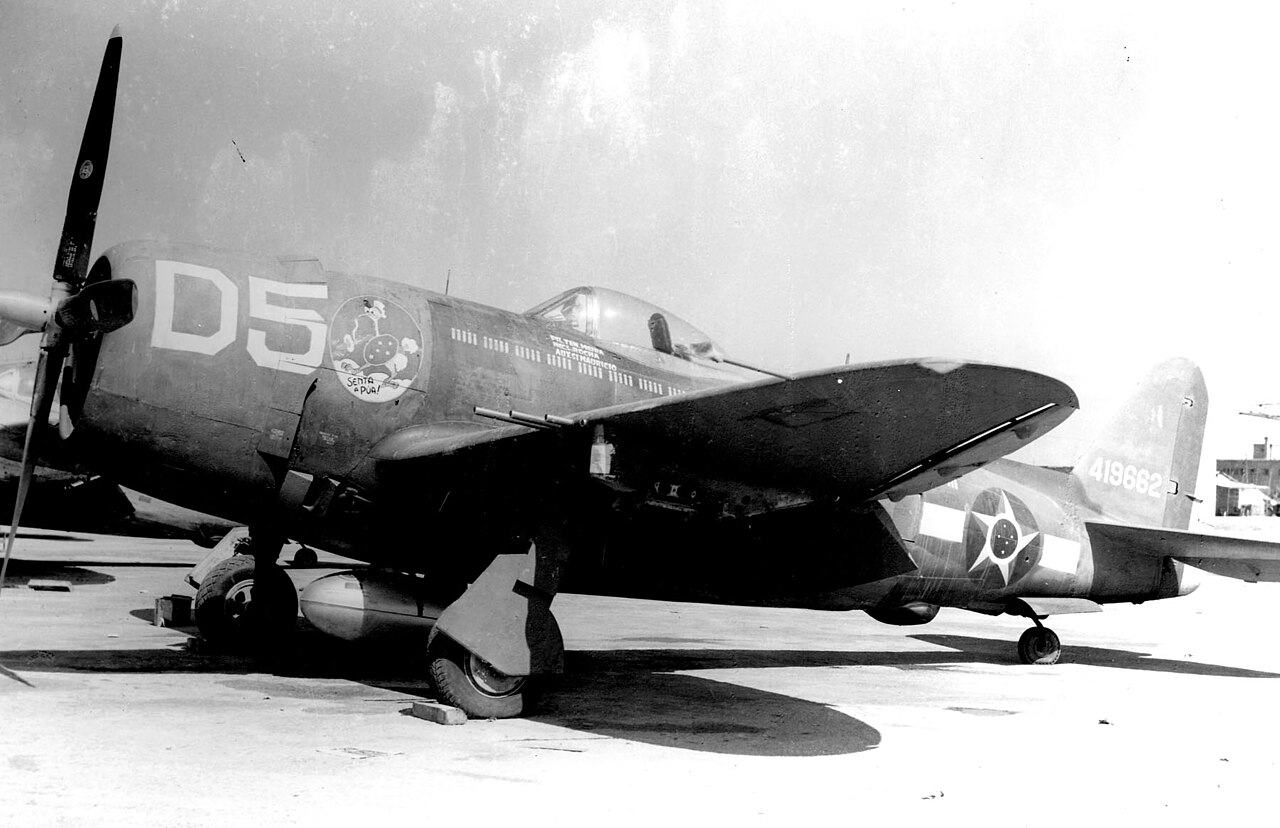

Brasil se encontraba bajo su segunda dictadura civil-militar liderada por Getúlio Vargas , manteniendo su neutralidad oficial hasta 1941, cuando permitió a las fuerzas estadounidenses utilizar bases para patrullar el Atlántico Sur . Estados Unidos construyó varios aeródromos en suelo brasileño con el entendimiento de que poco después de terminada la guerra, serían entregados a Brasil. [55] A raíz del ataque japonés a Pearl Harbor y las declaraciones de guerra de la Alemania nazi y la Italia fascista contra los EE. UU., en enero de 1942 en la IX Conferencia Panamericana celebrada en Río de Janeiro , Brasil ayudó a influir en otros países americanos para que cortaran las relaciones diplomáticas con las potencias del Eje. En represalia, Alemania e Italia extendieron su guerra submarina contra ellos. En la primera mitad de 1942, los submarinos del Eje hundieron buques mercantes brasileños, y las fuerzas navales brasileñas persiguieron y atacaron a estos submarinos. Cuando siete buques mercantes fueron hundidos por el submarino alemán U-507 , Vargas decidió hacer oficial el estado de guerra contra Alemania e Italia. [56]
El noreste de Brasil albergaba en Natal la mayor base aérea estadounidense fuera de su propio territorio, y en Recife , el Cuartel General de la 4.ª Flota de los EE. UU. bajo el mando del almirante Ingram . La base aérea de Natal brindó apoyo a la campaña del norte de África y una ruta para que los aviones de la USAAF volaran a la India y China . [57] [58]
Las fuerzas navales brasileñas en la Batalla del Atlántico ayudaron a las armadas de Estados Unidos y Gran Bretaña a patrullar el Atlántico Sur y Central, combatiendo a los submarinos y a los piratas del Eje. En 1943, las fuerzas navales aliadas hundieron la mayoría de los submarinos del Eje que estaban activos en el oeste del Atlántico Sur, entre ellos el U-199 . Después de esta intensa campaña, el Atlántico Sur se convirtió en una batalla perdida para Alemania. [59] [60] [61]
Después de dos años de preparación, una división de infantería completa (unos 25.000 soldados, llamada Fuerza Expedicionaria Brasileña (BEF)) fue enviada en julio de 1944 para luchar en la campaña de Italia . Lucharon en las dos últimas etapas de la campaña italiana: la lenta ruptura de la Línea Gótica y la ofensiva final aliada en ese frente . [62] [63]
Borneo británico
.svg/1280px-Flag_of_North_Borneo_(1902%E2%80%931946).svg.png)

Borneo se dividió en cinco territorios: cuatro en el norte bajo la jurisdicción británica ( Sarawak , Brunei , la isla de Labuan y Borneo del Norte británico ) y el resto y la mayor parte de la isla al sur bajo la jurisdicción de las Indias Orientales Holandesas (actual Indonesia ).
El plan de invasión japonés preveía que los territorios británicos fueran ocupados y mantenidos por el Ejército Imperial Japonés y que el territorio holandés del sur fuera ocupado y mantenido por la Armada Imperial Japonesa. [64] El 8 de diciembre de 1941, el gobierno de Brooke ordenó que los yacimientos petrolíferos de Miri y Seria y la refinería de Lutong fueran demolidos rápidamente. Al amanecer del 16 de diciembre, dos unidades de desembarco japonesas aseguraron Miri y Seria con poca resistencia por parte de las fuerzas británicas. Unas horas más tarde, Lutong fue capturada.
Honduras Británica (Belice)
.svg/1280px-Flag_of_British_Honduras_(1919%E2%80%931981).svg.png)
Bulgaria

Bulgaria renunció a su neutralidad y se convirtió en un aliado de Alemania, firmando el Pacto Tripartito el 1 de marzo de 1941. Su principal contribución fueron los derechos de tránsito para las unidades alemanas involucradas en la guerra contra Yugoslavia y Grecia. Bulgaria ocupó partes de Grecia y Yugoslavia para recrear las fronteras del siglo XIX de la Gran Bulgaria , pero no participó en la invasión de la Unión Soviética .
Tras el golpe de Estado búlgaro del 9 de septiembre de 1944 , dominado por los comunistas , el gobierno búlgaro declaró la guerra a Alemania. Los ejércitos búlgaros atacaron las posiciones alemanas en Yugoslavia. Se firmó un armisticio con los aliados en Moscú el 28 de octubre de 1944. Después de que los nazis huyeran del territorio yugoslavo, el ejército búlgaro continuó su ofensiva en Hungría y Austria. La participación de Bulgaria en la Segunda Guerra Mundial terminó cuando sus soldados se enfrentaron a las tropas británicas en Klagenfurt , Austria, en mayo de 1945.
Birmania (Myanmar)
.svg/1280px-Flag_of_Burma_(1939%E2%80%931941,_1945%E2%80%931948).svg.png)

Birmania se separó de la India británica en 1937 como colonia de la Corona con un gobierno constitucional. La colonia era importante para enviar suministros a China a través de la carretera de Birmania , que se completó en 1938. Sin embargo, quedó ligeramente defendida al estallar la Segunda Guerra Mundial: los británicos la consideraban un lugar apartado y un objetivo poco probable de ataque. [65] Japón comenzó su conquista de Birmania con pequeñas incursiones en diciembre de 1941, lanzando una invasión total el siguiente enero. Japón controlaba la mayor parte del país en abril y cedió los estados Shan a su aliado Tailandia .
Muchos birmanos esperaban obtener el apoyo de los japoneses para expulsar a los británicos, de modo que Birmania pudiera independizarse. [66] [67] Japón ya había entrenado a los Treinta Camaradas , que ahora formaban el núcleo del Ejército de Independencia de Birmania . Japón declaró la independencia de la colonia como el Estado de Birmania el 1 de agosto de 1943. Se instaló un gobierno títere dirigido por Ba Maw . Sin embargo, muchos birmanos comenzaron a creer que los japoneses no tenían intención de darles una independencia real. [66] [67] Aung San y otros líderes nacionalistas formaron la Organización Antifascista en agosto de 1944, que pidió al Reino Unido que formara una coalición con los demás aliados contra los japoneses.
Las fuerzas aliadas lanzaron ofensivas en Birmania a partir de finales de 1944. Capturaron Rangún tras la batalla de Elephant Point en mayo de 1945. Posteriormente, comenzaron las negociaciones entre los birmanos y los británicos para la independencia. Bajo la ocupación japonesa, murieron entre 170.000 y 250.000 civiles. [66] [67]
Canadá

El 10 de septiembre de 1939, Canadá también declaró la guerra a Alemania, [68] lo que marcó el comienzo de la participación de Canadá en el mayor esfuerzo nacional combinado de su historia. El ejército de Canadá estuvo activo principalmente en Italia , [69] el noroeste de Europa, [70] y el Atlántico Norte.
En el transcurso de la guerra, 1,1 millones de canadienses sirvieron en el Ejército , la Marina y la Fuerza Aérea . De ellos, más de 45.000 perdieron la vida y otros 54.000 resultaron heridos. [71] El coste financiero fue de 21.786.077.519,13 dólares , entre los años fiscales 1939 y 1950. [72] Al final de la guerra, Canadá tenía la cuarta fuerza aérea más grande del mundo, [73] y la tercera marina más grande. [74] Además, la Marina Mercante canadiense completó más de 25.000 viajes a través del Atlántico. [75] Muchos pilotos aliados se entrenaron en Canadá durante la guerra. Los canadienses también sirvieron en los ejércitos de varios países aliados .
Las fuerzas canadienses se desplegaron en el Reino Unido en 1939. Un cuerpo luchó en la campaña italiana, mientras que el otro luchó en el noroeste de Europa, comenzando con el desembarco de Normandía el 6 de junio de 1944, cuando invadió Juno Beach. El 1.er Ejército canadiense puso fin a la guerra en suelo alemán con cinco divisiones canadienses y una serie de formaciones aliadas bajo su mando directo.
Durante la guerra, Canadá fue objeto de ataques directos en la batalla del río San Lorenzo y en el bombardeo de un faro en Estevan Point, en la Columbia Británica.
La guerra tuvo importantes efectos culturales, políticos y económicos en Canadá, incluida la crisis del reclutamiento . Sin embargo, el esfuerzo bélico no sólo fortaleció la economía canadiense , sino que también consolidó a Canadá como un actor importante en el escenario mundial. [76]
Islas del Caribe

Durante la Segunda Guerra Mundial, Estados Unidos asumió las responsabilidades de defensa de Gran Bretaña en el Caribe. En septiembre de 1940, los dos países acordaron el Acuerdo de Préstamo y Arriendo (también llamado Acuerdo de Destructores por Bases ). Implicaba el préstamo de destructores estadounidenses a cambio del arrendamiento, sin pago de alquiler durante noventa y nueve años, de once bases navales y aéreas en territorio británico, incluidas Bahamas, Jamaica, Antigua, Santa Lucía, Trinidad y Tobago, Guayana Británica y Bermudas, así como Terranova. El Caribe oriental se convirtió en la vanguardia de la estrategia de defensa estadounidense, formalizada en la Declaración de Panamá de 1939. Los estrategas estadounidenses llamaron a las Indias Occidentales "el baluarte que vigilamos". [77]
Más del 50 por ciento de los suministros enviados a Europa y África desde los Estados Unidos se embarcaron desde puertos en el Golfo de México y pasaron por el Caribe. Un año después del ataque a Pearl Harbor , el Comando de Defensa del Caribe de los Estados Unidos alcanzó un total de 119.000 efectivos, la mitad de ellos estacionados en Panamá para proteger el canal de un ataque japonés previsto. Mientras tanto, la Kriegsmarine alemana infligió daños masivos a los barcos en el Caribe en 1942. A finales de ese año, los submarinos que operaban en el Caribe habían hundido 336 barcos, al menos la mitad de los cuales eran petroleros. [77]
Partes del Caribe habían sido colonizadas por países que ahora estaban bajo la ocupación del Eje. Aruba y Curazao permanecieron leales al gobierno holandés en el exilio , pero debido a que albergaban valiosas refinerías que procesaban petróleo venezolano, fueron puestas bajo protección británica. Ambas islas fueron sometidas a ataques alemanes en la Operación Neuland . En 1942 fueron transferidas a los Estados Unidos, que también había estacionado tropas en Surinam en 1941 para asegurar sus minas de bauxita. [78] Martinica y Guadalupe quedaron bajo el control de la Francia de Vichy . La presión estadounidense y británica aseguró que varios barcos franceses, incluido su único portaaviones, Béarn , permanecieran internados en Martinica. [79] Miles de refugiados huyeron, muchos de ellos fueron a Dominica , mientras crecía un movimiento de resistencia anti-Vichy . [78] Las islas, junto con la Guayana Francesa , pasaron a manos de la Francia Libre en 1943.
Ceilán (Sri Lanka)
.svg/1280px-Flag_of_Ceylon_(1875%E2%80%931948).svg.png)
Ceilán (hoy Sri Lanka ) era una colonia británica y una importante base naval aliada. El 5 de abril de 1942, más de 300 aviones de portaaviones japoneses bombardearon la isla . Winston Churchill lo llamó "el momento más peligroso" de la Segunda Guerra Mundial, porque los japoneses deseaban repetir un éxito mayor del ataque a Pearl Harbor. Los barcos británicos, sin embargo, fueron trasladados al atolón de Addu , en las islas Maldivas . No obstante, los británicos perdieron un portaaviones , dos cruceros y dos destructores , mientras que los escuadrones de la Real Fuerza Aérea en Ceilán sufrieron graves pérdidas.
El Regimiento de Artillería de Guarnición de Ceilán estaba estacionado en la isla Horsburgh, en las Islas Cocos , para defenderla del ataque japonés. Sin embargo, el regimiento se amotinó la noche del 8 de mayo de 1942, con la intención de entregar las islas a los japoneses. El motín fue reprimido y tres de los soldados ceilaneses fueron ejecutados.
Tras el motín de las Islas Cocos, no se desplegó ninguna unidad de combate ceilanesa en combate de primera línea, aunque se utilizaron tropas del Cuerpo de Abastecimiento y Transporte en zonas de retaguardia en Oriente Medio. Las defensas de Sri Lanka se reforzaron hasta tres divisiones del ejército aliado porque la isla era estratégicamente importante, como productora de caucho . Los japoneses reclutaron a los ceilaneses de Malaya y Singapur, ocupadas por los japoneses, para el Regimiento Lanka del Ejército Nacional Indio , con el fin de luchar contra los aliados. En realidad, nunca entraron en acción.
Chile

Chile declaró su neutralidad al estallar la guerra en Europa, manteniendo estrechos vínculos comerciales con Alemania. Sin embargo, más adelante en la guerra, Chile se distanció activamente de las potencias del Eje, y el gobierno chileno tomó medidas para despedir a los oficiales militares proalemanes. Un intento de golpe de Estado respaldado por los nazis en septiembre de 1938 puso a la mayoría de la población chilena en contra de la comunidad alemana dentro de Chile. Tras el hundimiento del Toltén por un submarino nazi frente a las costas de Nueva Jersey y las manifestaciones antialemanas en Chile, [80] las relaciones con los países del Eje se rompieron el 20 de enero de 1943. A lo largo de la duración de la guerra, la presencia naval chilena alrededor de la Isla de Pascua se fortaleció para protegerse de un temido ataque japonés (ya que los japoneses tenían ambiciones territoriales para que todas las islas de la Polinesia estuvieran bajo su dominio ), y reforzó las capacidades defensivas en los puertos vitales de Antofagasta , Coquimbo , Valparaíso y Talcahuano . Los buques mercantes chilenos también ayudaron a los barcos peruanos, colombianos y cubanos a patrullar el área alrededor de la Zona del Canal de Panamá durante la Batalla del Caribe . De 1943 a 1945, el campo de prisioneros chileno de Pisagua se convirtió en el sitio de internamiento en tiempos de guerra para ciudadanos de naciones enemigas. Chile finalmente declaró la guerra a Japón el 13 de abril de 1945, convirtiéndose en el último país de América Latina en hacerlo. [81] A mediados de 2017, documentos recientemente desclasificados revelaron que las Unidades de Policía de Investigación de Chile habían detenido el complot de una red de espías nazis para bombardear las minas de cobre del norte de Chile y hacer estallar el Canal de Panamá. [82]
Porcelana

La República de China había estado luchando contra Japón de forma intermitente desde el incidente de Mukden de 1931 , cuando Japón se anexionó Manchuria . El 7 de julio de 1937, el incidente del Puente Marco Polo llevó a los dos países a una guerra a gran escala. Con esto y el conflicto civil entre el Kuomintang (KMT, Partido Nacionalista Chino) y el Partido Comunista Chino , la atención total del Gobierno Nacionalista Chino estaba dentro de sus fronteras. Sin embargo, el generalísimo Chiang Kai-shek todavía se las arregló para enviar tropas para ayudar a Gran Bretaña en Birmania , a principios de 1942. Más de 1,5 millones de militares japoneses estaban empantanados en China con bajas estimadas en 1,1-1,9 millones. Al comienzo de la guerra, el ejército chino tenía 2,6 millones de soldados; al final de la guerra había crecido a 5,7 millones (excluyendo a los soldados comunistas).
La guerra enfrió las relaciones anteriormente cálidas de China con Alemania (ver Cooperación chino-alemana ) y, tras el ataque japonés a Pearl Harbor, China se unió formalmente a los Aliados y declaró la guerra a Alemania el 9 de diciembre de 1941.
Muchos de los centros urbanos, recursos industriales y regiones costeras de China estuvieron ocupados por Japón durante la mayor parte de la guerra. China sufrió un gran número de muertes, tanto militares como civiles, en la guerra. El ejército nacionalista chino sufrió alrededor de 3,2 millones de bajas y 17 millones de civiles murieron en el fuego cruzado. Después de la guerra, China obtuvo uno de los asientos permanentes en el Consejo de Seguridad de las Naciones Unidas . [83] [ referencia circular ]
Aunque los nacionalistas y los comunistas habían cooperado para oponerse a los japoneses, una vez terminada la guerra estalló de nuevo la Guerra Civil China . El gobierno nacionalista fue derrotado por los comunistas en 1949 y se retiró a Taiwán , mientras que la República Popular China comunista se estableció en el continente.
Colombia


Tras el ataque a Pearl Harbor , Colombia rompió relaciones diplomáticas con las potencias del Eje . Colombia proveía a los Aliados de productos petrolíferos . En 1943, el submarino alemán U-505 destruyó una goleta colombiana , lo que provocó que Colombia declarara un "estatus de beligerancia " contra Alemania el 26 de noviembre de 1943. [84]
El embajador alemán abandonó el país y se implementaron medidas de control, incluido el internamiento de ciudadanos alemanes en áreas designadas. También se entregaron a los Estados Unidos fotografías y aviones de reconocimiento pertenecientes a la empresa colombo-alemana Scadta , que solían tomar fotografías aéreas de ciudades colombianas y alemanas. La Armada colombiana ayudó a patrullar las aguas cercanas a la Zona del Canal de Panamá y participó en la Batalla del Caribe . El único enfrentamiento notable ocurrió en 1944: el destructor ARC Caldas atacó al submarino alemán U-154 , que fingió su propia destrucción para escapar. [85]
Comoras

Costa Rica
El presidente reformista de izquierda Rafael Ángel Calderón Guardia era aliado de Franklin Roosevelt y hostil al nazismo. En 1940, se informó que Calderón y Roosevelt habían acordado la construcción de una base estadounidense en la Isla del Coco , territorio de Costa Rica en el Pacífico; sin embargo, Estados Unidos finalmente decidió construir una base en las Galápagos . Costa Rica se unió a los Aliados el 8 de diciembre de 1941, declarando la guerra a Japón el día después del ataque a Pearl Harbor , y a Alemania e Italia poco después. Si bien el pequeño ejército de Costa Rica de 500 hombres no podía contribuir directamente a los combates, la administración de Calderón introdujo medidas de guerra contra las personas de las naciones del Eje en el país, incluida la confiscación de propiedades y el internamiento. Los objetivos incluían alemanes, italianos y españoles, los últimos de los cuales eran vistos como franquistas simpatizantes del fascismo. [86]
Cuba


El presidente Federico Laredo Brú lideró Cuba cuando estalló la guerra en Europa, aunque el poder real pertenecía a Fulgencio Batista como Jefe del Estado Mayor del ejército. [87] En 1940, Laredo Brú negó infamemente la entrada a 900 refugiados judíos que llegaron a La Habana a bordo del transatlántico alemán MS St. Louis . Después de que tanto Estados Unidos como Canadá también se negaran a aceptar a los refugiados, regresaron a Europa, donde muchos fueron finalmente asesinados en el Holocausto. [88] Batista se convirtió en presidente por derecho propio después de la elección de 1940. Cooperó con los Estados Unidos a medida que se acercaba a la guerra contra el Eje. Cuba declaró la guerra a Japón el 8 de diciembre de 1941, y a Alemania e Italia el 11 de diciembre. [89]
Cuba fue un participante importante en la Batalla del Caribe y su armada se ganó una reputación de habilidad y eficiencia. La armada escoltó a cientos de barcos aliados a través de aguas hostiles, voló miles de horas en convoyes y patrullas y rescató a más de 200 víctimas de ataques de submarinos alemanes desde el mar. Seis buques mercantes cubanos fueron hundidos por submarinos, cobrándose la vida de unos ochenta marineros. El 15 de mayo de 1943, un escuadrón de cazadores de submarinos cubanos hundió el submarino alemán U-176 cerca de Cayo Blanquizal . [90] Cuba recibió millones de dólares en ayuda militar estadounidense a través del programa Lend-Lease , que incluía bases aéreas, aviones, armas y entrenamiento. [89] La estación naval de los Estados Unidos en la Bahía de Guantánamo también sirvió como base para los convoyes que pasaban entre los Estados Unidos continentales y el Canal de Panamá u otros puntos del Caribe. [91]
Chipre
.svg/1280px-Flag_of_Cyprus_(1922%E2%80%931960).svg.png)
El Regimiento de Chipre fue fundado el 12 de abril de 1940 y pasó a formar parte de la estructura del Ejército británico . Estaba formado principalmente por voluntarios de los habitantes grecochipriotas y turcochipriotas de Chipre, pero también incluía a otras nacionalidades de la Commonwealth. Alrededor de 30.000 chipriotas sirvieron en el Regimiento. Incluía compañías de infantería, mecánica, de transporte y de transporte de carga. Los arrieros chipriotas fueron las primeras tropas coloniales enviadas al Frente Occidental. Sirvieron en Francia, Etiopía e Italia transportando equipo a zonas inaccesibles para los vehículos. El regimiento sirvió en Dunkerque, en la campaña griega ( Batalla de Grecia ), en el norte de África ( Operación Compass ), Francia, Oriente Medio e Italia. En los años de posguerra y antes de su disolución, el regimiento sirvió en Chipre y Oriente Medio, incluida Palestina entre 1945 y 1948. El regimiento se disolvió el 31 de marzo de 1950.
Checoslovaquia

Checoslovaquia fue desmembrada a partir del Acuerdo de Múnich y del Primer Laudo de Viena en 1938. Como resultado, los Sudetes pasaron a formar parte de Alemania, Trans-Olza fue anexada por Polonia y el sur de Checoslovaquia pasó a formar parte de Hungría. Más tarde, se creó la recién separada República Eslovaca , un régimen títere dependiente de los nazis dirigido por el sacerdote católico romano Jozef Tiso , mientras que el resto de la Rutenia de los Cárpatos fue ocupada y anexada por Hungría. Al día siguiente, la parte checa del país se convirtió en el Protectorado de Bohemia y Moravia bajo el presidente estatal Emil Hácha .
A partir de 1940, el gobierno en el exilio en Londres, encabezado por el ex presidente checoslovaco Edvard Beneš, fue reconocido como potencia aliada. En abril de 1945, el Ejército Rojo derrotó a los alemanes y derrocó al gobierno de Tiso.
República Eslovaca (Eslovaquia)
La recién fundada República Eslovaca dirigida por Jozef Tiso fue proclamada el 14 de marzo de 1939, aliándose con la Alemania nazi y sus fuerzas armadas participaron en la guerra contra Polonia y la Unión Soviética. Eslovaquia adoptó la política antisemita nazi y pagó a Alemania por la deportación de sus judíos. Trans-Olza fue anexada por Alemania después de la invasión de Polonia . El Levantamiento Nacional Eslovaco, iniciado en agosto de 1944, fue reprimido por las fuerzas alemanas a fines de octubre; los partisanos, sin embargo, continuaron luchando en las montañas hasta el final de la guerra. En abril de 1945, el Ejército Rojo derrotó a los alemanes y derrocó al gobierno de Tiso, y restauró el estado checoslovaco. [84]
Danzig

La Ciudad Libre de Danzig , una ciudad-estado semiautónoma bajo la protección de la Sociedad de Naciones , era predominantemente alemana y tenía un gobierno nazi en 1936. [92] El 30 de agosto de 1939, Alemania dio a la gran Polonia un ultimátum exigiendo el control de la ciudad, provocando la crisis de Danzig y la invasión de Polonia el 1 de septiembre. La ciudad-estado ayudó a la Alemania nazi durante la invasión. La policía y la milicia de la Ciudad Libre de Danzig lucharon en la batalla de Westerplatte y en el ataque a la oficina de correos polaca en Danzig . [93] Después de la campaña polaca, Danzig fue anexada a Alemania. Los nazis sometieron a las minorías judía y polaca de Danzig a la violencia del Holocausto y a los crímenes nazis contra la nación polaca . El Ejército Rojo ocupó Danzig el 30 de marzo de 1945 y expulsó a sus alemanes ; Se estima que 290.800 personas habían huido o habían sido expulsadas de la ciudad en 1950. [94] Gdansk pasó a formar parte de Polonia después de la guerra.
Dinamarca

Dinamarca se mantuvo oficialmente neutral desde el comienzo de la guerra. Alemania invadió el país sin declaración de guerra como parte de la Operación Weserübung el 9 de abril de 1940 y aplastó a Dinamarca en pocas horas de combate.
El gobierno danés permaneció en el poder en Copenhague hasta 1943 y firmó el Pacto Anticomintern . El 29 de agosto de 1943, el gobierno dimitió y se disolvió como respuesta a las demandas alemanas de más concesiones. Dinamarca estaba ahora bajo ocupación militar alemana. Los asuntos civiles estaban a cargo del general de las SS Werner Best .
El 4 de mayo de 1945, las fuerzas alemanas en Dinamarca se rindieron al ejército británico. Como el comandante alemán de la isla oriental de Bornholm se negó a rendirse a la Unión Soviética, dos ciudades de la zona fueron bombardeadas y la guarnición se vio obligada a rendirse. Bornholm permaneció bajo control soviético hasta 1946.
Islas Feroe y Groenlandia
El 10 de mayo de 1940, los británicos invadieron Islandia y las islas Feroe danesas . Estados Unidos ocupó Groenlandia , una posición que más tarde apoyó el enviado danés en Washington , Henrik Kauffmann . Islandia, que más tarde pasó del control británico al estadounidense, declaró su independencia en 1944.
República Dominicana
La República Dominicana declaró la guerra a Alemania y Japón tras los ataques de Pearl Harbor y la declaración de guerra nazi a los EE. UU. No contribuyó directamente con tropas, aviones o barcos, sin embargo, 112 dominicanos se integraron al ejército estadounidense y lucharon en la guerra. Además, 27 dominicanos murieron cuando submarinos alemanes hundieron cuatro barcos con tripulación dominicana en el Caribe. [95]
Indias Orientales Holandesas (Indonesia)

Los ricos recursos petrolíferos de las Indias Orientales Neerlandesas fueron un objetivo primordial del ejército japonés en su ataque a los aliados desde el 7 de diciembre de 1941. La Marina Real de los Países Bajos y el Ejército Real de las Indias Orientales Neerlandesas formaban parte del Comando estadounidense-británico-holandés-australiano , pero como los Países Bajos habían sido ocupados por Alemania en 1940 , el país tenía poca capacidad para defender su colonia. La marina y el ejército japoneses invadieron las fuerzas holandesas y aliadas en menos de tres meses, completando la ocupación en marzo de 1942. [96] Algunos miembros del personal y los barcos holandeses escaparon a Australia, donde continuaron luchando contra los japoneses.
El período de la ocupación japonesa fue uno de los más críticos en la historia de Indonesia . Al principio, muchos indonesios recibieron con alegría a los japoneses como liberadores del colonialismo holandés. Sin embargo, el sentimiento cambió cuando los indonesios se dieron cuenta de que se esperaba que soportaran dificultades para el esfuerzo bélico japonés. En Java y Sumatra , los japoneses educaron, entrenaron y armaron a muchos jóvenes indonesios y dieron voz política a los líderes nacionalistas. De esta manera, la ocupación japonesa creó las condiciones para la independencia de Indonesia. [97]
En 1944-1945, las tropas aliadas pasaron prácticamente por alto Indonesia, por lo que la mayor parte de la colonia seguía bajo ocupación japonesa en el momento de su rendición en agosto de 1945. La Proclamación de la Independencia de Indonesia se leyó a los pocos días de la rendición japonesa en el Pacífico. A continuación se produjo la Revolución Nacional de Indonesia , que permitió al país obtener la independencia en 1949. Un informe posterior de la ONU afirmó que cuatro millones de personas murieron en Indonesia como consecuencia de la ocupación japonesa. [98] Alrededor de 2,4 millones de personas murieron en Java por hambruna durante 1944-1945. [99]
Ecuador
Ecuador fue una de varias naciones sudamericanas que se unieron a los Aliados hacia el final de la guerra (se unieron contra Alemania el 2 de febrero de 1945), permitiendo a los Estados Unidos utilizar la isla Baltra como base naval. [100]
Egipto

Gran Bretaña había reconocido unilateralmente la independencia de Egipto en 1922, pero siguió ocupando militarmente el país y dominándolo. En virtud del Tratado anglo-egipcio de 1936, la ocupación británica se limitó a la zona del canal de Suez , pero permitió a las tropas británicas reocupar el resto del país en tiempos de guerra.
Egipto tenía una importancia estratégica vital debido al Canal de Suez y a su ubicación geográfica central. El gobierno egipcio suministró las fuerzas británicas, pero algunas de ellas entablaron negociaciones secretas con Alemania sobre la posibilidad de que Egipto se uniera al Eje en caso de que los británicos fueran derrotados en la campaña del desierto occidental . Muchos políticos y oficiales del ejército egipcios buscaron el apoyo del Eje para retirar a las fuerzas británicas de ocupación del país.
Después de que las fuerzas británicas derrotaran la invasión italiana inicial, Alemania entró en el teatro de operaciones del norte de África para salvar la Libia italiana . Una serie de victorias alemanas llevaron a las fuerzas del Eje a 160 kilómetros (99 millas) de El Cairo , lo que creó una gran expectativa entre los nacionalistas egipcios. Sin embargo, la victoria británica en El-Alamein anunció el fin de los avances del Eje en Egipto y la eventual derrota del Eje en el norte de África. Aunque Egipto tenía casi todo su ejército luchando contra el Eje en la campaña del desierto occidental, el rey Farouk todavía resistió la presión británica para declarar la guerra a Alemania hasta 1945.
El Salvador


De 1931 a 1944, El Salvador fue gobernado por el dictador militar Maximiliano Hernández Martínez , admirador de Hitler y Mussolini. A pesar de su admiración personal, Hernández Martínez declaró la guerra a Japón (8 de diciembre de 1941) y Alemania (12 de diciembre de 1941) poco después del ataque a Pearl Harbor debido a los fuertes lazos económicos de El Salvador con los Estados Unidos. Sacó a los alemanes del gobierno e internó a ciudadanos japoneses, alemanes e italianos. La Segunda Guerra Mundial hizo que los salvadoreños se cansaran de su dictadura, y una huelga nacional general en 1944 obligó a Hernández Martínez a renunciar y huir a Guatemala . Después de la guerra, fue asesinado más tarde en Honduras por un ciudadano salvadoreño vengativo. [101]
José Castellanos Contreras fue un coronel del ejército y diplomático salvadoreño que, mientras trabajaba como Cónsul General de El Salvador en Ginebra durante la Segunda Guerra Mundial , y junto con un empresario judío-húngaro llamado György Mandl , ayudó a salvar hasta 40.000 judíos y centroeuropeos de la persecución nazi al proporcionarles documentos falsos de nacionalidad salvadoreña . [102]
José Gustavo Guerrero fue un juez salvadoreño que desafió a los nazis durante la invasión de Hitler a Europa. El distinguido jurista salvadoreño vivió en Europa durante muchos años en su carrera como diplomático y como juez presidente de la Corte Permanente de Justicia Internacional , con sede en La Haya , Países Bajos .
En 1937, durante el ascenso del nazismo en Europa, el Doctor Guerrero asumió como presidente, hasta que fue obligado a abandonar el cargo en 1940 por los nazis. Precisamente tras la caída de los Países Bajos , el 17 de mayo de 1940, los nazis intentaron tomar el Palacio de la Paz de la Corte Permanente de Justicia Internacional en La Haya, pero allí se encontraron con el salvadoreño, único juez que se quedó con un grupo de oficiales holandeses. Cuando se acercó un general alemán, el Juez Presidente le dijo: "La Corte y su personal son inviolables. Sólo sobre mi cuerpo pueden entrar al palacio". Por esta y otras antes de valentía en defensa del Derecho Universal, el Doctor Guerrero fue nominado dos veces al Premio Nobel de la Paz .
Una vez establecido en Ginebra , el Dr. Guerrero recibió la visita del Cónsul General de El Salvador en Suiza, Coronel José Castellanos Contreras , quien había huido de Alemania, donde se desempeñó como Cónsul hasta que El Salvador rompió relaciones con el régimen de Hitler.
El coronel Castellanos ya había otorgado varias visas a personas de origen judío que eran perseguidas por los nazis. Sin embargo, ahora que se trataba de un proyecto mayor: la entrega de documentos falsos de nacionalidad salvadoreña a personas de origen judío. Castellanos consultó entonces al doctor Guerrero, quien inmediatamente accedió al plan que salvó la vida de miles de judíos. Según las investigaciones, el doctor Guerrero habría contribuido a redactar el texto del documento que luego les fue entregado para salvarles la vida.
Estonia
El Pacto Ribbentrop-Mólotov de agosto de 1939 entre la Alemania nazi y la Unión Soviética dejó a Estonia en la esfera de interés soviética. La Unión Soviética amenazó a Estonia con la guerra si Estonia no aceptaba un "pacto de asistencia mutua", que permitiría a las tropas soviéticas utilizar varias bases militares en Estonia durante un período de diez años. El gobierno estonio, convencido de que una guerra contra la URSS sería inevitablemente perdida, aceptó el 28 de septiembre de 1939. Los soviéticos llevaron a cabo un golpe de estado con el inicio de la ocupación soviética total de Estonia por el Ejército Rojo en junio de 1940, y se celebraron unas elecciones simuladas bajo control soviético. El nuevo gobierno asumió el poder y se proclamó la República Socialista Soviética de Estonia el 21 de julio de 1940. El estado títere fue aceptado formalmente en la Unión Soviética el 6 de agosto. La legalidad de la anexión no fue reconocida por la mayoría de los países occidentales y los estados bálticos continuaron existiendo formalmente como naciones independientes hasta que recuperaron la independencia en 1991. [84]
Estonia fue ocupada por Alemania en 1941 después de que estallara la guerra entre Alemania y la Unión Soviética. Con el regreso de las Fuerzas Armadas Soviéticas , 70.000 estonios se unieron o fueron reclutados por el lado alemán para luchar contra los soviéticos. El Comité Nacional no pudo restaurar el gobierno nacional en septiembre de 1944 debido a la reocupación soviética . Al final de la guerra, comenzó la subsiguiente insurrección armada de los Hermanos del Bosque contra las autoridades soviéticas, que duró en los estados bálticos hasta mediados de la década de 1950. Estonia siguió siendo una parte de facto de la URSS hasta 1991. [84]
Etiopía

Al estallar la guerra, Etiopía estaba bajo ocupación italiana y el emperador Haile Selassie de Etiopía estaba exiliado en Inglaterra tratando en vano de obtener el apoyo aliado para la causa de su nación. El movimiento Arbegnoch había comenzado su guerra de guerrillas contra las fuerzas de ocupación italianas el día que cayó Adís Abeba en mayo de 1936. Tras la huida del emperador al exilio, los restos del disuelto ejército imperial de Etiopía se habían transformado en unidades guerrilleras. Los residentes de las ciudades de todo el país formaron movimientos clandestinos para ayudar a los patriotas mientras la población en general lideraba una campaña de resistencia pasiva destinada a sofocar la agenda económica de Mussolini para la región. A lo largo de la ocupación y hasta el comienzo de la Segunda Guerra Mundial, el acoso constante a las columnas italianas y las líneas de comunicación y suministro redujo su capacidad de combate y su moral. Se había instalado un estado de paranoia entre las tropas y los civiles italianos a medida que se iban aislando cada vez más de Roma . [ cita requerida ] Las represalias fascistas a los ataques patriotas fueron brutales y a menudo dirigidas contra la población civil, lo que sólo llenó aún más las filas de los patriotas, creando un ciclo que condujo a la eventual desaparición del África Oriental Italiana de Mussolini . [103]
La declaración de guerra de Gran Bretaña contra Italia revitalizó el movimiento patriota y allanó el camino para el derrocamiento final de los italianos en Etiopía y en el Cuerno de África . La campaña aliada de liberación de Etiopía comenzó en el invierno de 1940. El emperador Haile Selassie , con el apoyo y la cooperación de los británicos, fue transportado a Sudán para trabajar junto con el mayor Orde Wingate para organizar y dirigir las principales divisiones patriotas etíopes que habían huido de Etiopía controlada por los fascistas tras la noticia de la declaración de guerra de Gran Bretaña. La campaña de África Oriental fue llevada a cabo por una fuerza en gran parte multiafricana y consistió en fuerzas etíopes, eritreas , británicas, sudanesas , kenianas , rodesianas , sudafricanas , indias , nigerianas , ghanesas y francesas libres . En cuestión de meses, se logró la liberación de Etiopía y el 5 de mayo de 1941, cinco años después de que el emperador huyera de su capital, Haile Selassie fue restaurado en su trono. La derrota de los fascistas en Etiopía marcó la primera victoria de los Aliados en la Segunda Guerra Mundial [ cita requerida ] y permitió que las fuerzas restantes se trasladaran rápidamente a Egipto para enfrentar el avance del Eje hacia El Cairo. [103]
Fiyi
Fiji fue una colonia británica durante la Segunda Guerra Mundial. La Fuerza de Defensa de Fiji sirvió con formaciones del Ejército de Nueva Zelanda , bajo el mando de las Áreas Aliadas del Océano Pacífico . El Regimiento de Infantería de Fiji luchó en la campaña de las Islas Salomón contra los japoneses. Fiji se convirtió en un importante puerto marítimo militar para el tráfico de convoyes entre los EE. UU. y Australia. Era la ruta más cercana y razonablemente segura alrededor de las asediadas Islas Salomón, un punto de parada para las tropas y suministros que se enviaban a las Salomón, justo al norte, y el puerto protegido más cercano disponible para los barcos dañados alrededor de Guadalcanal. Fiji también construyó muchas instalaciones, como aeródromos para los bombardeos aliados, cuarteles y campos de entrenamiento. [104]
Finlandia

Finlandia quedó en manos de la Unión Soviética en el marco del Pacto Ribbentrop-Mólotov , y cuando se negó a permitir que la Unión Soviética construyera bases en su territorio, fue atacada por las fuerzas soviéticas en la Guerra de Invierno (30 de noviembre de 1939 - 13 de marzo de 1940). Después de la guerra, Finlandia buscó sin éxito la protección del Reino Unido y de Suecia para contrarrestar la continua presión soviética, antes de dedicarse a mejorar las relaciones con la Alemania nazi. Esto produjo una cooperación entre los países, que condujo tres días después del inicio de la Operación Barbarroja a un ataque aéreo preventivo soviético contra Finlandia, que inició la Guerra de Continuación (25 de junio de 1941 - 4 de septiembre de 1944), en la que Finlandia era cobeligerante de Alemania. El Reino Unido declaró la guerra a Finlandia el 6 de diciembre de 1941. [105] Canadá y Nueva Zelanda declararon la guerra a Finlandia el 7 de diciembre, al igual que Australia y Sudáfrica al día siguiente.
Para asegurar el apoyo militar necesario para detener la Ofensiva de Vyborg-Petrozavodsk coordinada con el Día D , el 26 de junio de 1944 se firmó el Acuerdo Ryti-Ribbentrop , en el que las relaciones entre Finlandia y Alemania nazi se acercaron más a una alianza. Se firmó un armisticio después de que la ofensiva soviética se detuviera y la Wehrmacht se retirara de los estados bálticos . El tratado requería que Finlandia expulsara a todas las tropas alemanas, lo que condujo a la Guerra de Laponia (15 de septiembre de 1944 - 25 de abril de 1945). Esto fue poco antes de la rendición completa de las fuerzas nazis en toda Europa el 7 y 8 de mayo de 1945 ( Día de la Victoria en Europa ). La paz completa con el Reino Unido y la URSS se concluyó en los Tratados de Paz de París de 1947 .
Francia

Francia fue uno de los garantes originales de la seguridad de Polonia y, como tal, fue uno de los primeros países en declarar la guerra a Alemania. Durante varios meses, hubo pocos combates en la Guerra de Fantasía o drôle de guerre ("guerra divertida"). El 10 de mayo de 1940, Alemania comenzó su ataque a Francia . Después de seis semanas de intensos combates, el gobierno francés firmó el armisticio del 22 de junio de 1940. [ 106]
Después del armisticio, Francia se dividió en dos partes, un sector ocupado y un sector no ocupado . Dentro de la Francia ocupada , Otto von Stülpnagel y su primo y sucesor, Carl-Heinrich , dirigieron una administración militar. Los ciudadanos fueron sometidos al Service du travail obligatoire , un programa de trabajo forzado en Alemania. Los judíos y los gitanos se enfrentaron a la persecución del Holocausto en Francia . Una resistencia activa luchó contra las fuerzas de ocupación durante toda la guerra. El sur de Francia fue administrado por un gobierno títere bajo Philippe Pétain en Vichy , conocido por lo tanto como la Francia de Vichy . En la oposición, Charles de Gaulle dirigió la Francia Libre , un gobierno en el exilio en Londres con control sobre los territorios de ultramar no ocupados de Francia y las fuerzas que lucharon del lado aliado.
La liberación de Francia comenzó con las invasiones aliadas de 1944, la Operación Overlord en Normandía en el norte y la Operación Dragoon en el sur. Las fuerzas aliadas lograron la liberación de París en agosto. De Gaulle estableció el Gobierno Provisional de la República Francesa y todo el país regresó a los Aliados. Se produjeron más combates en Francia durante el avance hacia el Rin de 1944-1945. Después de la guerra, Francia se convirtió en miembro fundador de la OTAN , [107] y miembro permanente del Consejo de Seguridad de las Naciones Unidas . [108]
Vichy Francia
El régimen de Vichy se mantuvo oficialmente neutral durante el conflicto, pero colaboró con Alemania. El primer ministro Pierre Laval intentó en repetidas ocasiones acercar a Francia al bando del Eje, pero Pétain lo vetó. En varias ocasiones, las fuerzas de Vichy fueron atacadas por las fuerzas británicas y de la Francia Libre, especialmente en el África francesa . Como resultado de que Vichy en el norte de África violara los términos del armisticio de 1940 al convocar un alto el fuego tras la Operación Antorcha , los alemanes ocuparon toda Francia continental en el otoño de 1942, pero permitieron que el gobierno de Vichy siguiera operando. El gobierno y el ejército de Vichy en el norte de África, dirigidos por François Darlan, se unieron a los Aliados. Después de que Darlan fuera asesinado, De Gaulle tomó el poder junto con Henri Giraud . Laval fue ejecutado por alta traición después de la guerra. Pétain fue condenado a muerte, pero su sentencia fue conmutada.
Francia libre
.svg/1280px-Flag_of_Free_France_(1940-1944).svg.png)
Las Fuerzas Francesas Libres (FFF) del Comité Francés de Liberación Nacional (CFLN), un grupo de exiliados con base en Londres dirigido por Charles de Gaulle , se formaron en 1940 para mantener el compromiso francés con los Aliados y liberar el territorio francés ocupado por Alemania. Junto con la Resistencia Francesa , desempeñaron un papel en el teatro mediterráneo y la liberación de Europa occidental , incluida Francia en 1944. En 1943, la Francia libre controlaba grandes territorios pero no tenía industria bélica y seguía dependiendo de la ayuda estadounidense. Se reagrupó con la autoridad de Vichy que se unió a ella y la resistencia interior para luchar contra Francia. El CFLN tomó el control de Francia en agosto y septiembre de 1944.
En 1944, las FFF contaban con unos 560.000 soldados y en 1945 con más de 1.300.000. La Resistencia (fuerzas del interior), según D. E. Eisenhower, desempeñó un papel equivalente al de 15 divisiones de combate. Las FFF y la Resistencia desempeñaron un papel importante durante la liberación de Francia.
África Ecuatorial Francesa

La federación colonial se unió a las Fuerzas de la Francia Libre bajo el mando de Félix Éboué en agosto de 1940, a excepción de Gabón , que fue parte de la Francia de Vichy hasta el 12 de noviembre de 1940, cuando la administración de Vichy se rindió a la invasión de la Francia Libre en la Batalla de Gabón . Posteriormente, la federación se convirtió en el centro estratégico de las actividades de la Francia Libre en África, y la ciudad de Brazzaville fue la capital de la Francia Libre entre 1940 y 1943. [109] En 1944, Brazzaville fue sede de una reunión de las fuerzas de resistencia francesas y representantes de las colonias africanas de Francia. La Declaración de Brazzaville resultante representó un intento de redefinir la relación entre Francia y sus colonias africanas. [110]
Somalilandia Francesa
La Somalia francesa , con capital en Yibuti , fue escenario de escaramuzas y un bloqueo durante la campaña de África Oriental de la Segunda Guerra Mundial. Después de que Italia declarara la guerra a Francia el 10 de junio de 1940, hubo algunos combates entre sus fuerzas en Somalilandia hasta la caída de Francia y el armisticio franco-italiano el 25 de junio. El consejo de administración local se pronunció a favor del gobierno de Vichy el 19 de julio. [111] Italia ocupó el fuerte francés en Loyada y lo utilizó como base para su invasión de la Somalia británica en agosto. [112] Gran Bretaña estableció un bloqueo naval y bombardeó Yibuti en septiembre. En respuesta, el nuevo gobernador de Vichy, Pierre Nouailhetas , instituyó un brutal régimen de terror contra los europeos y los locales. [111] Fue llamado de nuevo y obligado a retirarse en 1942. A medida que el bloqueo se endureció, muchas fuerzas francesas desertaron y huyeron a la Somalia británica . Esto finalmente impulsó al gobernador a rendirse a las fuerzas de la Francia Libre el 26 de diciembre de 1942, la última posesión francesa en África que permaneció leal a Vichy. [113] Después de la liberación del territorio, la Somalilandia francesa cambió rápidamente de gobernadores y la recuperación de las privaciones de 1940-1942 solo comenzó cuando terminó la guerra.
África Occidental Francesa
El África Occidental Francesa no fue escenario de grandes combates. Sólo tuvo lugar allí una acción a gran escala: la batalla de Dakar (23-25 de septiembre de 1940). La región permaneció bajo el control de la Francia de Vichy tras la caída de Francia (25 de junio de 1940) y hasta la invasión aliada del norte de África (8-16 de noviembre de 1942). El Gabón francés , la única colonia del África Ecuatorial Francesa que no se unió a la Francia Libre tras el armisticio, cayó ante las fuerzas invasoras de la Francia Libre de las colonias vecinas tras la batalla de Gabón (8-12 de noviembre de 1940), aislando aún más al África Occidental. A diferencia de lo ocurrido en la Francia metropolitana, las tropas coloniales francesas en África Occidental no se redujeron tras el armisticio de 1940 y la región sufrió pocas interferencias de las potencias del Eje , lo que supuso una valiosa incorporación a las fuerzas de la Francia Libre tras su liberación.
Colonia y Protectorado de Gambia
.svg/1280px-Flag_of_The_Gambia_(1889%E2%80%931965).svg.png)

La colonia y protectorado de Gambia estaba gobernada por Gran Bretaña. En 1939, su ejército, la Compañía Gambia, se expandió al Regimiento de Gambia , con una fuerza de dos batallones a partir de 1941. Luchó en la campaña de Birmania . La colonia también formó una Policía Auxiliar, que, entre otras cosas, ayudó a hacer cumplir los apagones en Bathurst. La propia Gambia fue el hogar de la RAF Bathurst, una base de hidroaviones, y la RAF Yundum , una estación de la fuerza aérea, que se convirtió en el primer aeropuerto del país. [114] El HMS Melampus , una base en tierra, estuvo basado en Bathurst durante parte de la guerra, y en 1942, se lanzó un crucero ligero llamado HMS Gambia , que mantuvo vínculos con la colonia hasta que fue dado de baja en 1960. [115] Gambia fue el hogar de una sucesión de hospitales generales británicos en tiempos de guerra. [116] En 1943, Franklin D. Roosevelt hizo escala en Bathurst durante la noche en su camino hacia y desde la Conferencia de Casablanca . Esto marcó la primera visita al continente africano de un presidente estadounidense en funciones. [117] Después de la guerra, la atención se centró en la reforma económica y política en la colonia, como la disminución de su dependencia del maní , que representaba casi el 100% de sus exportaciones. [118]
Alemania
.jpg/1280px-Prisoners_in_the_concentration_camp_at_Sachsenhausen,_Germany,_12-19-1938_-_NARA_-_540175_(cleanup).jpg)
La Alemania nazi , liderada por Adolf Hitler , era la principal potencia del Eje en el teatro de operaciones europeo. Las fuerzas alemanas instigaron la guerra en septiembre de 1939 al invadir Polonia. Polonia quedó dividida con la Unión Soviética. La Guerra Falsa se produjo y en la primavera de 1940 las fuerzas alemanas invadieron y conquistaron Dinamarca, Noruega, Francia, Bélgica, Luxemburgo y los Países Bajos. Los intentos de someter al Reino Unido por aire en el verano de 1940 fracasaron y se canceló una invasión planeada. En el verano de 1941, Alemania dirigió sus fuerzas hacia el este invadiendo la Unión Soviética. El Frente Oriental se convirtió en el principal teatro de operaciones de los alemanes. La invasión de la URSS se había retrasado por las campañas en Grecia y Yugoslavia, destinadas a ayudar a las fuerzas italianas en crisis. El Afrika Korps fue enviado de manera similar al Desierto Occidental para ayudar a las fuerzas italianas en dificultades allí, y las fuerzas alemanas crecieron hasta convertirse en un grupo de ejército completo. Se cree que las grandes derrotas en Stalingrado en febrero de 1943 y la destrucción de las fuerzas del Eje en el norte de África poco después fueron los puntos de inflexión de la guerra. Las fuerzas alemanas lucharon en Sicilia y, cuando Italia cambió de bando, las fuerzas alemanas tomaron el poder, combatieron en una retirada exitosa y desviaron a las fuerzas aliadas del noroeste de Europa. Las graves pérdidas en Kursk en el verano de 1943 y durante las ofensivas soviéticas de verano de 1944 destrozaron el poder de combate alemán, y los desembarcos aliados en Normandía y el sur de Francia obligaron a los alemanes a luchar en varios frentes simultáneamente. La rendición de las fuerzas alemanas entre el 4 y el 8 de mayo de 1945 marcó el final de la guerra en Europa.
Las fuerzas alemanas fueron muy activas en el mar, principalmente a través de su fuerza submarina. La fuerza aérea alemana proporcionó un apoyo táctico y logístico eficaz hasta que los aliados lograron la superioridad aérea a mediados de 1944. El uso estratégico del poder aéreo fracasó y, a pesar de los intensos bombardeos aéreos (y más tarde, los cohetes V-1 y V-2) del Reino Unido, no logró obtener resultados duraderos.
Los objetivos de guerra de Hitler incluían la destrucción de los judíos de Europa, y en la Conferencia de Wannsee a principios de 1942, se finalizó un sistema de exterminio que condujo al Holocausto .
Austria
Austria pasó a formar parte de pleno derecho de la Alemania nazi en 1938, con gran aceptación popular durante el Anschluss . Alrededor de 1,2 millones de austriacos sirvieron en todas las ramas de las fuerzas armadas alemanas durante la Segunda Guerra Mundial. Tras la derrota de las potencias del Eje, los aliados ocuparon Austria en cuatro zonas de ocupación establecidas al final de la Segunda Guerra Mundial hasta 1955, cuando el país volvió a ser una república totalmente independiente con la condición de que permaneciera neutral. Las cuatro zonas de ocupación eran francesa, estadounidense, británica y soviética, y Viena también estaba dividida entre las cuatro potencias. Esto fue paralelo a la situación en Alemania de posguerra.
Gibraltar

El territorio británico de ultramar de Gibraltar ha sido una fortaleza y baluarte británico durante más de 300 años. Desde los primeros días de la Segunda Guerra Mundial, el Peñón se convirtió en un pivote del Mediterráneo; la Operación Torch , la invasión del norte de África, se coordinó desde el Peñón. La Operación Tracer , una misión de alto secreto en la que seis hombres debían ocultarse dentro de un búnker secreto dentro del Peñón de Gibraltar para que pudieran monitorear los movimientos del enemigo si el Peñón era capturado, también se llevó a cabo a través de Gibraltar. [119]
Costa de Oro (Ghana)
.svg/1280px-Flag_of_the_Gold_Coast_(1877%E2%80%931957).svg.png)
Las tropas coloniales de la Colonia de la Costa de Oro desempeñaron un papel importante en la campaña de África Oriental , particularmente en el ataque a Etiopía , controlada por Italia . Accra , la capital, recibió a los aviones aliados en sus vuelos entre Estados Unidos , Europa y el Pacífico. La Costa de Oro también se benefició económicamente de la guerra. En 1945, el aumento del gasto del gobierno británico y la introducción de un impuesto sobre la renta condujeron a una expansión de los ingresos locales. La guerra cambió la demografía de la colonia, concentrando a los trabajadores en unas pocas ciudades y pueblos grandes. El gobierno colonial lanzó un programa para lidiar con la escasez de viviendas mediante la construcción de materiales de construcción locales económicos pero resistentes (un terremoto en 1939 había dañado gravemente la infraestructura en muchas ciudades). [120]
Grecia
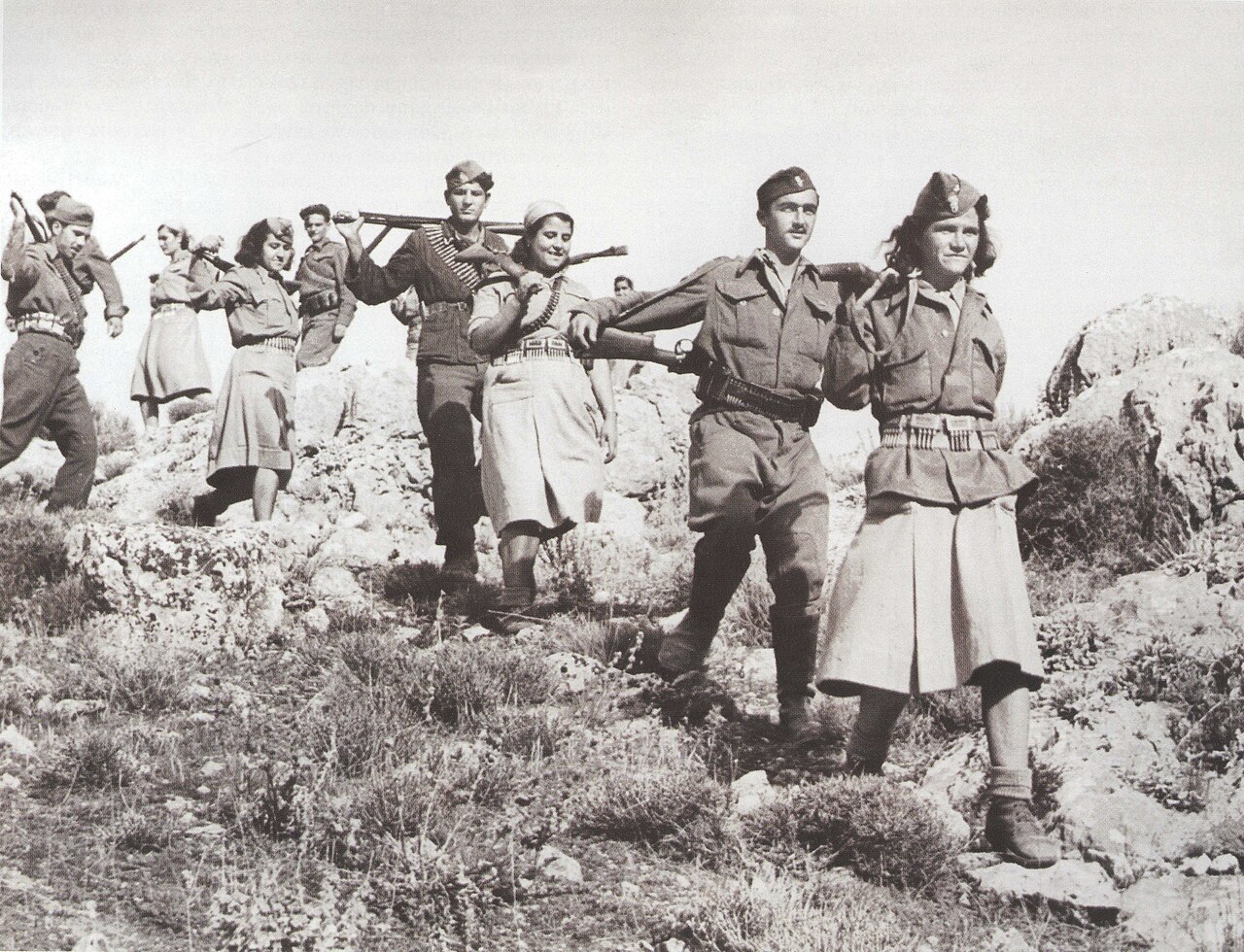
Grecia inicialmente resistió la invasión italiana del 28 de octubre de 1940 y rechazó a las fuerzas de Mussolini hacia Albania. Hitler envió a regañadientes fuerzas para rescatar a su aliado y someter a Grecia ( Operación Marita ). La Batalla de Grecia resultante en abril de 1941 retrasó la invasión de la Unión Soviética , y las fuertes pérdidas de los Fallschirmjäger alemanes sobre Creta pusieron fin de manera efectiva a las operaciones aerotransportadas alemanas a gran escala.
El gobierno y el rey huyeron del país a Egipto, desde donde continuaron la lucha. Las fuerzas de ocupación instalaron una serie de gobiernos títeres , que no contaban con la lealtad suficiente. A partir de 1942 se desarrolló un vigoroso movimiento de resistencia , dominado en gran medida por el Frente de Liberación Nacional (EAM), dirigido por los comunistas, y la Liga Nacional Republicana Griega (EDES) , no comunista .
A lo largo de 1943, las guerrillas liberaron gran parte del interior montañoso del país, estableciendo una zona libre llamada " Grecia Libre ". Después de la capitulación italiana en septiembre de 1943, los alemanes tomaron el control de la zona italiana, a menudo acompañada de derramamiento de sangre, ya que los italianos intentaron resistirse tanto a ellos como a los aliados que intentaban ocupar las áreas controladas por Italia (la campaña del Dodecaneso ). A medida que se acercaba la liberación, la Resistencia se dividió en líneas políticas y se produjo una lucha civil. Se alcanzó un acuerdo para establecer un gobierno de unidad nacional en la conferencia del Líbano de mayo de 1944 , lo que alivió un poco la tensión.
Con el avance del Ejército Rojo a través de Europa del Este en el verano de 1944, las fuerzas alemanas se retiraron del continente griego en octubre-noviembre de 1944, aunque muchas guarniciones de las islas fueron abandonadas y se rindieron después de la rendición incondicional del 8 de mayo de 1945. El gobierno que regresó al exilio, respaldado por las fuerzas británicas, pronto se enfrentó con las fuerzas del EAM en Atenas, comenzando la Guerra Civil griega ; un conflicto que duraría hasta 1949 y dejaría un legado divisivo.
Guatemala

Guatemala inicialmente se mantuvo al margen de la Segunda Guerra Mundial, y el presidente Jorge Ubico declaró la neutralidad del país el 4 de septiembre de 1941. Este pronunciamiento fue reforzado cinco días después con otra declaración. Ubico implementó fuertes prohibiciones a la propaganda nazi en Guatemala, que tenía una de las mayores poblaciones de inmigrantes alemanes de América Latina. Más tarde, Guatemala se unió al bando aliado: el 9 de diciembre de 1941, declaró la guerra a Japón, y tres días después, declaró la guerra a Alemania e Italia. Ubico permitió a los Estados Unidos construir una base aérea en el país. [121]
Durante los años de guerra, la inestabilidad en Guatemala fue en aumento y culminó con el estallido de la Revolución guatemalteca en junio de 1944. Ubico dimitió en junio tras una huelga general y el nuevo dictador que lo sustituyó cayó en manos de una revolución popular democrática en octubre. El filósofo Juan José Arévalo ganó las elecciones presidenciales celebradas en diciembre y gobernó Guatemala durante el resto del período de guerra.
Guayana
.svg/1280px-Flag_of_British_Guiana_(1919%E2%80%931955).svg.png)
Haití
Haití permaneció neutral en la Segunda Guerra Mundial hasta el bombardeo de Pearl Harbor. Así, a finales de 1941, Haití declaró la guerra a Japón (8 de diciembre), Alemania (12 de diciembre), Italia (12 de diciembre), Bulgaria (24 de diciembre), Hungría (24 de diciembre) y Rumania (24 de diciembre). [122] De estos seis países del Eje , solo Rumania correspondió, declarando la guerra a Haití el mismo día (24 de diciembre de 1941). [123] Haití proporcionó suministros de alimentos a las fuerzas aliadas y albergó un destacamento de la Guardia Costera de los Estados Unidos , pero no contribuyó con tropas; sin embargo, cinco haitianos de la Fuerza Aérea Haitiana se integraron en el ejército estadounidense ( división de aviadores de Tuskegee ) y lucharon en la guerra. [124] [125] El presidente de Haití , Élie Lescot , introdujo varias medidas de emergencia impopulares durante la guerra, que los críticos afirmaron que estaban diseñadas para aumentar su poder. Lescot fue depuesto el año después de que terminara la guerra. [ cita requerida ]
Honduras

Honduras fue inicialmente neutral en la guerra, pero se unió al bando aliado después del ataque a Pearl Harbor. Declaró la guerra a Japón el 8 de diciembre de 1941, y a Alemania e Italia cinco días después. Contribuyó con alimentos y materias primas al esfuerzo bélico aliado y envió tropas, de las cuales murieron 150. Debido a esto, el país comenzó una serie de patrullas aéreas utilizando aviones modelo NA-16 a partir de 1942. Los submarinos alemanes también hundieron tres barcos hondureños a lo largo de la guerra y uno fue capturado por la marina japonesa. Además de patrullar el territorio hondureño, los aviadores hondureños también volaron en las cercanías del Golfo de México en apoyo conjunto con otras naciones latinoamericanas para evitar que se hundieran más barcos destinados a los Estados Unidos [126]. Como eran un gran productor de plátanos, también enviaron miles de plátanos a las fuerzas aliadas.
Hong Kong
.svg/1280px-Flag_of_Hong_Kong_(1959%E2%80%931997).svg.png)

Hong Kong había sido una colonia británica durante un siglo. Japón ocupó la ciudad después de la agotadora Batalla de Hong Kong , que terminó el día de Navidad de 1941. Los japoneses convirtieron muchas instalaciones sanitarias en hospitales de campaña para ayudar a los soldados heridos que regresaban del teatro de operaciones del Pacífico. [127] También se impusieron raciones de comida estrictas y, para mantenerlas bajas, muchos ciudadanos fueron deportados a China. Al final de la guerra, la población de Hong Kong había caído de 1.500.000 a solo 600.000. [128] La Armada de los Estados Unidos llevó a cabo ataques aéreos en Hong Kong durante tres años mientras la Marina Real Australiana colocaba minas cerca, pero la ciudad permaneció en manos japonesas hasta después de la rendición de Japón en 1945. Un grupo de cruceros liderados por el HMS Swiftsure llegó a Hong Kong el 30 de agosto para recuperarla para Gran Bretaña; los japoneses se rindieron formalmente el 16 de septiembre. [129]
Hungría

Hungría fue un importante aliado de Alemania. Firmó el Pacto Tripartito el 20 de noviembre de 1940 y se sumó a la invasión de la Unión Soviética al año siguiente. Cuando, en 1944, el gobierno del regente Miklós Horthy quiso firmar un alto el fuego con los aliados, fue derrocado por los nazis y reemplazado por un gobierno dirigido por el movimiento húngaro Cruz Flechada , que gobernó el país hasta que fue invadido por los soviéticos en 1945.
Islandia
Islandia era un estado libre al estallar la guerra en unión personal con el rey de Dinamarca en funciones de jefe de estado. Tras la invasión alemana de Dinamarca (1940) , Islandia perdió todo contacto con el rey. Las fuerzas británicas invadieron Islandia el 10 de mayo de 1940 para asegurarse bases y negarle a Alemania la misma opción. Una pequeña fuerza armada estaba presente, pero obedeció las órdenes de no resistirse a los británicos. Los británicos procedieron a arrestar a varios ciudadanos alemanes, incluido el cónsul alemán , Werner Gerlach, y a confiscar los servicios de radio y teléfono.
El gobierno de Islandia protestó formalmente por la ocupación, pero cooperó de facto con los británicos . Durante el apogeo de la ocupación, había 25.000 soldados británicos estacionados en Islandia, en comparación con los aproximadamente 40.000 habitantes de Reikiavik. El 7 de julio de 1941, el control de Islandia pasó de Gran Bretaña a los Estados Unidos. Los Estados Unidos aún no estaban en guerra, pero era necesario negarles Islandia a los alemanes.
Islandia experimentó un auge económico durante la ocupación, ya que muchos islandeses aceptaron trabajos para extranjeros, y algunos dicen que el bretavinnan (aproximadamente, los empleos británicos) proporcionó algunos de los éxitos de la economía islandesa de posguerra. El 17 de junio de 1944, con el apoyo estadounidense, Islandia se convirtió en una república independiente permanente y cortó todos los lazos con Dinamarca. A pesar de estar ocupada, Islandia permaneció oficialmente neutral durante toda la Segunda Guerra Mundial. Las bases aéreas islandesas, como la de Keflavík, fueron importantes para la lucha aliada contra los submarinos alemanes en la Batalla del Atlántico .
Con su pequeña población, Islandia no estaba en condiciones de formar fuerzas armadas. La estrecha cooperación entre los estadounidenses y los islandeses llevó a Islandia a renunciar a su neutralidad y convertirse en miembro fundador de la Organización del Tratado del Atlántico Norte (OTAN) en 1949. Islandia no ha tenido fuerzas armadas (pero véase Guerras del Bacalao ), pero su contribución fueron bases para sus aliados: la base aérea estadounidense y la estación aérea naval de Keflavík .
India

El Imperio indio estaba formado por el territorio actual de la India , Pakistán y Bangladesh ; Birmania se había convertido en una colonia separada en 1937, aunque extraoficialmente se incluía la Residencia del Golfo Pérsico . Como parte del Imperio británico, la India estaba cubierta por la declaración de guerra de Gran Bretaña. Dos millones y medio de soldados indios lucharon bajo el mando británico con el Ejército indio , la Real Fuerza Aérea de la India y la Real Armada de la India , formando el ejército más grande formado por alistamiento voluntario. Alrededor de 87.000 miembros indios de las fuerzas armadas murieron en acción, [130] y otros 64.000 resultaron heridos. [131] Muchos miembros del personal indio recibieron premios por su valentía, incluidas 30 Cruces Victoria durante la década de 1940. [132]
El trabajo de millones de indios más contribuyó al esfuerzo bélico aliado. Las malas condiciones de trabajo y los accidentes como la explosión de Bombay en 1944 se cobraron muchas vidas. [132] Estratégicamente, la India proporcionó la base para las operaciones estadounidenses en apoyo de China en el teatro China-Birmania-India . Los suministros fluían de la India a China por tierra a lo largo de la carretera de Ledo y por aire sobre la joroba . Las ciudades de la costa oriental de la India se vieron amenazadas por los ataques aéreos japoneses; [132] Calcuta y Chittagong , [133] por ejemplo, fueron bombardeadas varias veces. [134] En 1944, las fuerzas japonesas invadieron el este de la India , sufriendo pérdidas devastadoras por enfermedades, desnutrición y agotamiento. [135]
Se estima que entre 2,1 y 3 millones de personas, de una población de 60,3 millones, murieron de hambre, malaria y otras enfermedades agravadas por la desnutrición, el desplazamiento de la población, las condiciones insalubres y la falta de atención sanitaria. Los historiadores han caracterizado con frecuencia la hambruna como "causada por el hombre", afirmando que las políticas coloniales en tiempos de guerra crearon y luego exacerbaron la crisis. [136]
Aunque amplios sectores de la sociedad india prestaron su apoyo a la guerra, incluida la Liga Musulmana , los indios estaban lejos de ser unánimes en su apoyo. La Misión Cripps de 1942 no logró obtener el apoyo del Congreso Nacional Indio para el esfuerzo bélico y el futuro estatus de Dominio . En cambio, el Congreso, liderado por Mohandas Gandhi , exigió la independencia en el Movimiento Quit India . En respuesta, Gandhi y la mayoría de los líderes del Congreso fueron arrestados. Mientras tanto, Subhas Chandra Bose encabezó un movimiento nacionalista que intentó utilizar la Segunda Guerra Mundial como una oportunidad para luchar contra los británicos. El movimiento de Bose generó un gobierno en el exilio, llamado Azad Hind , y unidades militares que lucharon con el Eje: el Ejército Nacional Indio en el sudeste asiático y la Legión India en Europa.
Islas Andamán y Nicobar
El 23 de marzo de 1942, las fuerzas japonesas invadieron las islas Andamán y Nicobar . En diciembre de 1943, se formó el Movimiento de la India Libre ( Azad Hind ), patrocinado por Japón. Las islas Andamán pasaron a llamarse islas Shaheed y las islas Nicobar, islas Swaraj. Los habitantes de las islas Andamán y Nicobar lucharon junto a los japoneses durante este tiempo. Las islas no fueron ocupadas nuevamente por los británicos hasta el 6 de octubre de 1945.
Indochina

After the Battle of France and the fall of the French Third Republic, the colonial administration of Indochina (modern-day Vietnam, Laos and Cambodia) passed to Vichy France. In September 1940 Japanese troops entered parts of Indochina; in July 1941 Japan occupied the entire territory. Thailand took this opportunity to reclaim previously lost territories, resulting in the Franco-Thai War between October 1940 and May 1941. Japan used Indochina to launch part of its invasion of Malaya; this and attacks on Pearl Harbor and other British and American territories sparked the Pacific War, bringing World War II to Indochina.[137]
During the Japanese occupation, Indochinese communists established a base in Cao Bằng Province, but most of the resistance to Japan and Vichy France, including both communist and non-communist groups, remained based over the border in the Republic of China. China released Ho Chi Minh from jail in 1941; with the aid of Western intelligence services, he revived the Việt Minh to fight the Japanese occupation.[138]
The Liberation of Paris in 1944 ended the Vichy regime. The new Provisional Government of the French Republic joined the Allies, and its administration in Indochina began to give covert support to Allied operations in the Pacific.[139] Therefore, on 9 March 1945, Japan launched a coup d'état to oust the French administration. Vietnam, Cambodia and Laos became nominally independent members of Japan's Greater East Asia Co-Prosperity Sphere: the Empire of Vietnam, Kingdom of Kampuchea, and Kingdom of Laos. In reality, the Japanese were in control of Indochina until the news of their government's surrender came in August. The general disorganization of Indochina, coupled with several natural disasters, led to the Vietnamese Famine of 1945. The Việt Minh staged the August Revolution and issued a proclamation of independence at the war's end. The French took back control of the country in 1945–1946, but the First Indochina War that began that December would bring an end to French rule.
Laos
In 1945 the Japanese occupied Vientiane in April. King Sīsavāngvong was allowed to keep his throne, but his son Crown Prince Savāngvatthanā called on all Laotians to resist the occupiers. Prince Phetxarāt opposed this position, and thought that Lao independence could be gained by siding with the Japanese, who made him Prime Minister of Luang Phrabāng, though not of Laos as a whole. In practice the country was in chaos and Phetxarāt's government had no real authority. Another Lao group, the Lao Issara (Free Lao), received unofficial support from the Free Thai movement in the Isan region. Thailand re-annexed a small portion of Laos following the conclusion of the French–Thai War in 1941. The territories were only returned to French sovereignty in October 1946.
Iran

During the start of the war the Allies demanded that Iran remove German nationals from their soil, fearing they might be Nazi spies or harm the British-owned oil facilities, but Reza Shah refused, stating that they had nothing to do with the Nazis.
The Allies worried that Germany would look to neutral Iran for oil. Soon the Allies questioned themselves about Iranian neutrality and they gave Reza Shah a final warning to remove the German workers. He refused once again. In August 1941, the British and Soviet troops invaded Iran (Operation Countenance) and, in September 1941, forced Reza Shah Pahlavi to abdicate his throne. He was replaced by his son Mohammad Reza Shah Pahlavi, who was willing to enter the war on the side of the Allies. Iran became known as "The Bridge of Victory".
Iran provided a 'blue water' supply route to the Soviet Union via the port of Bandar Abbas and a specially constructed railway route. The supply routes were known collectively as the Persian Corridor. Soviet political operatives known as "agitprops" infiltrated Iran and helped establish the Comintern affiliate Tudeh Party in early 1942.
In September 1943, Iran declared war on Germany, which qualified it for membership in the United Nations (UN).
The Soviet Union fomented revolts among the Azerbaijani and Kurdish peoples in Iran and soon formed the People's Republic of Azerbaijan in December 1945 and the Kurdish People's Republic not long after. Both were run by Soviet-controlled leaders. Soviet troops remained in Iran, following the January 1946 expiration of a wartime treaty providing for the presence of American, British and Soviet troops.[citation needed]
Iraq

Iraq was important to Britain due to its position on a route to India and the strategic oil supplies that it provided. Since the end of the First World War, these were protected by a significant Royal Air Force base at Habbaniyah and by maintaining sympathetic governments. Because of the United Kingdom's weakness early in the war, Iraq backed away from the Anglo-Iraqi alliance. When the British High Command requested to send reinforcements to Iraq, the country's Prime Minister, Nuri al-Said, allowed a small British force to land. Consequently, he was forced to resign after a pro-Axis coup under Rashid Ali in April 1941. Later British requests to reinforce Iraq were denied by the new leadership.
The new regime secretly began negotiations with the Axis powers. The Germans and Italians responded quickly and sent military aid by Luftwaffe aircraft to Baghdad via Syria. Indian troops consequently invaded in late April 1941 and reached Baghdad and RAF Habbaniyah in May. The Iraqi army attacked Habbaniyah but quickly capitulated and Rashid Ali fled the country. The United Kingdom urged Iraq to declare war on the Axis in 1942. British forces remained to protect the vital oil supplies. Iraq declared war on the Axis powers in 1943 after cutting diplomatic ties. Germany initially refused to accept the declaration, as they still recognised Rashad Ali as the legitimate government.[140] The Iraqi army played a role in protecting the logistic routes of the Allies, especially the military aids to the Soviet Union which used to arrive from Basra, Baghdad and Kirkuk. British and Indian operations in Iraq should be viewed in conjunction with events in neighbouring Syria and Persia.
Ireland

Ireland remained neutral throughout the war, the only member of the British Commonwealth to do so. The Emergency Powers Act 1939 gave sweeping new powers to the government for the duration, including internment, censorship, and government control of the economy. Internment of both Axis and Allied military took place in separate sections of the same camp. No.1 Internment camp, built by the British pre-1922, held republicans who had a suspected link to the IRA.[141]
Irish citizens were free to work abroad and join foreign militaries. By the end of the war, figures suggest that 70,000 men and women born in the State served in the British armed forces,[142] although this estimate has risen considerably over the years.[143] One Irishman, Brendan Finucane, the youngest wing commander and fighter ace in the Royal Air Force's history,[144] before the age of 22 achieved one of the highest kill rates in the Battle of Britain and in offensive operations over France.[145]
Some civilians were killed in the Bombing of Dublin in World War II and County Carlow in apparently-accidental bombings by the Luftwaffe.[146] The bombings have been cited as the result of either deliberate attacks, errors in navigation or British electronic countermeasures against the Luftwaffe. It was established much later that the Luftwaffe bombed Dublin's North Strand district as part of Operation Roman Helmet, an operation carried out in retribution for Ireland's breaches of neutrality which included Eamon DeValera's decision to send fire engines across the border to assist in fighting fires in the Belfast blitz.[147]
In June 1940 British Major General Bernard Montgomery was tasked to make plans to invade Ireland in order to seize[148] Cork and Cobh. Winston Churchill also made plans to invade to take the three former Treaty Ports.[149] The decision to go ahead with the D-day landings was decided by an Atlantic Ocean weather report from Blacksod Lighthouse, County Mayo Ireland.[150]
Italy

Fascist Italy had completed conquests (Ethiopia and Albania) prior to its entry into World War II. After the initially successful campaigns of Nazi Germany, Italy joined in the war in June 1940, planning to get a share of Allied territory with the defeat of France.
The Italians bombed Mandatory Palestine, invaded Egypt and occupied British Somaliland with initial success. A friendly Fascist regime had been installed in Spain, and a puppet regime installed in Croatia following the Invasion of Yugoslavia. Albania, Ljubljana, coastal Dalmatia, and Montenegro had been directly annexed into the Italian state. Most of Greece had been occupied by Italy (despite initial defeat), as had the French territories of Corsica and Tunisia following Vichy France's collapse and Case Anton. However, after the German-Italian defeat in Africa and Eastern Front, the Allies started to invade Italy in the summer of 1943 and Mussolini's government collapsed.
The new royal government of Marshal Pietro Badoglio signed an armistice with the allies, but most of the country was quickly occupied by the Germans, who established a puppet government under Mussolini in the north, the Italian Social Republic (also known as the Salò Republic, from its headquarters). Badoglio and King Victor Emmanuel III escaped to Brindisi without giving any order to the army, which was left in chaos and without leadership: some divisions surrendered to the Germans, others fought back on their own.
The royal government remained in control of the south and declared war on Germany; the military forces it still controlled joined the Allies in a position of co-belligerence. It was eventually re-established as the government of all of Italy shortly before the end of the war in the spring of 1945, when partisan uprisings liberated northern Italy. Italy would become a member of NATO after the war, but lost the region of Istria and the Dalmatian city of Zadar to Yugoslavia, and all its colonies excluding Somalia.[84]
Italian East Africa

Benito Mussolini had formed Italian East Africa in 1936 by merging recently conquered Ethiopia with the older colonies of Eritrea and Somaliland.[152] On 10 June 1940, Mussolini declared war on Britain and France, which made Italian military forces in East Africa a danger to the bordering British and French colonies. The Comando Supremo (Italian General Staff) had planned for a war after 1942; in the summer of 1940 Italy was not ready for a long war or for the occupation of large areas of Africa.[153]
The East African campaign began on 13 June 1940 with an Italian air raid on a British air base at Wajir in Kenya. To mount their counterattack, the Allies assembled a largely multi-African force that included Ethiopians, Eritreans, soldiers from Britain's African colonies and from India, and soldiers of the Congolese Force Publique fighting for Free Belgium. The campaign continued until Italian forces had been pushed back from Kenya and Sudan, through Somaliland, Eritrea and Ethiopia in 1940 and early 1941. The bulk of the Italian forces still in the colony surrendered after the Battle of Gondar in November 1941, but small groups kept fighting a guerrilla war in Ethiopia until the Armistice of Cassibile in September 1943.[154] The East African campaign was the first Allied strategic victory in the war.
After the campaign, the victorious Allies dismantled Italian East Africa. The Anglo-Ethiopian Agreement restored Haile Selassie to the Ethiopian throne (see the section on Ethiopia). Somaliland and Eritrea were placed under British military administration. In 1945, during the Potsdam Conference, the United Nations granted Italy trusteeship of Italian Somaliland under close supervision, on condition that Somalia achieve independence within ten years.[155] In 1950 Eritrea was ceded to Ethiopia. Both British and Italian Somaliland became independent in 1960 soon after united as the Somali Republic.[156]
Jamaica
Japan

The Empire of Japan was the leader of the Axis powers in the Pacific Theatre. Some scholars consider the outbreak of the Second Sino-Japanese War, which began when Japan invaded China after the Marco Polo Bridge incident in 1937, to be the true beginning of World War II.[157] This conflict merged with the world war following Japan's attack on Pearl Harbor in December 1941, which was immediately followed by a series of coordinated attacks on the U.S.-held Philippines, Guam and Wake Island; on the British colonies of Malaya, Singapore, and Hong Kong; and on the Kingdom of Thailand.[158] During 1942 Japan launched offensives in the China, Southeast Asian, and Pacific Theatres of the war. By late 1942 Japan was on the defensive as the Allies reversed its earlier gains. The Atomic bombings of Hiroshima and Nagasaki by the United States convinced the Japanese government to surrender unconditionally on September 2, 1945.[159] Many political and military leaders from Japan were convicted for war crimes before the Tokyo tribunal and other Allied tribunals in Asia.[160]
Kenya

During the war, Kenya was one of the most important conscription grounds for the British Army in Africa. During the course of the war, 98,240 Kenyans were enlisted as Askaris into the King's African Rifles (KAR), representing 30% of the unit's total strength.[161] The soldiers from Kenya, of whom most were conscripted,[162] were overwhelmingly African, and the policy of racial segregation in the British Army meant that they were commanded by white officers and NCOs. Blacks were not able to rise above the rank of Warrant Officer. Kenyan soldiers served in the successful East African campaign against the Italians, as well as the invasion of Vichy-held Madagascar and the Burma campaign against the Japanese, alongside troops from west Africa. Individual Kenyans also served in the Royal Navy and Royal Air Force.
Fighting occurred in northern Kenya as part of the Southern Front of the East African campaign. In July 1940, Italian forces advanced as far as Buna, about 100 km south of the border with Ethiopia. By early 1941, the Italians had withdrawn to the border. In January and February 1941, British forces launched an offensive across the border into southern Ethiopia.[163]
Korea

Korea was under Japanese rule as part of Japan's 50-year imperialist expansion (22 August 1910 to 15 August 1945). During World War II more than 100,000[164] Koreans were mandatorily drafted into the Imperial Japanese Army.[165]
Independence movements during the colonial era included the March 1st Movement. Koreans created an official, formal government to prepare for independence. The Provisional Government of Republic of Korea was established in 1919. It created the Korean Liberation Army (KLA) on September 17, 1940, and declared war against the Empire of Japan on December 10, 1941.
The KLA failed to initiate Operation Eagle, a plan to liberate the Korean Peninsula by first attacking the capital region (Seoul and Incheon), on August 18, 1945. The Office of Strategic Services of the United States also promised to assist the KLA with warplanes, submarines, and airborne troops during the operation. However, the plan failed due to the early surrender of Japan on August 15, 1945. The Provisional Government also faced heavy oppositions against the United States military government in Korea after World War II. The government of the Republic of Korea was established on August 15, 1948, and the Provisional Government was disbanded officially.
Formally, Japanese rule ended on 2 September 1945 upon the Japanese defeat in World War II in 1945. Postwar Korea was jointly occupied by Soviet and American forces, with political disagreements leading to the separation of the peninsula into two independent nations. This eventually escalated into the Korean War.
Latin America
Latvia

When the war began on September 1, 1939, Latvia declared its neutrality.[166] After the conclusion of the Molotov–Ribbentrop Pact, Latvia was compelled by a Soviet ultimatum to accept Red Army garrisons on its territory in 1939.[167] On 16 June 1940, the Soviet Union issued an ultimatum demanding that government be replaced and that unlimited number of Soviet troops be admitted.[168] The government acceded to the demands, and Soviet troops occupied the country on June 17. On August 5, 1940, Latvia was annexed into the USSR. The following year, USSR security agencies "Sovietized" Latvia, resulting in the deaths of between 35,000 and 50,000 residents of Latvia.[nb 2] The legality of the annexation was not recognised by most Western countries and the Baltic states continued to exist as formally independent nations until 1991.
After the outbreak of German-Soviet hostilities, Soviet forces were quickly driven out by German forces. Initially, the German forces were almost universally hailed as liberators, but Nazi occupation policies gradually changed that. Riga was retaken by Soviet forces on 13 October 1944, and a major part of the German Army Group North (Heersgruppe Nord) was cut off in Kurzeme, the peninsula that forms the northwestern part of Latvia. There, they and locally raised Latvian units formed the "Kurland Fortress", which successfully held out until the end of the war in May 1945.
The first Latvian Police Battalions were formed in early 1943, and the Latvian Waffen SS Volunteer Legion on 16 March 1943. The German Occupation Government soon resorted to conscription, and Latvia became one of two countries (the other was Estonia) from where the Waffen SS soldiers were draftees. By 1 July 1944, more than 110,000 men were under arms in German-controlled units. The Latvian Legion consisted of 87,550 men, of them 31,446 serving in the 15th and 19th Waffen-Grenadier Divisions, 12,118 served in Border Guard regiments, 42,386 in various Police Forces, and 1,600 in other units. 22,744 men served in units outside the Legion such as Wehrmacht Auxiliaries and as Luftwaffenhelfer.[169]
Approximately 70,000 Latvians (both from Latvia and the Russian SFSR) were recruited, mostly through conscription, into national units in the Red Army (Latvian Riflemen Soviet Divisions). Also, a small fleet of Latvian ships, which did not return to their home country after the start of the Soviet occupation, became a part of the Allied merchant marine while flying the Latvian flag.[170]
Some Latvian personnel took an active part during the Holocaust, working as part of both the Soviet and the Nazi occupation governments.[171] Attempts were made by various movements to restore an independent and democratic Latvia with ties to the Western Allies, such as the Latvian Central Council, but these efforts were thwarted by Nazi and Soviet regimes. At the end of the war, the subsequent Forest Brothers armed insurrection against the Soviet authorities lasted in the Baltic states until the mid-1950s.
Lebanon
Lebanon, then under French rule, was controlled by the Vichy government after the fall of the French Third Republic. Most Lebanese people did not tolerate the Vichy government and the way it ruled, many Lebanese would mock and criticize the French soldiers for becoming Nazi Germany's ally. Lebanon was invaded and occupied by Allied forces from Palestine during the Syria–Lebanon campaign. De Gaulle declared Lebanon independent on 22 November 1943. In 1945, Lebanon declared war on Germany and Japan.[84]
Liberia
Liberia granted Allied forces access to its territory early in the war. It was used as a transit point for troops and resources bound for North Africa, particularly war supplies flown from Parnamirim (near Natal) in Brazil. Perhaps more importantly, it served as one of the Allies' only sources of rubber during the war when the plantations of Southeast Asia had been taken over by the Japanese.
The importance of this resource led to significant improvement of Liberia's transport infrastructure and a modernisation of its economy. Liberia's strategic significance was emphasised when Franklin Roosevelt, after attending the Casablanca Conference, visited Liberia and met President Edwin Barclay. Despite its assistance to the Allies, Liberia was reluctant to end its official neutrality and did not declare war on Germany until 27 January 1944.[84]
Libya

The coastal parts of Italian Libya became an integral part of Italy under a law of 9 January 1939, and Libya came to be called "the Fourth Shore of Italy" (Quarta Sponda).[172] Libyans were given "Special Italian Citizenship" that was only valid within Libya.[173] Libyans were allowed join the Muslim Association of the Lictor, a branch of the National Fascist Party. This allowed the creation of Libyan military units within the Italian army: the 1st Sibille and 2nd Pescatori[174] The units had Italian officers with Libyan NCOs and soldiers. The Libyan divisions were loyal to Italy and performed well in combat.[175] Squadrons of Libyan Spahis served as light cavalry. These measures reduced the appeal of the Libyan resistance movement and kept it mostly limited to Fezzan, and even there it remained weak before the arrival of Free French troops in the area. Beginning in the late 1930s, Libyan Jews faced the persecution of the Holocaust in Libya.[176]
Libya saw some of the fiercest fighting of the North African campaign. At the start of the war, Italy aimed to extend Libya's borders to the south and annex a land bridge connecting it to Italian East Africa.[177] In September 1940, Italy launched the Western Desert campaign with its invasion of Egypt. That December, the British counterattacked with Operation Compass, which pushed Italian forces back over the border, occupied all of Cyrenaica, and captured most of the Tenth Army. With German support, this territory was regained during Operation Sonnenblume, though the Allies successfully lifted the Siege of Tobruk. The Battle of Gazala in 1942 finally drove the Allies from Tobruk and back into Egypt. The Second Battle of El Alamein in Egypt spelled doom for the Axis forces in Libya and the end of the Western Desert campaign.
In February 1943, retreating German and Italian forces abandoned Libya and withdrew to Tunisia, permanently ending Italian rule. The Free French occupied Fezzan in 1943. At the close of World War II, Britain and France collaborated with local resistance in the Allied administration of Libya. In 1951, the Allies ceded power to Idris, now king of an independent Libya.[178]
Liechtenstein
After the end of World War I, Liechtenstein concluded a customs and monetary agreement with Switzerland and entrusted its larger neighbor with its external relations. Following the Austrian Anschluss of March 1938, Prince Franz abdicated in favor of his third cousin, Franz Joseph II. Franz's wife Elisabeth von Gutmann was Jewish, and it was worried that her ancestry could provoke Nazi Germany.[179] With the German occupation of Czechoslovakia, the vast lands that the House of Liechtenstein owned there were confiscated, forcing Prince Franz Joseph to move to Liechtenstein itself, the first prince to take up residence within the principality.[180]
When war broke out, Franz Joseph kept the principality out of the war and relied upon its close ties to Switzerland for its protection.[181] The neutrality of the country itself was never violated, but the House of Liechtenstein never recovered its landholdings outside the principality, including its former seat in Lednice–Valtice.[180] The country took in some 400 Jewish refugees from occupied Europe and granted citizenship to some others, mostly people of means who were able to pay.[181] Jewish laborers at a concentration camp in Strasshof were hired out to work on estates belonging to the princely family.[181] In 1945 Liechtenstein gave asylum to nearly 500 Russians of the pro-Axis First Russian National Army. It refused Soviet demands to repatriate them, and most eventually resettled in Argentina.[182]
The National Socialist "German National Movement in Liechtenstein" was active but small. It called for unification with Germany and the expulsion of Liechtenstein's Jews.[183] In March 1939, the party attempted a coup that ended in total failure, its leaders having fled or been arrested.[183] The organization was formed anew in 1940 but did not gain any power. Its publication Umbruch was banned in 1943 and its leader was convicted of high treason after the war.[183]
Lithuania

As a result of Molotov–Ribbentrop Pact between Nazi Germany and the Soviet Union, Lithuania was occupied by the Red Army and forcibly annexed into the Soviet Union along with Latvia and Estonia, with no military resistance. [citation needed] The legality of the annexation was not recognised by most Western countries and the Baltic states continued to exist as formally independent nations until 1991.
Some Lithuanians sided with Germany after Hitler eventually invaded the Soviet Union in the hopes of restoring Lithuania's independence. Some collaborators were involved in the Holocaust and other crimes against humanity. A Lithuanian division (the 16th Rifle Division) and other units (29th Rifle Corps) were formed in the Red Army. Unlike in Latvia, an attempt by the German authorities to form a 'Lithuanian Legion' failed, with the most notable unit formed being the Lithuanian Territorial Defense Force.
At the end of the war, the subsequent Forest Brothers armed insurrection against the Soviet authorities started, which lasted in the Baltic states until the mid-1950s.
Luxembourg

When Germany invaded France by way of the Low Countries in the spring of 1940, it also invaded Luxembourg, despite its neutrality. The country was occupied quickly: the government made an attempt to slow the advancing German forces, but local forces put up little resistance and surrendered before the end of the first day.[184] During the German occupation, the administration was led by Gustav Simon, who pursued a policy of Germanisation and carried out the Holocaust in Luxembourg.[185] In August 1942, Germany fully annexed Luxembourg and attached it to Gau Moselland.[186]
The exiled Luxembourgish government meanwhile fled to France and then Portugal before establishing itself in London for the remainder of the war, while Grand Duchess Charlotte settled in Montreal.[187] The exiled government committed its very limited resources to the Allied war effort, signing the Declaration of St James's Palace and Declaration by United Nations. It also formed the agreement that created the Benelux customs union with the exiled governments of Belgium and the Netherlands.[188]
Some Luxembourgers collaborated with Nazi Germany or were drafted into the German armed forces. A total of 12,000 Luxembourgers served in the German military, of whom nearly 3,000 died during the war.[189] Others joined the Luxembourg Resistance. The general strike of 1942 was an act of passive resistance that mobilized a large portion of the population and led to the execution of 21 leaders.[189] American forces liberated the capital in September 1944, but the country continued to see combat. Luxembourg Resistance fought German forces in the Battle of Vianden in November, and the Battle of the Bulge was fought in the country between December and January.[190]
Madagascar

French Madagascar played an important role in the war due to the presence of critically important harbors and the contribution of Malagasy troops. After the fall of France in 1940, Madagascar became a crucial flashpoint in the conflict between the Free French movement and Vichy France. The island was consequential in the Pacific theater of the war as Imperial Japanese naval forces operated unopposed off the island for some time. Madagascar was also briefly considered as the solution to the Jewish Question by the government of Nazi Germany who floated the idea of deporting Europe's Jewish population to the island in 1940. This scheme, the Madagascar Plan, never came to fruition for a variety of reasons.
In May 1942, the British and several other Allied forces launched an invasion of Madagascar, seeking to protect its position as a link in Allied shipping and deny its use to the Axis. The northern naval base at Diego Suarez quickly surrendered. That September, newly arrived troops from East Africa, South Africa, and Northern Rhodesia launched an offensive to capture the rest of the island. British forces took the capital Tananarive in late September; on 8 November, the last Vichy forces surrendered. The British handed the island over to Free France in 1943, under whose control it remained for the rest of the war.
Malaya
Malaya was under British rule before the war began. It was occupied by Japan in 1942 through 1945. The Malayan Communist Party became the backbone of the Malayan Peoples' Anti-Japanese Army. [citation needed] The British Forces in Malaya fled to Singapore, where they would eventually be defeated. After the war, the British Military Administration of Malaya took over the country.
The 4 Malay states of Kedah, Perlis, Kelantan and Terengganu were annexed by Thailand, which was under a Fascist Regime and aligned to the Axis Powers. These territories were gifted by Japan, as they had occupied Malaya almost 2 years prior. All 4 states were given back to Malaya after the Japanese Surrender.
Maldives
During World War II, the Maldives were a British protected state ruled by a succession of sultans. The islands were only lightly affected by the war. Britain built RAF Gan on Addu Atoll at the southern end of the country, which was later redeveloped as Gan International Airport.[191] The Action of 27 February 1941 occurred near the Maldives. The Italian auxiliary cruiser Ramb I had escaped the destruction of the Red Sea Flotilla and sailed for Japanese-controlled territory. HMNZS Leander engaged and sank Ramb I; most of the crew were rescued and taken to Gan.[192] The RAF forces created "Port T". The Maldive Islands, the British Indian Ocean Territory, Ceylon and other naval bases and areas in the Indian Ocean were victims to the Easter Sunday Raids of 1941.
The Maldives were also a victim to massive resource shortages, notably economy and food-wise. Most food was imported into the country by boat during the war, and the nation relied on local fishing in the islands. This was commonly known as the great famine in the Maldives.[193]
Malta

Malta was a British colony during World War II. The Legislative Council of Malta reaffirmed the people's loyalty to Britain on 6 September 1939. Between June 1940 and December 1942, Malta became the besieged and battered arena for one of the most decisive struggles of World War II. Malta was the most bombed place in the war and was crucial to Allied efforts to thwart Axis maneuvers in Africa. Britain awarded the George Cross to the island of Malta in a letter dated 15 April 1942, from King George VI to Governor William Dobbie: "To honour her brave people, I award the George Cross to the Island Fortress of Malta to bear witness to a heroism and devotion that will long be famous in history".[194]
The fortitude of the population under sustained air raids and a naval blockade, which almost saw them starved into submission, won widespread admiration, with some historians dubbing it "the Mediterranean Stalingrad". The George Cross is woven into the modern Flag of Malta.[195]
Manchukuo

Established in 1931 as a puppet state of Japan, the Empire of Manchukuo was led by Pu Yi, the last Emperor of China, who reigned as Emperor Kang De. The state remained a loyal ally to Japan until 1945. In 1945, the Soviet Union declared war on Japan, and Manchukuo was subsequently invaded and abolished. The former puppet state was returned to communist China. [citation needed]
Mauritius
During the Second World War, the Mauritius Territorial Force was expanded to two battalions and renamed the Mauritius Regiment.[196] The 1st Battalion went to Diego Suarez, Madagascar, in December 1943 to relieve imperial forces who had captured the island in the Battle of Madagascar. Shortly after landing, the battalion mutinied due to poor conditions and because they had been told they would not leave Mauritius. Disarmed by the King's African Rifles, 300 soldiers were arrested, but only 6 remained imprisoned by 1946.[197] Mauritius also had a home guard formation, the Mauritius Defence Force of 2,000 men, and a naval Coastal Defence Force.[198]
Mengjiang
Mengjiang was established in Inner Mongolia as a puppet state of Japan, and contributed troops which fought alongside the Japanese in China. It ceased to exist following the Soviet invasion in 1945.
Mexico

Mexico entered World War II in response to German attacks on Mexican ships. The Potrero del Llano, originally an Italian tanker, had been seized in port by the Mexican government in April 1941 and renamed in honor of a region in Veracruz. It was attacked and crippled by the German submarine U-564 on 13 May 1942. The attack killed 13 of 35 crewmen.[199] On 20 May 1942, a second tanker, Faja de Oro, also a seized Italian ship, was attacked and sunk by the German submarine U-160, killing 10 of 37 crewmen. In response, President Manuel Ávila Camacho and the Mexican government declared war on the Axis powers on 22 May 1942.
A large part of Mexico's contribution to the war came through an agreement January 1942 that allowed Mexican nationals living in the United States to join the American armed forces. As many as 250,000 Mexicans served in this way.[200] In the final year of the war, Mexico sent one air squadron to serve under the Mexican flag: the Mexican Air Force's Escuadrón Aéreo de Pelea 201 (201st Fighter Squadron), which saw combat in the Philippines in the war against Imperial Japan.[201] In addition to those in the armed forces, tens of thousands of Mexican men were hired as farm workers in the United States during the war years through the Bracero program, which continued and expanded in the decades after the war.[202]
World War II helped spark an era of rapid industrialization known as the Mexican Miracle.[203] Mexico supplied the United States with more strategic raw materials than any other country, and American aid spurred the growth of industry.[204] President Ávila was able to use the increased revenue to improve the country's credit, invest in infrastructure, subsidize food, and raise wages.[205]
Monaco
While Prince Louis II's sympathies were strongly pro-French, he tried to keep Monaco neutral during World War II, and he supported the Vichy France government of his old army colleague, Philippe Pétain. In 1943, the Italian army invaded and occupied Monaco, setting up a fascist government administration. Shortly thereafter, following Mussolini's collapse in Italy, the German army occupied Monaco and began the deportation of the Jewish population. Among them was René Blum, founder of the Ballet de l'Opera, who died in a Nazi extermination camp.[206] In August 1944, the Germans executed three Resistance leaders. Under Prince Louis's secret orders, the Monaco police, often at great risk to themselves, warned in advance those people whom the Gestapo planned to arrest.[citation needed] The country was liberated, as German troops retreated, on 3 September 1944.
Mongolia

During the war, Outer Mongolia—officially the Mongolian People's Republic—was ruled by the communist government of Khorloogiin Choibalsan and was closely linked to the Soviet Union. Mongolia was considered a breakaway province of the Republic of China by most nations. In August 1937, as part of their effort to support China, the Soviets decided to station troops along Mongolia's southern and southeastern frontiers. The arrival of the Soviet army coincided with a series of intensified terrors and purges (the "Great Terror").[207]
The Soviet–Japanese Neutrality Pact of 13 April 1941 recognized the neutrality of Mongolia and its place with the Soviet sphere of influence. Its geographical situation made it a buffer state between Japanese forces and the Soviet Union. In addition to keeping around 10% of the population under arms, Mongolia provided supplies and raw materials to the Soviet military and financed several units, and half million military trained horses.
Mongolian troops took part in the Battle of Khalkhin Gol in the summer of 1939 and in the Soviet invasion of Manchuria in August 1945, both times as small part in Soviet-led operations. On 10 August 1945, the Little Khural, the Mongolian parliament, issued a formal declaration of war against Japan.[208]
For Mongolia, the most important result of World War II was the recognition of its independence by China, American consent having been given with the Yalta agreement.
Morocco
Most of Morocco was a protectorate of France during World War II, and entered on France's side at the beginning. When France was defeated, Morocco came under the control of the Vichy regime, and therefore was nominally on the side of the Axis powers, although an active resistance movement operated. In November 1942, it was invaded by the Allies as part of Operation Torch. From that point, Moroccan forces (especially the Goumier's) fought on the side of the Allies.
A small area in northern Morocco, Spanish Morocco, was a Spanish protectorate and remained neutral throughout the war, as did the international city of Tangier.
Nauru
Nauru was administered by Australia under a League of Nations mandate. Nauru was shelled by a German surface raider in December 1940, aiming to incapacitate its phosphate mining operations (this action was probably the most distant military activity carried out by Germany during the entire war). Phosphates are important for making ammunition and fertilizers. [citation needed]
Nauru was occupied by Japan from 1942 to 1945, and was the target of shelling by American battleships and cruisers, and aerial bombing by the Allies. For example, Nauru was bombarded by the American battleships North Carolina, Washington, South Dakota, Indiana, Massachusetts, and the Alabama, on 8 December 1943, and also bombed by U.S. Navy carrier airplanes on the same day. See the article on the Washington. [citation needed]
Nepal
The Kingdom of Nepal declared war on Germany on September 4, 1939. Once Japan entered the conflict, sixteen battalions of the Royal Nepalese Army fought in the Burma campaign. In addition to military support, Nepal contributed guns, equipment, and hundreds of thousands of pounds of tea, sugar and raw materials such as timber to the Allied war effort.
Besides RNA troops, Nepalese fought in the British Indian Gurkha units and were engaged in combat all over the world. A total of 250,280[209] Gurkhas served in 40 battalions during the war,[210] in almost all theatres. In addition to keeping peace in India, Gurkhas fought in Syria, North Africa, Italy, Greece and against the Japanese in Burma, northeast India and Singapore.[211] They did so with considerable distinction, earning 2,734 bravery awards[209] and suffering around 32,000 casualties in all theatres.[212] After the war, Gurkha troops formed part of the Allied occupation force in Japan.
Netherlands

Like the Belgians, the Netherlands declared neutrality in 1939. In May 1940, the Netherlands was invaded after fierce resistance against the Nazis. Rotterdam and Middelburg were heavily bombed. The Dutch joined the Allies and contributed their surviving naval and armed forces to the defense of East Asia, in particular, the Netherlands East Indies. Until their liberation in 1945, the Dutch fought alongside the Allies around the globe, from the battles in the Pacific to the Battle of Britain. On the islands of Aruba and Curaçao (Netherlands West Indies) a large oil refinery was of major importance for the war effort in Europe, especially after D-day. As a protection, a considerable U.S. military force was stationed on the island. [citation needed]
New Zealand

New Zealand declared war on 3 September 1939, backdating the date to the time of Britain's declaration.
With gratitude for the past and confidence in the future, we range ourselves without fear beside Britain. Where she goes, we go; where she stands, we stand. We are only a small and young nation, but we march with a union of hearts and souls to a common destiny.[213]
New Zealand sent one Army division that served in Greece, North Africa, and Italy, and it offered a fair number of pilots and aircrew to the Royal Air Force in England. Royal New Zealand Navy (RNZN) warships fought in the South Atlantic, including in the Battle of Rio de la Plata in 1939, before being called back to defend the homeland. [citation needed]
New Zealand fought in the Pacific War through warships of the Royal New Zealand Navy, the Royal New Zealand Air Force (RNZAF), and independent army brigades, such as on Vella Lavella. While New Zealand's home islands were not attacked, the casualty rate suffered by the military was the worst per capita of all Commonwealth nations, except for Great Britain.[citation needed]
In the South West Pacific theater, the RNZAF participated in a unique force, AirSols, in the Solomon Islands, consisting of squadrons from the U.S. Marine Corps, U.S. Navy, USAAF, and RNZAF, with occasional help from the Royal Australian Air Force. [citation needed]
Newfoundland

During World War II the Dominion of Newfoundland was governed directly by the United Kingdom. It joined the war on 4 September 1939, declaring war on Germany. The defenses of Newfoundland, and the Newfoundland Home Guard forces were integrated with the Canadian military, and both governments agreed to form a joint coastal defense organization. As part of the Anglo-American Destroyers for Bases Agreement, the United States was granted Air Force and U.S. Navy bases on Newfoundland's territory. The influx of American money and personnel had significant social, economic, and political effects on the island.[214]
Newfoundlanders were encouraged to enlist in the large armed forces of the United Kingdom and of Canada. Over 3,200 Newfoundlanders enlisted in the Royal Navy. On 14 September 1939, The Royal Navy requested 625 experienced fishermen or seamen for special service in the Northern Patrol, guarding the Atlantic shipping lanes.[215] The Royal Artillery raised the 166th Newfoundland Field Artillery Regiment, which fought in North Africa and Italy, and the 59th Newfoundland Heavy Artillery, which fought in Normandy and northwestern Europe. Another 700 Newfoundlanders served in the Royal Air Force, most notably with the 125th Newfoundland Squadron. In all, some 15,000 Newfoundlanders saw active service, and thousands more were engaged in the hazardous duty of the Merchant Navy. Some 900 Newfoundlanders (including at least 257 Merchant Mariners) lost their lives in the conflict.
Newfoundland was directly attacked by German forces when U-boats attacked four Allied ore carriers and the loading pier at Bell Island. The cargo ships S.S. Saganaga and S.S. Lord Strathcona were sunk by the German submarine U-513 on 5 September 1942, and the S.S. Rosecastle and P.L.M. 27 were sunk by the German submarine U-518 on 2 November 1942. German troops were landed in Labrador to establish weather stations.
Nicaragua
During the war, Nicaragua was ruled by Anastasio Somoza García, who had assumed the presidency after a military coup in 1937. Somoza was an ally of the United States, and Nicaragua declared war on Japan immediately after the attack on Pearl Harbor. Three days later, on 11 December, Nicaragua declared war on Germany and Italy, and, on 19 December, on Bulgaria, Romania, and Hungary. Out of these six Axis countries, only Romania reciprocated, declaring war on Nicaragua on the same day (19 December 1941).[123]
Nigeria

During World War II, three battalions of the Nigeria Regiment fought in the East Africa campaign. Nigerian units also contributed to two divisions serving with British forces in Palestine, Morocco, Sicily and Burma. Wartime experiences provided a new frame of reference for many soldiers, who interacted across ethnic boundaries in ways that were unusual in Nigeria. Inside Nigeria, union membership increased sixfold during the war to 30,000. This rapid growth of organised labour brought new political forces into play. The war also made the British reappraise Nigeria's political future. In 1944, Herbert Macaulay and Nnamdi Azikiwe founded the National Council of Nigeria and the Cameroons, a nationalist and pro-labour political party advocating Nigerian independence.[216]
Northern Rhodesia (Zambia)
Northern Rhodesia (now Zambia) was a British colony. As such, it was covered by the British declaration of war. Northern Rhodesian units served in East Africa, Madagascar and Burma.[217]
Norway

Norway was strategically important as a route for the transport of iron ore from Sweden to Germany, via Narvik. Both sides had designs on Scandinavia. Norwegian neutrality was compromised in the Altmark incident.
Norway remained neutral until it was invaded by Germany on 9 April 1940, as part of Operation Weserübung. The Norwegian government fled the capital and after two months of fighting went to Britain and continued the fight in exile.
The Norwegian Shipping and Trade Mission (Nortraship) was established in London in April 1940 to administer the merchant fleet outside German-controlled areas. Nortraship operated some 1,000 vessels and was the largest shipping company in the world. British politician, Philip Noel-Baker, Baron Noel-Baker commented after the war that "Without the Norwegian merchant fleet, Britain and the allies would have lost the war."[218]
After the occupation, the Germans began producing heavy water in Norway. After commando raids and bomber attacks, the Germans decided to move heavy water supplies to Germany. The Allies maintained a deception of a planned invasion of Norway. As a result, additional German forces were held there to repel any attempts. In 1944, Finnmark was liberated by the Soviet Union, and (together with the northern parts of Troms) totally destroyed by the retreating Nazis. German forces surrendered on 8 May 1945.
Norway declared war on Japan on 6 July 1945, with reciprocal effect dating back to 7 December 1941.[219] The delay was because it had been impossible for the parliament to convene during the German occupation.[220] Several hundred Norwegian sailors died when their ships were sunk by Japanese forces or during subsequent captivity.[220] After the war, Norway became one of the founding members of NATO.
Nyasaland (Malawi)
Throughout the war, the Nyasaland Protectorate was an economic asset for the Allies and contributed a significant number of soldiers to fight in the British Army. At the outbreak of war, the Acting Governor requested aid, fearful that the German settlers might organize a pro-Nazi uprising. In response, 50 soldiers from Southern Rhodesia arrived in Nyasaland by air. They returned to Salisbury after only a month, having found no risk of a possible rebellion.[221] A number of camps were constructed in Nyasaland intended to house Polish war refugees. Additionally, perceived "enemy aliens" – primarily members of the German community, but also Italian settlers[222] – were brought to Southern Rhodesia for internment during the war.[223]
Many Nyasas fought for the British, primarily as askaris of the King's African Rifles (KAR). Others were recruited into the Artillery, Engineers, Service Corps and Medical Corps, placing the total number of enlisted Nyasas at around 27,000. Nyasas fought in a number of theatres, including the East African campaign, the Italian invasion of British Somaliland, the Battle of Madagascar, and the Burma campaign. Nyasaland's economy benefited from the end of the war as returning soldiers came home with useful skills, such as the 3,000 who had been trained as lorry drivers.[224]
Oman
The Sultan of Oman declared war on Germany on September 10, 1939 as it was then part of the British Empire as a protectorate. During the Second World War, Great Britain recognized the strategic importance of Oman's geographical location by expanding facilities throughout the country. A new airfield was built on Masirah Island, which, from 1943 onwards, housed No. 33 Staging Post. In 1943, both Masirah and Ras Al-Hadd became Royal Air Force stations in their own right. Units of No. 2925 Squadron of the RAF Regiment guarded these bases while the marine craft was based in Oman to perform air-sea rescue duties.[225]
Pacific Islands

The population, culture and infrastructure of Melanesia, Micronesia and Polynesia (the Pacific Islands) were completely changed between 1941 and 1945 due to the logistical requirements of the Allies in their war against Japan.[226][227] At the start of the war the islands had experienced 200 years of colonialism from Europe and its colonies; some islands were on the verge of being fully annexed while others were close to independence. The early Japanese expansion through the western Pacific then introduced a new colonial system to many islands. The Japanese occupation subjected the indigenous people of Guam and other Islands to forced labor, family separation, incarceration, execution, concentration camps, and forced prostitution, but also created opportunities for advanced education.[228][229]
The Pacific Islands then experienced military action, massive troop movements, and resource extraction and building projects as the Allies pushed the Japanese back to their home islands.[230] The juxtaposition of all these cultures led to a new understanding among the indigenous Pacific Islanders of their relationship with the colonial powers. In communities that had very little contact with Europeans before the war, the sudden arrival and rapid departure of men and machines spurred the growth of so-called "cargo cults" in parts of Melanesia,[231][232] such as the cult of John Frum that emerged in the New Hebrides (modern Vanuatu).
Palestine

Mandatory Palestine remained under British rule via the League of Nations mandate system. During the war, Palestine was a location of hostilities, a staging area for the British and a source of troops. In July 1940, Italy began bombing Tel Aviv, Haifa and other coastal cities.
Since Nazi Germany was seen as a greater threat, David Ben-Gurion directed the Jews in Palestine to set aside their grievances against the British stemming from the 1939 White Paper restricting Jewish immigration to Palestine, stating "support the British as if there is no White Paper and oppose the White Paper as if there is no war". The Irgun also felt this way and many of its leaders were released from prison. The more radical branch of the Irgun disagreed and, on 17 July 1940, it split under the leadership of Avraham Stern and became known as "The National Military Organization in Israel" as opposed to Irgun's official name, "The National Military Organization in the Land of Israel". It would later change its name to Lehi, referred to by the British as the "Stern Gang", as a completely separated militia.[233]
During the Syria–Lebanon campaign starting on 8 June 1941, many volunteers from Palestine participated in the fighting, including Palmach units that had been attached to allied troops. It was during this campaign that Moshe Dayan, attached to the Australian 7th Division, lost an eye, requiring him to wear what would become his trademark eye-patch.[234]
In order to maintain the status quo ante bellum between the Jews and the Arabs, the British instated a policy of equal recruitment from both groups to the Palestine Regiment. However, due to the events of the 1936–1939 Arab revolt in Palestine and the alliance of exiled former Grand Mufti of Jerusalem Hajj Mohammad Amin al-Husayni with Adolf Hitler, only one Arab volunteered for every three Jewish volunteers. On August 6, 1942, the policy was relinquished and the regiment was formed, containing three Jewish battalions and one Arab. The regiment was assigned mostly to guard duty in Egypt and North Africa.[235]
On 3 July 1944, Britain agreed to allow the Jews to fight against the Nazis directly and not just in a supportive role. Thus the three Jewish battalions of the Palestine Regiment together with the 200th Field Regiment were reorganized under the aegis of the Jewish Brigade, which would see action in Italy.[236]
At the start of the war, approximately a thousand German nationals residing in Palestine known as Templers were deported by Britain to Australia, where they were held in internment camps until 1946–47. Although some had been registered members of the Nazi party and Nazi marches had taken place in their settlements, no evidence had been presented until 2007 that the majority supported Hitler. Although their property had been confiscated by the British authorities, the State of Israel chose to compensate them in 1962.[237]
Panama
The small Panama Canal Zone was United States territory, and American forces from the U.S. Navy, U.S. Army, the USAAF (at Howard Air Force Base), and Colombian forces helped inside the Canal Zone, guarded the Panama Canal from both ends. This Canal provided the United States and its Allies with the ability to move warships and troops rapidly between the Atlantic Ocean and the Pacific Ocean. Since most of the American shipbuilding capability was on the East Coast and the Gulf of Mexico, the Canal was vital for moving new warships to the Pacific to fight the Imperial Japanese Navy.
Paraguay
Paraguay's authoritarian government under Higinio Morínigo was sympathetic to the Axis powers early in the war; the country's large German community, in particular, were supporters of Nazism, as well as most of the Paraguayan population.[238] Serious thought was given to joining the war on Germany's side, but United States President Franklin D. Roosevelt avoided this by providing aid and military hardware in 1942. Paraguay declared war on Germany on February 2, 1945, by which time the war was almost over and many Paraguayans joined the Brazilian air force for fighting the Axis Powers.[239]
Peru
Peru broke off relations with the Axis on 24 January 1942. Because of its ability to produce aviation fuel and its proximity to the Panama Canal, the oil refinery and port city of Talara, in northwest Peru, became an American air base. Although Peru did not declare war on Germany and Japan until February 1945 (Peru declared a "state of belligerency"), the Peruvian Navy patrolled the Panama Canal area. As many as 2,000 Peruvian citizens of Japanese descent were detained and sent to the United States under American orders as part of the Japanese American internment policy. [citation needed]
Philippines
.jpg/1280px-Lot-9432-17_(23555117450).jpg)
In 1941, the Philippine Commonwealth was a semi-independent commonwealth of the United States, with full Independence scheduled for 4 July 1946.[240] The Philippine Commonwealth Army was commanded by American General Douglas MacArthur, and the Philippines was one of the first countries invaded by the Empire of Japan; combined Filipino and American forces maintained a stubborn resistance against the invasion. General MacArthur was ordered by the President to withdraw his headquarters to Australia, where he made his famous statement "I came out of Bataan, and I shall return". The Americans in the Philippines surrendered at Corregidor, on 6 May 1942.[241]
Despite the official surrender, there was a significant local resistance movement to the Japanese Occupation. Elements of the Philippine Army continued their activity and were able to free all but twelve of the then-fifty Provinces of the Philippines, whilst other groups such as the Hukbalahap were also involved. While in exile, President Manuel L. Quezon continued to represent the Philippines until his death from tuberculosis in 1944. American forces under General MacArthur made their return in October 1944, beginning with amphibious landing on Leyte.[242][241]
Poland

The Second World War started in September 1939, as Poland suffered an attack by Nazi Germany and later by the USSR. Many Polish troops and other servicemen escaped the occupied country. They reorganized in France and took part in the Battle of France. Later Poles organized troops in the United Kingdom and were integrated into the forces of Britain with Polish pilots serving with distinction in the Battle of Britain. Polish soldiers also played an important role in the Battle of Monte Cassino in 1944. Poland was the only German-occupied country that never had any official collaboration with the Nazis. The Polish Resistance Movement was the largest anti-Nazi resistance in the whole Nazi-occupied Europe and the only non-Communist resistance among the Slavic countries. It is remembered for its daring and brave methods of resisting occupation, often facing German forces in a pitched battle. Polish armies also reformed in Soviet territory. The Polish-Jewish community was mostly exterminated in the Holocaust in Nazi-occupied Poland, while Poles themselves were considered to be a threat to the "German race", and were classified as "subhumans". Millions of Poles were sent to concentration camps or were killed in other fashions in occupied Poland. German-occupied Poland was the only territory where any kind of help for Jews was punishable by death for the helper and his whole family. However, many Polish civilians risked their lives, and the lives of their families, to save the Jews from the Nazis. Moreover, Poles created "Żegota" – the only organization in occupied Europe, entirely focused on helping the Jews.[243]
Portugal
For the duration of World War II, Portugal was under the control of the dictator António de Oliveira Salazar. Early in September 1939, Portugal proclaimed neutrality to avoid a military operation in Portuguese territory. This action was welcomed by Great Britain. Germany's invasion of France brought the Nazis to the Pyrenees, which increased the ability of Hitler to bring pressures on Portugal and Spain.
Following the Nazi invasion of the Soviet Union, which cut off their supply of tungsten metal, Germany sought tungsten from Portugal. Salazar attempted to limit their purchases, and in late 1941, German U-boats attacked Portuguese ships. In January 1942 Salazar signed an agreement to sell tungsten to Germany. In June 1943, Britain invoked the long-standing Anglo-Portuguese Alliance requesting the use of the Azores, to establish an air force and naval air base. Salazar complied at once. The Allies promised all possible aid in the event of a German attack and guaranteed the integrity of Portugal's territorial possessions. In 1944, Portugal declared a total embargo of tungsten shipments to Germany. Germany protested but did not retaliate.
Lisbon became a safe-haven to a scattering of Jews from all over Europe. Jewish refugees from Central Europe were granted resident status. After the German invasion of France, Portugal allowed thousands of Jewish refugees to enter the country. As the war progressed, Portugal gave entry visas to people coming via rescue operations, on the condition that Portugal would only be used as a transit point. More than 100,000 Jews and other refugees were able to flee Nazi Germany into freedom via Lisbon. By the early 1940s, there were thousands of Jews arriving in Lisbon and leaving weeks later to other countries.
Macau
Although the Japanese military invaded and occupied the neighboring British colony of Hong Kong in 1941, they initially avoided direct interference in the affairs of Macau. It remained a neutral territory, belonging to Portugal, but Portuguese authorities lacked the ability to prevent Japanese activities in and around Macau. In 1943, Japan ordered the government of Macau to accept Japanese advisors. The limited Portuguese military forces at Macau were disarmed, although Macau was never occupied.
Portuguese Timor (East Timor)

In early 1942, Portuguese authorities maintained their neutrality, in spite of warnings from the Australian and Dutch East Indies governments that Japan would invade. To protect their own positions in neighboring Dutch Timor, Australian and Dutch forces landed in Portuguese Timor and occupied the territory. There was no armed opposition from Portuguese forces or the civilian population. However, within a matter of weeks, Japanese forces landed but were unable to subdue substantial resistance, in the form of a guerrilla campaign launched by Allied commandos and continued by the local population. It is estimated that 40,000–70,000 Timorese civilians were killed by Japanese forces during 1942–1945.[244]
Qatar
Qatar was a British protected state under the Persian Gulf Residency of the British Indian Empire. The country's first oil strike occurred at Dukhan in 1939, but the outbreak of war halted production. The petroleum industry that was to transform the country did not resume until after the war.[245] The war also disrupted food supplies, prolonging a period of economic hardship going back to the 1920s with the collapse of the pearl trade, continuing through the Great Depression and a Bahraini embargo in 1937. Entire families and tribes moved to other parts of the Persian Gulf, leaving many Qatari villages deserted. Emir Abdullah bin Jassim Al Thani abdicated in 1940 in favor of his second son, Hamad bin Abdullah Al Thani.[246]
Romania

Romania had its first involvement in the war in providing transit rights for members of the Polish government, its treasury, and many Polish troops in 1939. During 1940, threatened with Soviet invasion, Romania ceded territory to the Soviet Union, Hungary, and Bulgaria, and following an internal political upheaval, Romania joined the Axis. Subsequently, the Romanian army participated with over 600,000 men in the German-led invasion of the Soviet Union, with its forces taking part in the capture of Odessa, Sevastopol and ultimately suffering irrecoverable losses at Stalingrad. Romania was also a major source of oil for Nazi Germany via the Ploiești oil fields.
With the entry of Soviet troops into Romania and a royal coup in August 1944, a pro-Allied government was installed, and after Germany and Hungary declared war on Romania, the country joined the Allies as a co-belligerent for the remainder of the war. The total number of troops deployed against the Axis was 567,000 men in 38 army divisions.[citation needed] The Romanian Army was involved in the siege of Budapest and reached as far as Czechoslovakia and Austria.[citation needed]
After the war, Romania forcibly became a people's republic as the country fell under the Soviet sphere of influence and joined the Warsaw Pact.
Samoa
Samoa declared war on Germany along with New Zealand, which administered all of Western Samoa under a League of Nations mandate. Prior to World War I, Samoa had been a German colony and was occupied by New Zealand in 1914. Under the Treaty of Versailles, Germany relinquished its claims to the islands.
Samoa sent many troops to fight with the New Zealand armed forces in the war. After the sinking of a Samoan food ship by a Japanese gunboat in 1940, the Samoan government was forced to dispatch a light-gunned ship. HMS Fa'i was in action and sank seven ships, including the attacking gunboat.
When the American armed forces entered Samoa, using it as a port, four midget submarines were spotted entering the capital Apia's port. The Samoan home guard reacted by firing a fair number of rounds, resulting in the sinking of the Hirojimi and the Shijomiki.[citation needed]
San Marino
Ever since the times of Giuseppe Garibaldi, San Marino has maintained strong ties with the Italian state. Throughout the war, San Marino maintained its neutrality, although it did not remain unscathed from both sides. Germany invaded San Marino on 13 September,[247] and on 17–20 September 1944 retreating German troops of the 278th Infantry Division fought the Battle of San Marino within the country against units of the 4th Indian Division. Allied victory was followed by a short occupation.
Saudi Arabia
Saudi Arabia severed diplomatic contacts with Germany on 11 September 1939, and with Japan in October 1941. Although officially neutral, the Saudis provided the Allies with large supplies of oil. Dhahran was bombed by Italian planes in October 1940, targeting the oil refineries. Diplomatic relations with the United States were established in 1943. King Abdul Aziz Al-Saud was a personal friend of Franklin D. Roosevelt. The Americans were then allowed to build an air force base near Dhahran. On 28 February 1945, Saudi Arabia declared war on Germany and Japan, but no military actions resulted from the declaration.
Sierra Leone
Freetown served as a critical convoy station for the Allies.
Singapore
Singapore was part of the Straits Settlements, a British Crown colony, and is in a strategic location for shipping routes connecting Asia to Europe. For these reasons, Japan invaded Singapore in the Battle of Singapore from 7 February to 14 February 1942. The city was renamed Syonan and kept under Japanese occupation until the end of the war in September 1945.[citation needed]
Slovakia
Slovakia was part of Czechoslovakia during World War II. See this article's section on Czechoslovakia in general, and its subsection on the Slovak Republic in particular.
Solomon Islands

Japan occupied several areas in the British Solomon Islands during the first six months of 1942. The Japanese began to build naval and air bases to protect the flank of their offensive in New Guinea. The Allies, led by the United States, launched a counterattack with the Guadalcanal campaign beginning 7 August 1942. These landings initiated a series of battles in the central and northern Solomons, on and around New Georgia Island, and on Bougainville Island. In a campaign of attrition fought by land, sea, and air, the Allies wore the Japanese down, inflicting irreplaceable losses. The Allies retook parts of the Solomon Islands, but Japanese resistance continued until the end of the war.[248]
The impact of the war on islanders was profound. The destruction, together with the introduction of modern materials, machinery and Western material culture, transformed traditional ways of life. Some 680 islanders enlisted in the British Solomon Islands Protectorate Defence Force, while another 3,000 worked as labourers in the Solomon Islands Labour Corps.[249] The experiences of Corps members affected the development of the Pijin language and helped spark the postwar political movement Maasina Ruru.[250][251] During the war, the capital of Tulagi was damaged, while the Americans did much to develop the infrastructure around Henderson Field on Guadalcanal. After the war, this evolved into the new capital, Honiara.[252]
South Africa

As a member of the British Commonwealth, the Union of South Africa declared war on Germany shortly after the United Kingdom, on 6 September 1939. Three South African infantry divisions and one armored division fought under Allied commands in Europe and elsewhere, most notably in the North African campaign and the Italian campaign. Most of the South African 2nd Division was taken prisoner with the fall of Tobruk on 21 June 1942. Under the Joint Air Training Scheme, part of the British Commonwealth Air Training Plan, South Africa trained 33,347 aircrews for the British Royal Air Force, South African Air Force and other Allied air forces. Only Canada trained more.[253]
Southern Africa (Botswana, Lesotho, and Eswatini)
The so-called High Commission Territories of Bechuanaland, Basutoland, and Swaziland (modern Botswana, Lesotho, and eSwatini) had autonomous governments under the supervision of the British High Commissioner for Southern Africa. In July 1941, the paramount chiefs of these territories convinced the colonial authorities to create an independent force consisting of their subjects: the African Auxiliary Pioneer Corps. During its service the corps provided crucial logistical support to the Allied war effort during the North African and Italian campaigns. Initially a labor battalion, AAPC's duties were gradually expanded to include anti-aircraft artillery operation and other combat duties. Unequal treatment of the African soldiers compared to their white counterparts led to resentment and unrest, including mutinies and riots when the unit's return home was delayed after the end of the war.[254]
Southern Rhodesia (Zimbabwe)
Southern Rhodesia (modern-day Zimbabwe) had been a self-governing British colony since 1923. It was covered by the British declaration of war, but its colonial government issued a symbolic declaration of war anyway.[255] Southern Rhodesia's white troops did not serve in a composite unit (unlike their Australian, Canadian, or South African counterparts) because they constituted a significant part of the settler population; it was feared that the colony's future might be placed in jeopardy if an all-Southern Rhodesian unit went into the field and suffered heavy casualties. Southern Rhodesians served in East Africa, Europe, North Africa, the Middle East and the Burma campaign. A significant number of Southern Rhodesian troops, especially in the Rhodesian African Rifles, were black or mixed race. Their service has never been recognised by the ZANU–PF government in Harare. Ian Smith, the future Prime Minister, like many of his white contemporaries, served under British command as a fighter pilot in the Royal Air Force.[256]
Soviet Union

The Soviet Union's participation in World War II began with the Battles of Khalkhin Gol against Japan, in Mongolia between May and August 1939. Later that year, by agreement with Germany, it invaded eastern Poland about three weeks after the Germans invaded the west of the country. During the next eleven months the Soviets occupied and annexed the Baltic states. The Soviet Union supported Germany in the war effort against Western Europe through the 1939 German–Soviet Commercial Agreement and larger 1940 German–Soviet Commercial Agreement with supplies of raw materials that were otherwise blocked by the British naval blockade. After Finland rebuffed Moscow's demands for military bases and a territorial swap, the Soviet Union invaded on 30 November 1939, in the Winter War. The Soviet Union also annexed Bessarabia, leading Romania to ally with Germany.
On June 22, 1941, Nazi Germany launched a massive surprise attack on the Soviet Union. Soviet forces took heavy losses, but this Eastern Front fighting would inflict on German forces about half of their military casualties over the course of the war.[257][258] After an initial devastating advance, the Wehrmacht suffered its first defeat in war at Moscow. The Germans and their allies tried in 1942 to advance southward, to the Caucasus. After six months of fighting, they suffered a pivotal defeat at Stalingrad. In late 1943, in the wake of Battle of Kursk, the Soviet Red Army gained the initiative with a series of major victories. After the Allies opened a second European front with the June 1944 landings in France, the USSR was able to push the Germans back.[259][260][261][262] Soviet forces advanced into Eastern Europe during 1944 and into Germany in 1945, concluding with the Battle of Berlin. The war against the USSR inflicted loss of lives (both civilian and military), on a scale greater than any countries in the war. Following the end of the war in Europe and the American atomic bombing of Hiroshima, the USSR joined the war against Japan. The Soviet Union, as one of the main victors, gained one of the permanent seats in the United Nations Security Council. After the war, the Soviet sphere of influence was widened to cover most of Eastern Europe, formalized in the Warsaw Pact. The Soviet Union came to be considered one of the two superpowers of the Cold War.[263]
Armenian SSR (Armenia)
Armenia participated in the Second World War on the side of the Allies under the Soviet Union. Armenia was spared the devastation and destruction that wrought most of the western Soviet Union during the Great Patriotic War of World War II. The Nazis never reached the South Caucasus, which they intended to do in order to capture the oil fields in Azerbaijan. Still, Armenia played a valuable role in aiding the Allies both through industry and agriculture. An estimated 300–500,000 Armenians served in the war, almost half of whom did not return.[264] Armenia thus had one of the highest death tolls, per capita, among the other Soviet republics.
One hundred and nineteen Armenians were awarded with the rank of Hero of the Soviet Union.[265] Many Armenians who were living in the areas occupied regions of the Soviet Union also formed partisan groups to combat the Germans.[266] Over sixty Armenians were promoted to the rank of general, and with an additional four eventually achieving the rank of Marshal of the Soviet Union.[266] The 89th Tamanyan Division, composed of ethnic Armenians, distinguished itself during the war. It fought in the Battle of Berlin and entered Berlin.[267][circular reference]
Azerbaijan SSR (Azerbaijan)
Azerbaijan played a crucial role in the strategic energy policy of the Soviet Union since much of the petroleum needed on the Eastern Front was supplied by Baku. Mobilization affected all spheres of life in Azerbaijan. The oil workers extended their work to 12-hour shifts, with no days off, no holidays, and no vacations until the end of the war. By decree of the Supreme Soviet of the USSR in February 1942, more than 500 workers and employees of the oil industry of Azerbaijan were awarded orders and medals. In addition to this labor, some 800,000 Azerbaijanis fought in the ranks of the Soviet Army, of which 400,000 died. Azeri Major-General Hazi Aslanov was twice awarded Hero of the Soviet Union. Like the other people of the Caucasus, some Azerbaijanis joined the side of Germany.
Baku was the primary strategic goal of the right flank of Germany's 1942 Fall Blau offensive. In this attack, labelled Operation Edelweiss, the German Wehrmacht targeted Baku's oil fields.[268] The German army was at first stalled in the mountains of the Caucasus, then decisively defeated at the Battle of Stalingrad and forced to retreat.
Byelorussian SSR (Belarus)

During WWII, Belarus was part of the Soviet Union as the Byelorussian SSR. Byelorussia's borders were expanded in the invasion of Poland of 1939 under the terms of the Molotov–Ribbentrop Pact, which divided Poland's territory into German and Soviet spheres. Despite the pact, Nazi Germany invaded on June 22, 1941; Germany occupied all of Belarus by August. The Jewish inhabitants were rounded up by Einsatzgruppen and slaughtered. In 1943 the Germans established the Belarusian Central Council, a collaborationist government. Meanwhile, the Belarusian resistance fought against the occupiers. Soviet forces took back Belarus during Operation Bagration on August 1, 1944.
Georgian SSR (Georgia)
.jpg/1280px-Georgische_soldaten_op_Texel_(19_november_1945).jpg)
Although the Axis powers never penetrated the Georgian Soviet Socialist Republic, Soviet Georgia contributed to the war effort almost 700,000 officers and soldiers (about 20% of the total 3.2–3.4 million citizens mobilized), of which approximately 300,000 were killed. 137 Georgians were awarded Hero of the Soviet Union, the most numerous recipients of this award in the Caucasus.[269][270] The country was also a vital source of textiles as well as an important manufacturer of warplanes.[citation needed]
Around 30,000 Georgians, both captives and volunteers, fought for the Germans in units such as the Bergmann Battalion. One such Axis unit, the Georgian Legion, staged the Georgian Uprising of Texel in the Netherlands, often described as Europe's last battle of World War II.[271] When it became clear that the Germans were losing, the Georgians of the "Queen Tamar" Battalion,[272][circular reference][273] led by Shalva Loladze, decided to switch sides. On 6 April 1945, they attempted to capture the island's heavily fortified coastal batteries. A German counterattack led to fierce fighting and the failure of the uprising.[271][273]
Ukrainian SSR (Ukraine)
_%D0%B2_%D1%87%D0%B5%D1%81%D1%82%D1%8C_%D0%B2%D0%B8%D0%B7%D0%B8%D1%82%D0%B0_%D0%B3%D0%B5%D0%BD%D0%B5%D1%80%D0%B0%D0%BB-%D0%B3%D1%83%D0%B1%D0%B5%D1%80%D0%BD%D0%B0%D1%82%D0%BE%D1%80%D0%B0_%D0%9F%D0%BE%D0%BB%D1%8C%D1%88%D0%B8_%D1%80%D0%B5%D0%B9%D1%85%D1%81%D0%BB%D1%8F%D0%B9%D1%82%D0%B5%D1%80%D0%B0_%D0%93%D0%B0%D0%BD%D1%81%D0%B0_%D0%A4%D1%80%D0%B0%D0%BD%D0%BA%D0%B0_1.jpeg/1280px-thumbnail.jpeg)
Before the German invasion, Ukraine was a constituent republic of the Soviet Union, inhabited by Ukrainians with Russian, Polish, Jewish, Belarusian, German, Romani and Crimean Tatar minorities. It was a key subject of Nazi planning for the post-war expansion of the German state. Upon the beginning of Operation Barbarossa, modern-day Ukraine fell under their occupation. The Nazi occupation of Ukraine ended the lives of millions of civilians in the Holocaust and other Nazi mass killings: it is estimated 900,000 to 1.6 million Jews and 3[274] to 4[275] million non-Jewish Ukrainians were killed during the occupation. Under the Reichskommissariat Ukraine, many Ukrainians fled east to aid the Soviet Red Army in resisting the German advance, while others stayed behind and formed the Ukrainian Insurgent Army (UPA) (Ukrainian: Українська Повстанська Армія), which waged military campaign against Germans and later Soviet forces as well against Polish civilians.[276]
Those Ukrainians who remained at times welcomed the Germans as liberators. Those who collaborated with the German occupiers did so in various ways including participating in the local administration, in the Ukrainian Auxiliary Police, the Schutzmannschaft, in the German military, and serving as concentration camp guards. An entire Ukrainian volunteer SS division was created. Nationalists in western Ukraine were among the most enthusiastic and hoped that their efforts would enable them to re-establish an independent state later on. For example, on the eve of Operation' Barbarossa, as many as 4000 Ukrainians, operating under Wehrmacht orders, sought to cause disruption behind Soviet lines, and some groups aided the German Army in the invasion, including the infamous Nachtigall and Roland battalions.
Spain
.jpg/1280px-Despidiendo_a_la_Divisi%C3%B3n_Azul_(Madrid,_1941).jpg)
Italian and German intervention had aided the Franco government in the recent Spanish Civil War, but Franco and Hitler did not achieve an agreement about Spanish participation in the new war. Galicia became an alternate source of tungsten for the Reich. Despite its non-belligerency, Spain sent volunteers to fight against the Soviet Union in the form of the Blue Division. As the Allies emerged as possible victors, the regime declared neutrality in July 1943. Removal of Spanish troops from the Eastern Front was completed in March 1944.
Spain did make plans for defence of the country. Initially, the mass of the Spanish army was stationed in southern Spain in case of Allied attack from Gibraltar during 1940 and 1941. However, Franco ordered the divisions to gradually redeploy in the Pyrenees as Axis interest in Gibraltar grew. By the time it became clear that the Allies were gaining the upper hand, Franco had amassed all his troops on the French border and was assured that the Allies did not wish to invade Spain.
St. Lucia
Suriname
In 1940, Suriname was a colony of the Netherlands. At the start of the Battle of the Netherlands, it was defended by 200 soldiers of the Royal Netherlands East Indies Army and 180 local volunteers of the Schutterij.[277]
Suriname was a major producer of bauxite which is used to make aluminium, a vital resource for the aircraft industry. Between 1940 and 1943, Suriname supplied 65% of American imports of bauxite. On 1 September 1941, three months before Pearl Harbor, President Franklin D. Roosevelt made an offer to Queen Wilhelmina to station 3,000 soldiers in Suriname.[278] The number of troops was later revised to 2,000 soldiers who started to arrive from November 1941 onwards.[277] In December 1941, the American troops started to transform Airstrip Zanderij into the largest airport of South America at the time.[279]
The border with French Guiana, part of Vichy France, was a major concern, and was defended by the Schutterij.[277] On 16 March 1943,[280] French Guiana sided with Free France.[281] In 1943, the American troops were replaced by Puerto Ricans.[277]
Swaziland (Eswatini)
In exchange for greater Swazi autonomy from the British, King Sobhuza II gathered a few thousand Swazi volunteers to fight with the Allies in the war. Swazi soldiers served in the Western Desert campaign and the Invasion of Italy.
Sweden
Sweden maintained neutrality throughout the war, though some Swedish volunteers participated in the Winter War and in the Continuation War against the Soviet Union.
After Denmark and Norway were invaded on 9 April 1940, Sweden and the other remaining Baltic Sea countries became enclosed by Nazi Germany and the Soviet Union, then on friendly terms with each other as formalized in the Molotov–Ribbentrop Pact. The lengthy fighting in Norway resulted in intensified German demands for indirect support from Sweden, demands that Swedish diplomats were able to fend off by reminding the Germans of the Swedes' feeling of closeness to their Norwegian brethren. With the conclusion of hostilities in Norway this argument became untenable, forcing the Cabinet to give in to German pressure and allow continuous (unarmed) troop transports, via Swedish railroads, between Germany and Norway. Throughout the war, Sweden supplied Germany with iron ore, which they desperately needed to produce weapons.
Switzerland
Switzerland intended to be a neutral power during the war, but Axis threats and military mobilizations towards its borders prompted the Swiss military to prepare for war. Following the German invasion of Poland on 1 September 1939, this country was completely mobilized within three days. An invasion of Switzerland, codenamed Operation Tannenbaum, was planned for 1940, but Hitler decided it would be a waste of resources. Unlike the Netherlands, Belgium, and other western European nations that had easily fallen under German maneuver warfare, Switzerland had a strong military and mountainous terrain offering defenders the traditional advantage of high ground in mountain warfare.
Despite its neutrality, Switzerland was not free from hostilities. Early in the war, Swiss fighters shot down German aircraft for violating Swiss air space. Counting both sides, hundreds of aircraft, such as those with battle damage, landed in Switzerland and were interned at Swiss airports and their crews held until the end of the war. Allied airmen were interned, in some cases contrary to Swiss law, and some were reportedly subjected to abuse in internment camps. Both sides accidentally bombed Swiss cities. Because of its defensive and hostile nature toward both sides, Switzerland eventually and unofficially proclaimed itself on its own side in the war. Although the Swiss government was anti-Nazi, Swiss troops did not directly participate in the war. After the war, controversies arose over assets of the victims and perpetrators of the Holocaust in Swiss banks.
Syria
Syria was under French control throughout the war. Following the French surrender in 1940, this was the Vichy government, a puppet of the Nazi regime. Winston Churchill feared that Germany could use Syria to threaten Britain's Iraqi oil supplies. These appeared to be substantiated when Luftwaffe supply flights to the new pro-German Iraqi regime (under Rashid Ali) refuelled in Damascus. [citation needed]
In June 1941, British and Free French forces invaded Syria, and after giving effective opposition, the Vichy forces surrendered in July 1941. British occupation lasted until the end of the war. During the occupation, Syria gradually went on the path towards independence. The proclamation of independence took place in 1944; October 1945 Syrian Republic was recognized by the United Nations; it became a de facto sovereign state on 17 April 1946 with the withdrawal of French troops.
Tanganyika (Tanzania)
After the United Kingdom declared war, the British forces in Tanganyika were ordered to intern the German males living in the territory out of fear that they would try to help the Axis. Some of the Germans living in Dar es Salaam attempted to flee the country, but they were stopped and later interned by a small group of Tanganyikan soldiers and British officers that included Roald Dahl.[282]
During the war about 100,000 people from Tanganyika joined the Allies.[283] Tanganyikans with the King's African Rifles fought in the East African campaign against the Italians, in the Madagascar campaign against the Vichy French, and in the Burma campaign against the Japanese.[284] Tanganyika became an important source of food and Tanganyika's export income greatly increased from the pre-war years of the Great Depression;[283] however, this led to a rise in inflation.[285]
Tibet
Tibet was a de facto independent state that lacked international recognition.[286] It remained neutral throughout the war. The 14th Dalai Lama, Tenzin Gyatso, was enthroned by the Ganden Phodrang government at the Potala Palace in 1939. Tibet established a Foreign Office in 1942, and in 1946 it sent congratulatory missions to China and India related to the end of the war.[287] Its era of independence ended after the Nationalist government of China lost the Chinese Civil War and the People's Liberation Army entered Tibet in 1950.
Thailand

Thailand was nominally an ally of Japan at the beginning of the war. Field Marshal Plaek Phibunsongkhram, a military dictator with nationalist leanings, ruled the country under the nominal rule of King Rama VIII, who was just fourteen years old in 1939 and remained in Switzerland until the war ended. Thailand remained uninvolved when war broke out in Europe, but it took the opportunity of France's defeat to settle claims to parts of French Indochina, in the Franco-Thai War. The December 1941 Japanese invasion of Thailand brought five hours of war after which Phibun surrendered and acquiesced, making the country a stepping-stone to open the Burma campaign.
Japanese victory in the Malayan campaign made the Premier more enthusiastic about co-operation, and on 21 December, a formal "alliance" was concluded. On 25 January 1942, Thailand declared war on the United States and the United Kingdom. Some Thais disapproved, and formed the Free Thai Movement to resist. Eventually, when the war turned against the Japanese, Phibun was forced to resign, and Thailand renounced its alliance with Japan.
Tonga

By 1939, Tonga was a protected state of the British Empire and Commonwealth (through the United Kingdom) respectively, Britain had sovereignty over its foreign affairs and defence, thus declaring war on Germany in 1939 and Japan in 1941 following the attack on Pearl Harbor.[288] The Queen of Tonga, Salote Tupou III accepted the outcome and put her island country's resources at the disposal of Britain and supported the Allied cause throughout the war. [citation needed] The Tonga Defense Service (TDS) came into existence in 1939. New Zealand trained two Tongan contingents of about 2000 troops, who saw action in the Solomon Islands and Guadalcanal.[289][290] In addition, New Zealand and US troops were stationed on Tongatapu, which became a staging point for shipping.
Transjordan
The Emirate of Transjordan was a British mandate territory, and the Transjordanian forces were under British command during the war.
Trinidad and Tobago
Tunisia
.jpg/1280px-Bundesarchiv_Bild_101I-554-0872-35,_Tunesien,_Panzer_VI_(Tiger_I).jpg)
Tunisia was a French protectorate and many Tunisians took satisfaction in France's defeat by Germany,[291] but the nationalist parties were unable to derive any benefit from it. The Vichy French Resident-General, Admiral Jean-Pierre Esteva, repressed political activity and arrested leaders of the independence party Neo Destour.[292] The Bey Muhammad VII al-Munsif (Moncef Bey) declared neutrality and attempted to protect Tunisian Jews from persecution.[293][294]
Allied forces landed in Algeria with Operation Torch on 8 November 1942. Beginning on 10 November, the British First Army under Kenneth Anderson began to advance toward Tunis. For the next six months, Tunisia was a battlefield as Axis and Allied forces fought on northern and southern fronts. In February 1943 the Axis won a victory at the Battle of Kasserine Pass, the first major engagement involving American troops, but the Operation Ochsenkopf offensive at the end of the month failed to stop the Allied advance. The Battle of Longstop Hill cleared the road to Tunis, which fell on 7 May. All Axis forces in Tunisia surrendered in the following days.
Following the recapture of Tunis, Free France took control of the country. Charles Mast served as the Resident General for the remainder of the war. The Free French accused Moncef Bey of collaborating with the Vichy Government and deposed him.[295] From Tunisia, the Allies launched Operation Husky, the invasion of Sicily, in July 1943.
Turkey
Turkey was neutral until several months before the end of the war, at which point it joined the Allied powers. Prior to the outbreak of war, Turkey signed a Mutual Aid Pact with France and Britain in 1939. After the German invasion of France, however, Turkey remained neutral, relying on a clause excusing them if military action might bring conflict with the USSR, which, after the division of Poland, Turkey feared, as East Thrace including Istanbul and the Caucasian borderlands were especially vulnerable to a potential Soviet attack. Then, in June 1941, after neighboring Bulgaria joined the Axis and allowed Germany to move troops through to invade Yugoslavia and Greece, Turkey signed a treaty of friendship with Germany.[citation needed]
Turkey was an important producer of chromite, which is a key ingredient in the manufacture of stainless steel and refractory brick, and Germany had limited access to it. The key issue in Turkey's negotiations with both sides was the sale of chromite to Germany or to the Allies. The Allies had access to other sources and mainly bought the chromite in order to preclude its sale to Germany. Turkey halted its sales to Germany in April 1944 and broke off relations in August. Turkey declared war on the Axis powers in February 1945, after the Allies made its invitation to the inaugural meeting of the United Nations (along with the invitations of several other nations) conditional on full belligerency. There is no record that Turkish troops ever saw combat.
The main theme of Eric Ambler's 1940 spy thriller Journey Into Fear is the efforts of Britain and Germany to get Turkey to join them – or at least prevent it from joining the other. At the time of writing, it was far from clear what Turkey's role in the war would be.
It is noteworthy that in the March 18, 1943 entry in the Diary of Anne Frank, Anne is recording the jubilation felt by herself and her family at the news that Turkey had joined the war on the side of the Allies, replaced on the following day by disappointment when hearing that in fact Turkey had not actually joined the war, all that happened was a Turkish minister saying that Turkey might end its neutrality at some future time. This phenomenon of a jubilation followed by disappointment was not limited to the hidden Jews alone. In the March 19, 1943 entry is recounted that a newsboy on Amsterdam's Dam Square had been calling out "Turkey stands with England! Read all about it!" and that a sizeable crowd turned out to buy the paper.[296]
Tuva
The Tuvan People's Republic was a partially recognized Soviet puppet state.[297] Tuva volunteer forces took part in the battles on the eastern front as part of the formations of the Workers and Peasants Red Army. On October 14, 1944, the Tuva People's Republic became part of the Soviet Union, becoming the Tuva Autonomous Oblast. From that moment on, the Tuvans participated in hostilities until the end of the war as citizens of the Soviet Union.
United Kingdom

The United Kingdom, along with most of its Dominions, all of its Crown colonies, and eventually its protectorates declared war on Nazi Germany in September 1939 to honour its commitments to Poland after the German invasion. At the time, Britain was the world's major superpower, having the largest navy in the world, its influence and presence in each continent. As a result, a National Service Act was passed immediately after declaring war, but conscription was never implemented in Northern Ireland, despite urgings from the Stormont government, due to Irish nationalist opposition.[298] After the fall of France, Britain was the only major Allied nation left in Europe. In the early war, the Royal Navy engaged Axis ships in the Battles of the Atlantic and the Mediterranean. The British Army fought the Axis in the Mediterranean and Middle East including the Balkans, the East African and Western Desert campaigns.
While Nazi Germany never attacked Britain with ground forces, it subjected the country to heavy air attacks in the Battle of Britain of 1940, which was won by the Royal Air Force. Nightly attacks of the Blitz continued until mid-1941, which killed 40,000 people[299] and prompted evacuations of major urban centres, but achieved none of Germany's strategic objectives.[300] The economy of Britain was re-oriented to military production.[301] Initiatives such as the Women's Land Army boosted food production, while a rationing program regulated consumption.
Britain entered the Pacific Ocean theater when Japan seized many British colonies in Asia in 1941–1942.[302] After the Soviet Union and United States joined the Allies in 1941, the U.K. launched major offensives in North Africa, Italy, Normandy and Burma. As a member of the Big Three, Prime Minister Winston Churchill participated in conferences with the US and USSR to plan the war and the postwar world. After the war, Britain became one of the Permanent members of the United Nations Security Council.
Channel Islands
The Channel Islands are self-governing Crown dependencies off the coast of France, and were the only British territory to be occupied by Germany during the War. The islands are dependent on the United Kingdom for their defence and foreign relations. In 1940, the British government demilitarised the islands, and they were subsequently occupied by German forces. Strong German defences were set up, but the Islands were not assaulted except by occasional hit-and-run commando raids. German forces surrendered at the end of the war. Almost all the Jewish people fled the islands before the German occupation; some who remained were deported to extermination camps.[303]
Isle of Man
The Isle of Man is a self-governing Crown dependency external to the United Kingdom. Its foreign relations and defence, however, are the responsibility of the government of the UK. During the Second World War, the Isle of Man had a detention camp for Axis citizens and suspected sympathisers, including members of the British Union of Fascists and the Irish Republican Army.[citation needed] A naval base, radar network and training stations were also established on the island.
The Captain, a 1967 WWII novel by Dutch writer Jan de Hartog, features a Royal Navy captain originating from the Isle of Man who takes great pride in his island, and who eventually goes down, heroically defending a naval convoy under his charge against an overwhelming attack by a U-boat "wolf pack".
United States
_DS.jpg/1280px-Rosie_the_Riveter_(Vultee)_DS.jpg)
A sense of having been tricked into World War I led Congress, with strong public opinion backing, to pass the Neutrality Acts of the 1930s. After 1939 the Roosevelt Administration made support of Britain, China and France a priority and tried to revoke or avoid the neutrality laws. This new policy included trade with the British under terms that the Axis could not meet. The U.S. passed a Lend-Lease act in March 1941. After the Japanese attack on Pearl Harbor on 7 December 1941, the debates on neutrality ended and the nation was unified in support of the war. Washington and the Allies made German defeat the priority, coordinating with London in most major operations. However, it also maintained a strong effort against Japan, being the primary Allied power in the Pacific Theater. The U.S. led the Manhattan Project to develop atomic weapons, which it deployed in August 1945 in the atomic bombings of Hiroshima and Nagasaki. This attack led to the surrender of Japan and the end of World War II.
Inside the United States, every aspect of life from politics to personal savings was put on a wartime footing. The country directed its massive industrial production to the war effort as what President Roosevelt called "the Arsenal of Democracy." Civilians engaged in volunteer efforts and submitted to government-managed rationing and price controls. The Hollywood film industry produced wartime propaganda. Between 110,000 and 120,000 Japanese Americans were forcibly moved to internment camps. After the war, the United States retained military commitments to European security while providing economic investment to rebuild nations devastated during the war. Politically, the U.S. abandoned its neutrality and became a founding member of NATO,[107] and hosts the United Nations[304] in which it gained one of the permanent chairs on the Security Council.[108]
American Samoa
American Samoa is an American territory and a U.S. Navy base, and was used during the war. See also Pacific Islands.
Native American nations

25,000 Native Americans in World War II fought actively: 21,767 in the Army, 1,910 in the Navy, 874 in the Marines, 121 in the Coast Guard, and several hundred Native American women as nurses. As sovereign nations, the tribes joined the war alongside the United States with their citizens enlisting in the U.S. Armed Forces.[305]
The Iroquois Confederacy was the only Native American nation to have officially declared war on the Axis powers separately from the United States. The Iroquois representative to the U.S. stated: "We represent the oldest, though smallest, democracy in the world today. It is the unanimous sentiment among Indian people that the atrocities of the Axis nations are violently repulsive to all sense of righteousness of our people, and that this merciless slaughter of mankind can no longer be tolerated. Now we do resolve that it is the sentiment of this council that the Six Nations of Indians declare that a state of war exists between our Confederacy of Six Nations on the one part and Germany, Italy, Japan and their allies against whom the United States has declared war, on the other part."[306][307]
Puerto Rico

More than 65,000 Puerto Ricans served in the United States armed forces during World War II. Some guarded American installations in the Caribbean, while others served in combat in the European and Pacific theatres. Many of the soldiers from the island served in the 65th Infantry Regiment or the Puerto Rico National Guard. As recruitment increased many were assigned to units in the Panama Canal Zone and the British West Indies to replace the continental troops serving in regular Army units. Puerto Ricans residing on the mainland were assigned to regular units of the military. They were often subject to the racial discrimination that was widespread in the United States at the time.[308]
Borinquen Army Airfield (Ramey Air Force Base), was established in Puerto Rico in 1939.[309] In 1940, President Roosevelt ordered the construction of a major naval base to serve as "the Pearl Harbor of the Atlantic". Roosevelt Roads Naval Station grew into a major facility but was scaled back after the defeat of Germany. The naval station remained in use until 2003, when it was shut down.[310][311]
Uruguay

Uruguay was neutral for most of World War II but eventually joined the Allies. It declared its neutrality on September 4, 1939, although President Alfredo Baldomir was poorly disposed towards the Axis powers. Uruguay's neutrality included a 500-kilometre (310 mi) exclusion zone extending from its coast, established as part of the Declaration of Panama.[312]
Neither side of the conflict acknowledged the exclusion zone, and in December, British warships and the German warship Admiral Graf Spee fought the Battle of the River Plate in the zone. This prompted a joint protest from several Latin American nations to both sides. (Admiral Graf Spee took refuge in Uruguay's capital, Montevideo, claiming sanctuary in a neutral port, but was later ordered out.) In early 1942, President Baldomir broke off diplomatic relations with the Axis Powers. On 15 February 1945, near the end of the war, Uruguay dropped its neutrality and joined the Allies, and declaring war on Germany and Japan.
Vatican City

Vatican City, the smallest autonomous country in the world at 0.44 km2 (0.16 sq mi, little more than 100 acres), remained unoccupied throughout the war and its small military did not engage in combat. Pope Pius XII allegedly supported resistance efforts in secret, issued public statements against racism, and attempted to broker peace before the outbreak of total war. However, as Cardinal Eugenio Pacelli, he signed the very first treaty negotiated by Nazi Germany when it came to power in 1933, the Reichskonkordat, on behalf of Pope Pius XI (a treaty that remains in force).[citation needed] The Vatican City was also bound by the Lateran Treaty with Italy, requiring the Vatican and the Holy See to remain politically neutral, which Pius XII successfully maintained throughout the war.
Venezuela
After the attack on Pearl Harbor, Venezuela severed diplomatic relations with Italy, Germany, and Japan, and produced vast oil supplies for the Allies. It maintained a relative neutrality until the last years of war, when it finally declared war on Germany and the rest of the Axis countries.[citation needed]
Yemen
The Mutawakkilite Kingdom of Yemen, which occupied the northern portion of modern Yemen, followed an isolationist foreign policy under King Yahya Muhammad Hamid ed-Din. It formed an alliance with Italy in 1936, an obvious precaution following the Italian Conquest of Ehiopia, directly across the Red Sea from Yemen. Yet Yemen had no intention of actually involving itself in Italy's wars, and it remained neutral for the duration of the war. The southern portion of modern Yemen, known as the Aden Protectorate, was under British control.[citation needed]
Yugoslavia

The Axis Powers occupied Yugoslavia in 1941 and created several puppet states and client states including the Independent State of Croatia, Nedić's Serbia, and the Kingdom of Montenegro. Other parts of Yugoslavia were occupied directly. Yugoslavs opposing the Nazis soon started to organize resistance movements, the Partisans, led by Josip Broz Tito and the Communist Party of Yugoslavia, and the monarchist Chetniks, led by Draža Mihailović. The Sisak People's Liberation Partisan Detachment of the Yugoslav Partisans established in Sisak, Croatia, was the first armed anti-Fascist movement to take place in occupied Yugoslavia and primarily consisted of Croats. By the end of 1941, of the roughly 7,000 members of Partisans in Croatia, 5,400 were Serbs. By May 1944, the ethnic composition of the Yugoslav Partisans on a national level was made up of 44% Serbs, 30% Croats and 10% Slovenes.[313] The two resistance movements had conflicting goals, and the Chetniks began collaborating in the middle of the war with the Axis powers to fight against the Partisans. The Chetniks also engaged in a campaign of ethnic cleansing of non-Serbs in the territory of the former Kingdom of Yugoslavia during the war.[314] This was in accordance with Mihailović's directive of 20 December 1941 which called for the cleansing of Croats and Bosniaks living in areas intended to be part of Greater Serbia. Communist Anti-Fascist Council of National Liberation of Yugoslavia was convened on in Bihać in 1942 and in Jajce. Near the end of the war, Western governments attempted to reconcile the various sides, which led to the Tito-Šubašić Agreement in June 1944. However, the Communist Party ruled the post-war state. After heavy bloodshed in a complex war, Yugoslavia was reestablished in 1945, including areas previously ruled by Kingdom of Italy (Istria and parts of Dalmatia). General Mihailović and many other royalists were rounded-up and executed by the Partisans. Mihailović was posthumously awarded the Legion of Merit by President Harry S. Truman for his resistance efforts throughout the war and for his role in Operation Halyard.[315]
Independent State of Croatia
The Independent State of Croatia (Nezavisna Država Hrvatska, or NDH) was a Nazi-puppet state that became a member of the Axis on 10 April 1941 and joined the Tripartite Pact on 15 June 1941. The state was nominally a monarchy and a de facto Italian-German quasi-protectorate until the Italian capitulation on 8 September 1943, after which it remained a de facto German quasi-protectorate until the German withdrawal near the end of the war. It had a government controlled by the fascist Ustaše movement who were put in power by Germany. During the war, the Ustaše regime committed genocide against Serbs as well as Jews and Roma in the NDH. They also had their own separate concentration camps, such as the Jasenovac extermination camp.[316] Its military fought alongside Axis troops; mainly on anti-Partisan operations within the NDH. Volunteers from the NDH fought in Wehrmacht formations on the Eastern Front as the 'Croatian Legion' for some time. The Armed Forces of the Independent State of Croatia remained engaged in battle a week after the capitulation of Germany on 8 May 1945 in an attempt to surrender to Allied forces rather than the Yugoslav Partisans.
Nedić's Serbia
Nedic's Serbia was a puppet state installed by Nazi Germany. Unlike the puppet state Independent State of Croatia, the regime in the occupied Yugoslavia was never accorded status in international law and did not enjoy formal diplomatic recognition on the part of the Axis powers.[317] The regime enjoyed some support.[318] Serbia became the second country in Europe, following Estonia,[319][320] to be proclaimed Judenfrei (free of Jews).[321][322][323][324][325]
Kingdom of Montenegro
The Kingdom of Montenegro was an occupied territory under military government of Fascist Italy during World War II. Although the Italians had intended to establish a quasi-independent Montenegrin kingdom, these plans were permanently shelved after a popular uprising in July 1941.[326][327][328] Following the Italian surrender in September 1943, the territory of Montenegro was occupied by German forces which withdrew in December 1944.
See also
- Lists of World War II topics
- Diplomatic history of World War II
- Declarations of war during World War II
- Military production during World War II
- World War II casualties
Notes
- ^ "The cavalry of the Gruppo Bande were recruited for all over Ethiopia and were Amharic speaking, hence the name. But the NCOs were Eritrean, and the officers were Italians, hand-picked by Amedeo himself"[151] Along with this, the unit contained Yemeni infantry
- ^ The exact figures are not known since Russia has not made the relevant documents public.
References
- ^ Bartiromo, Maria; Freeman, James (27 October 2020). The Cost: Trump, China, and American Revival. Simon and Schuster. ISBN 9781982164003.
- ^ Sainsbury, Keith (1986). The Turning Point: Roosevelt, Stalin, Churchill, and Chiang Kai-Shek, 1943: The Moscow, Cairo, and Teheran Conferences. Oxford: Oxford University Press.
- ^ Dupree, Louis: Afghanistan, pages 477–478. Princeton University Press, 1980
- ^ What Did Afghanistan Do In World War 2? | Central Asian Neutrality? 1939-1947. 22 July 2022. Retrieved 2024-01-06.
- ^ Ali, Tariq (30 November 2001). "The king of Greater Afghanistan; A German dispatch from 1940 shows Zahir Shah's true colours". Irish Independent. Retrieved 2016-11-29.
- ^ "EX-KING AMANULLAH NOW WORKS FOR HITLER". Argus (Melbourne, Vic. : 1848 – 1957). 1941-05-24. p. 4. Retrieved 2019-08-29.
- ^ Times, Paul Hofmann Special to The New York (1979-04-29). "Afghan King, In Rome Exile, Tightens Belt". The New York Times. ISSN 0362-4331. Retrieved 2019-08-29.
- ^ Crews, Robert D. (2015-09-14). Afghan Modern: The History of a Global Nation. Harvard University Press. ISBN 9780674286092.
- ^ Cernuschi, Enrico. La resistenza sconosciuta in Africa Orientale
- ^ Playfair, Major-General I. S. O.; et al. (1954). Butler, J. R. M. (ed.). The Mediterranean and Middle East: The Early Successes Against Italy (to May 1941). History of the Second World War, United Kingdom Military Series. Vol. I. HMSO. pp. 397, 399. OCLC 494123451. Retrieved 7 September 2017.
- ^ Kelly, Saul (2002). The Lost Oasis: The Desert War and the Hunt for Zerzura. Westview Press. pp. 156, 193. ISBN 0-7195-6162-0.
- ^ Widerøe, Turi (2008). "Annekteringen av Dronning Maud Land". Norsk Polarhistorie (in Norwegian). Archived from the original on 24 September 2015. Retrieved 15 July 2011.
- ^ D. T. Murphy, German exploration of the polar world. A history, 1870–1940 (Nebraska 2002), p. 204.
- ^ Bertrand, Kenneth J. (1971). Americans in Antarctica 1775–1948. New York: American Geographical Society.
- ^ "About – British Antarctic Survey". www.antarctica.ac.uk. Retrieved 25 March 2018.
- ^ "Scott Polar Research Institute, Cambridge » Picture Library catalogue". www.spri.cam.ac.uk. Retrieved 25 March 2018.
- ^ "Operation Tabarin overview". British Antarctic Survey – Polar Science for Planet Earth. British Antarctic Survey. 2015. Retrieved 31 May 2019.
- ^ Allén Lascano, Luís C. (1977). Argentina y la gran guerra, Cuaderno 12. «La Soberanía», Todo es Historia, Buenos Aires
- ^ a b Carlos Escudé: Un enigma: la "irracionalidad" argentina frente a la Segunda Guerra Mundial, Estudios Interdisciplinarios de América Latina y el Caribe, Vol. 6 Nº 2, jul-dic 1995, Universidad de Tel Aviv
- ^ a b c d e Galasso, Norberto (2006). Perón: Formación, ascenso y caída (1893-1955), Colihue, ISBN 950-581-399-6
- ^ "Wings of Thunder – Wartime RAF Veterans Flying in From Argentina". PR Newswire. 6 April 2005. Retrieved 8 January 2008.
- ^ Eloy Martínez, Tomás (1984). "Peron and the Nazi War Criminals". Latin American Program Working Papers (144). Woodrow Wilson International Center for Scholars. Retrieved 29 June 2024.
- ^ "Department of Foreign Affairs and Trade, Australia". Info.dfat.gov.au. Retrieved 2010-07-22.
- ^ Stevens, The Naval Campaigns for New Guinea paragraph 30 Retrieved 10 March 2016.
- ^ Smith, Larry (12 July 2011). "Planning to Protect our Bahamian Islands". Bahama Pundit. Archived from the original on July 18, 2011. Retrieved 28 May 2019.
{{cite web}}: CS1 maint: unfit URL (link) - ^ Bloch, Michael (1982). The Duke of Windsor's War. London: Weidenfeld and Nicolson. ISBN 0-297-77947-8, pp. 79–80
- ^ Ziegler, Philip (1991). King Edward VIII: The official biography. New York: Alfred A. Knopf. ISBN 0-394-57730-2.
- ^ Higham, Charles (1988). The Duchess of Windsor: The Secret Life. McGraw Hill. pp. 331–332. ISBN 9780070288010.
- ^ Ziegler, pp. 471–472
- ^ Matthew, H. C. G. (September 2004; online edition January 2008) "Edward VIII, later Prince Edward, duke of Windsor (1894–1972)", Oxford Dictionary of National Biography, Oxford University Press, doi:10.1093/ref:odnb/31061, retrieved 1 May 2010 (Subscription required)
- ^ STACEY, C. P. (1955). "Official History of the Canadian Army in the Second World War- Volume I -Six Years of War" (PDF). National Defence and the Canadian Forces. Government of Canada. p. 181. Archived from the original (PDF) on August 2, 2016. Retrieved July 31, 2016.
- ^ "Saudi Aramco World: Air Raid! A Sequel". archive.aramcoworld.com. Retrieved 2018-04-27.
- ^ Polsson, Ken. "October 1936". 2timeline.info. Archived from the original on 29 January 2013. Retrieved 31 December 2012.
- ^ Lucas, James (1988). Storming Eagles: German Airborne Forces in World War Two. London: Arms and Armour. pp. 21–22. ISBN 0-85368-879-6.
- ^ Various authors (1941). Belgium: The Official Account of What Happened, 1939–40. London: Belgian Ministry of Foreign Affairs. pp. 41–5.
- ^ "Les prisonniers de guerre belges". 7 May 2006. Retrieved 17 January 2013.
- ^ Office of United States Chief of Counsel for Prosecution of Axis Criminality (1946). "Germanization and Spoliation §4. The Western Occupied Countries" (PDF). Nazi Conspiracy and Aggression. Vol. I. Washington, DC: US Government Printing Office. p. 1064.
- ^ "Freiwillige Zwangsarbeit? Die Expansion nach Westen". German Federal Archives. Retrieved 23 May 2013.
- ^ "Belgium". European Holocaust Research Infrastructure Project. enhri-project.eu. Archived from the original on 21 September 2013. Retrieved 4 April 2013.
- ^ Witte, Els; Craeybeckx, Jan; Meynen, Alain (2010). Political History of Belgium: From 1830 Onwards. Asp. pp. 203–4. ISBN 978-90-5487-517-8.
- ^ "La Belgique docile" report summarised in Baes, Ruben. "'La Belgique docile': Les autorités belges et la persécution des Juifs". CEGES-SOMA. Archived from the original on 28 September 2011. Retrieved 18 January 2013.
- ^ Estes, Kenneth W. (2007). A European Anabasis: Western European Volunteers in the German Army and SS, 1940–1945. Columbia: Project Gutenburg. ISBN 978-0-231-13030-1.
- ^ Conway, Martin (12 January 2012). The Sorrows of Belgium: Liberation and Political Reconstruction, 1944–1947. Oxford: Oxford University Press. pp. 21–23. ISBN 978-0-19-969434-1.
- ^ Shirer, William L. (1990). The Rise and Fall of the Third Reich: A History of Nazi Germany (Rev. ed.). New York [u.a.]: Simon & Schuster. p. 729. ISBN 0-671-72868-7.
- ^ Baete, Hubert, ed. (1994). Belgian Forces in United Kingdom. Ostend: Defence. pp. 31–7.
- ^ Thomas, Nigel (1991). Foreign Volunteers of the Allied Forces: 1939–45. London: Osprey. p. 17. ISBN 978-1-85532-136-6.
- ^ "April 5, 1943: Belgium tragedy in USAAF daylight bombing raid". Ww2today.com. Archived from the original on 17 April 2021. Retrieved 15 April 2013.
- ^ "1944: The liberation of Brussels". Brussels.be. Archived from the original on 2015-03-07. Retrieved 2013-01-09.
- ^ "Battle of the Bulge: December 16, 1944 – January 28, 1945". History Channel. Retrieved 12 May 2013.
- ^ "V-Bomb Damage in Belgium Extensive". Canberra Times. 17 May 1945. Retrieved 15 April 2013.
- ^ Langworth, Richard M. "Feeding the Crocodile: Was Leopold Guilty?". Churchill Centre. Archived from the original on 21 May 2013. Retrieved 17 January 2013.
- ^ Singiza, Dantès (7 September 2012). "Ruzagayura, une famine au Rwanda au cœur du Second Conflit mondial" (PDF). L'Institut d'Histoire Ouvrière, économique et Sociale.
- ^ Dorji, Lham (2008). The Wangchuk Dynasty: 100 Years of Enlightened Monarchy in Bhutan. The Centre for Bhutan Studies. pp. 35–37. doi:10.13140/RG.2.1.3780.4889.
- ^ I. C. B. Dear and M. R. D. Foot, eds. The Oxford Companion to World War II (1995).
- ^ Wesley F. Craven & James L. Cate; The Army Air Forces in the World War II; Office of US Air Force History 1983; page 69
- ^ Maximiano, C.C.; Bonalume N., R. (2011), Brazilian Expeditionary Force in World War II, Long Island City: Osprey Publishing, ISBN 9781849084833 Page 6.
- ^ World Affairs; American Peace Society; Indiana University 1951; Volume 114
- ^ Wesley F. Craven & James L. Cate; 1983 Ibidem
- ^ Helgason, Guðmundur. "Loss listings" of WWII German U-boats.
- ^ Barone, João (2013) 1942: O Brasil e a Guerra quasi desconhecida (1942: Brazil and its almost forgotten war) (in Portuguese) Rio de Janeiro, ISBN 8520933947 Chapter 2
- ^ Carey, Alan C. (2004) Galloping Ghosts of the Brazilian Coast. Lincoln, NE USA: iUniverse, Inc., ISBN 0595315275 Page 100.
- ^ Wesley F. Craven & James L. Cate; 1983 Ibidem Page 695
- ^ Lochery, Neill. Brazil: The Fortunes of War, War II and the Making of Modern Brazil. Basic Books, 2014 ISBN 9780465039982 Parts 4 & 5.
- ^ The Japanese Occupation of Borneo 1941–1945, Ooi Keat Gin, page 36
- ^ Jackson, Ashley (2006). The British Empire and the Second World War. London: Hambledon Continuum. pp. 387–388. ISBN 978-1-85285-517-8.
- ^ a b c Micheal Clodfelter. Warfare and Armed Conflicts: A Statistical Reference to Casualty and Other Figures, 1500–2000. 2nd Ed. 2002 ISBN 0-7864-1204-6. p. 556
- ^ a b c Werner Gruhl, Imperial Japan's World War Two, 1931–1945 Transaction 2007 ISBN 978-0-7658-0352-8 (Werner Gruhl is former chief of NASA's Cost and Economic Analysis Branch with a lifetime interest in the study of the First and Second World Wars.)
- ^ CBC Archives, On This Day, Sept. 10, 1939
- ^ Canadian War Museum "The Italian Campaign" Archived 2008-02-22 at the Wayback Machine. Retrieved on: 5 August 2007.
- ^ Canadian War Museum "Liberating Northwest Europe" Archived 2008-02-15 at the Wayback Machine. Retrieved on: 5 August 2007.
- ^ Canadian War Museum "Counting the Cost" Archived 2008-06-15 at the Wayback Machine. Retrieved on: 5 August 2007.
- ^ "World War II". The Canadian Encyclopedia. Archived from the original on March 19, 2005. Retrieved 2010-08-19.
- ^ Canadian Air Force Journal, Vol. 3, No. 1, "World's Fourth Largest Air Force?" Archived 2013-06-14 at the Wayback Machine
- ^ World War – Willmott, H.P. et al.; Dorling Kindersley Limited, London, 2004, Page 168 Retrieved on 17 May 2010.
- ^ Veterans Affairs Canada "The Historic Contribution of Canada's Merchant Navy" Archived 2007-11-17 at the Wayback Machine. Retrieved on: 5 August 2007.
- ^ Stacey, C. "World War II: Cost and Significance". The Canadian Encyclopedia online (Historica). Revised by N. Hillmer. Retrieved on: 5 August 2007.
- ^ a b "Caribbean Islands – World War II". www.country-data.com. Retrieved 27 August 2017.
- ^ a b Gibson, Carrie (2014). Empire's Crossroads: A History of the Caribbean from Columbus to the Present Day. Grove Press. pp. 258–263. ISBN 978-0-8021-2431-9.
- ^ Hastings, Max, p. 74., All Hell Let Loose, The World at War 1939–45, Harper Press, London (2011)
- ^ "Tolten". uboat.net. 1995. Retrieved 1 July 2020.
- ^ Ministerio de Relaciones Exteriores de Chile (13 April 1945). "LEY 8109 - AUTORIZA AL PRESIDENTE DE LA REPUBLICA PARA RECONOCER LA EXISTENCIA DEL ESTADO DE GUERRA ENTRE CHILE Y EL JAPÓN". www.leychile.cl. Retrieved 16 September 2021.
- ^ "Documents Show Chile Foiled Nazi Plot to Attack Panama Canal". Retrieved June 28, 2017.
- ^ China and the United Nations
- ^ a b c d e f g Dear and Foot, The Oxford Companion to World War II (1995).
- ^ "CLAVE 1944 RC CALDAS HUNDE SUBMARINO NAZI - eltiempo.com". 22 October 1991. Retrieved May 6, 2013.
- ^ Zamora, Alberto (9 December 2017). "The "FDR" of Costa Rica: The Life and Times of Dr. Calderón Guardia". TribunaMag. Retrieved 19 May 2019.
- ^ Frank Argote-Freyre. Fulgencio Batista: Volume 1, From Revolutionary to Strongman. Rutgers University Press, New Jersey.
- ^ "U.S. Policy During the Holocaust: The Tragedy of S.S. St. Louis". Retrieved 12 June 2013.
- ^ a b "Second World War and the Cuban Air Force". Retrieved 6 February 2013.
- ^ Polmar, Norman; Thomas B. Allen. World War II: The Encyclopedia of the War Years 1941–1945. p. 230.
- ^ Hague, Arnold The Allied Convoy System 1939–1945 Naval Institute Press 2000 ISBN 1-55750-019-3 p.111
- ^ Levine, Herbert S., Hitler🇩🇪's 3 City: A History of the Nazi Party in Danzig, 1925–39 (University of Chicago Press, 1970), p. 102.
- ^ Danzig: Der Kampf um die polnische Post (in German)
- ^ Die deutschen Vertreibungsverluste. Bevölkerungsbilanzen für die deutschen Vertreibungsgebiete 1939/50. Herausgeber: Statistisches Bundesamt – Wiesbaden. – Stuttgart: Kohlhammer Verlag, 1958 Pages 38 and 45
- ^ "112 dominicanos lucharon en la Segunda Guerra Mundial". hoy.com.do. Archived from the original on 2012-03-08. Retrieved 2010-12-02.
- ^ Klemen, L. (1999–2000). "The conquer of Borneo Island, 1941–1942". Dutch East Indies Campaign website. Archived from the original on 2019-07-11. Retrieved 2019-09-19.
- ^ Ricklefs, Merle Calvin (1991). A History of Modern Indonesia Since c. 1300 (Second ed.). MacMillan. p. 199.
- ^ Cited in: Dower, John W. War Without Mercy: Race and Power in the Pacific War (1986; Pantheon; ISBN 0-394-75172-8).
- ^ Van der Eng, Pierre (2008). "Food Supply in Java during War and Decolonisation, 1940–1950". Munich Personal RePEc Archive. pp. 35–38.
- ^ "Pictures from the Galápagos Islands in Ecuador". Travel.mongabay.com. Retrieved 2010-07-22.
- ^ "CU People has been decommissioned". People.cornell.edu. Retrieved 2010-07-22.
- ^ Call to honour El Salvador's rescuer of Jews after war role rediscovered, Rory Carroll, June 2008, The Guardian, retrieved 8 April 2015
- ^ a b Leonard Mosley, Haile Selassie: the conquering lion (1964)
- ^ Chen, C. Peter. "Fiji in World War II". WW2DB. Retrieved 2018-04-27.
- ^ Polvinen (1964) Suomi suurvaltojen politiikassa 1941–1944 p. 271
- ^ "BBC – History – World Wars: The Fall of France". Retrieved 2018-04-27.
- ^ a b "A short history of NATO". North Atlantic Treaty Organization. Archived from the original on 2016-03-10. Retrieved 2013-06-29.
- ^ a b "Charter of the United Nations: Chapter V: The Security Council". United Nations Security Council. Retrieved 2013-06-29.
- ^ Jean-Jacques Youlou & Scholastique Dianzinga, "Une capitale dans l'histoire"; Chapter 1 in Ziavoula (2006).
- ^ Thomas, Dominic (2005). Encyclopedia of Twentieth-Century African History. Routledge.
- ^ a b Thompson, Virginia McLean; Adloff, Richard (1968). Djibouti and the Horn of Africa. Stanford University Press. pp. 16–17.
- ^ Picone Chiodo, Marco (1990). In nome della resa: l'Italia nella guerra 1940–1945. Mursia. p. 86.
- ^ Thompson, Virginia McLean; Adloff, Richard (1968). Djibouti and the Horn of Africa. Stanford University Press. p. 21.
- ^ "Yundum". Britannica Online encyclopedia. Retrieved 10 August 2012.
- ^ "In the run-up to the duration of World War II, The Gambia direct". The Point. 5 January 2010. Retrieved 1 April 2017.
- ^ "Locations of British General Hospitals during WW2". Scarlet Finders. Retrieved 1 April 2017.
- ^ Meredith, Martin (2005). The State of Africa: A History of Fifty Years of Independence. London: Free Press. p. 9.
- ^ "Hansard HC Deb 25 March 1959, vol 602, cols 1405–1458". Parliamentary Debates (Hansard). 25 March 1959. Archived from the original on 10 November 2017. Retrieved 28 May 2019.
- ^ "Operation Tracer – Stay Behind Cave". www.aboutourrock.com. Archived from the original on May 19, 2012. Retrieved 10 September 2012.
- ^ Lawler, Nancy Ellen (2002). Soldiers, Airmen, Spies, and Whisperers: the Gold Coast in World War II. Athens, Ohio: Ohio University Press. ISBN 9780821414309.
- ^ Immerman, Richard H. (1982). The CIA in Guatemala: The Foreign Policy of Intervention. Austin, Texas, USA: University of Texas Press. p. 37. ISBN 978-0-292-71083-2.
- ^ Dr Erik Goldstein, Routledge, 2005, Wars and Peace Treaties: 1816 to 1991, p. 217
- ^ a b Dr Erik Goldstein, Routledge, 2005, Wars and Peace Treaties: 1816 to 1991, p. 218
- ^ "Tuskegee Airmen Pilot Listing". Archived from the original on 3 December 2013. Retrieved 13 May 2014.
- ^ Francis, Charles E (1997). The Tuskegee Airmen: The Men who Changed a Nation. Branden Books. p. 438. ISBN 9780828320290. Retrieved 13 May 2014.
- ^ "Honduras participó activamente en la Segunda Guerra Mundial – Diario La Tribuna". www.latribuna.hn (in Spanish). Archived from the original on 2018-07-20. Retrieved 2018-07-20.
- ^ Chen, C. Peter. "Hong Kong in World War II". WW2DB. Retrieved 2018-04-27.
- ^ Keith Bradsher (18 April 2005). "Thousands March in Anti-Japan Protest in Hong Kong". NY Times. Archived from the original on 2006-02-14. Retrieved 11 April 2006.
- ^ Roland, Charles G. (2001). Long Night's Journey into Day: Prisoners of War in Hong Kong and Japan, 1941–1945. Wilfrid Laurier University Press. pp. xxviii, 1, 321. ISBN 0889203628.
- ^ "Commonwealth War Graves Commission Annual Report 2014-2015 p. 38". Commonwealth War Graves Commission. Archived from the original on 25 June 2016. Retrieved 24 May 2016. Figures include identified burials and those commemorated by name on memorials.
- ^ Clodfelter, Micheal (2002). Warfare and Armed Conflicts – A Statistical Reference to Casualty and Other Figures, 1500–2000. McFarland & Co. p. 582.
- ^ a b c Khan, Yasmin (17 June 2015). "Has India's contribution to WW2 been ignored?". BBC News. BBC. Retrieved 20 May 2019.
- ^ "JAPANESE RAID CHITTAGONG". Sydney Morning Herald. 1942-12-14. Retrieved 2024-02-09.
- ^ Randhawa, K. (15 September 2005). "The bombing of Calcutta by the Japanese". BBC. Archived from the original on 4 February 2012. Retrieved 26 April 2006.
- ^ Despatch "Operations in Assam and Burma from 23RD June 1944 to 12TH November 1944" Supplement to the London Gazette, 3 March 1951 pg 1711
- ^ Famine Inquiry Commission (May 1945). Report on Bengal (PDF). New Delhi: Manager of Publications, Government of India Press. p. 103.
- ^ "World War II (1939–1945)". www2.gwu.edu. Retrieved 2017-05-30.
- ^ Patti, Archimedes L. A. (1980). Why Viet Nam? Prelude to America's Albatross. University of California Press. p. 47. ISBN 0520041569.7
- ^ Marr, David G. (1995). Vietnam 1945: The Quest for Power. University of California Press. p. 43.
- ^ Desplat, Juliette. "Archaeology and the Second World War in Iraq". blog.nationalarchives.gov.uk. Archived from the original on 12 March 2019. Retrieved 18 March 2019.
- ^ "K-Lines Internment Camp". The Curragh. 2011. Retrieved 2016-05-02.
- ^ "History Ireland". historyireland.com. Retrieved 27 August 2017.
- ^ Doherty, Richard (1999). "Chapter I". Irish Men and Women in the Second World War. Dublin: Four Courts Press.
- ^ Stokes, Doug (1992) [1983]. Paddy Finucane, Fighter Ace: A Biography of Wing Commander Brendan E. Finucane, D.S.O., D.F.C. and Two Bars. Somerton, Somerset, UK: Crécy Publishing. pp. 193–194. ISBN 0-947554-22-X.
- ^ [1] "An Irishman who became one of the most decorated Spitfire Ace's. With the highest number of 'kills' (32), Finucane was the youngest Wing Commander in the RAF all before his 22nd birthday. Paddy was both the leader of his Squadron, and an inspirational leader to his pilots and ground crew. With his Shamrock crested Spitfire emblazoned with his initials, Paddy achieved one of the highest kill rates in RAF history."
- ^ See The War Room website for a listing of bombing attacks on Irish soil, available here Archived 2021-01-28 at the Wayback Machine
- ^ "Nazi bombing of Dublin was "not accidental"". The Irish Times. 19 June 1997. Retrieved 20 May 2022.
- ^ Fisk, Robert (1996) [1983]. In Time of War: Ireland, Ulster and the Price of Neutrality, 1939–1945. London: Gill & Macmillan. p. 241. ISBN 0-7171-2411-8. Cobh was to be attacked by the British 3rd Infantry Division so that the Cork Harbour could be used as a naval base for the anti-submarine war in the Atlantic, the plan was eventually dropped as one division was not considered enough of a force to reoccupy this part of the State.
- ^ Fisk, Robert (1983). In Time of War. Gill and Macmillan. p. 242. ISBN 0-7171-2411-8.
- ^ Duggan, John P. (2003). Herr Hempel at the German Legation in Dublin 1937–1945. Irish Academic Press. p. 180. ISBN 0-7165-2746-4.
- ^ WW2 in Africa, Sebastion O'kelly, http://www.amedeoguillet.com/ww2-in-africa/
- ^ Playfair, Major-General I. S. O.; et al. (1954). Butler, J. R. M. (ed.). The Mediterranean and Middle East: The Early Successes Against Italy (to May 1941). History of the Second World War, United Kingdom Military Series. Vol. I. HMSO. p. 2. OCLC 494123451. Retrieved 3 September 2015.
- ^ Playfair, pp. 38–40.
- ^ Cernuschi, Enrico (December 1994). "La resistenza sconosciuta in Africa Orientale" [The Unknown Resistance in East Africa]. Rivista storica (in Italian). Roma: Coop. giornalisti storici: 5, 36. OCLC 30747124.
- ^ Zolberg, Aristide R.; Aguayo, Sergio; Suhrke, Astri (1992). Escape from Violence: Conflict and the Refugee Crisis in the Developing World. New York: Oxford University Press. p. 106. ISBN 978-0-19-507916-6.
- ^ The New Encyclopædia Britannica (15th ed.). Chicago: Encyclopædia Britannica. 2002. p. 835. ISBN 978-0-85229-787-2.
- ^ Ferris, John; Mawdsley, Evan (2015). The Cambridge History of the Second World War, Volume I: Fighting the War. Cambridge: Cambridge University Press.
- ^ Gill, G. Hermon (1957). Royal Australian Navy 1939–1942. Australia in the War of 1939–1945. Series 2 – Navy. Vol. 1. Canberra: Australian War Memorial. p. 485. LCCN 58037940. Archived from the original on May 25, 2009. Retrieved June 16, 2015.
- ^ Butow, Robert Joseph Charles (1956). Japan's decision to surrender. Stanford University Press. ISBN 9780804704601.
- ^ Blumenthal, Ralph (March 7, 1999). "The World: Revisiting World War II Atrocities; Comparing the Unspeakable to the Unthinkable". The New York Times. Retrieved 2008-07-26.
- ^ Killingray, David (2010). Fighting for Britain: African Soldiers in the Second World War. Woodbridge, Suffolk: James Currey. p. 44. ISBN 978-1-84701-015-5.
- ^ Gregory, Robert (1993). Quest for Equality: Asian Politics in East Africa, 1900-1967. New Delhi: Orient Longman Limited. pp. 50 to 52. ISBN 0-86311-208-0.
- ^ Playfair, Major-General I. S. O.; et al. (1954). Butler, J. R. M. (ed.). The Mediterranean and Middle East: The Early Successes Against Italy (to May 1941). History of the Second World War, United Kingdom Military Series. Vol. I. HMSO. OCLC 494123451. Retrieved 3 September 2015.
- ^ "Koreans in the Japanese Imperial Army". Archived from the original on 22 May 2012. Retrieved 5 August 2009.
- ^ "Over 2,000 Koreans forced into labor camp in Siberia" (in Korean). Koreaherald.com. 2010-12-27. Archived from the original on 2011-09-16. Retrieved 2011-08-06.
- ^ "Soviet Occupation and Annexation of Latvia 1939–1940". Ministry of Foreign Affairs of the Republic of Latvia. 2004-08-16. Retrieved 2020-02-14.
- ^ "Latvia". Encyclopædia Britannica (Encyclopædia Britannica Online ed.). 2006.
- ^ See text of ultimatum; text in Latvian: I. Grava-Kreituse; I. Feldmanis; J. Goldmanis; A. Stranga (1995). Latvijas okupācija un aneksija 1939–1940: Dokumenti un materiāli (The Occupation and Annexation of Latvia: 1939–1940. Documents and Materials). Preses nams. pp. 340–342.
- ^ "Report of General Inspectorate of the Latvian Legion on Latvian nationals in German armed forces". Archived from the original on 2007-02-27. Retrieved 2006-12-12.
- ^ "The Story of the Last Latvian Ships in 1940". Latvia.eu. 2017-01-19. Retrieved 2020-02-14.
- ^ Andrew Ezergailis estimates the number of criminally guilty working for the German side, to be between 500 and 600, with 1,000 being the high estimate. Ezergailis, Andrew. "Introduction to "The Holocaust in Latvia, 1941–1944: The Missing Center"". Archived from the original on 2007-05-04. Retrieved 2006-12-12.
- ^ Rodogno, D. (2006). Fascism's European empire: Italian occupation during the Second World War. p. 61.
- ^ Jon Wright. History of Libya. P. 165.
- ^ Sarti, Roland. The Ax Within: Italian Fascism in Action. Modern Viewpoints. New York, 1974, p. 196.
- ^ Libyan colonial Troops: pp. 3031[permanent dead link]
- ^ "The Holocaust in Libya (1938–43)". Retrieved 21 September 2013.
- ^ Stegemann, Bernd; Vogel, Detlef (1995). Germany and the Second World War: The Mediterranean, South-East Europe, and North Africa, 1939–1941. Oxford University Press. p. 176. ISBN 0-19-822884-8.
- ^ Boddy-Evans, Alistair. "A Timeline of African Countries' Independence". ThoughtCo.
- ^ "LIECHTENSTEIN: Nazi Pressure?". TIME. 1938-04-11. Archived from the original on March 9, 2007. Retrieved 2010-05-26.
- ^ a b "The former Liechtenstein possessions of Lednice-Valtice". Minor Sights. September 2014. Retrieved 4 October 2014.
- ^ a b c "Nazi crimes taint Liechtenstein". BBC News. BBC. 14 April 2005. Retrieved 18 June 2019.
- ^ ARGENTINA: Last of the Wehrmacht – Monday, Apr. 13, 1953
- ^ a b c "Volksdeutsche Bewegung in Liechtenstein". e-archiv.li (in German). Liechtenstein National Archives. Retrieved 18 February 2014.
- ^ May, Ernest R. (2015). Strange Victory: Hitler's Conquest of France. Hill and Wang. pp. 3–4. ISBN 9781466894280.
- ^ Fletcher, Jean Tucker (2012). Fletcher, Willard Allen (ed.). Defiant Diplomat: George Platt Waller, American consul in Nazi-occupied Luxembourg 1939–1941. Newark: University of Delaware Press. p. 102. ISBN 978-1-61149-398-6.
- ^ "Luxembourg". United States Holocaust Memorial Museum. Retrieved 29 September 2020.
- ^ Various (2011). Les Gouvernements du Grand-Duché de Luxembourg depuis 1848 (PDF). Luxembourg: Government of Luxembourg. pp. 110–1. ISBN 978-2-87999-212-9. Archived from the original (PDF) on 2011-10-16. Retrieved 29 September 2020.
- ^ Yapou, Eliezer (1998). "Luxembourg: The Smallest Ally". Governments in Exile, 1939–1945. Jerusalem.
{{cite book}}: CS1 maint: location missing publisher (link) - ^ a b "World War II". Allo Expat: Luxembourg. Archived from the original on 20 February 2015. Retrieved 29 September 2020.
- ^ Raths, A. (2008). Unheilvolle Jahre für Luxemburg: années néfastes pour le Grand-Duché. Luxemburg: Rappel. OCLC 845663699.
- ^ Jefford, C.G. RAF Squadrons, a Comprehensive Record of the Movement and Equipment of all RAF Squadrons and their Antecedents since 1912. Shrewsbury, Shropshire, UK: Airlife Publishing, 1988. ISBN 1-84037-141-2.
- ^ Waters, S. D. (1956). The Royal New Zealand Navy. Official History of New Zealand in the Second World War 1939–45 (New Zealand Electronic Text Centre ed.). Wellington, NZ: War History Branch, Dept. of Internal Affairs. pp. 96–98. OCLC 11085179. Retrieved 23 February 2016.
- ^ "Ameen Didi and the Great Famine". themaldivesjournal.com. Retrieved 2023-05-30.
- ^ "1942: Malta gets George Cross for bravery". BBC News. 15 April 1942. Retrieved 4 October 2014.
- ^ "Constitution of Malta, Article 3". Government of Malta. Retrieved 4 October 2014.
- ^ p. 325 Jackson, Ashley The British Empire and the Second World War, A&C Black, 9 Mar 2006
- ^ pp. 121–122 Killingray, David & Plaut, Martin Fighting for Britain: African Soldiers in the Second World War Boydell & Brewer Ltd, 2012
- ^ p.325 Jackson
- ^ Helgason, Guðmundur. "Potrero del Llano (steam tanker)". German U-boats of WWII - uboat.net. Retrieved 29 May 2019.
- ^ Lars Schoultz (2014). National Security and United States Policy Toward Latin America. Princeton University Press. p. 175. ISBN 9781400858491.
- ^ Klemen, L. "201st Mexican Fighter Squadron". The Netherlands East Indies 1941–1942.
- ^ Navarro, Armando, Mexicano political experience in occupied Aztlán (2005)
- ^ Howard F. Cline, The United States and Mexico, revised edition. New York: Atheneum Press, 1962, p. 184.
- ^ Pruitt, Sarah (24 September 2018). "The Surprising Role Mexico Played in World War II". History.com. A&E Television Networks. Retrieved 30 May 2019.
- ^ Howard F. Cline, The United States and Mexico, revised edition. New York: Atheneum Press, 1962, p. 286.
- ^ Abramovici P. Un rocher been occupé : Monaco pendant la Guerre 1939–1945 Editions Seuil, Paris 2001, ISBN 2-02-037211-8
- ^ Tsedendambyn Batbayar (2003), "The Japanese Threat and Stalin's Policies Towards Outer Mongolia", Imperial Japan and National Identities in Asia, 1895–1945, Li Narangoa and Robert B. Cribb, eds. (London: Routledge Curzon), 188.
- ^ Christopher P. Atwood (1999), "Sino-Soviet Diplomacy and the Second Partition of Mongolia, 1945–1946", Mongolia in the Twentieth Century: Landlocked Cosmopolitan, Bruce A. Elleman and Stephen Kotkin, eds. (Armonk, NY: M. E. Sharpe), 147.
- ^ a b Cross, J.P & Buddhiman Gurung (2002) Gurkhas at War: Eyewitness Accounts from World War II to Iraq. Greenhill Books, p. 32 ISBN 978-1-85367-727-4
- ^ Osprey Military Elite Series #49 The Gurkhas by Mike Chappell 1993 ISBN 1-85532-357-5
- ^ "Participants from the Indian subcontinent in the Second World War". Retrieved 27 February 2007.
- ^ Parker, John (2005). The Gurkhas: The Inside Story of the World's Most Feared Soldiers. Headline Book Publishing, p. xvii. ISBN 978-0-7553-1415-7.
- ^ McGibbon., Ian. "Second World War – New Zealand's involvement'". Te Ara – the Encyclopedia of New Zealand. Retrieved 4 January 2015.
- ^ Earle, Karl McNeil (Winter 1998). "Cousins of a Kind: The Newfoundland and Labrador Relationship with the United States". American Review of Canadian Studies. 28 (4): 387–411. doi:10.1080/02722019809481611.
- ^ Jenny Williams. "Newfoundlanders in the War: Royal Navy". Newfoundland and Labrador Heritage Web Site. Retrieved 2008-12-16.
- ^ O. E. Udofia, Nigerian Political Parties: Their Role in Modernizing the Political System, 1920–1966, Journal of Black Studies Vol. 11, No. 4 (Jun., 1981), pp. 435–447.
- ^ "Rhodesian Army". Spartacus.schoolnet.co.uk. Archived from the original on 2011-10-24. Retrieved 2011-08-06.
- ^ "NRK TV – Se I krig og kjærleik". nrk.no. 10 January 2010. Retrieved 18 October 2016.
- ^ Eriksen, Knut Einar; Terje Halvorsen (1990). Norge i krig – Frigjøring (in Norwegian). Oslo: Aschehoug. p. 190. ISBN 82-03-11423-7.
- ^ a b Greve, Tim (1990). Norge i krig III – Verdenskrig (in Norwegian). Oslo: Aschehoug. p. 272. ISBN 82-03-11418-0.
- ^ Macdonald, J. (1945). Lion with Tusk Guardant (PDF). Salisbury: Rhodesian Printing and Publishing Company. OCLC 85997210.
- ^ McCracken, J. (2012). A History of Malawi, 1859–1966. Woodbridge: Boydell & Brewer. ISBN 9781847010506.
- ^ Rupiah, M. (1995). "The History of the Establishment of Internment Camps and Refugee Settlements in Southern Rhodesia, 1938–1952". Zambezia. 22 (2). University of Zimbabwe: 137–152. hdl:10520/AJA03790622_444. ISSN 0379-0622.
- ^ McCracken 2012, pp. 238–240.
- ^ "Oman and the Second World War". rafmuseum.org. Royal Air Force Museum. Retrieved 24 April 2021.
- ^ Williamson Murray, Allan R. Millett, A War to be Won: Fighting the Second World War, Harvard University Press, 2001, p. 143
- ^ White, Geoffrey Miles; Lindstrom, Lamont (1989). The Pacific Theater: Island Representations of World War II. University of Hawaii Press. p. 3. ISBN 9780824811464.
- ^ Werner Gruhl, Imperial Japan's World War Two, 1931–1945 Archived January 1, 2016, at the Wayback Machine, Transaction Publishers, 2007 ISBN 978-0-7658-0352-8
- ^ Lindstrom, Lamont; White, Geoffrey Miles; Center, East-West (September 17, 1990). Island Encounters: Black and White Memories of the Pacific War. Smithsonian Institution Press. p. 33. ISBN 9780874744576.
- ^ Bennett, Judith A. (2009). Natives and Exotics: World War II and Environment in the Southern Pacific. University of Hawaii Press. p. 179. ISBN 9780824832650.
- ^ Lindstrom, Lamont (1993). Cargo Cult: Strange Stories of desire from Melanesia and beyond. Honolulu: University of Hawaii Press.
- ^ Lawrence, Peter (1971). Road Belong Cargo: A Study of the Cargo Movement in the Southern Madang District, New Guinea. Manchester University Press. ISBN 9780719004575.
Cargo cult new guinea.
- ^ Nachman Ben-Yehuda. The Masada Myth: Collective Memory and Mythmaking in Israel. Madison, Wisconsin, USA: Wisconsin University Press, 1995. Pp. 322.
- ^ "Letters describing Dayan losing his eye to be auctioned". The Times of Israel.
- ^ Frank, Benis M. (July 4, 1997). "The Jewish Company of the Shanghai Volunteer Corps Compared With Other Jewish Diaspora Fighting Units".
- ^ Paraszczuk, Joanna (March 12, 2010). "'We proved to the world that we can fight'. Veterans attend a special showing in Tel Aviv of Chuck Olin's award-winning documentary about the outstanding all-Jewish Brigade that helped defeat Hitler". Jerusalem Post. Retrieved September 12, 2023.
- ^ Schwartz, Adi (2007-03-17). "The nine lives of the Lorenz Cafe – Haaretz Daily Newspaper | Israel News". Haaretz.com. Retrieved 2011-08-06.
- ^ Seiferheld, Alfredo. "Nazism y Fascismo en el Paraguay" (in Spanish).
- ^ "Los Pilotos paraguayos en la Segunda Guerra Mundial". Diario Última Hora (in Spanish). 29 November 2009. Retrieved 20 May 2022.
- ^ "Tydings-McDuffie Act". Britannica.com. Encyclopedia Britannica. Retrieved 30 May 2018.
- ^ a b "What Happened During the Battle of Corregidor?". U.S. Army Airborne & Special Operations Museum. Retrieved 28 July 2024.
- ^ Vergun, David. "U.S. Forces Began Main Battle For Philippines 75 Years Ago". U.S. Department of Defense. Retrieved 28 July 2024.
- ^ Andrzej Sławiński, Those who helped Polish Jews during WWII Archived 2019-10-20 at the Wayback Machine. Translated from Polish by Antoni Bohdanowicz. Article on the pages of the London Branch of the Polish Home Army Ex-Servicemen Association. Last accessed on March 14, 2008.
- ^ [2] Archived February 11, 2005, at the Wayback Machine
- ^ "The Qatar Oil Discoveries" by Rasoul Sorkhabi". geoxpro.com. 2010. Retrieved 1 February 2015.
- ^ Toth, Anthony. "Qatar: Historical Background." A Country Study: Qatar (Helen Chapin Metz, editor). Library of Congress Federal Research Division (January 1993).
- ^ Packard, Reynolds (September 14, 1944). "Nazis Invade San Marino". The Philadelphia Inquirer. p. 2.
- ^ Spector, Ronald H. (1985). Eagle Against the Sun. The MacMillan Wars of the United States. New York: MacMillan, Inc. ISBN 0-02-930360-5.
- ^ "Pacific Memories: Island Encounters of World War II". Retrieved 2007-06-12.
- ^ "Solomon Islands Pijin – History". Archived from the original on May 13, 2007. Retrieved 2007-06-12.
- ^ Brij V. Lal, Edward D. Beechert, and Doug Munro. Plantation Workers: Resistance and Accommodation, Honolulu: University of Hawaii Press, 1993. Page 162-3.
- ^ Stanley, David (3 December 2004). Moon Handbooks South Pacific. David Stanley. p. 999. ISBN 978-1-56691-411-6.
- ^ Becker, Captain Dave (1989). Yellow Wings – The Story of the Joint Air Training Scheme in World War 2. Pretoria: The SAAF Museum. p. 102.
- ^ Jackson, Ashley (1999). "African Soldiers and Imperial Authorities: Tensions and Unrest During the Service of High Commission Territories Soldiers in the British Army, 1941–46". Journal of Southern African Studies. 25 (4): 645–665. doi:10.1080/030570799108515.
- ^ Wood, J. R. T. (June 2005). So Far And No Further! Rhodesia's Bid For Independence During the Retreat From Empire 1959–1965. Victoria, British Columbia: Trafford Publishing. pp. 8–9. ISBN 978-1-4120-4952-8.
- ^ Jackson, Ashley (2006). The British Empire and the Second World War (First ed.). London & New York: Continuum International Publishing Group. p. 173. ISBN 978-0-8264-4049-5.; MacDonald, John Forrest (1947). The War History of Southern Rhodesia 1939–1945. Salisbury: S R G Stationery Office. p. 39. OCLC 568041576.
- ^ [3] Article at The New York Times Feb. 21, 2004.
- ^ [4] Article at Der Spiegel, July 31, 2013.
- ^ Churchill memoirs, Molotov requests for second front.
- ^ "The United States is well aware of the fact that the Soviet Union bears the weight of the fight."— F. D. Roosevelt. Source: Correspondence of the Council of Ministers of the USSR with the U.S. Presidents and Prime Ministers of Great Britain during the Great Patriotic War of 1941–1945, V. 2. M., 1976, pp. 204
- ^ "Red Army decided the fate of German militarism". – W. Churchill. Source: Correspondence of the Council of Ministers of the USSR with the U.S. Presidents and Prime Ministers of Great Britain during the Great Patriotic War of 1941–1945., V. 2. M., 1976, pp. 204
- ^ "he attack on the Third Reich was a joint effort. But it was not a joint effort of two equal parts. The lion's share of victory in Europe can be awarded only to Stalin's forces." – N. Davis, Sunday Times, 5 November 2006.
- ^ David M. Glantz, Jonathan M. House, When Titans Clashed: How the Red Army Stopped Hitler, University Press of Kansas, ISBN 0700621210
- ^ Walker, Christopher J. (1980). Armenia The Survival of a Nation. New York: St. Martin's Press. pp. 355–356. ISBN 0-7099-0210-7.
- ^ "V-Day: Armenian leader attends WW II allies’ parade in Red Square Archived 2010-05-12 at the Wayback Machine." ArmeniaNow. May 9, 2010.
- ^ a b (in Armenian) Khudaverdyan, Konstantine. «Սովետական Միության Հայրենական Մեծ Պատերազմ, 1941–1945» ("The Soviet Union's Great Patriotic War, 1941–1945"). Armenian Soviet Encyclopedia. Yerevan: Armenian Academy of Sciences, 1984, pp. 542–547.
- ^ Participants in World War II#Armenia
- ^ Swietochowski, Tadeusz(1995) Russia and Azerbaijan: A Borderland in Transition, Columbia University, p. 133.
- ^ "Georgia: Past, Present, Future..." tripod.com. Retrieved 18 October 2016.
- ^ Gachava, Nino (28 December 2009). "Georgian President Blasted Over Monument's Demolition – Radio Free Europe/Radio Liberty © 2010". Radio Free Europe/Radio Liberty. Rferl.org. Retrieved 2010-07-22.
- ^ a b Zaloga, Steven J (2011). The Atlantic Wall (2): Belgium, The Netherlands, Denmark and Norway. Osprey Publishing. p. 57. ISBN 978-1-78096-145-3.
- ^ Georgian Legion (1941–1945)
- ^ a b Luchtvaart en Oorlogsmuseum. "The uprising of the Georgians – VVV Texel". Texel.net. Retrieved 2011-08-06.
- ^ Magocsi, Paul Robert (1996). A History of Ukraine. University of Toronto Press. p. 633. ISBN 9780802078209.
- ^ Michael Berenbaum (ed.), A Mosaic of Victims: Non-Jews Persecuted and Murdered by the Nazis, New York University Press, 1990; ISBN 1-85043-251-1
- ^ Wilson, Andrew. Ukrainian Nationalism in the 1990s: A Minority Faith. Cambridge University Press. London: 1997. 47–51.
- ^ a b c d "Tweede wereldoorlog". TRIS Online (in Dutch). Retrieved 6 January 2022.
- ^ "Het Prinses Irene detachement in Suriname". Parbode (in Dutch). 22 February 2021. Retrieved 6 January 2022.
- ^ "Aanleg vliegveld in Suriname". Algemeen Handelsblad (in Dutch). 2 December 1941. Retrieved 6 January 2022.
- ^ Donet-Vincent, Danielle (2001). "Les "bagnes" des Indochinois en Guyane (1931-1963)". Persée. Outre-Mers. Revue d'histoire (in French). p. 220.
- ^ Thabouillot, Gérard (2011). "Être chef de poste en Inini (1930-1969)". Persée. Outre-Mers. Revue d'histoire (in French). p. 48. ISSN 2275-4954.
- ^ Going Solo, By Roald Dahl, Publisher: Puffin Books (September 4, 2008), ISBN 978-0141322742
- ^ a b Jay Heale, Winnie Wong, 2009, Cultures of the World, Second (Book 16), Tanzania, Publisher: Cavendish Square Publishing (March 1, 2009), ISBN 978-0761434177
- ^ Memorial Gates Trust, African participants in the Second World War, www.mgtrust.org/afr2.htm
- ^ Tanzania: British rule between the Wars (1916–1945), Updated September 2005, Electoral Institute for Sustainable Democracy in Africa, www.content.eisa.org.za/old-page/tanzania-british-rule-between-wars-1916-1945
- ^ Anand, R. P. (2004). Studies in International Law and History: An Asian Perspective. Springer-Science+Business Media, B.V. ISBN 978-90-04-13859-9.
- ^ Smith, Daniel, "Self-Determination in Tibet: The Politics of Remedies".
- ^ "The United States Invasion of Tonga In 1942". Retrieved 23 July 2021.
- ^ "Name Change". Archived from the original on 4 September 2014. Retrieved 4 September 2014.
- ^ Garamone, Jim (9 November 2010). "Mullen Thanks Tonga for Steadfast Support". U.S. Navy. Archived from the original on 23 October 2016. Retrieved 9 January 2018.
- ^ Perkins, Kenneth J. (2004). A History of Modern Tunisia. Cambridge University Press. ISBN 0-521-81124-4.
- ^ Perkins, Kenneth J. (1986). Tunisia. Crossroads of the Islamic and European World. Westview Press. ISBN 0-7099-4050-5.
- ^ Adnan et Saadeddine Zmerli, "Moncef Bey, protecteur des Juifs", Jeune Afrique, 19 April 2009, p. 87
- ^ Henri Grimal, La décolonisation de 1919 à nos jours, éd. Complexe, Bruxelles, 1985, p. 100
- ^ Barrouhi, Abdelaziz (13 August 2006). "Moncef Bey, les juifs, l'Axe et les Alliés". jeuneafrique.com (in French). Archived from the original on 5 October 2008.
- ^ Diary of Anne Frank, entries for March 8 and 9.
- ^ Toomas Alatalu (1992). "Tuva: a State Reawakens". Soviet Studies. 44 (5): 881–895. doi:10.1080/09668139208412051. JSTOR 152275.
- ^ "Northern Ireland at War". Theirpast-yourfuture.org.uk. Archived from the original on 2013-10-29. Retrieved 2010-07-22.
- ^ Richards, Denis (1974) [1953]. Royal Air Force 1939–1945: The Fight At Odds. Vol. I (paperback ed.). London: HMSO. pp. 38, 217. ISBN 978-0-11-771592-9. Retrieved 22 December 2015.
- ^ Hooton, E. R. (1997). Eagle in Flames: The Fall of the Luftwaffe. Arms & Armour Press. ISBN 978-1-85409-343-1.
- ^ Edgerton, David (2012). Britain's War Machine. Retrieved 2020-05-10
{{cite book}}:|website=ignored (help); "Britain's War Machine: Weapons, Resources and Experts in the Second World War". Reviews in History. Retrieved 2020-05-10. - ^ David White, The Everything World War II Book: People, Places, Battles, and All the Key Events, Adams Media, 2010, p. 331
- ^ Sanders, Paul (2005). The British Channel Islands under German Occupation 1940–1945. Jersey: Jersey Heritage Trust / Société Jersiaise. ISBN 0953885836.
- ^ Hamilton, Thomas J. (October 10, 1952). "WORK COMPLETED ON U. N. BUILDINGS; $68,000,000 Plant Finished – Lie Announces a Plan to Reorganize Top Staff". The New York Times. Retrieved 2013-06-29.
- ^ Morgan, Thomas D. (Fall 1995). "Native Americans in World War II". Army History: The Professional Bulletin of Army History (35): 22–27. Archived from the original on 2017-03-27. Retrieved 2013-04-17 – via www.shsu.edu.
- ^ Treuer, David (22 January 2019). The Heartbeat of Wounded Knee: Native America from 1890 to the Present. Riverhead Books.
- ^ Thomas D. Morgan (1995). "Native Americans in World War II". Army History (35): 22–27. JSTOR 26304400. Retrieved 2022-01-29.
- ^ "Donan bandera nazi a la Guardia Nacional de Puerto Rico". NotiCel (in Spanish). January 7, 2014. Archived from the original on January 11, 2014. Retrieved January 11, 2014.
- ^ Ravenstein, Charles A. Air Force Combat Wings Lineage and Honors Histories 1947–1977. Maxwell Air Force Base, Alabama: Office of Air Force History 1984. ISBN 0-912799-12-9.
- ^ Puerto Rico Herald May 1, 2003 Archived October 22, 2007, at the Wayback Machine
- ^ Navy Closes Major Base in Wake of Protests
- ^ Martin Henry John Finch, A political economy of Uruguay since 1870 (Springer, 1981).
- ^ Jovanović, Nenad (3 September 2019). "Krive brojke Kolinde Grabar Kitarović". Novosti.
- ^ Tomasevich 1975, p. 259.
- ^ Dobroslav Pavlović, and Stevan K. Pavlowitch, Hitler's new disorder: the Second World War in Yugoslavia (Columbia University Press, 2008).
- ^ Robert McCormick, Croatia Under Ante Pavelic: America, the Ustase and Croatian Genocide (IB Tauris), 2014.
- ^ Tomasevich (2001), p. 78.
- ^ MacDonald, David Bruce (2002). Balkan holocausts?: Serbian and Croatian victim-centred propaganda and the war in Yugoslavia. Manchester: Manchester University Press. p. 142. ISBN 0719064678.
- ^ Byfield 2012, p. 304.
- ^ Weitz 2009, p. 128.
- ^ Cohen 1996, p. 83.
- ^ Tasovac 1999, p. 161.
- ^ Manoschek 1995, p. 166.
- ^ Cox 2002, p. 93.
- ^ Benz 1999, p. 86.
- ^ Rodogno 2006, pp. 134–136.
- ^ Tomasevich 1975, p. 103.
- ^ Lemkin 2008, p. 590.
Sources
- Benz, Wolfgang (1999). The Holocaust: A German Historian Examines the Genocide. New York: Columbia University Press. ISBN 978-0-231-11215-4.
- Byfield, Judith A. (2012). "Beyond Impact: Toward a New Historiography of Africa and World War II.". In Zeiler, Thomas W. (ed.). A Companion to World War II. Vol. 2. pp. 652–665.
- Cohen, Philip J. (1996). Serbia's Secret War: Propaganda and the Deceit of History. Texas A&M University Press. ISBN 978-0-89096-760-7.
- Cox, John (2002). The History of Serbia. The Greenwood Histories of the Modern Nations. Westport: Greenwood Publishing Group. ISBN 978-0-313-31290-8.
- Lemkin, Raphael (2008). Axis Rule in Occupied Europe. Clark, New Jersey: The Lawbook Exchange. ISBN 978-1-58477-901-8. Archived from the original on 2023-01-14. Retrieved 2016-10-15.
- Manoschek, Walter (1995). "Serbien ist judenfrei": Militarische Besatzungspolitik und Judenvernichtung in Serbien 1941/42 (in German) (2nd ed.). Munich: Oldenbourg Verlag. ISBN 9783486561371.
- Rodogno, Davide (2006). Fascism's European Empire: Italian Occupation During the Second World War. Cambridge: Cambridge University Press. ISBN 978-0-521-84515-1. Archived from the original on 2023-02-15. Retrieved 2020-09-19.
- Tasovac, Ivo (1999). American Foreign Policy and Yugoslavia, 1939–1941. College Station, Texas: Texas A&M University Press. ISBN 978-0-89096-897-0.
- Tomasevich, Jozo (1975). War and Revolution in Yugoslavia 1941–1945: The Chetniks, Volume 1. Stanford University Press. ISBN 978-0-8047-0857-9.
- Weitz, Eric D. (2009). A Century of Genocide: Utopias of Race and Nation. Princeton, New Jersey: Princeton University Press. ISBN 978-1-40082-550-9.
Further reading

- Bahar, I. Izzet (2012). Turkey and the Rescue of Jews During the Nazi Era: A Reappraisal of Two Cases; German-Jewish Scientists in Turkey & Turkish Jews in Occupied France (PDF) (PhD). University of Pittsburgh.
- Dear, I. C. B. and M. R. D. Foot, eds. The Oxford Companion to World War II (1995)
- Higham, Robin, Loyd E. Lee, Mark A. Stoler, eds. World War II in Europe, Africa, and the Americas, with General Sources: A Handbook of Literature and Research (1997)
- Lee, Loyd E. ed. World War II in Asia and the Pacific and the War's Aftermath, with General Themes: A Handbook of Literature and Research (1998)
- Leitz, Christian. Nazi Germany and Neutral Europe During the Second World War
- Packard, Jerrold M. Neither Friend Nor Foe: The European Neutrals in World War II
- Tomasevich, Jozo (2001). War and Revolution in Yugoslavia 1941-1945: Occupation and Collaboration. Stanford University Press. ISBN 0-8047-3615-4.