 Hispanopedia Wiki
Las siguientes ciudades tienen, o tuvieron históricamente, murallas defensivas .
África
Argelia
Egipto
- Al-Fustat
- El Cairo
- Damieta
Ver Lista de castillos, fortalezas, fortificaciones y murallas de Egipto .
Etiopía
Libia
- Apolonia
- Bengasi
- Cirene
- Derna
- Germà
- Ghadames
- Ghat
- Jaghbub
- Cabaña
- Murzuq
- Nalut
- Sokna
- Tolmeita
- Trípoli
- Waddan
Malí
.jpg/1280px-A%C3%AFt_Benhaddou1_(js).jpg)

Marruecos
- Agadir
- Ait Ben Haddou
- Asilah
- Azemmour
- Casablanca
- Chefchaouen
- Eljadida
- Esauira
- Fez
- Alcazarquivir
- Alcazarseguir
- Larache
- Marrakech
- Mequinez
- Mulay Abdullah
- Mulay Idriss
- Uarzazate
- Uchda
- Rabat
- Safí
- Venta
- Sefrou
- Tánger
- Taroudant , la ciudad mejor conservada de Marruecos [1]
- Taza
- Tetuán
- Tiznit
Níger
Nigeria
Túnez
Américas
Canadá
Chile
Colombia
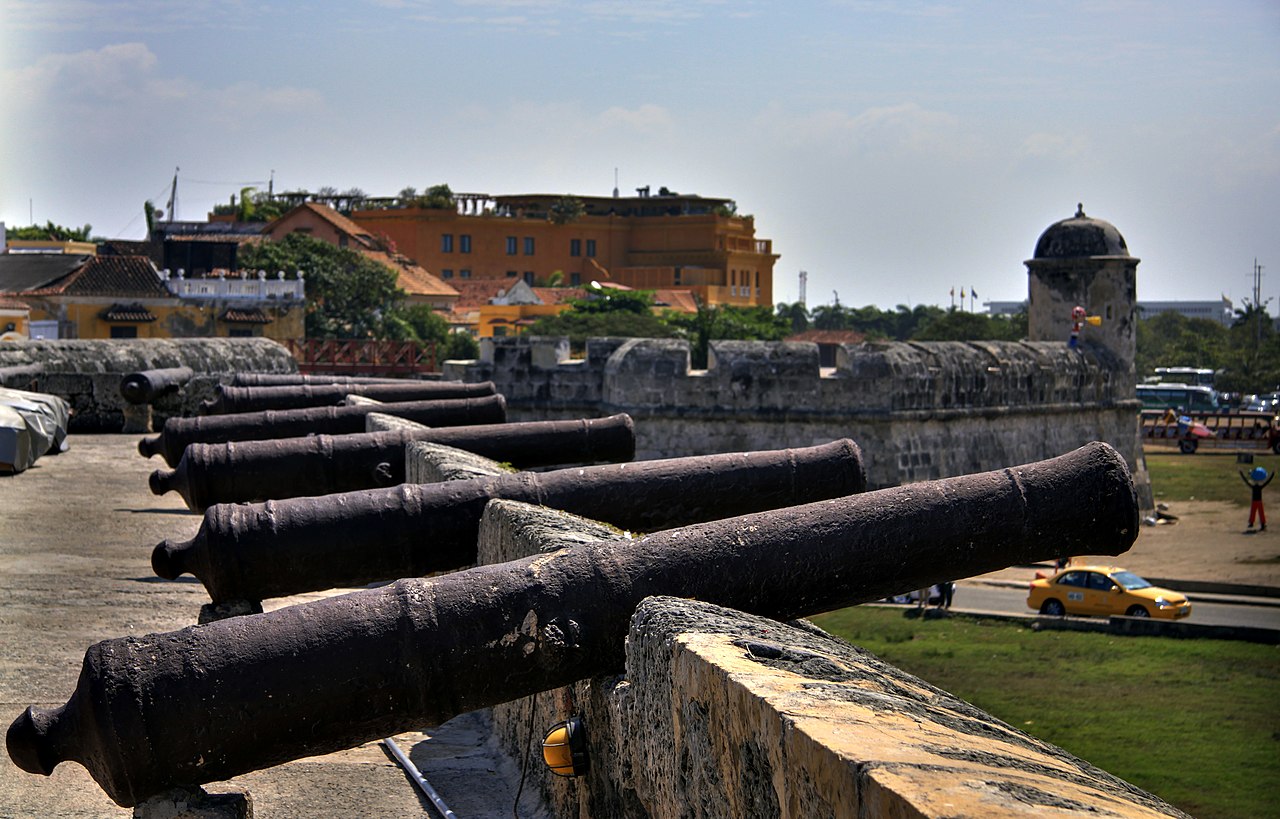
Cuba
República Dominicana
- Santo Domingo fue una ciudad fortificada desde el siglo XVI hasta principios del XX. Partes de la muralla aún son visibles en la Zona Colonial . Una de las puertas principales está muy bien conservada y hace siglos fue nombrada “La Puerta del Conde” en honor al Conde de Peñalba, quien detuvo la invasión de William Penn y Robert Venables durante el Sitio de Santo Domingo .
México

- Campeche - sobreviven la mayoría de las murallas que rodean el casco antiguo
- Mayapán (ruinas mayas)
- Mérida, Yucatán (demolida en su mayor parte a finales del siglo XIX, pero quedan algunos segmentos y portales arqueados)
- Ciudad de México [ cita requerida ]
- Tulum (ruinas mayas)
- Veracruz (murallas derribadas en el siglo XIX, pero queda un bastión) [5]
Panamá
Casco Antiguo de la Ciudad de Panamá (aún existe una parte de la Muralla) [6]
Perú
Puerto Rico
- Viejo San Juan - El distrito histórico del Viejo San Juan cubre toda el área de la ciudad amurallada de San Juan Bautista, también conocida como La Llave de las Indias , la capital colonial de Puerto Rico . El distrito incluye el Castillo San Felipe del Morro , el Castillo San Cristóbal , La Fortaleza , El Cañuelo y otras fortalezas que forman parte de las Murallas del Viejo San Juan , que aún rodean el setenta y cinco por ciento de la ciudad colonial.
Estados Unidos
_Castello_Plan_1660.jpg/1280px-Stad_Amsterdam_in_Nieuw_Nederland_(City_Amsterdam_in_New_Netherland)_Castello_Plan_1660.jpg)
- Boston , Massachusetts, mantuvo una muralla defensiva y una puerta a lo largo de Boston Neck , el único punto donde la ciudad estaba conectada con el continente, desde 1631 hasta finales del siglo XVIII.
- Charleston , Carolina del Sur, fue una ciudad amurallada desde la década de 1690 hasta la década de 1720. Una parte de la muralla, llamada Half Moon Battery, aún es visible en el Provost Dungeon del Old Exchange Building.
- San Agustín, Florida : a partir de 1704, los españoles construyeron la Línea Cubo , unida al Castillo de San Marcos y que encierra la ciudad. Los mapas del siglo XVIII detallan las murallas que encierran toda San Agustín [7]
- Nueva Orleans, Luisiana , planificada en 1718 como ciudad amurallada. La muralla estuvo presente durante la Batalla de Nueva Orleans , pero se encontró en tal estado de desorden que no pudo ser utilizada. [8] [9]
- La ciudad de Nueva York , en el siglo XVII , tenía una muralla defensiva que atravesaba Manhattan . Wall Street debe su nombre a esta barrera. [10]
Uruguay
Asia
Afganistán
- Balkh , la ciudad antigua
Porcelana

- Pekín , véase Muralla de Pekín . Muchas partes de las murallas de Pekín fueron demolidas durante la década de 1960 para abrir grandes calles alrededor de la ciudad. Una línea de metro también sigue la ubicación de las antiguas murallas de la ciudad.
- Xiangyang
- Cantón
- Dalí
- Shangqiu
- Jianshui
- Zhangjiakou , ver distrito de Wanquan
- Zhaoqing
- Ciudad antigua de Guangfu
- Ciudad de Xingcheng
- Liaocheng
- Kaifeng
- Qiansuo en Huludao
- Ciudad vieja
- Condado de Daming
- Fortaleza de Yongtai
- Jingzhou
- Ciudad amurallada de Kowloon , un antiguo enclave de Hong Kong
- Nanjing , ver Muralla de la ciudad de Nanjing
- Linhai
- Qufu
- Taiyuan , ver Distrito de Jinyuan
- Pingyao
- Shanghái ( Ciudad Vieja (Shanghái) ): destruida en gran parte en 1912, solo sobreviven fragmentos
- Canción pan
- Xi'an – La ciudad de Xi'an tiene murallas bien conservadas con un foso lleno de agua que es una atracción turística que incorpora pequeños parques que rodean una zona concurrida y moderna de la ciudad.
- Zhengding
- Distrito de Yuanzhou en Guyuan
- Todavía se pueden encontrar pueblos amurallados en China continental y Hong Kong .
India
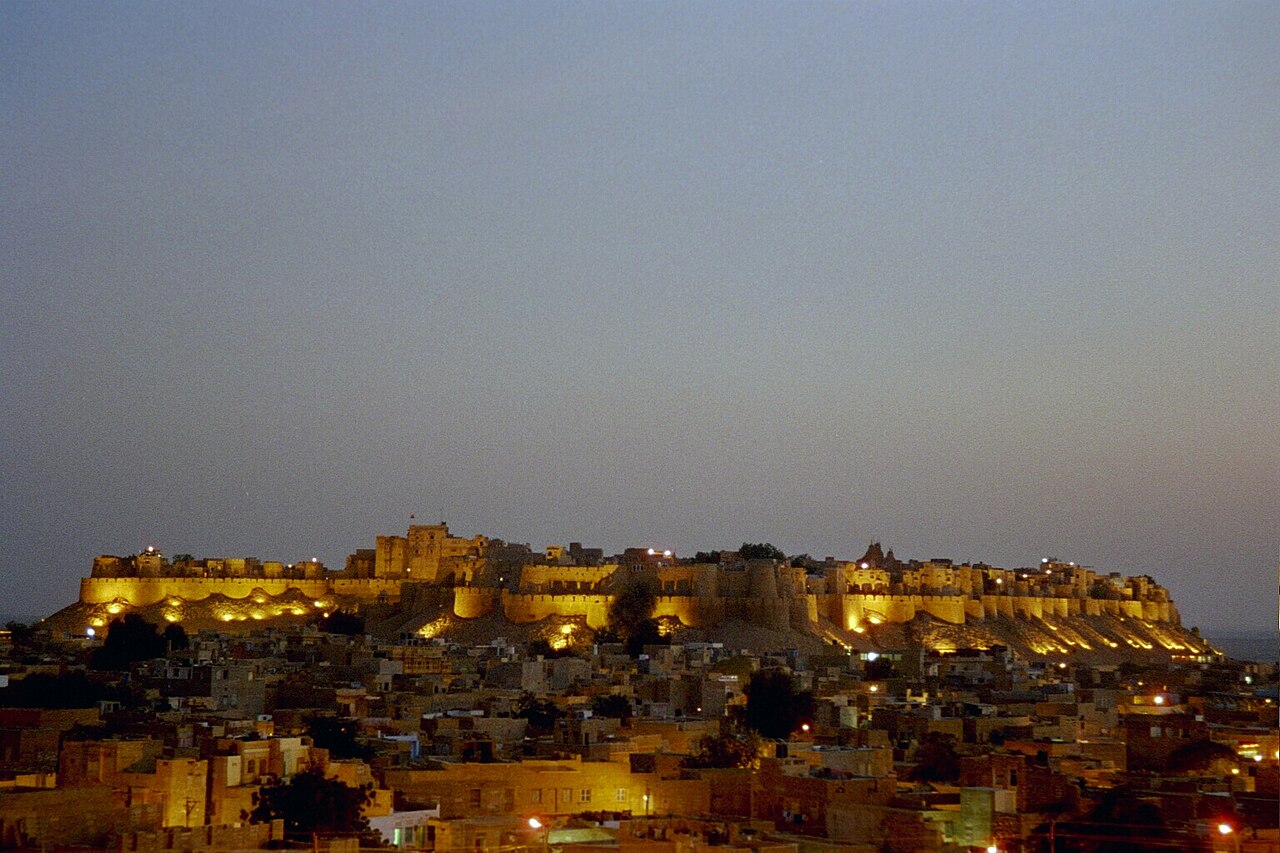
- Agra
- Ahmedabad
- Amravati
- Amritsar
- Datos
- Delhi
- Hyderabad
- Jaipur
- Jaisalmer
- Jodhpur
- Lucknow
- Mumbai (ciudad antigua de Bombay)
- Raigad
- Udaipur
- Warangal
- Chennai
- Cómo
- Badami
- Agujero
- Kanchipuram
- Madurai
- Belur
- Halebidu
- Tiruvannamalai
- Srirangapatnam
- Kolhapur
- Surat
- Baroda
- Surat
- Indore
- Gwalior
- Gauda
- Murshidabad
- Karnasubarna
- Nabadwip
- Tamralipti
- Bhubaneshwar
- Puré
- Khajuraho
- Benarés
- Jhansi
- Faizabad
- Gaya
- Patliputra
- Cangrejo
- Charaideo
- Jammu
- Ludhiana
- Patiala
- Señor Hind
- Champawak
- Pithoragarh
- Bilaspur
- Ciudad de Shimla
Indonesia
Pakuan Pajajaran , la capital del reino de Sunda , estaba rodeada de fosos y murallas defensivas. Ahora la zona forma parte de la ciudad moderna de Bogor.
Una muralla del siglo XVIII construida por Hamengkubuwono I, del reino Ngayogyakarta Hadiningrat, para proteger la capital interior de los holandeses y otros enemigos durante el período del reino Mataram. Hoy en día, el 96 % de la muralla todavía existe y es un punto de referencia local.
El 17 de febrero de 1745, el Reino de Surakarta se trasladó a un nuevo bosque abierto llamado Villa Sala y construyó su Palacio Residencial Real y una zona urbana con un "Beteng Kraton" o muralla del palacio de 15 kilómetros de largo a su alrededor. En 2022, todavía se conserva el 90 % de las murallas de la ciudad.
- Surosowan
Conocida como la capital del Reino de Banten , la muralla fue destruida por los holandeses durante su período colonial para poner fin al reinado de Banten. La muralla de la ciudad que quedó es solo un 10% de su aspecto real.
Trowulan fue la capital del antiguo Imperio Majapahit . Durante su período de gloria, la capital fue la primera ciudad antigua sistematizada europea (con un sistema de canales para el transporte y también un gran pasillo y carretera para el transporte principal) en Indonesia, porque Trowulan se desarrolló en el período de gloria de Majapahit entre los siglos XIII y XV. La muralla protegía el "Kraton" interior o palacio real y algunos lugares importantes. Hoy en día, la muralla no se puede ver con su aspecto original.
Irán
Irak
Israel
- Acre : fortificación otomana moderna del siglo XVIII capaz de resistir ataques de cañones. La muralla ha sido restaurada y ahora incluye una muralla para turistas.
- Jaffa
- Seguro
- Tiberíades
- Jerusalén - El Libro de Nehemías es una narración de los judíos que reconstruyeron los muros de la ciudad durante el regreso a Sión .
Líbano
- Baalbek : todavía se pueden ver secciones de las fortificaciones árabes (construidas con piedras de estructuras romanas) alrededor de la Acrópolis y el casco antiguo.
- Batroun : la ciudad es conocida por su muralla fenicia de 225 m de longitud. También había una ciudadela del siglo IX a. C., de la que todavía se pueden ver partes.
- Beirut : en el centro de la ciudad se han desenterrado partes de las fortificaciones fenicias y romanas y de la ciudadela otomana . Las famosas murallas erigidas por el emir Fakhruddin II aún no se han recuperado.
- Biblos : el casco antiguo está rodeado por murallas medievales, con un castillo en su extremo sur.
- Sidón : hoy en día quedan pocos restos de las fortificaciones medievales de la ciudad, excepto el Castillo de San Luis .
Malasia
- Malaca – Construida por los portugueses después de la ocupación de la ciudad en 1511, fue demolida por los británicos en 1806. Conocida localmente como A Famosa .
Pakistán
Casi todas las ciudades antiguas de Pakistán tenían una muralla defensiva. Los británicos destruyeron gran parte de estas murallas para reforzar las ciudades. Algunas de las ciudades que fueron fortificadas fueron:
- Hyderabad
- Lahore
- Multán
- Peshawar
- Shikarpur
- Hazro, distrito de Attock
- Quetta
- Sialkot
- Rawalpindi
- Gujarat
- Gujranwala
- Bhera
- Judaabad
- Bannu
- Tulamba
- El Sharif Uch
- Sehwan Sharif
- Eso es
- Karachi
- Rohri
- Mansurá
- Bella
Palestina
Filipinas

- Cebú (ver Fuerte San Pedro )
- Manila ( Intramuros ): parcialmente conservada y parcialmente restaurada después de la Segunda Guerra Mundial. Las paredes originales todavía están bien conservadas.
- Olongapo ("Puerta Española")
- Ozámiz (Fuerte de la Concepción y del Triunfo)
- Zamboanga (ver Fuerte Pilar )
Corea del Sur
- Dongnae (ahora parte de Busan ) (Ver Dongnaeeupseong )
- Seúl (Ver Muralla de la Fortaleza de Seúl )
- Suwon (ver fortaleza de Hwaseong )
- Gwangju, Gyeonggi (Ver Namhansanseong )
- Goyang (ver Bukhansanseong )
Sri Lanka
- Galle (Ver Fuerte de Galle .)
- Matara (Ver Fuerte Matara .)
Siria
Taiwán
- Changhua
- Chiayi
- Fongshan (ahora parte de Kaohsiung )
- Hengchun (ver casco antiguo de Hengchun )
- Hsinchu
- Magong
- Puli
- Quemoy
- Tainan
- Taipei (ver Murallas de Taipei )
- Zuoying (ahora parte de Kaohsiung , véase Ciudad antigua de Zuoying )
Algunas otras ciudades fueron fortificadas con bambúes espinosos en la era Qing . [11]
Tailandia

- Ayutthaya
- Bangkok – Ver las fortificaciones de Bangkok
- Chiang Mai estaba rodeada por un foso y murallas cuando el rey Mangrai el Grande la fundó en 1296. Fueron reconstruidas en gran medida a principios del siglo XIX. Grandes partes de las murallas y las puertas de la ciudad de Chiang Mai sobrevivieron hasta el presente.
- Chiang Rai
- Chiang Saen
- Playa de Kamphaeng Phet
- Lámpara
- Lámpara
- Lop Buri
- Nakhon Ratchasima
- Nakhon Si Thammarat
- Nan, Tailandia
- Pichai
- Phayao
- Phimai
- Phitsanulok
- Frase
- Si Satchanalai
- Songkhla
- Sukhothai
- Suphan Buri
- Thon Buri
- Wiang Kum Kam
Uzbekistán
Vietnam
- Cổ Loa
- Hanoi
- Matiz
- Bắc Ninh
- Vinh
- Thanh Hoa
- Quảng Trị
- Nombre de pila
- Ciudadela de Mac
- Ciudadela de Sơn Tây
Yemen

Europa
Albania
Austria
- Paso de Allen
- Amstetten No está amurallada, pero está rodeada de fosos y torres de entrada.
- Bleiburgo
- Bludenz
- Braunau am Inn
- Bregenz
- Bruck an der Leitha – parcialmente conservado
- Bruck an der Mur
- Iglesia de Donner .
- Drosendorf
- Dürnstein
- Ebenfurth
- Eferding
- Eggenburg
- Eisenstadt
- Enns
- Fehring
- Iglesia de Feldkirch
- Friedberg
- Freistadt – casi completamente conservado
- Friesach
- Frohnleiten
- Fürstenfeld
- Gmünd
- Gmuend-in-Kaernten
- Gmunden
- Graz
- Gross-Enzersdorf
- Adivinación
- Hainburg an der Donau – casi completamente conservado (2,5 km, 3 puertas, 15 torres)
- Hallein
- Hall in Tirol , parcialmente conservado
- Huevo duro
- Hartberg
- Haslach an der Muhl
- Piedra de Heidenreich
- Herzogenbüro
- Bocina
- Judenburg
- Kitzbühel
- Klagenfurt
- Castillo de Neuburg
- Campo de punto
- Korneuburg
- Cremas
- Kufstein
- Laa an der Thaya
- Leoben
- Leonfelden
- Leoben
- Lienz
- Linz
- Litschau
- Maissau
- Marchegg – algunos segmentos conservados
- Mautern – en el lado occidental del casco antiguo se encuentran los restos de la fortaleza romana “Favianae”.
- Melk
- Murano
- Mordedura de garra
- Nuevo mercado en el lago Wallersee
- Nuevo mercado
- Obdach
- Oberwölz
- Oggau en el lago Neusiedler See
- Ottenheim
- Peuerbach
- Pochlarn
- Purbach en el lago Neusiedler See
- Raabs en el Thaya
- Radfeld
- Radkersburg
- Radstadt : muralla casi completamente conservada (siglos XIII al XVI); 3 torres redondas (década de 1530); 1 puerta
- Rattenberg
- Retocar
- Ried en el circuito interior
- Rottenmann
- Óxido
- San Andrä
- Sankt Veit an der Glan
- San Pölten
- Salsburgo
- Esquizofrenia
- Scheibbs
- Schladming
- Schrattenthal
- Schwanenstadt es un asentamiento rodeado por un terraplén, coronado por una empalizada de madera y con sólo un pequeño tramo de muralla adyacente a la "Stadtturm".
- Distrito de la ciudad
- Manchado
- Piedra
- Estrasburgo
- Steyr
- Steyregg
- Traismauer
- Tulln del Danubio
- Viena , destruida y convertida en Ringstraße
- Villach
- Vils
- Puente Vöcklabruck
- Mercado Volkermarkt
- Voitsberg
- Waidhofen del Thaya
- Waidhofen del Ybbs
- Weitra
- Bien
- Viena Neustadt
- Wilhelmsburg
- Wolfsberg
- Ybbs del Danubio
- Zeiselmauer . El fuerte auxiliar romano fue fortificado nuevamente por los Babenberg en el siglo X, pero nunca se le concedió un mercado ni una concesión.
- Zistersdorf
- Zwettle
Azerbaiyán
- Bakú conserva la mayor parte de las murallas que separan el centro histórico de las partes más nuevas de la ciudad desarrolladas después del siglo XIX.
- Shaki
- Shusha
Bélgica
Bosnia y Herzegovina
Bulgaria
- Hisarya , la antigua ciudad romana, todavía está rodeada casi en su totalidad por las ruinas bien conservadas de sus murallas defensivas.

- Nessebar - ciudad insular fortificada
- Ciudad romana de Nicopolis ad Nestum , Garmen , Gotse Delchev, provincia de Blagoevgrad
- Ciudad romana de Novae , Svishtov
- Pliska , la primera capital de la Bulgaria del Danubio
- Fortificaciones y murallas de Plovdiv : puerta oriental de Filipópolis , Hisar Kapia y Nebet Tepe
- Preslav como capital de Bulgaria
- Silistra
- Sozopol
- Sofía – fundada como ciudad amurallada Ulpia Serdica por el emperador romano Trajano
- Varna
- Veliko Turnovo : tres colinas fortificadas: la fortaleza de Trapezitsa , la fortaleza de Tsarevets y Sveta Gora forman una ciudad capital de Bulgaria

Croacia
Chipre
Czech Republic
_(7).jpg/1280px-M%C4%9Bstsk%C3%A9_opevn%C4%9Bn%C3%AD_(Beroun)_(7).jpg)

- Bechyně
- Bělá pod Bezdězem
- Benátky nad Jizerou
- Beroun
- Bochov
- Bor
- Brno
- Broumov
- Bruntál
- Čáslav
- Česká Lípa
- České Budějovice
- Český Brod
- Český Dub
- Český Krumlov
- Cheb
- Chrudim
- Chyše
- Dačice
- Domažlice
- Dvůr Králové nad Labem
- Frýdlant
- Fulnek
- Havlíčkův Brod
- Hlučín
- Horažďovice
- Horšovský Týn
- Hostinné
- Hradec Králové
- Hranice
- Jablonné v Podještědí
- Jaroměř
- Jevíčko
- Jičín
- Jihlava – Large parts of the town walls remain to the south, west and east side of the medieval town. Some fragments remain on the north side. The fortifications are also a good example of a Zwinger.
- Jindřichův Hradec
- Josefov
- Kadaň
- Klatovy
- Kolín
- Kostelec nad Labem
- Kouřim
- Krnov
- Kutná Hora
- Kroměříž
- Lanškroun
- Lipník nad Bečvou
- Litomyšl
- Litovel
- Loket
- Louny
- Mělník
- Mladá Boleslav
- Mohelnice
- Náchod
- Nové Město nad Metují
- Nový Bydžov
- Nový Jičín
- Nymburk

Nymburk walls - Odry
- Olomouc
- Opočno
- Opava
- Osoblaha
- Ostrava
- Ostrov
- Pardubice
- Písek
- Planá
- Plzeň
- Plumlov
- Polička – Close to 80% of Polička's town walls survive today, in an excellently preserved condition.

Wall and bastion in Polička - Prachatice
- Prague
- Hradčany
- Malá Strana
- New Town
- Old Town

Prague Pulverturm, Gate to the Staré Město - Vyšehrad
- Přelouč
- Přerov
- Prostějov
- Rabštejn nad Střelou
- Rakovník
- Rataje nad Sázavou
- Rokycany
- Rožmitál pod Třemšínem
- Slaný
- Soběslav
- Sobotka
- Stará Boleslav

Town gate, Stará Boleslav - Šternberk
- Štramberk
- Strážnice
- Stříbro
- Svitavy
- Šumperk
- Sušice
- Tábor
- Tachov
- Teplá
- Tovačov
- Třeboň

Town wall and defensive bastions in Třeboň - Trutnov
- Toužim
- Uherský Brod
- Uničov
- Ústí nad Orlicí
- Valtice
- Velvary
- Vidnava
- Vodňany
- Vraný
- Vysoké Mýto
- Zábřeh
- Zákupy
- Žatec
- Žlutice
- Znojmo – more than half of the walls are preserved, with large parts of the zwinger surviving.


Denmark
- Fredericia, extensive renaissance ramparts to the north and west of the city and sea facing ramparts.
- Copenhagen, extensive renaissance ramparts to the south and east, trace remains to the north and west, nice fort at the harbor mouth, three small island fortlets outside the harbor entrance.
- Nyborg – the remains include three preserved bastions, a town gate and the old town is still mostly surrounded by a moat indicating the locations of the other (now demolished) bastions.
- Stege, One of the town gates, the Mølleporten, still remains. Most of the earthwork rampart and dry ditch surrounding the town center still remain.
Estonia

- Pärnu, a rampart with two bastions, a moat and a town gate remain to the west of the old town. It is now transformed into a park, the Valli Park.
- Tallinn (and Toompea), see Tallinn City Walls, most of the wall and towers remains
- Tartu, very few sections remained
Finland


- Hamina Surrounded by about 4–5 km long star-shaped walled fortification
- Lappeenranta The old center of the town is located inside a fortress
- Loviisa It was planned to build a full fortress around the town, but only two bastions were complete
- Suomenlinna An inhabited sea fortress off the coast of Helsinki
France

- Acquigny
- Agde
- Aigues-Mortes
- Ainay-le-Château
- Aire-sur-la-Lys
- Aix-en-Provence
- Alençon, Orne
- Amance, Haute-Saône
- Amboise, Indre-et-Loire
- Ammerschwihr
- Angers, Maine-et-Loire
- Angoulême
- Antibes
- Apt
- Ardres
- Arles
- Arras
- Aubigny-sur-Nère
- Auch
- Autun
- Auvet-et-la-Chapelotte
- Avallon
- Avesnes-sur-Helpe
- Avignon
- Avranches
- Ayherre
- Bâgé-le-Châtel
- Bargème
- Baux-de-Provence
- Bavay
- Bayonne
- Bazas
- Beaugency
- Beaune
- Beauvais
- Béguios
- Bellême
- Bergheim, Haut-Rhin
- Bergues
- Besançon
- Blois, Loir-et-Cher
- Bœrsch
- Boisseron
- Bonneval, Eure-et-Loir
- Bougue
- Bourbon-Lancy
- Bourges
- Bourg-le-Roi
- Briançon
- Brignon
- Briod
- Bruch, Lot-et-Garonne
- Cadillac, Gironde
- Caen
- Cahors
- Campel
- Capdenac
- Carcassonne
- Carignan, Ardennes
- Caudebec-en-Caux
- Cernay, Haut-Rhin
- Chalon-sur-Saône
- Champdieu
- Champigneulles
- Champlitte
- Charleville-Mézières
- Château-Thierry, Aisne
- Châtelais
- Châtillon-sur-Saône
- Chéraute
- Clermont-Ferrand
- Cluny
- Collonges-la-Rouge
- Colmar
- Colmars
- Compiègne
- Compreignac
- Concarneau
- Condé-sur-l'Escaut
- Corbigny
- Cordes-sur-Ciel
- Cormery
- Cosne-Cours-sur-Loire
- Coucy-le-Château-Auffrique – Large parts of the walls remain, though partly in a ruinous state. Remains include several towers, stretches of curtain wall and three gates, the Porte de Laon, Porte de Soissons and the Porte de Chauny.
- Courthézon
- Crécy-la-Chapelle – fragmentary remains
- Créquy
- Cucuron
- Cuiseaux
- Cusset
- Dachstein, Bas-Rhin
- Dambach-la-Ville
- Dax, Landes
- Decize
- Die, Drôme
- Diemeringen
- Dieppe, Seine-Maritime
- Dinan
- Dole, Jura
- Domfront, Orne
- Domme, Dordogne
- Dun-sur-Auron
- Espalion
- Eu, Seine-Maritime
- Évreux
- Falaise, Calvados
- Faucogney-et-la-Mer
- Feurs
- Figeac
- Fos-sur-Mer
- Fougères
- Fréjus, Var
- Givet
- Granville, Manche
- Grenoble
- Guémar, Haut-Rhin
- Guérande
- Hennebont
- Herrlisheim-près-Colmar
- Hesdin
- Hiers-Brouage
- Honfleur
- Île-d'Aix
- Illfurth
- Issoudun, Indre
- Isturits
- Joigny
- La Cavalerie
- La Charité-sur-Loire
- La Chassagne
- La Couvertoirade
- La Groutte
- La Martyre
- La Roche-de-Glun
- La Rochelle
- La Roche-Posay
- La Sauvetat, Puy-de-Dôme
- La Turbie
- Langres
- Lanneray
- Lantabat
- Laon
- Larceveau-Arros-Cibits
- Larressingle
- Laval, Mayenne
- Le Castellet, Var
- Le Crozet
- Le Malzieu-Ville
- Le Mont-Saint-Michel
- Le Palais
- Le Poët-Laval
- Le Quesnoy
- Le Thor
- Les Andelys
- Les Cluses
- Levens
- Loches – large parts remain intact. The upper town and the Loches castle are built on a hill which offers a strategic position over the surrounding countryside and the Indre river. The walls of the upper town remain largely intact and include the ruins of the Porte de Saint-Ours, the well preserved Porte Royale, long stretches of curtain wall and several towers and bastions. The walls of the lower town are partly demolished, but 4 towers, a few smaller later-added turrets, a long section of curtain wall and the well preserved Porte des Cordeliers and Porte Picois (which now serves as the City hall) still remain intact.
- Loudun, Vienne
- Lucéram
- Maisod
- Mans
- Marcolès
- Marsal, Moselle
- Marville, Meuse
- Maubeuge
- Mende, Lozère
- Mennetou-sur-Cher
- Metz
- Meursac
- Molsheim
- Monceaux-sur-Dordogne
- Mondoubleau
- Monpazier
- Montarcher
- Montbrison, Loire
- Mont-de-Marsan
- Monteux
- Montfort-sur-Meu
- Montivilliers
- Mont-Louis
- Montréal, Yonne
- Montreuil, Pas-de-Calais
- Montreuil-Bellay
- Montverdun
- Moret-sur-Loing
- Morlaix
- Mougins
- Mouzon, Ardennes
- Nabas, Pyrénées-Atlantiques
- Nages-et-Solorgues
- Nantes
- Narbonne
- Navarrenx
- Neubois
- Neuf-Brisach
- Nevers
- Nice, Alpes-Maritimes
- Nieul-sur-l'Autise
- Nîmes
- Notre-Dame-de-Gravenchon
- Oberhaslach
- Obernai
- Oradour-sur-Glane, Haute-Vienne
- Orange, Vaucluse
- Orgon
- Ostabat-Asme
- Paris
- Parthenay
- Pérouges
- Pertuis
- Pesmes
- Placey
- Ploërmel
- Poitiers, Vienne
- Poligny, Jura
- Pommiers, Loire
- Pont-de-l'Arche
- Pontgibaud
- Pont-l'Abbé-d'Arnoult
- Pontoise
- Pouilly-lès-Feurs
- Prades-le-Lez
- Prats-de-Mollo-la-Preste
- Provins
- Puycelsi
- Quimper, Finistère
- Quintin
- Rânes
- Rauzan
- La Réole
- Revest-des-Brousses
- Ribeauvillé
- Richelieu, Indre-et-Loire
- Rions
- Riquewihr
- Rocamadour
- Rochefort, Charente-Maritime
- Rocroi
- Rodemack
- Romenay
- Rosheim
- Rouffach
- Roye, Somme
- Ruoms
- Saint-Bertrand-de-Comminges
- Saint-Dyé-sur-Loire
- Sainte-Croix-sur-Buchy
- Saint-Émilion, Gironde
- Saintes, Charente-Maritime
- Sainte-Eulalie-de-Cernon
- Sainte-Suzanne-et-Chammes
- Saint-Étienne-de-Baïgorry
- Saint-Félix-Lauragais
- Saint-Gence
- Saint-Hippolyte, Haut-Rhin
- Saint-Jean-Pied-de-Port
- Saint-Junien – A tower and remains of the curtain wall remain behind houses at the junction of the Boulevard de la République and the Rue de Brèche.
- Saint-Laurent-des-Arbres
- Saint-Léger-Magnazeix
- Saint-Lô
- Saint-Macaire
- Saint-Marcouf, Manche
- Saint-Martin-d'Arrossa
- Saint-Mitre-les-Remparts
- Saint-Omer
- Saint-Pastour
- Saint-Paul-de-Vence
- Saint-Pompont
- Saint-Suliac
- Saint-Sulpice-de-Favières
- Saint-Trivier-sur-Moignans
- Saint-Valery-sur-Somme – Large parts remain, including the Porte de Nevers, the Porte Jeanne d'Arc, stretches of curtain wall and some towers. A hill named Cap Hornu arises above the town which is the most likely and possible location of the Roman Saxon Shore fort and harbour named Locus Quartensis sive Hornensis.
- Saint-Vérain
- Saissac
- Sarralbe
- Sarrebourg
- Saumur, Maine-et-Loire
- Sauvain
- Sélestat
- Semur-en-Auxois
- Senlis, Oise
- Sens, Yonne
- Septème
- Sisteron
- Soissons
- Sorel-Moussel
- Strasbourg
- Suèvres
- Thann, Haut-Rhin
- Thionville, Moselle
- Thouars
- Tillac
- Tincry
- Toul, Meurthe-et-Moselle
- Toulouse
- Tours, Indre-et-Loire
- Trôo
- Turckheim
- Uzès
- Vabre
- Vannes
- Vaucouleurs, Meuse
- Venasque
- Vence
- Verdun, Meuse
- Vervins
- Vézelay
- Vianne
- Vienne, Isère
- Viens, Vaucluse
- Vievy-le-Rayé
- Villefranche-de-Conflent
- Villeneuve-sur-Yonne
- Vitré, Ille-et-Vilaine
- Vouvant
- Wangen, Bas-Rhin
- Wattwiller
- Westhoffen
- Wissembourg
- Zellenberg
Germany


- Aachen, some parts of the inner walls still remain alongside Tempelgraben (at the corner with the Eilfschornsteinstraße and the corner with the Pontstraße), and at the back of the houses alongside Seilgraben. Of the outer walls three towers, the Langer Turm, Pfaffenturm and the Marienturm, still stand today. The two remaining city gates, Ponttor and Marschiertor, are among the best preserved gates in Germany.
- Aach
- Abensberg
- Ahrweiler
- Aichach
- Altentreptow – the remains include some stretches of wall, a tower and two town gates, the Brandenburger Tor and the Demminer Tor.
- Annaberg-Buchholz
- Amberg
- Amöneburg
- Andernach
- Arberg – only one town gate remains.
- Arnstadt
- Aschaffenburg
- Aub – large sections of the walls remain, including some towers. One town gate remains, the Zentturm.
- Babenhausen
- Bad Colberg-Heldburg
- Bad Frankenhausen
- Bad Hersfeld
- Bad Langensalza – large parts of the walls still remain today, including 12 wall towers and one city gate, the Klagetor.
- Bad Münstereifel
- Bad Neustadt an der Saale
- Bad Orb
- Bad Rodach
- Bad Sooden-Allendorf
- Bad Waldsee
- Bad Wimpfen
- Bacharach
- Ballenstedt
- Barby
- Bautzen
- Beilngries
- Berching
- Berlin had a defensive wall around the city from about 1250 until the mid-17th century, and a Customs Wall from the mid-18th to the mid-19th centuries. The Berlin Wall that existed from 1961 to 1989 was claimed by the authorities of East Germany to be defensive, but in fact it was rather intended to prevent unauthorized emigration. Parts of Berlin's medieval wall still remain alongside the Littenstraße.
- Bernau bei Berlin
- Bernkastel – one town gate, the Graacher Tor, remains.
- Besigheim
- Blankenburg (Harz)
- Bodenwerder
- Boizenburg
- Boppard
- Bönnigheim – some parts of the walls and a town gate remain.
- Brandenburg
- Buchen
- Burgau
- Burg bei Magdeburg
- Burghausen
- Butzbach
- Büdingen
- Calbe
- Chemnitz – only one tower remains, the Roter Turm (Red Tower).
- Coburg
- Cologne
- Crailsheim – some remains are located north of the Ringgasse, including a wall tower. Another tower remains alongside the Grabenstraße.
- Darmstadt
- Dausenau – the walls remain almost intact. One town gate still remains, the Torturm.
- Delitzsch
- Demmin large parts of the city walls still remain alongside Nordmauer, Bauhofstraße and Südmauer. One town gate still remains, the Luisentor.
- Dettelbach
- Dillenburg
- Dillingen
- Dilsberg
- Dinkelsbühl – the medieval town walls remain fully intact, including 4 gates and 19 towers.
- Dollnstein
- Dömitz
- Donauwörth
- Dresden – Dresden's defensive walls were some of the first in Germany, inspired by the earlier Italian model. The walls surrounded both the ‘Old City’ south of the Elbe, and the ‘New City’ to the north. The walls, gates and moats were largely removed c. 1815, following the Napoleonic Wars, being deemed outmoded for modern warfare. Some small sections have been rediscovered and established as the Museum Festung Dresden https://web.archive.org/web/20160509160153/http://www.festung-dresden.de/de/festung_dresden/museum/ below the more famous Brühl Terrace.
- Duderstadt
- Duisburg
- Ebern
- Eberbach (Baden)
- Eibelstadt
- Eichstätt
- Einbeck
- Eisenheim
- Ellwangen
- Eltville am Rhein
- Emden
- Erding
- Erlangen – some stretches of wall still remain alongside Nördliche Stadtmauerstraße, Wöhrstraße and Schulstraße.
- Feuchtwangen
- Fladungen
- Forchheim
- Freiberg
- Freyburg, Germany
- Freystadt
- Friedberg, Bavaria
- Freinsheim
- Frickenhausen am Main
- Fritzlar
- Gangelt
- Gardelegen – there are several remains of the old town wall, including the impressive Salzwedeler Tor, the remains of the Stendaler Tor, and some stretches of wall.
- Gartz (Oder) – The remains of the walls around the medieval town include some sizable stretches of walls, towers and one town gate, the Stettiner Tor.
- Geisa
- Gelnhausen
- Germersheim
- Gerolzhofen
- Göllheim – two town gates are preserved, the Kerzenheimer Tor and the Dreisener Tor. One tower remains, the Ulrichsturm.
- Gräfenberg – the remains include three well-preserved town gates, the Egloffsteiner Tor, the Hiltpoltsteiner Tor and the Gesteiger Tor. Some parts of the walls still remain adjacent to the Gesteiger Tor and at the back of the houses alongside Am Gesteiger and Schulgasse.
- Grebenstein – most of the medieval walls are still surrounding the old town. One town gate remains, the Burgtor.
- Greding
- Grimma
- Grimmen one tower still remains, the Wasserturm. All three of the original town gates also remain, the Stralsunder Tor, Greifswalder Tor and the Mühlentor.
- Großostheim
- Gundelfingen an der Donau
- Gundelsheim
- Gunzenhausen
- Güstrow – remains of the walls remain south of the cathedral and alongside the Gelviner Mauer. The town
- Haldensleben
- Hannoversch Münden
- Hattingen
- Heidelsheim – one town gate and a wall tower still remain today.
- Heidingsfeld, today part of Würzburg
- Heilbad Heiligenstadt
- Herborn
- Herrieden
- Hildburghausen
- Hirschhorn
- Haldensleben
- Hammelburg
- Hardgesen
- Hollfeld – the remains include one town gate, the Obere Tor, and some parts of the walls to the south of the old town.
- Homberg, Efze
- Horn
- Höchstadt an der Aisch
- Höchstädt an der Donau
- Horb am Neckar – large sections of the walls still remain. One town gate, the Ihlinger Tor, still remains, and some towers still remain, most notably the Schurkenturm and the Schütteturm.
- Höxter
- Hünfeld
- Ingelheim am Rhein – sizable remains, including stretches of wall, the Malakoffturm, the Bismarckturm, Ohrenbrückertor, Uffhubtor and the ruined Heidesheimer Tor. The medieval town centre also houses the ruins of the Ingelheimer Kaiserpfalz.
- Ingolstadt
- Iphofen
- Jena
- Kallenhardt
- Karlstadt am Main
- Alt Kaster – The old medieval town of Kaster now forms part of Bedburg. The town walls remain largely intact, including 2 town gates and several towers.
- Kaub
- Kaufbeuren
- Kemnath – several sections and towers of the walls remain around the medieval town. The eastern town gate was later converted into a church tower.
- Kempen – some parts of the walls still remain. They include the Kuhtor, a well-preserved town gate, the Mühlenturm and the remains of another town gate, the Peterstor.
- Kindelbrück
- Kirchberg an der Jagst
- Kirchhain
- Kirchheim unter Teck
- Kitzingen
- Kroppenstedt
- Korbach
- Kranenburg
- Kronach
- Kulmbach
- Kuppenheim
- Kyritz
- Ladenburg
- Landsberg am Lech
- Landshut
- Langenzenn
- Laucha an der Unstrut
- Lauchheim
- Lauingen
- Lauf an der Pegnitz
- Laufen
- Lauffen am Neckar – the old town consists of three parts. While the town is divided by the river Neckar, the castle stands on a small island circled by the river. On the left bank there is a sizable stretch of wall is located next to the church. On the right bank, some towers, stretches of wall and the Neues Heilbronner Tor still remain.
- Leipheim
- Leipzig – remains include the Moritzbastei bastion.
- Leonberg
- Leutershausen
- Löbejün
- Lohr am Main
- Lübben
- Luckau
- Magdeburg
- Mainbernheim
- Maintal – large sections of the walls still remain, notably to the north of the medieval town.
- Mainz – the remains include the well-preserved square-shaped citadel, the medieval Alexanderturm, and the remains of a bastion alongside the Augustusstraße.
- Malchin two town gates still remain, the Kalensches Tor and the Steintor. Some parts of the walls to the south and east of the town still remain.
- Marbach am Neckar
- Markt Einersheim – two town gates still remain.
- Marktbreit
- Mayen
- Meisenheim
- Mellrichstadt
- Memmingen
- Meppen – the remains include a star shaped moat around the medieval town.
- Merkendorf
- Meyenburg
- Michelstadt
- Miltenberg
- Mindelheim
- Möckmühl
- Monheim – two town gates remain, the Oberes Tor and the Unteres Tor.
- Mühlhausen
- Müncheberg
- Munich has some of its former city gates still standing, and a section of its late 13th-century defensive wall.
- Münnerstadt
- Münzenberg – fragments of the walls remain, including two towers.
- Monheim – some stretches of wall still remain and both town gates, the Oberes Tor and the Unteres Tor, are preserved.
- Nabburg
- Naumburg
- Neckarsulm
- Neubrandenburg
- Neubrunn
- Neuburg an der Donau – some parts of the medieval walls still remain, including the Unteres Tor. The trace of the later bastion earthworks, the so-called Untere Schanze, Elias Holl Schanze and Oberer Schanze, is still recognizable in the fields and from the air.
- Neudenau
- Neuenstadt am Kocher
- Neuenstein
- Neuleiningen
- Neumarkt in der Oberpfalz
- Neunkirchen am Brand – three town gates still remain, the Forchheimer Tor, the Erleinhofer Tor and the Erlanger Tor.
- Neuss
- Neustadt (Hessen)
- Neustadt an der Aisch – substantial parts of the walls still remain, including some towers and a well-preserved town gate, te Nürnberger Tor.
- Neustadt in Holstein – one town gate remains, the Kremper Tor.
- Niedernberg – several stretches of the walls wall remain. One wall tower remains at the riverside end of the Turmgasse
- Niedernhall – most of the town walls remain intact.
- Nordhausen
- Nördlingen
- Nürnberg
- Obernburg am Main
- Oberwesel
- Ochsenfurt
- Oebisfelde
- Oettingen
- Öhringen
- Oldenburg
- Oppenheim – some stretches of the town walls remain near the ruins of Landskron castle. One town gate and two towers remain, the Gautor, the Ruprechtsturm and the Uhrturm.
- Ornbau
- Orsoy
- Ortenberg
- Oschatz
- Ostheim
- Paderborn
- Pappenheim
- Pasewalk
- Tribsees – two town gates remain, the Steintor and the Mühlentor
- Trier-Pfalzel
- Pfullendorf
- Pößneck
- Potsdam
- Prenzlau there are some good remains of the walls, especially North, East and South of the town. 4 gates still remain, the Steintor, Wasserpforte, Mitteltor and the Blindower Tor. The walls also include 25 towers.
- Prenzlin
- Prichsenstadt
- Querfurt
- Radolfzell am Bodensee
- Ratingen
- Ravensburg – three town gates still remain, the Frauentor, Obertor and the Untertor. Nine of the original ten wall towers still remain, most notably a tower named Mehlsack.
- Recklinghausen two defensive towers and some portions of wall still remain today, north west of the old city.
- Reichelsheim – three towers remain.
- Rodach
- Rees – large parts of the town walls still remain intact, mainly located at the riverside of the town and in the parks at the north-east and west side of the medieval town.
- Rheinbach
- Rheinberg
- Rhens – the town walls remain largely intact. Three town gates still remain, the Rheintor, the Josephstor and the ruins of the Viehtor.
- Rostock
- Röttingen
- Roth
- Rothenburg ob der Tauber
- Rottweil
- Rüthen
- Salzkotten
- Salzwedel
- Schleusingen
- Schlüsselfeld
- Schmalkalden
- Schongau, Bavaria
- Schrobenhausen
- Schwaigern
- Schwalmstadt – the remains of a town gate still survive, the medieval Lüdertor. The earthworks are mostly demolished, leaving a moat of which the course indicates the location of four round bastions.
- Schweinfurt
- Seehausen – the moat still surrounds most of the medieval town. Fragments of the walls are to be found at the southern side of the old town. One town gate still remains, the Beustertor.
- Seßlach
- Seligenstadt – the remains include the Steinheimer Torturm, the Pulverturm and a tower at the Friedhofsmauer.
- Segnitz
- Soest – 2.5 km of the town walls (1180) are still intact, also a town gate ("Osthofentor", with the world largest collection of crossbow bolts) and a defense tower ("Kattenturm").
- Sommerach
- Sömmerda
- Sommerhausen
- Spalt
- Spangenberg
- Stade
- Staßfurt
- Stadt Blankenberg
- Steinheim
- Steinau an der Straße
- Stendal – two town gates still remain.
- Sternberg
- Stadtsteinach
- Stralsund
- Sulzbach – sizable parts of the walls and towers still remain. One town gate is preserved, the Rosenberger Tor.
- Sulzfeld am Main
- Tangermünde – most of the town walls still remain, including some towers.
- Templin
- Themar
- Treysa – the remains are located mainly South, East and North of the old town.
- Trier, portions of the city walls still exist, but the size of the Roman gate, the "Porta Nigra", gives evidence of the importance of the city. Other Roman remains include the baths, the Constantine Basilica, an amphitheater, and a 2nd-century AD Roman bridge.
- Torgau
- Überlingen
- Uffenheim
- Ulm an der Donau
- Villach
- Villingen
- Vilseck
- Vilshofen an der Donau
- Vellberg
- Volkach
- Waiblingen
- Waldenburg
- Waldfeucht
- Wangen im Allgäu
- Warburg (Westfalia)
- Wassertrüdingen
- Wemding
- Weikersheim
- Weil der Stadt
- Weilrod – the only town gate still remains.
- Weißenburg (Bavaria)
- Werben – one town gate still remains to the north east of the medieval town, the Elbtor. A tower with adjacent portion of the town wall remains to the west of the medieval town.
- Wertheim
- Wettenberg
- Windsbach
- Winterhausen
- Wittstock
- Witzenhausen
- Woldegk
- Wolframs-Eschenbach
- Worms, Germany
- Wörth am Main
- Wunsiedel 3 towers, small portions of the walls and a town gate (Koppetentor) still remain.
- Würzburg
- Xanten
- Zeil am Main
- Zerbst
- Zons
- Zülpich
- Zwickau
Gibraltar
Greece


Many towns and cities still retain at least parts of their defensive walls, including:
- Arta
- Athens – mostly demolished, see city walls of Athens
- Chania – see Fortifications of Chania
- Chios
- Corfu (city)
- Drama, Greece – sizable parts of the town walls remain to the north and east side of the old town. Including 2 towers and stretches of wall.
- Heraklion Candia Khandak – see Fortifications of Heraklion see siege of Candia – Arab and Byzantine walls still remain, about 20%, Venetian 7.5 km long walls, 95% still remain, 30.000 people live now inside the Venecian walls. Two gates, one castle in the sea (Koules)
- Ioannina – see Ioannina Castle
- Kastoria – fragmentary remains.
- Kavala (a significant part of the seaside walls survive)
- Kissamos
- Komotini
- Koroni – preserved fortifications of the castle and upper town.
- Missolonghi
- Monemvassia
- Mystras
- Nafplion
- Naupactus
- Preveza
- Rethymno – see Fortezza of Rethymno
- Rhodes – see Fortifications of Rhodes
- Thessaloniki – see Walls of Thessaloniki
- Veria (about 170 m of the Byzantine walls survive)
Hungary
- Buda – the Castle Hill is surrounded by preserved medieval and early modern fortifications. Only a short section survived from the walls of the Víziváros neighbourhood.
- Pest – segments of the 15th-century city walls are preserved inside the courtyards of later houses.
- Eger – some segments preserved, mostly demolished
- Győr – the walls were demolished in the 19th century but segments are preserved
- Komárom
- Kőszeg
- Mosonmagyaróvár – the walls were demolished in the 1820s
- Pécs – long sections of the medieval walls are preserved and freed to later intrusions.
- Sárospatak
- Sopron – medieval circle of walls partly built on ancient Roman foundations
- Szécsény – some segments of the city walls preserved
- Székesfehérvár – long sections of the medieval walls are preserved
- Vác – some segments and one tower preserved
- Veszprém – walled old town on Castle Hill
Republic of Ireland
Italy


- Acqui Terme – three town gates and remains of walls.
- Acuto
- Albenga – fragmentary remains, including stretches of wall and 3 town gates.
- Alghero
- Altamura – some remains; two gates are still visible, namely Porta Bari and Porta dei Martiri
- Ancona
- Anghiari
- Aosta's Roman walls are still preserved almost in their entirety
- Appignano
- Aquasparta
- Arcevia
- Asolo
- Assisi
- Arezzo – Large parts of the town walls still survive, including several stretches of curtain wall, 6 bastions, 4 town gates and the well preserved citadel Fortezza Medicea.
- Bagnacavallo – two town gates remain.
- Bari – historically a walled port city on a promontory but only two bastions and a short section of the sea walls survived
- Bassano del Grappa
- Bastia Umbra
- Belvedere Ostrense
- Belluno
- Bergamo – surrounding hill of the old city
- Bisceglie
- Bologna
- Bosco Marengo – a large part of the north-western walls with towers are preserved.
- Bozzolo
- Brescia – the castle hill (called Cidneo Hill) is surrounded by preserved medieval and Renaissance fortifications. Segments of Roman and venetian walls are partially survived
- Bressanone – the western gate remains as well as the north side where the houses serves as walls
- Brindisi – several parts of the walls are preserved, including 5 bastions and two town gates, the Porta Lecce and the Porta Mesagne.
- Brunico – three gates remain, the western, northern and eastern ones.
- Busseto
- Cagli
- Cagliari
- Caltagirone
- Camerino
- Capua
- Castel Bolognese – three wall towers still remain.
- Castel del Monte
- Castel Goffredo – tiny fraction of the walls and a tower remain
- Castelfranco Veneto – the old town is completely surrounded by medieval walls and a moat
- Castelvetro di Modena
- Castelsardo
- Castiglion Fiorentino
- Castiglione di Garfagnana
- Castiglione del Lago's old town has fully preserved walls
- Cesena
- Cingoli
- Cittadella – one of the best preserved walled towns in Italy, there's a small breach on the northwestern part (the walls are fully walkable)
- Città della Pieve
- Città di Castello
- Cividale del Friuli – small part of the walls remain on the north east
- Colmurano
- Cologna Veneta – minor part of the walls remaining on the western side
- Como – about 70% is remaining with a few towers
- Cordovado – two town gates remain
- Corinaldo
- Corridonia
- Cortona
- Crema (Venetian walls of Crema)
- Crotone
- Domodossola – a tiny fraction remains behind the church
- Este, Veneto – parts of walls still remaining
- Fabriano
- Faenza
- Falerone
- Fano – large sections of the Roman walls and towers are preserved. One town gate still remains, the Roman Arco di Augusto.
- Felizzano
- Ferrara – originally 13 km now 9 km remain
- Firenzuola
- Fiuggi
- Florence
- Foligno
- Fossano – a minor part remains, particularly a bastion at the north end
- Forlì – remains include the ruins of the Porta Schiavona. The foundations of a tower can be found in the roundabout at the Piazza Santa Chiara.
- Gallipoli
- Gemona
- Genoa has partial fortifications still standing
- Glurns Glorenza in Italian, the medieval stone walls fully encapsulate the old town
- Gradara
- Gradisca d'Isonzo – large part of the walls and towers still intact
- Grosseto's star shaped town walls are almost completely intact.
- Guardiagrele
- Guastalla – a star-shaped road around the town indicates the trace of the fortifications. A wall tower still stands at the corner Via Giuseppe Verdi/Via Volturno.
- Iglesias
- Isernia
- Ivrea
- Jesi
- Lanciano
- Lazise – part of the northern and southern walls still intact, including several towers and 3 town gates.
- Lecce
- Lecco – small part of the walls remains on the north east
- Leonessa
- Livorno
- Loano
- Loro Piceno
- Lucca
- Macerata
- Marostica – The defensive walls around the old town are fully intact. The walls are among the best preserved medieval defensive structures in Italy. Including 3 town gates, 20 towers and two castles, the Castello Superiore and the Castello Inferiore.
- Marsala
- Marta
- Massa Martana
- Massa Fermana
- Matera
- Melfi
- Messina – see Fortifications of Messina
- Mignano Monte Lungo – the Porta Fratte town gate is the only remain of the medieval town walls.
- Mineo
- Mondolfo
- Monopoli
- Montefalco
- Montegiorgio
- Monteriggioni
- Montagnana – perfectly preserved medieval walls and one of the most impressive in Europe
- Montappone – small fortified town. The town directly borders the walled town of Massa Fermana
- Montecassiano
- Montecatini Terme
- Monte del Lago
- Monte San Giusto – fragmentary remains, including an impressive town gate and a tower.
- Monte San Pietrangeli
- Monte San Savino
- Monte Vidon Corrado
- Muggia – remains include two towers, two stone bastions, two town gates and large stretches of the walls.
- Naples
- Nardò – several fragments of the walls still stand around the town, including many towers which are incorporated in houses.
- Narni
- Nettuno
- Noale
- Norcia
- Novi Ligure
- Orbetello
- Orvieto
- Ostra
- Ostuni
- Otranto
- Padova
- Palmanova has fortress plan and structure, called a star fort it is a nine pointed citadel
- Passignano Sul Trasimeno
- Pavia
- Perugia
- Pesaro – the remains include two bastions, a curtain wall and a town gate, the Porta Rimini.
- Peschiera del Garda – fortified town surrounded by water
- Peschici
- Petriolo
- Piacenza has large sections of its Renaissance walls still standing
- Piglio
- Piombino
- Pisa
- Pistoia
- Pizzighettone – nearly completely surrounded by walls apart from a few breaches
- Pollenza
- Pontremoli
- Portobuffolé – little town with a gate remaining
- Portoferraio
- Potenza Piceno
- Pozzuoli
- Prato
- Procida
- Rapagnano
- Rapolano Terme
- Ravenna
- Reggio Emilia – very little remains of the medieval town walls. One town gate remains, the impressive Porta Santa Croce. A stretch of wall is located at the Viale Monte Grappa.
- Ricetto di Candelo – small town completely surrounded by walls
- Rieti
- Rimini
- Riva del Garda – parts of the walls and two gates remain
- Rome has walls since the Roman Empire
- Rovereto – a part of the medieval stone walls remains on the eastern side
- Sabbioneta – surrounded by a star fort
- Salò – two gates remaining
- San Costanzo – one of the smallest fortified towns in Italy
- San Gemini
- San Gimignano
- San Severino Marche
- San Vito al Tagliamento – part of the walls remain and three gates
- Santarcangelo di Romagna – most of the medieval town wall remains around the old town, including long stretches of wall, a gate and several towers.
- Sansepolcro
- Sant'Angelo in Pontano
- Sassari fragmentary remains, mainly at the north side of the old town.
- Savignaro Sul Panaro
- Sciacca
- Senigallia
- Serra De'Conti
- Sesto al Reghena – two gates remain
- Siena
- Siracusa
- Soave – town surrounded by medieval walls and three gates (Porta Bassano, Porta Vicentina and Porta Verona)
- Soncino – nearly completely surrounded by walls and a moat
- Spilamberto – one town gate still remains.
- Spilimbergo
- Spoleto
- Staffolo
- Sulmona
- Susa – fragmentary remains of Roman walls. The cathedral is built against the side of the Roman town gate Porta Savoia. Several parts of the walls and three lowered towers can be found alongside the Corso Unione Sovietica.
- Talamone
- Tarquinia
- Termoli
- Terra del Sole almost all town walls remain, with four bastion and two gate (Porta Romana and Fiorentina). Ideal-town of renaissance
- Todi
- Torino – the remains include the impressive Roman town gate Porta Palatina and 3 bastions with turrets and curtain walls in the park nearby the Porta Palatina.
- torre San Patrizio
- Torri del Benaco – minor part of the wall remaining on the south side
- Trapani
- Treia
- Trevi
- Treviso
- Tuscania
- Udine – fraction of the walls remain and two gates
- Urbino
- Urbisaglia
- Verona
- Veruccio
- Venzone – medieval stone walls surrounding the town, partly rebuilt after the 1976 earthquake
- Vicenza large sections of the town walls still remain, mainly alongside the Viale Giuseppe Mazzini, Via Goivanni Cecciarini and the Via Legione Gallieno. Four town gates remain, the Porta San Bortolo, Porta Santa Lucia, Porta Castello and the Porta Santa Croce.
- Villafranca di Verona – completely intact walls part of the castle
- Vipiteno – a tower gate remains
- Volterra
- Vaste
Latvia
- Riga – the best preserved part of the old town walls is the Powder Tower. Just north west of the Powder Tower remains a stretch of wall with a square tower. Foundations of the wall can be seen at Kalēju iela street, and there are fragments of a ruined wall at the site of a demolished building at Minsterejas iela street. The only remains of the earthen ramparts around the old town is a star shaped moat, now transformed into a park.
- Cēsis
- Daugavpils fortress (Not a true walled city, but a huge fortress with buildings)
- Limbaži
- Valmiera
Lithuania
Luxembourg
_-_view_from_Metz_square.jpg/1280px-Luxembourg_(city)_-_view_from_Metz_square.jpg)
North Macedonia
Malta
Monaco
Montenegro

- Kotor
- Bar
- Budva
- Herceg Novi
- Kotor – built by Illyrian tribes in the 9th century and enlarged many times from the 13th century until the 19th century.
- Podgorica
- Sveti Stefan
- Ulcinj
Netherlands
Norway
- Fredrikstad
- Gamlebyen
- Oslo (Akershus Fortress)
Poland


- Biała
- Białogard
- Bolesławiec – the old town has fragmentary remains of the old town wall, including several towers and stretches of wall.
- Braniewo
- Brodnica
- Brzeg – a star-shaped park around the old town is what remains of the renaissance fortifications. Some parts of the moat still remain. The shape of seven bastions is recognizable from the air.
- Bystrzyca Kłodzka
- Chełmno – almost whole length of walls (2.2 km), with 17 watch towers and city gate, 13th and 14th centuries.
- Chojna
- Chojnice
- Dąbie
- Dzierżoniów
- Gdańsk
- Głogów
- Gniew
- Goleniów
- Golub-Dobrzyń
- Gorzów Wielkopolski
- Grodków
- Grudziądz
- Gryfice
- Gryfino
- Jawor
- Jelenia Góra
- Kalisz
- Kamień Pomorski
- Kętrzyn
- Kłodzko – the remains include the impressive citadel located on a hill north of the medieval town.
- Kołobrzeg – a round basion and a part of the moat still remain.
- Kostrzyn – the medieval town was entirely destroyed during World War II, only remaining some ruins of houses, the ruins of a church and the riverside fortified walls. The fortified walls include three bastions and a land gate. The remaining moat of an outer work is located north west of the ruined medieval town.
- Koszalin
- Kowalewo Pomorskie
- Kożuchów
- Kraków – only the barbican, Floriańska Gate, two watch towers and some traces preserved
- Krapkowice
- Kwidzyn
- Legnica
- Lębork – city ruins from the Medieval era
- Lidzbark Warmiński
- Lipiany
- Lubań – partially preserved
- Lubawa
- Lubin
- Lublin
- Malbork – one gate and a round bastion still remain. Stretches of the walls still remain alongside the river in the direction of the famous Malbork Castle
- Maszewo – the town walls are nearly complete, apart from two breaches made for the increasing traffic. The two original town gates are demolished, and an adjacent tower of one of the gates still remains.
- Mieszkowice
- Modlin Fortress
- Myślibórz
- Nowe – sizable parts of the walls remain.
- Nowe Miasto Lubawskie – two town gates remain.
- Nowogrodziec
- Nysa – there are large remains of the renaissance fortifications, notably to the east of the old town and to the north of the Nysa Klodzka river. There are several forts around Nysa. The remains of the medieval town walls include two land gates, the remains of a water gate, some towers and stretches of wall.
- Olkusz
- Olsztyn
- Opole – the remaining walls are located in the north east corner of the medieval town.
- Paczków – very well preserved walls with 19 towers and 3 gates
- Pasłęk – large stretches of the walls remain intact, including two city gates
- Poznań – city walls existed until the early 19th century (fragments remain); Prussian fortifications were built in the 19th century
- Prabuty
- Prudnik – three watch towers
- Przemyśl – partially preserved ruins
- Pyrzyce – until World War II best preserved city walls in Pomerania region, from the 14th century
- Sandomierz
- Słupsk
- Stargard – significant parts survived with 3 gates (including unique water gate – Brama Młyńska); one of the most interesting city walls in Poland
- Starogard Gdański
- Strzegom
- Strzelce Krajeńskie
- Sulechów
- Susz
- Syców
- Szczecin – to the east of the castle remains a well-preserved wall tower. Two town gates still remain.
- Szprotawa
- Szydłów – city walls with Krakowska Gate and watch towers built in the 14th century
- Środa Śląska
- Świebodzice
- Świebodzin
- Tarnów
- Tczew
- Toruń – several watch towers, three city gates and some sections (the longest and most impressive from Vistula) from the 13th to 15th centuries
- Trzcińsko-Zdrój
- Trzebiatów
- Warsaw – partially preserved, partially restored after World War II, barbican restored
- Wieluń
- Wolin – only one bastion remains to the south of the town.
- Wrocław
- Ząbkowice Śląskie
- Zamość – complete renaissance and 19th-century walls preserved
- Złotoryja
- Żagań
- Żary
Portugal
- Almeida Vauban style fortress town.
- Avis (or Aviz)
- Beja
- Bragança – the old town is still completely surrounded with medieval walls, including all 12 towers and two gates.
- Caminha
- Castelo Branco
- Castelo de Vide
- Chaves
- Coimbra
- Évora
- Elvas – Elvas is among the finest examples of intensive usage of the trace italienne (star fort) in military architecture.
- Estremoz
- Guarda
- Guimarães
- Lagos, Portugal
- Lisboa, Portugal – There are fragments of a Fernandin Wall since the 13th century.
- Marvão
- Monção
- Monsaraz
- Monforte
- Óbidos
- Olivenza
- Peniche
- Santarém
- Setúbal – the remains of 5 bastions can be found around town.
- Valença
- Vide
- Vila Viçosa
Romania


Russia
- City walls
- Derbent (a World Heritage site)
- Izborsk
- Moscow (the walls of the Bely Gorod have been dismantled, the Kitay-gorod wall for the most part too)
- Pskov
- Smolensk

.jpg/1280px-Golubac_Fortress_(27379120351).jpg)
- Vyborg (two towers of the medieval wall remain, while one bastion on one side and a full set on the other remain from the bastioned fortifications)
- Yaroslavl (only several towers still stand)
- Novokuznetsk
- Gorodets
- Kremlins (citadels)
- Ladoga
- Swiyazhsk
- Astrakhan
- Ivangorod
- Kazan
- Kolomna
- Moscow
- Nizhny Novgorod
- Novgorod
- Porkhov
- Tobolsk
- Tula
- Zaraysk
- Korela
- Rostov
- Beloozyorsk
- Suzdal
- Dmitrov
- Mozhaysk
- Gdov
- Uglich
- Yuriev-Polski
- Velikie Luki
- Yam
- Verkhoturie
- Serpukhov
- Alexandrov
- Suzran
- Vyazma
- Vologda
- Volokamsk
- Vladimir
- Zvenigorod-Moskovski
- Ryazan
- Pereyaslavl-Zalesski
- Bryansk
- Irkutsk
Serbia
- Belgrade – Kalemegdan
- Novi Sad – Petrovaradin
- Bač
- Manasija – Resava
- Niš
- Pirot
- Smederevo
- Golubac
- Maglič
- Šabac
Slovakia


- Banská Bystrica
- Banská Štiavnica – only one city gate left
- Bardejov – walls almost completely preserved, with bastions and barbican
- Beckov
- Bojnice – large parts of the wall preserved, together with one of the city gates
- Bratislava – only few structures have survived from original fortifications.
- Brezno
- Fiľakovo
- Komárno – baroque fortifications almost completely preserved
- Košice
- Kežmarok
- Kremnica – about two-thirds of the defensive walls around the town preserved, with several bastions and the city gate with barbican.
- Krupina
- Levice – parts of the defensive walls were found during an archaeological survey
- Levoča – almost completely preserved
- Modra – about two-thirds of the walls still standing, one bastion and one of the city gates
- Nové Zámky
- Pezinok – parts of the defensive walls visible on several locations of the town
- Podolínec
- Pukanec
- Prešov – parts of the defensive walls were found during an archaeological survey
- Sabinov
- Skalica – large parts preserved
- Spišská Kapitula
- Svätý Jur
- Trenčín – parts of the defensive walls were found during an archaeological survey
- Trnava – mostly preserved, with several bastions and one city gate
- Zvolen
- Žilina
Slovenia
- Celje
- Koper
- Kranj – evidence of the 1st-century fortifications and parts of the medieval fortifications, with four of the original eight towers preserved
- Ljubljana – In the 1st century AD, a Roman settlement called Emona, on the site of the present-day Ljubljana, was fortified with strong walls. A small section of the southern wall is still preserved to this day. Ljubljana got its medieval walls, like many other towns in Slovenia, in the 13th century
- Maribor – Originally 13th-century fortifications, rebuilt several times until the 17th century; some segments, including three towers and two bastions, are still preserved. Withstood sieges by Matthias Corvinus in 1480/1481 and by the Ottoman Empire in 1532.
- Novo Mesto
- Piran – 7th-century fortification, expanded between 1470 and 1533
- Ptuj – 13th-century fortification
- Slovenj Gradec
- Škofja Loka
- Vipavski Križ
Spain
- A Coruña – fragmentary remains and 3 gates
- Aínsa
- Alarcón
- Albarracín
- Alburquerque
- Alcalá de Henares – has preserved 1,200 metres of walls dotted with 19 towers
- Alcántara, Cáceres
- Alcúdia
- Almazán
- Alquézar
- Artajona
- Astorga
- Atienza
- Ávila – has the most complete medieval walls in Spain, half of which is navigable on foot
- Badajoz – has medieval walls and most of its renaissance fortress
- Balaguer
- Barcelona – has portions of a Roman wall
- Béjar
- Berlanga
- Berlanga de Duero
- Besalú
- Brihuega
- Buitrago del Lozoya – has complete medieval walls.
- Burgos – has some sizable remaining parts of the town walls alongside the Paseo Cubos and to the north east of the castle, including 10 wall towers. There are also remaining towers at the Calle Trinidad and the Calle San Lesmes. Five gates still remain intact, the Arco de Santa Maria, the Arco San Martin, the Arco de San Esteban, the Arco de San Gil and the Arco de San Juan
- Burgo de Osma-Ciudad de Osma
- Cáceres
- Campo Maior
- Cartagena
- Castellar de la Frontera
- Cedeira – fragmentary remains[15]
- Ceuta
- Ciudad Rodrigo – suffered several sieges in Napoleonic wars, walls remain intact
- Ciutadella de Menorca
- Coca, Segovia
- Córdoba
- Coria – the old town is still completely surrounded by medieval and Roman walls
- Covarrubias, Province of Burgos
- Cuéllar
- Cuenca
- Daroca
- Frías, Province of Burgos
- Galisteo – the town walls are completely preserved
- Gijon
- Girona
- Granada
- Zarza de Granadilla
- Haza, Province of Burgos
- Hondarribia
- Huesca – fragmentary remains
- Ibiza
- Jerez de los Caballeros
- Laguardia
- Laredo – two town gates still remain, the Puerta de Merenillo and the Puerta de Bilbao
- Llanes
- León – has an almost complete set of Roman walls dating back to the 3rd century AD, besides some parts built during the Middle Ages
- Loarre
- Lugo – has completely intact Roman walls. It is protected by UNESCO as a World Heritage Site
- Maderuelo
- Walls of Madrid – five walls
- Maderuelo
- Madrigal de las Altas Torres
- Málaga
- Mansilla de las Mulas
- Manzaneda – Part of the medieval wall still remains, including one of the 3 gates[16]
- Mataró
- Medina del Campo – fragmentary remains
- Melilla – the old town is still fully enclosed by its impressive medieval walls
- Mirambel
- Molina de Aragón
- Monforte de Lemos – most of the 13th century city walls have been preserved, including two gates.
- Montblanc
- Montfalco Murallat
- Mora de Rubielos
- Morella
- Niebla, Huelva
- Olivenza – the oldest part of the town, the area adjacent to the medieval castle of Olivenza, still has well-preserved stretches of walls and towers, including two original town gates. Large parts of the later star-shaped Renaissance fortifications are also preserved, including 9 bastions and 1 town gate, the Puerta del Calvario
- Olmedo
- Oviedo – has preserved parts of its medieval walls
- Palazuelos
- Palma, Majorca
- Pamplona
- Pedraza, Segovia
- Peniscola
- Plasencia
- Portillo, Valladolid – fragmentary remains
- Rada
- Rello
- Requena
- Ronda – has almost complete walls (not counting the gorge which defends it on one side)
- Salamanca
- San Vicente de la Barquera – the old town has preserved the walls along with the castle
- Santander – the old town had medieval defensive walls. A stretch of wall alongside Calle de Cadiz is all that remains
- Santiago de Compostela – only a gate (Arco de Mazarelos) remains
- Santillana del Mar – there are fragmentary remains of the medieval walls, including a stretch of wall alongside a car park southeast of the old town and a tower at the Plaza las Arenas facing to the north
- Sasamón
- Segovia – preserves parts of the wall plus three gates
- Sigüenza
- Talavera de la Reina
- Tarifa
- Tarragona
- Tiedra – vestiges
- Toledo
- Tortosa – large parts of the extensively fortified medieval town remain intact
- Tossa de Mar
- Tui – a large part of both the 12th century wall and the 17/18th century fortifications has been preserved.[17]
- Urueña
- Valencia – preserves portions of a Muslim wall and towers from Christian medieval age
- Valladolid – vestiges
- Vitoria-Gasteiz – fragmentary remains
- Viveiro – fragmentary remains and 3 gates of the original 6[18]
- Xàtiva
- Zamora – the old town walls remain largely intact, especially at the north, west and riverside of the old town.
- Zaragoza
Sweden
- City wall of Visby
- Gothenburg has a part of the western city wall left, the bastion Carolus Rex at Esperantoplatsen (Esperanto square) and most of the city moat is still left.
- Halmstad had renaissance ramparts. To the north of the old town a bastion with adjacent town gate remains, the Norre Port. To the south of the old town a bastion with a remnant of the moat remains.
- Kalmar substantial remains of the walls. Sizable stretches of walls and a bastion remain to the south of the old town. To the east remain two bastions. To the north remain portions of wall near Fiskaregatan. To the west the shape of two bastions is clearly recognizable, with a ravelin in front of the remaining town gate Westport (Westgate). Two other town gates still remain, an unmanned gate of later date at the Skeppsbrogatan, and a gate at Skeppsbron.
- Stockholm has a small remainder of the medieval city wall preserved.
- Bohus Fortress
Switzerland

- Aarau – the remains of the medieval town walls include two town gates (the Haldertor and the Oberer Turm) and a tower (the Pulverturm) with an adjacent stretch of wall.
- Altstätten
- Arbon – the remains include some fragments of wall and a tower converted into a house.
- Avenches
- Baden
- Basel
- Bellinzona (Dominated by its three castles: Castelgrande, Castello di Montebello and Castello di Sasso Corbaro)
- Biel
- Bremgarten
- Brugg
- Bülach
- Chur
- Delémont
- Diessenhofen
- Frauenfeld
- Fribourg
- Geneva
- Greifensee
- Grüningen
- Gruyères
- Ilanz
- Laufen
- Lausanne
- Lenzburg
- Liestal – one town gate remains.
- Lucerne – the wall on the northern bank of the Reuss is well preserved and among the principal landmarks of the city. It is called Museggmauer and Stadtmauer.

The late medieval walls of Lucerne, called Museggmauer or Stadtmauer. - Maienfeld
- Meienberg, Sins, Aargau
- Morges
- Münchenstein
- Murten: Medieval walls
- Neuchâtel
- Nyon
- Olten
- Orbe
- Rapperswil
- Regensberg
- Rheinfelden
- Romont
- Schaffhausen
- Sempach
- Solothurn – large parts still remain, including several walls, towers and a bastion. Two town gates remain, the impressive Baseltor and the Bieltor.
- Steckborn
- Sursee
- Thun
- Uznach
- Wangen an der Aare
- Werdenberg
- Wiedlisbach
- Willisau
- Winterthur
- Yverdon-les-Bains
- Zofingen
- Zug – the only remainder of the inner town walls is the Zeitturm (Clocktower), a medieval town gate. The remains of the outer town walls include four towers (the Kapuzinerturm, Knopfliturm, Huwilerturm and the Pulverturm), and some stretches of wall.
- Zürich – the main remains are the Schanzengraben, and the shapes of several bastions are recognizable through the course of the moat. One bastions remains largely intact, and it now houses the Alter Botanischer Garten.

Turkey
.jpg/1280px-Walls_of_Troy_(1).jpg)
- Troy. The ancient city of Troy was famous for its defensive walls. There is archaeological evidence that Troy VII, generally identified as the stage of the legendary Trojan War of Homer's Iliad, usually dated between 1194 BC – 1184 BC, had walls with a carefully built stone base over four meters thick and some nine meters high in places, which was surmounted by a larger superstructure with towers in mudbrick. The walls in Homer's epic are so mighty that the siege of Troy by Achaeans lasts more than nine years, and only could be finished with the trickery of the Trojan Horse. Sections of the stone base of Trojan walls still survive on the archaeological site in present-day Hisarlık, in Çanakkale Province.
- Istanbul. The system of walls around (as it was then known) Constantinople built in 412 by the Roman emperor Theodosius II was a complex stone barrier that stretched 6.5 kilometers and is often called the Wall of Theodosius. This barrier stood impregnable for ten centuries and resisted several violent sieges until 1453 when the Ottomans succeeded in breaching the walls. There was a new element in the battlefield: the Ottoman army had powder cannon and the walls offered limited resistance to them.

- Diyarbakır. Diyarbakır is surrounded by an almost intact, dramatic set of high walls of black basalt forming a 5.5 km (3.4 mi) circle around the old city. There are four gates into the old city and 82 watch-towers on the walls, which were built in antiquity, restored and extended by the Roman emperor Constantius in 349.
- Osmangazi
- Ankara
- Çanakkale
- İznik
- Antalya
- Sinop
- Rize
- Amasya
- Bodrum
- Alanya
- Ani
- Kuşadası
- Pergamon
- Assos
- Bozcaada
- Edirne
- Trabzon. The most of the city walls are still standing and are among the city's oldest buildings. In fact, their oldest part can be dated back to the 1st century AD during the Roman Empire era. Historical sources provide information about older stages of their construction. Xenophon, who visited the city in the 5th century BC also mentioned the existence of city walls
- Enez
- Bursa
- Sığacık
Ukraine
- City walls
- Bilhorod-Dnistrovskyi (see Akkerman Fortress)
- Chernihiv (only ruins remain underground)
- Kropyvnytskyi (small parts of St. Elizabeth Fortress survived)
- Kyiv (see Golden Gate)
- Lviv (see Hlyniany Gate and Lviv High Castle)
- Citadels and castles
- Lutsk (see Lubart's Castle)
- Kamianets-Podilskyi (see Kamianets-Podilskyi Castle)
- Kremenets (see Kremenets Castle)
- Khotyn (see Khotyn Fortress)
- Khust (see Khust Castle)
- Mangup
- Medzhybizh (see Medzhybizh Fortress)
- Mukachevo (see Palanok Castle)
- Stare Selo (see Stare Selo Castle)
- Sudak
- Uzhhorod (see Uzhhorod Castle)
- Yeni-Kale
United Kingdom
England
Northern Ireland
Scotland
Wales
- Aberystwyth
- Beaumaris
- Brecon
- Caerleon (Isca Augusta)
- Caerwent (Venta Silurum)
- Caernarfon
- Cardiff
- Cardigan
- Chepstow – Port Wall
- Cowbridge
- Conwy
- Denbigh
- Hay on Wye
- Kenfig
- Kidwelly
- Monmouth
- Montgomery
- Tenby
- Pembroke
- Radnor
Vatican City
See also
- Defensive wall
- City gate
- Closed city
- Fortification
- List of walls
- Wall
- Stone wall
- Medieval fortification
References
- ^ "12 Impressive Walled Cities in the World". Retrieved 9 December 2012.
- ^ a b "Discovering the secret city from the 1700s under Halifax". CTV Atlantic. BellMedia. 30 April 2019. Retrieved 9 July 2020.
- ^ "Le Bourg des Trois Rivières".
- ^ "Defenses – History – Colony of Avalon". www.heritage.nf.ca.
- ^ "Baluarte de Santiago". Fodor's. Retrieved 30 October 2009.
- ^ Castillero, Alfredo (2004). UNESCO Guides: Panamá la Vieja and Casco Viejo. UNESCO Publishing. ISBN 92-3-103923-7.
- ^ "Plan de la ciudad de San Agustín: Distrito histórico: herencia latina estadounidense: itinerario de viaje para descubrir nuestra herencia compartida". Nps.gov . Consultado el 16 de septiembre de 2018 .
- ^ "Nueva Orleans antes de la batalla La batalla de Nueva Orleans, diciembre de 1814 – 8 de enero de 1815". battleofneworleans.org . Consultado el 4 de septiembre de 2016 .
- ^ Administración, Progreso de las obras (15 de agosto de 2011). Guía de la ciudad de Nueva Orleans. Garrett County Press. ISBN 9781891053405.
- ^ "Los holandeses y los ingleses, parte 2: Un muro con otro nombre". Departamento de Registros y Servicios de Información de la Ciudad de Nueva York . 23 de febrero de 2017. Consultado el 17 de enero de 2023 .
- ^ Instituto de Historia de Taiwán, Academica Sinica. "清代臺灣城郭".台灣歷史文化地圖.
- ^ Seka Brkljača (1996). Urbano biće Bosne i Hercegovine (en serbocroata). Sarajevo: Međunarodni centar za mir, Institut za istoriju. pag. 27 . Consultado el 28 de octubre de 2021 .
- ^ "El conjunto natural y arquitectónico de Stolac". Centro del Patrimonio Mundial de la UNESCO . Consultado el 28 de octubre de 2021 .
- ^ "St. Laurence's Gate – Drogheda Walls | Atracciones | Museos y atracciones | Toda Irlanda | República de Irlanda | Louth | Drogheda | Descubre Irlanda". Discoverireland.ie . Consultado el 16 de septiembre de 2018 .
- ^ Muralla urbana de Cedeira
- ^ "Manzaneda | Asociación española de amigos de los Castillos, Castillos de España, Castillos medievales". www.castillosdeespaña.es .
- ^ Muralla de Tui - Asociación Española de Amigos de los Castillos.
- ^ Muralla urbana de Viveiro.
- ^ "Fragmento de las murallas de la ciudad (sección catalogada), parte trasera de 93 Cartway (lados este y norte), SMRNO00374". Descubriendo la historia de Shrophshire . Consultado el 22 de octubre de 2011 .
- ^ "The Town Wall Tavern". realalerambles.co.uk . Consultado el 23 de abril de 2018 .
- ^ "Muros y puertas de Leceister". Universidad de Leceister . Consultado el 22 de mayo de 2019 .